


Liquid propane (LP) is a primary energy source in recreational vehicles (RVs), supplying critical appliances such as absorption refrigerators, furnaces, water heaters, and stovetops. Despite the adoption of lithium batteries and solar panels, LP remains essential for off-grid applications.
According to National Fire Protection Association (NFPA) standards, all RVs must be equipped with a permanently installed LP leak detector. A widely used model, manufactured by Safe-T-Plus, is typically hardwired to the 12-volt DC distribution panel, drawing power from the house battery. Installation is generally at floor level within the kitchen cabinetry, as LP gas is denser than air and will accumulate at lower elevations in the event of a leak.

Detection limitations and false alarms
Permanently mounted detectors may not sense leaks at certain points, such as DOT cylinders (trailers), ASME tanks (motorhomes), or appliance connections (e.g., behind refrigerators, outdoor grills, exterior kitchens, and furnaces).
Low house battery voltage can cause false alarms. These detectors typically draw approximately 1.5 amps. If the RV is not connected to shore power, battery depletion can lead to nuisance beeping. To mitigate this, manufacturers have begun installing 100-watt solar panels to maintain adequate battery charge for the detector.
Black water holding tank fumes can also trigger false positives. Additionally, most detectors have a five-year service life and may emit an End Of Life (EOL) signal, which can be mistaken for a leak warning.
Portable leak detector
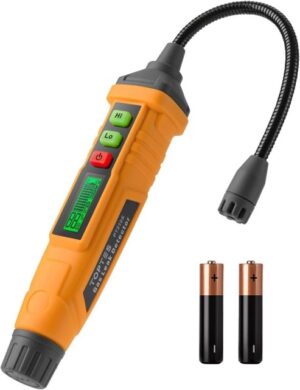
For comprehensive diagnostics, portable LP leak detectors are recommended. For example, the PT210S model features a flexible probe for accessing confined spaces (e.g., behind appliances), rapid response time (0.5 seconds), and both visual (red screen, rising bar graph) and audible (75 dB buzzer) alarms. The detection range spans 100 ppm to 5,000 ppm (1%–10% Lower Explosive Limit, LEL), with alarm intensity increasing along with gas concentration. You can find it on Amazon here.
Safety protocol
If a leak is detected, immediately evacuate the RV, shut off the LP supply if accessible, and contact a certified RV technician for inspection and repair.
LP leak detector maintenance checklist
Use this checklist to ensure proper maintenance and functionality of your LP leak detector:
- Test the LP leak detector monthly using the built-in test button.
- Monitor house battery voltage regularly to prevent false alarms.
- Clean detector vents and inspect the device for physical damage.
- Replace the detector every five years or immediately when an End Of Life (EOL) signal occurs.
- Investigate and address any causes of false alarms promptly.
- Schedule annual inspections by a certified RV technician.
*****
Twelve days of Christmas RV tools
- First day: anemometer
- Second day: infrared temperature sensor
- Third day: water heater flush wand
- Fourth day: Kill A Watt electricity usage monitor
- Fifth day: magnetizer/demagnetizer
- Sixth day: non-contact voltage tester
- Seventh day: keychain screw gun bit holder
- Eighth day: smartphone and selfie stick
You might also enjoy these posts from Dave
- Fifth wheel’s LP leak detector beeps only when being towed. Truck exhaust?
- The ultimate guide to liquid propane (LP) systems
- Essential LP cylinder safety tips
- Why no 12-volt power to RV LP leak detector or holding tank sensors?
DAVE HAS ANSWERED MORE THAN 1,000 readers’ maintenance and repair questions. Read a directory here. There is so much to learn!
Dave Solberg is a leading expert in the RV industry and the author of the “RV Handbook.”
RVDT2797

About that 5 year life, mine did in 60 months & that was in the middle of Covid when no one had a exact replacement. Wondering what’s inside of the units that trigger when its life is up!
Snoopy
Thank you for the suggestion and discussion, Dave. Good to know there is such a thing (although we have no propane onboard). Have a great day, safe travels, and grand 2026!