


On the second day of Christmas, my must-have tool is the infrared temperature sensor. As I have stated many times, it’s important to have specifics when troubleshooting most RV repairs, rather than just saying it’s not cooling or not heating.
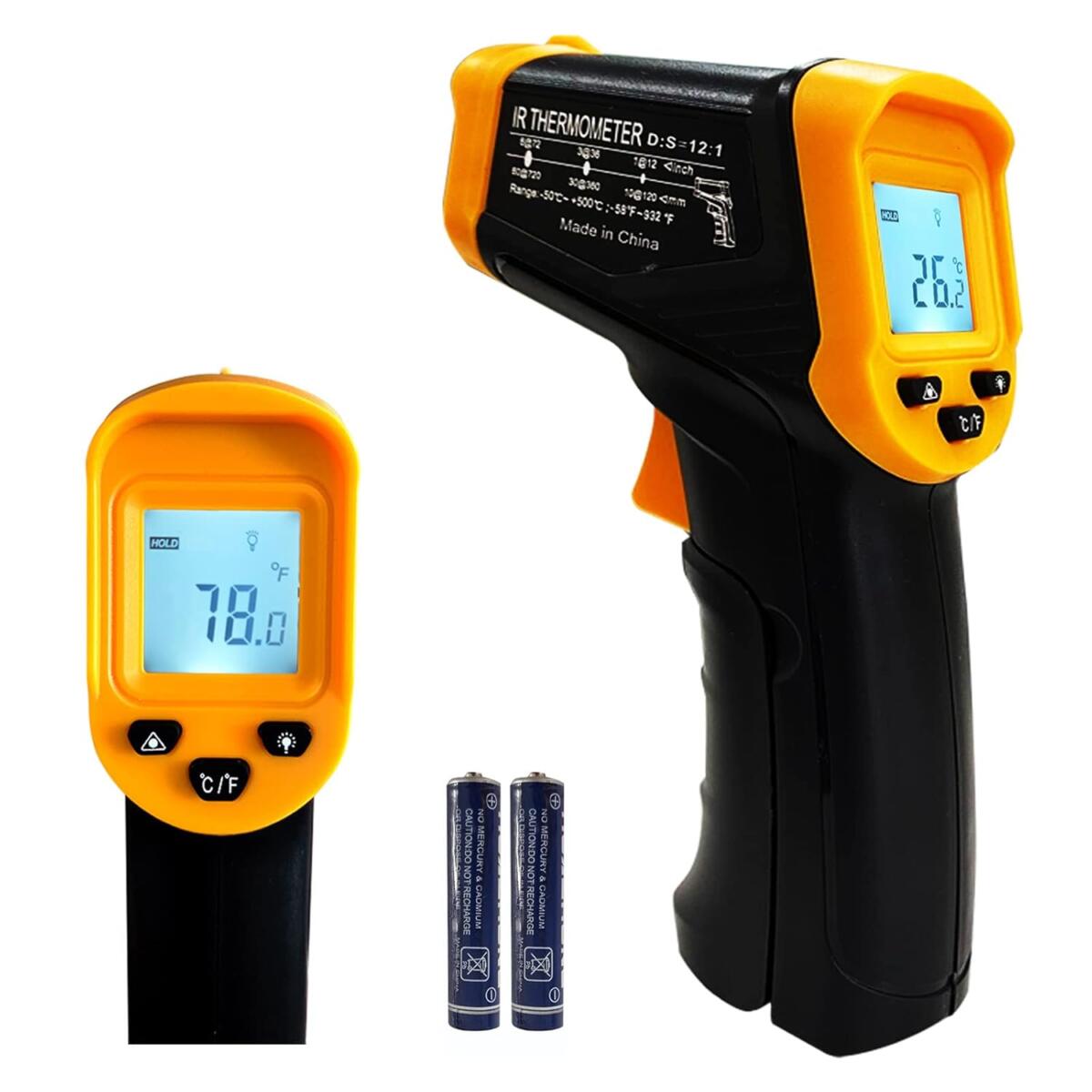
You can find one for about $10 on Amazon here.
This non-contact, handheld temperature sensor can provide pinpoint accuracy for hot and cold temperature ranges from -58º F to 932º F. Hopefully, you don’t need to test to those temperatures! Just pull and hold the trigger and read the LED for temperature. You can even scan along a material or component to see temperature variations.
Use infrared temperature sensor to test air conditioner
There are so many uses for this tool, starting with the air conditioner. Inside air is drawn in through the return air vent, then passes through the evaporator coil where heat and moisture are drawn out. It is then forced out the vent or through the ductwork in the ceiling to the vents. This procedure can draw down the temperature approximately 16-20 degrees.
Using this tool will verify the ambient temperature of the air going in, and the “conditioned” temperature going out. If it is not cooling the air at by least 15º, you now have the proper information to start troubleshooting.
Learn more about how to troubleshoot your roof air conditioner in this previous article.
Check the temperature of air coming from furnace
You can also use this tool to verify the temperature of air coming out of the furnace. According to Suburban, the air temperature coming out of the actual furnace should be 120-140º F, and slightly less at the end of a long run. I have had a few readers claim the temperature was more than 190º, which you can read further here.
I have also had many readers and owners attending my seminars indicate the ductwork of the furnace is too hot. Touching a metal ductwork that is 140º will be scalding hot to the skin. Using this tool will provide actual the temperature. To dig further into troubleshooting, read this post.
Test temp of wheel bearings and trailer brakes
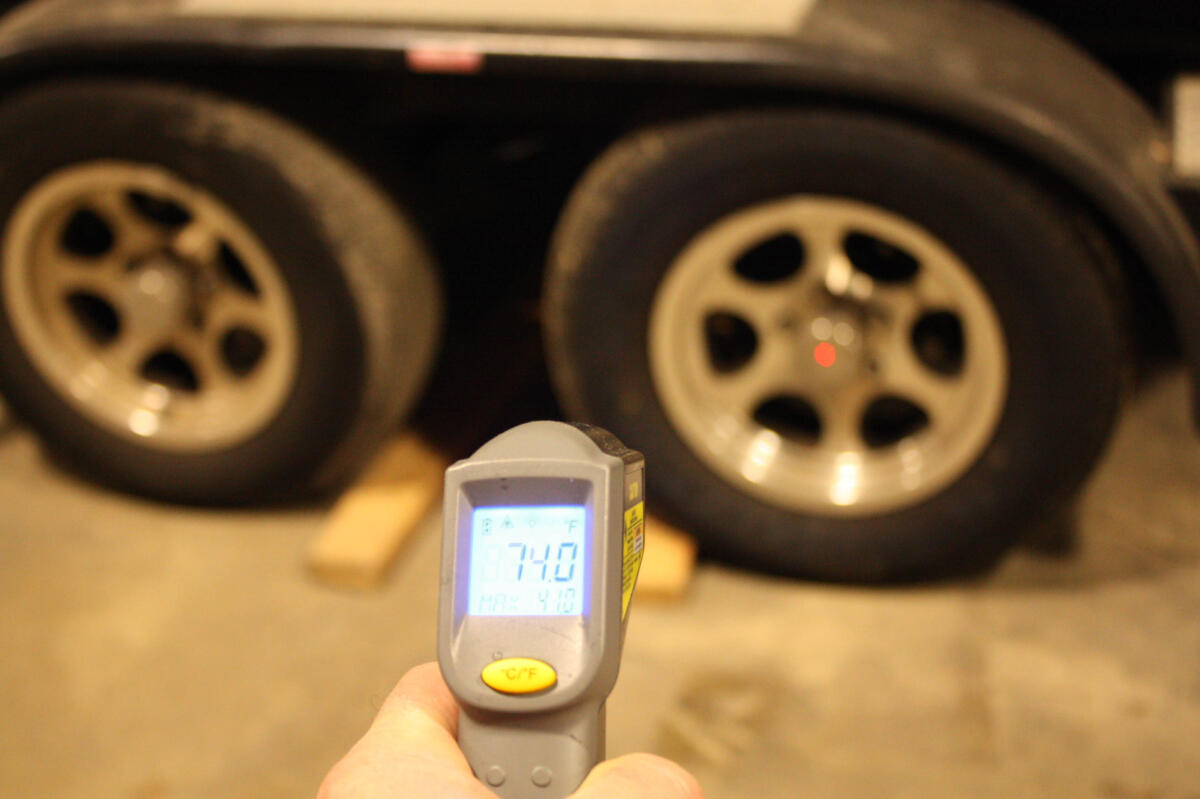
Another area that I use this tool is to test the temperature of the wheel bearings and auxiliary brakes of my trailer. After driving for a period of time, I test the hub, brake drum, and the tire to get temperatures.
If the ambient temperature outside is 80º, it is not uncommon for the bearings to heat up to more than 100º, which is normal. However, if the temperature spikes to 180º or higher, the bearings are getting dry and should be inspected and repacked. I can guarantee this is much less expensive in your shop or in a service center than sitting on the side of the road.
If the brake drum is exceptionally hot, the brakes may be locking up, or the setting is too high. High tire temperature can mean low inflation, but this tool should not replace a tire pressure monitoring system (TPMS).
Knowing the temperatures and understanding what is normal and what is not can help reduce tire, brake, and axle failure before it becomes an issue.
*****
Twelve Days of Christmas RV Tools
• First day: anemometer
You might also enjoy these posts from Dave
- Why does one RV air conditioner blow warm air while driving?
- Help! My RV air conditioner sounds like a ‘dying cow’
- Why does RV’s furnace run for 20 seconds, then stop?
- RV’s furnace blows warm air only. What should I check?
- How often should I repack my RV’s wheel bearings?
- Why do my RV’s brakes feel spongy and weak?
DAVE HAS ANSWERED MORE THAN 1,000 readers’ maintenance and repair questions. Read a directory here. There is so much to learn!
Dave Solberg is a leading expert in the RV industry and the author of the “RV Handbook.”
RVDT2791

I use one to check the wheel temperature of both our trailer and truck. I usually do this whenever we stop at a rest area during travels. I’m looking for consistency of temperatures. I usually find all wheel temperatures within a few degrees of each other and, depending on outside temperature, I see anywhere from high 90 degrees to less than 125 degrees when checking temperature near the center of the wheels.
I’ve never found one of those that is actually accurate. They are good checking the difference in temperature on the hubs though.
I’ve tested a few with a probe type thermometer on a container of hot water and there is normally a 5-10º difference.
Thank you, Dave! We have one and use it. Have a great day, grand 2026, and safe travels!