

By Cheri Sicard
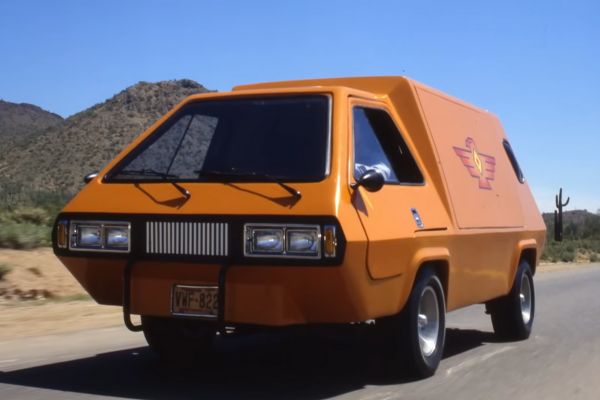
A Volkswagen bus is usually the kind of vehicle people picture as simple and boxy. The Phoenix Camper van flipped that idea on its head.
Designed in the 1970s by Robert Q. Riley of Robert Q. Riley Enterprises in Chandler, Arizona, this DIY camper turned a VW Type 2 into a fold-out home with a look that still feels a little ahead of its time.
In the video at the end of this post, we take a closer look at this unusual RV from the team at Retro Car.
The Phoenix Camper wasn’t a factory-built RV. It was sold as a plan, complete with instructions and material lists, so regular people could build it at home. It even earned pop culture cred along the way:
- It was featured in Popular Mechanics magazine.
- It appeared in the 1990 film Total Recall.
That mix of homebuilt roots and sci-fi style is a big reason it’s still remembered.
Riley’s idea was simple: Make a camper that a careful builder could tackle with common tools. The plan called out basics like a drill, jigsaw, and metal saw. Instead of buying a finished RV, an owner could start with a donor Volkswagen bus and rebuild it into something totally different.
The Phoenix design used the Volkswagen Type 2 chassis, and the instructions were meant to work with Volkswagen Transporter models from the mid-1950s through the end of the T2 era. That VW platform mattered because it kept the layout compact. With a rear engine and rear-wheel drive, the back of the van could hold both drivetrain and camper features without wasting space.
The Phoenix Camper build
The build started with a major teardown. Builders removed the outside parts, detached the original body, and added a new safety cage.
From there, the new camper shell took shape using foam panels cut and formed from templates. Those panels were glued together, then layered with fiberglass on the inside and outside. Resin finished the surface, helping create a lightweight but tough body.
One of the Phoenix’s most recognizable details is the gullwing doors. They opened up access to the front cabin, where two bucket seats sit. A center aisle ran between them and continued toward the back, making the interior feel less cramped than a typical van conversion.
Along each side, bench seating pulled double duty as sleeping space. Under the benches, large storage compartments handled gear and supplies without eating up floor space.
The kitchen unit sat at the rear, positioned above the engine compartment. It included:
- A two-burner propane stove
- A mirror-faced icebox
- A sink
A 9-gallon plastic water tank was mounted under the icebox, keeping the setup compact and practical.
The fold-out expansion when parked
Parked mode is where the Phoenix really showed off. The roof lifted, and the sidewalls folded outward to form a larger room. For something built on a VW bus footprint, that’s a wild transformation.
The 1980s update: Renegade
In the 1980s, the design returned with small updates under the name Renegade. The changes were mostly cosmetic, including different side windows and foam-filled bumpers.
One custom-build, called the Phoenix 2, took more than three years to complete. It used sandwich panels made from fiberglass and urethane foam on a metal frame. It also added extra gullwing doors, sliding front windows, and a front end with five headlights.
For power, it used a Transvair adapter kit to fit a six-cylinder Corvair engine with an automatic transmission.
Why the Phoenix camper van still matters
The Phoenix remains rare, and in some countries, it was never street legal. Still, it’s hard not to admire the big swing it took as a fold-out camper with a bold shape and a true DIY spirit.
Anyone who likes oddball campers and vintage VW builds will see why it keeps popping up in conversations decades later.
RELATED
- Tour Retro RV’s awesome VW Kombi Camper
- Wow, check out this triple-decker micro camper build—a 3-story ‘toaster’ trailer
- A bit of nostalgia: A horde of VW camper vans come to camp
- RV oddities: Ruben’s Armadillo, a ’56 VW bus/Airstream hybrid
RVDT2823
Carried the Popular Mechanics with me for years. For the period, what dreams are made of.
Some very good compact ideas.