


Dear Dave,
I travel with my RV’s absorption refrigerator running on gas. Does this shorten the life of the refrigerator? I am sure this has been answered, but I have seen so many differing opinions I am asking the question again. Thanks for your assistance. —Craig, 2023 Arctic Fox 25Y
Dear Craig,
Running your absorption refrigerator on gas does not shorten the life of the refrigerator as there are no moving parts. However, I do not recommend it as it means you have an open propane line and a flame. This has been a hot topic for a long time, with some owners stating they have been doing it for years with no problems. Just because nothing has happened to them (yet), does not make it safe.
How an absorption refrigerator works
Your absorption refrigerator has a rich solution vessel that contains hydrogen, ammonia, water, and sodium chromate. A heat source such as the flame using propane, or a heating element on 120-volt power, heats the liquid. That creates vapors that rise to the condenser fins and evaporator of the cooling unit and “flash” heat out of the freezer and then the refrigerator. The vapors separate and return to liquid form and zigzag back to the container and start the cycle over again. It is a lot more complicated than that; however, that is a brief overview for the purpose of your question.

When using propane, the LP container is open and pressurized LP is available in all the LP lines going to the water heater, stove/oven, and refrigerator. If you have an accident or even a minor scrape on the side of the rig, it could produce a leak in the lines. Even the vibration of driving could loosen a fitting at one of the appliances—and now you have an open source of LP.
LP excess flow valve
All LP connections have an excess flow valve that is spring-loaded and designed to shut the line in case of a leak. However, it is not 100% as a slow leak would be the same pressure as an appliance or two using LP during operation.
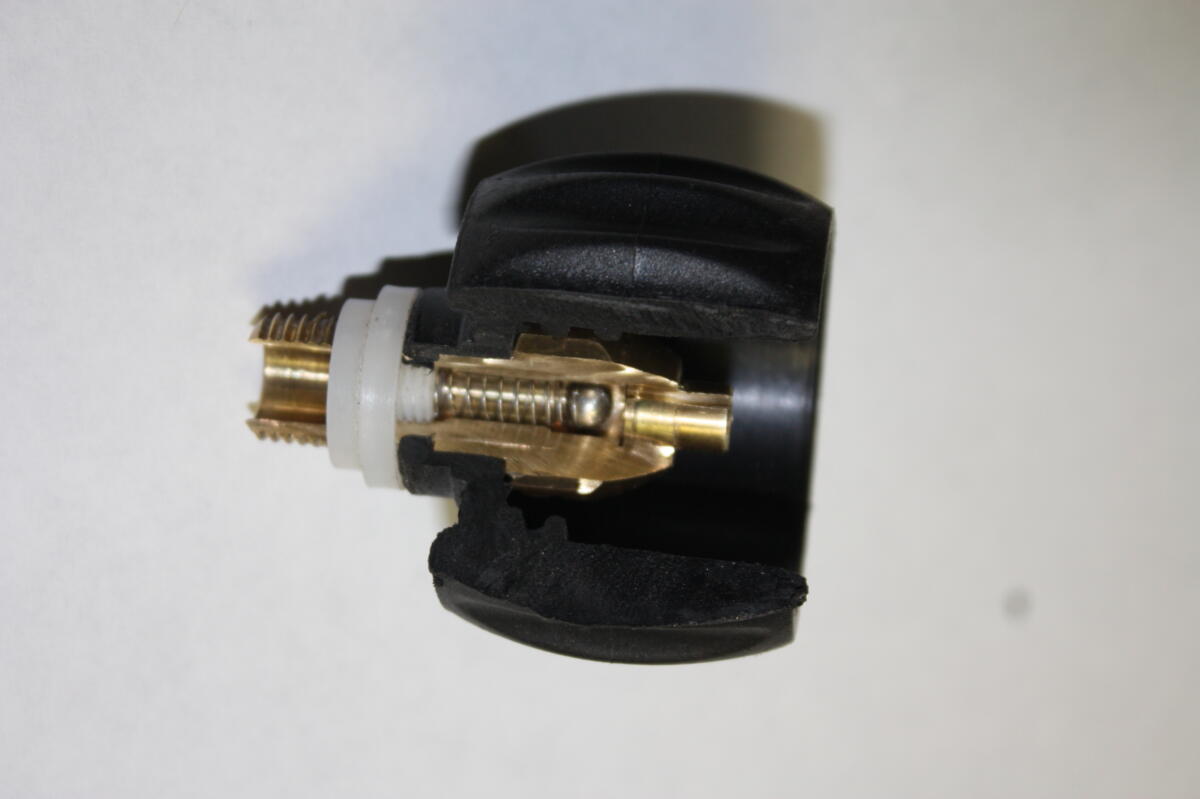
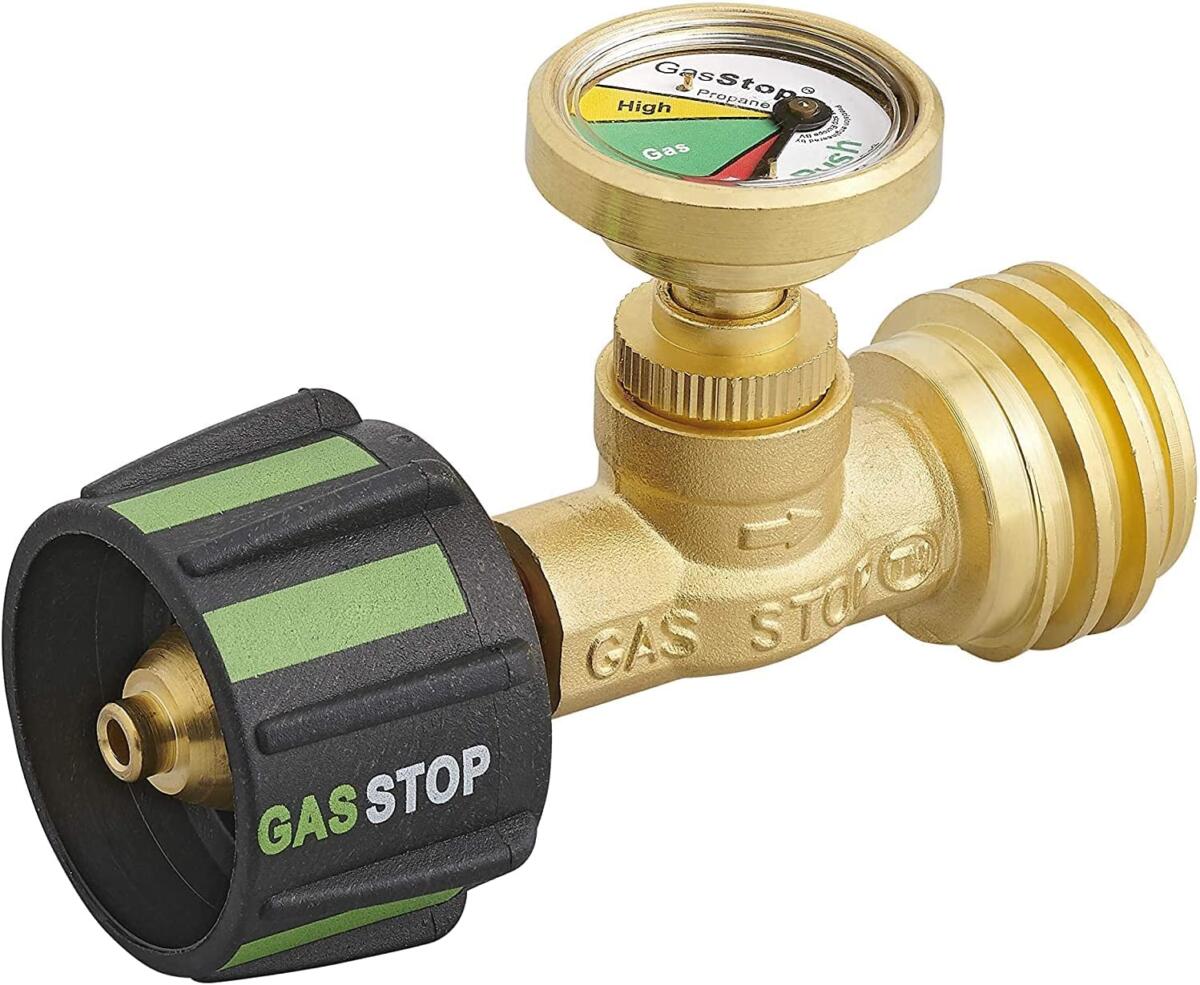
GasStop™ is a device that many people are using to supplement the excess flow valve, and I would recommend getting one.
A better option, in my opinion, is to connect your refrigerator to an inverter connected to the house batteries and run it on the 120-volt mode. You might need to increase your battery bank; however, the engine alternator should be able to keep up with the power requirements while you are driving.
You might also enjoy these posts from Dave
- The ultimate guide to liquid propane (LP) systems
- Is it safe to drive with propane on in RV?
- RV Gadget: Testing the GasStop gas safety device
- Why does my GasStop shut off the LP when the furnace turns on?
Dave Solberg is a leading expert in the RV industry and the author of the “RV Handbook.”
Read more from Dave here.
HAVE A QUESTION FOR DAVE?
Send your inquiries to him using the form below.
RVDT2653


“Been doing it for years with no problems” makes as much sense as not using your seatbelt for years with no problems. Kinda scary to think that I am sharing the road with someone that has that attitude.
When towing on a warm sunny day, I am not so much worried about the refrigerator temp as I am about the frozen foods in the freezer.
I leave the gas on – and I use an add-on Gas Stop. Going one-step further, all my RV propane cylinders have built-in float gauges – not the temperature affected pressure gauge. While still not a perfect leak detection tool, a float gauge will give you a far more accurate reading on tank contents and if you regularly check (I do) you should notice unusual consumption rates.
I remember a similar question someone asked you a few years ago, and your answer made me change my thinking on traveling with the LP running my refrigerator while driving. You suggested that most refrigerators were insulated well enough to keep food cold and frozen food frozen for several hours without running the refrigerator while driving. We have been doing that ever since. We don’t like to travel more than four hours a day as a rule and have not experienced any serious degradation of temperature in our refrigerator in that time frame. If we do have to drive more than four hours, we may have to come up with another plan.
I think it’s the best thing you can do for your absorption refer
the constant motion will keep the liquid from hardening in the tubes
some years back a tire blew and the tread broke a gas line
The excess flow valve worked as designed and I didn’t even know the gas was off.
One important detail if you were going to run your fridge on 120V via an inverter: You need a DC–DC charger to supply energy to your trailer batteries while driving. The power provided by the seven pin connector is insufficient.
Dave, in regard to your suggestion about adding an inverter.
In my Arctic Fox 5th wheel, I have a Norcold N1095L which has 300W heater coils @ 120VAC. This is a 25 A @ 12VDC load.
Electrical power on the road (12VDC) is provided by two Odyssey 98 Ah house batteries and one 160 W solar panel. From what I can determine the 12VDC provided by my ’18 Ram 3500 is minimal.
I modified my electrical system to run the frig (heater only) off of a dedicated 500W inverter. On a long trip I thought that the frig cycling on/off would allow the batteries to keep charged.
I was wrong.
On a 8 hr+ trip it took my batteries down to a charge level that could have destroyed them.
Thank you for the discussion, Dave! Thank you, too, for attempting to dissuade people traveling with their propane running. Seems a dangerous behavior. Have a great day and safe travels!