


No RVer plans to have an accident. However, suppose you were involved in an accident while RVing. Do you know what to do first? What to avoid doing?
Check out these tips to be prepared.
Discombobulated
I was involved in a car crash as a teen. Thankfully, no one was seriously injured, but all six of us were shaken up. I still recall the accident as a scene playing out in slow-motion. A truck broadsided our vehicle and caused it to spin completely around. When the car came to a jolting stop, I tried to put on my glasses. Turns out, the glasses in my lap belonged to a friend sitting in the back seat! It took some time for me to realize that I was wearing contact lenses!
Fast forward to 2020. That’s when a strong derecho blew over our RV. (We sheltered in a nearby church.) When the winds finally subsided, we discovered that the wind had blown over our rig. Neither my husband nor I had our cell phones. It took a while to remember the phone numbers of relatives we needed to contact. Why? Because all of that contact information was stored on our phones. RVing friends guided us through the hours that followed until the shock finally wore off.
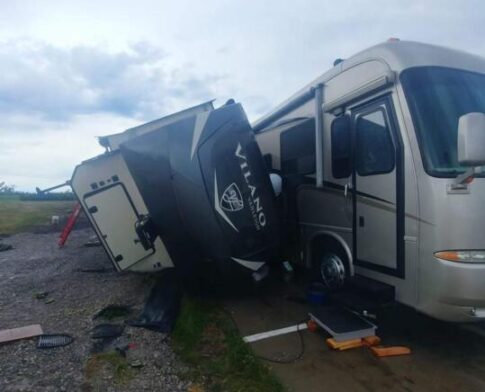
Any type of vehicle accident is scary and disorienting. It helps to know what to do and how to do it when an accident occurs.
First things first
If you are involved in an RV accident, the first thing to do is check whether you or others are seriously hurt. Then call 911. Getting emergency responders involved right away protects the health of everyone involved. It also creates an official record of the incident.
If the RV is in a dangerous spot (middle of a highway, burning, leaking fluid), move people a safe distance away if it’s safe to do so. Turn on hazard lights and place reflectors or triangles on the roadway so that other drivers can see you. This can reduce the chance of a secondary crash.
Treating shock
Shock can follow trauma even when injuries aren’t obvious. If someone looks shocked, confused, pale, or is breathing strangely, treat shock as a medical emergency.
Keep the person lying down with their feet slightly elevated (unless that could worsen a spinal injury). Keep the person warm and call for emergency medical help. Don’t give food or drink if they’re nauseated or you suspect head/neck injuries. According to the Red Cross, these actions help preserve circulation and reduce complications while professionals are on the way.
Secure the scene
If your RV is drivable and it’s safe to move it off the road, do so. That will lower the risk of another vehicle hitting you. If you’re towing, be very cautious. A poor hitch connection or unseen damage can make moving the rig dangerous. Use your hazard lights and set out cones or reflective markers. Keeping the scene secure helps first responders work more effectively.
Document
Document everything while details are fresh. Your phone is the best tool for photos and recordings, but if it’s damaged or missing, use pen-and-paper from your glove box.
Photograph all vehicles from multiple angles and capture license plates. Take pictures or notes of road signs, skid marks, and weather conditions. Also, make a record of any visible injuries.
Write down the names of everyone involved along with their phone numbers, if applicable. Also, get driver’s license numbers, insurance details, and short witness statements.
Thorough documentation speeds up claims and can help settle disputes about fault. Documentation also preserves evidence that may fade from memory.
Law enforcement report
Even for minor collisions, a police or state patrol report is often the clearest neutral record of what happened. In many places, a report is required for an insurance claim or by law.
Ask the officer for the report number and get the responding officer’s name and badge number. If officers don’t respond on scene, find out how to file a local crash report and do so as soon as you can.
Exchange information
Exchange necessary information with other drivers involved in the accident. This includes driver names, license numbers, vehicle make/model, license plates, and insurance company/policy numbers.
AAA advises that you don’t discuss blame or sign anything you don’t understand. Refrain from saying “I’m sorry” because those comments can be used later to assign fault. Stick to facts when talking with other drivers, witnesses, and police. This protects your legal and insurance positions.
Phone or paper backup?
Phones commonly get crushed or lost during a crash. That’s why it’s important to keep a printed accident checklist and a paper copy of your insurance card, emergency contacts, and medical information in your glove box or wallet. That way, you can still exchange and record details. Plus, having a printed backup can speed things up on the scene.
Notify your RV insurance company
Most RV insurers ask that you report accidents within a short time window (often 24–72 hours). Tell your insurer what happened. Give them the police report number if you have it, and send photos along with your notes.
Ask whether your insurance company has a preferred repair shop in the area or a recommended claims adjuster. Also inquire about your emergency travel benefits (lodging, rental vehicle), if needed. Prompt reporting keeps your claim on track and helps you understand the next steps for getting repairs or temporary shelter.
An honest-looking shop estimate might be tempting when you’re stuck. However, you should wait for your insurance adjuster to confirm coverage and provide the names of approved vendors if your policy requires them.
Authorizing work before claim approval can lead to denied coverage or surprise bills. Ask the shop for a written estimate and keep copies of every invoice and receipt.
Paper trail
Log the full names and contact info of every person you talk with, including claims reps, adjusters, tow operators, and shop managers. Save emails, estimates, repair orders, receipts, and photographs. A personal record prevents misunderstandings, can help resolve billing disputes, and documents losses for a smooth claim outcome.
Medical follow-up
Adrenaline and shock can mask injuries for hours or even days. If you notice new pain, headaches, dizziness, numbness, or fatigue, get checked by a medical professional. Keep all medical records and bills. They’re important for both your health and any claim for injury-related losses.
Legal help
If injuries are severe, fault is disputed, or there are complicated liability issues with a campground, rental company, or commercial vehicle, consult a qualified attorney familiar with RV and motor vehicle law. Your early documentation and police reports are the foundation for any legal case.
Practical prep
Before you hit the road, make a small stack of hard-copy essentials: a printed accident checklist, a paper insurance card with your policy and claims number, emergency-contact list, medical info for everyone in the rig, and a pen. Keep those in the glove box and a second copy in your wallet. Consider storing key numbers on a laminated index card and inside your wallet under “ICE” (in case of emergency). Small prep steps like this make it far easier to act if your phone is gone or you’re in shock.
After the claim
Once repairs and medical care are handled, review how your policy performed. Did you have emergency travel coverage? Were personal items covered? Did any exclusions surprise you? If gaps appeared, ask your agent about better-suited RV policy options (agreed value, emergency travel expense coverage, personal effects coverage, etc.). This is the time to close coverage gaps so your next trip is safer.
Be ready
Slip a laminated card with the index-card checklist into your glove box and wallet. (See below.)
Program at least two emergency contacts as ICE on your phone and keep a printed copy in your wallet. Photograph or scan your insurance card and keep the file in a cloud account you can log into from any device.
If you don’t already carry emergency cones, triangles, or flares, put them inside your RV or tow vehicle today.
Review your current insurance plan to ensure you have the coverage you need.
Index card checklist
• Keep calm; check everyone
• Call 911 if injured or unsafe
• Move to safety if you can, don’t tow if unsure
• Treat shock: lie down, feet slightly up, stay warm
• Take photos (vehicles, plates, scene)
• Write down names, phones, licenses, insurance
• Get police report number/officer info
• Call your RV insurer now (24–72 hrs.)
• Don’t sign repairs without OK from insurer
• Save receipts, report medical issues ASAP
Have you ever been involved in an RV accident? Tell us what you learned using the comments below.
RELATED
- Dealing with medical emergencies on the road while RVing
- These emergency tips could save your RV, your wallet… or your life
- Prepare for common RV problems: The RV roadside readiness list
RVT1237

Dash Camera.
Definitely Tom, videos don’t lie.
Absolutely and then some!
Thanks Gail,
You’ve prompted me to get some of those emergency LED strobe lights I’ve been putting off for years. I also printed your article to fold up after adding some recommended information and then keeping it under the tissue box in the glove box. Hopefully we’ll never see it again!
Thank you for the systematic and comprehensive discussion, Gail! We only had to submit the dash camera footage and photographs of the apparent damage to our vehicle to our insurance company when I hit a small/female moose just outside of Homer, Alaska in June. The first available appointment at our manufacturer’s service center was 4 months later. Thankfully, our RV was drivable in the meantime. Have a great week and safe travels!