


Dear Dave,
My 2011 American Tradition has ceramic tile floors. Several of the tiles have cracks. Replacing a tile floor can be quite expensive as the old tile must first be removed. I’m wondering if I can install Luxury Vinyl Planks directly over the old tile. One concern is the added height (1/8″ – 3/16″) and if it would interfere with the slide-outs. They are made by Power Gear and, when extended, are level with the main floor. Also, would it be best to allow the LVP floor to “float” or glue all vinyl planks? I’m guessing they should float, especially considering the existing tile floors are heated. Thanks in advance! —Stephen, 2011 American Coach “Tradition”
Dear Stephen,
It amazes me how often history repeats itself, especially in the RV industry. Years ago when I was at Winnebago, Monaco came out with a tile floor and everyone had to have one. Problem is, no matter how strong you think the chassis is, it will still flex going down the road and have issues with temperature changes. Winnebago jumped on the bandwagon and installed tile flooring in a few of the highline models and most didn’t even make it out of the plant without needing rework.
So they switched the grout to a polymer version that was supposed to be flexible enough to withstand the harsh effects of the road and would expand and contract with temperature changes. It did help somewhat, but not enough—so there was quite a warranty issue. They then switched to fake tile from a company called Nafco and ran with that for a while. Trouble is, companies periodically would reintroduce tile, and that’s what the buyers wanted. So back came tile flooring and back came the same headaches!
I do believe some of today’s chassis and foundations might be conducive to having tile, but not in every situation. And who really wants tile when they are RVing? Oh, wait. Full body paint, marble countertops, solid oak cabinetry, full body slides, and 5 TVs… That’s not RVing!
Can you install LVP flooring over old cracked tile?
So, back to your question. Can you install Luxury Vinyl Plank (LVP) flooring directly over the old, cracked tile? Probably not, as the LVP flooring needs a perfectly smooth underlayment. With cracked tile already an issue, you will most likely get heaving. If your ceramic tile is the “butt joint” type, which means there is no grout between the tiles and the tile edges are squared off rather than the traditional rounded edge for grout, you might be able to get by with it. However, I believe you would be asking for trouble. And, as you stated, the additional height would most likely be an issue with the slides, as they slide down at the end of the extension to create a flush or flat floor. That means they need to slide up when retracted and would most likely catch the height of the new LVP.
Most LVP flooring products need to “float,” as they will expand and contract with temperature changes, even a very slight change of 10 degrees. Gluing them down will create resistance and they will separate and heave.
I have talked with several companies that specialize in RV renovations and they all recommend using at least 7-mil-thick planking and a good underlayment.
Taking the old tile out
I realize taking the old tile out is a chore; however, it is the best option in my opinion. Using a drywall hammer with a good sloping hatchet end works the best. Lay the hammer down on the side with the chisel end at the tile edge and tap the round hammer end to chisel under the tile. You can use a wood chisel, but it might gouge the underlayment. You can find a drywall hammer on Amazon here.
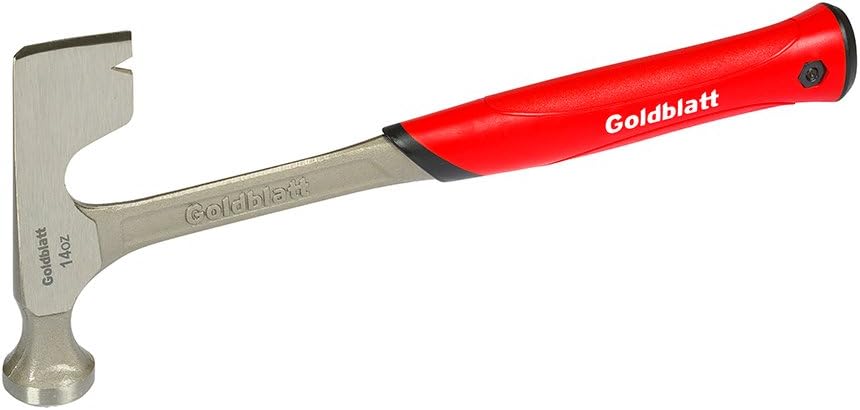
Then use a good sturdy putty knife to remove the excess mortar. I have also used an oscillating tool with the flat blade in touch spots. You may have to sand the floor or install a thin underlayment to get a smooth floor to install the new LVP. However, it should be the same height after installation.
You might also enjoy this from Dave
How much does it cost to replace an RV floor?
Dear Dave,
I live in my RV full-time, and my floors are becoming soft in certain areas. What is the cost to replace an RV floor? Is it expensive? I am retired and live on a fixed income, so I need to know how much approximately do you think it would cost? —Diana, 2017 Keystone Bullet
Dave Solberg is a leading expert in the RV industry and the author of the “RV Handbook.”
Read more from Dave here.
HAVE A QUESTION FOR DAVE?
Send your inquiries to him using the form below.
##RVDT2348


“That’s not RVing!” Dave, I think you are confusing camping with RVing. People who camp use RVs, but people who use RVs may not be camping. If we can label cars behind RVs as ‘toads’ (towed), we can certainly label people with luxury RVs as ‘turtleling’ (bringing their home with them). 🙂
I personally have a philosophic issue with buying an RV with a built-in sophisticated power train if I am going to just park it for months at a time. Having a separate tow vehicle means I can at least get some use out of the power train while the land yacht is parked. But each to their own proclivities. Makes for interesting discussion so long as each side doesn’t think they have a one-size fits all idea.
Thank you, Dave! Our RV has those amenities that you mention, so I call what we do “traveling” and never “camping.” 🙂 One thing concerns me about removing the tile floor of an American Tradition is the probability that the floor is heated. How, if at all, does that complicate the removal of the tile and replacement of the flooring? Thanks and safe travels! 🙂
Neal. I am the owner of the Tradition in question, and you are correct that the floors are heated. I’m interested to hear Dave’s response as well!
Hi Stephen, Good luck with the work! 🙂 Traditions are amazing! We had a 2017 Revolution and I lusted for a Tradition. Enjoy it and safe travels! 🙂
Most LVP does not require an underlayment, unless you are talking about the plywood type to cover any imperfections or gaps in the floor. Most plywood underlayments are 4mm thick and adding 7mm LVP would raise the floor almost a 1/2 inch. That’s after the tile or old flooring is removed. May cause a problem with slides.
Preparation, preparation, preparation is the key for a successful long lasting floor.