


Dear Dave,
I’ve been watching a few videos about EternaBond tape and most use it on older RVs. Some have mentioned using it on a new RV around all roof vents, A/C units and along the edges. Is this something that you would recommend? —Bob, 2022 Sportsmen 332BH
Dear Bob,
I have used EternaBond only in emergency situations where I had to do a quick patch to keep it from leaking or when needing to band-aid a spot so we could get the rig to a service center and have it properly repaired. And no, I would not apply it to all the seams and vents, especially the roof A/C.
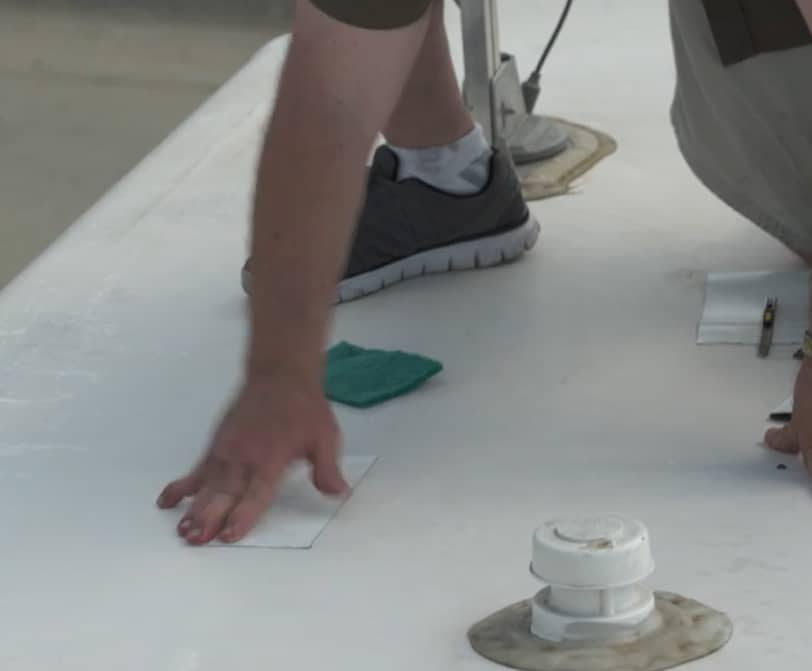
EternaBond has several pros and cons when it comes to sealing RV seams
Pros
- It is easy to apply and covers a wide 4” patch as opposed to spreading on lap sealant from a 1/4” caulk gun tube.
- It sticks to any material such as fiberglass, EPDM, TPO, and even aluminum.
- It works, at least from an owner’s point of view, as most do not see the cons until much later.
Cons
- It is a band-aid fix to the original issue and will not last.
- It dries out eventually and cracks.
What Is EternaBond?
According to the H.B. Fuller website, the manufacturer of EternaBond, it is a one-step sealant tape designed for all roof materials featuring MicroSealant Technology. Here is the official description:
“Featuring MicroSealant® Technology, EternaBond tape is a 100% solids formulation of synthetic resins, thermoplastics and non-curing rubber with a built-in primer. It is bonded to a UV-stable backing. The adhesive coating is protected by a silicone release liner, to be removed prior to application.”
They go on to talk about how it forms a stable molecular structure and synthetic polymers, which frankly puts me to sleep but is their justification for it sticking to stuff.
You will find a large number of EternaBond lovers on forums; however, over time, they might not be as excited about the product. Have you noticed that no RV manufacturer uses it for the seams? That is because eventually it will dry up, shrink, and pull the roof material with it.
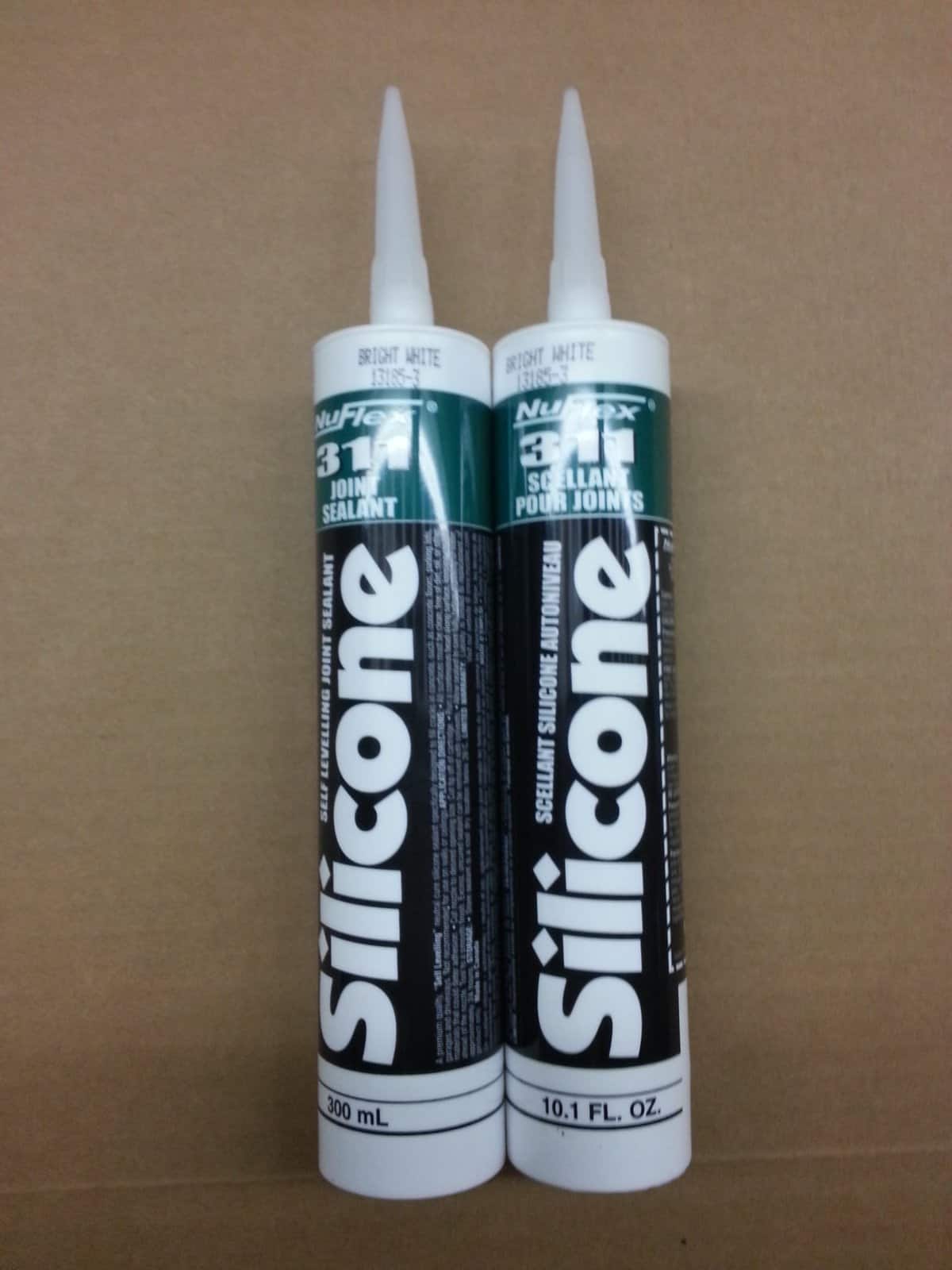
There still is nothing better than checking the seams on a regular basis and using the recommended sealant for your roof material. There are some sealants like RV 311 that are designed for fiberglass and others like the Dicor product that are designed for TPO and EPDM.
What about roof air conditioners?
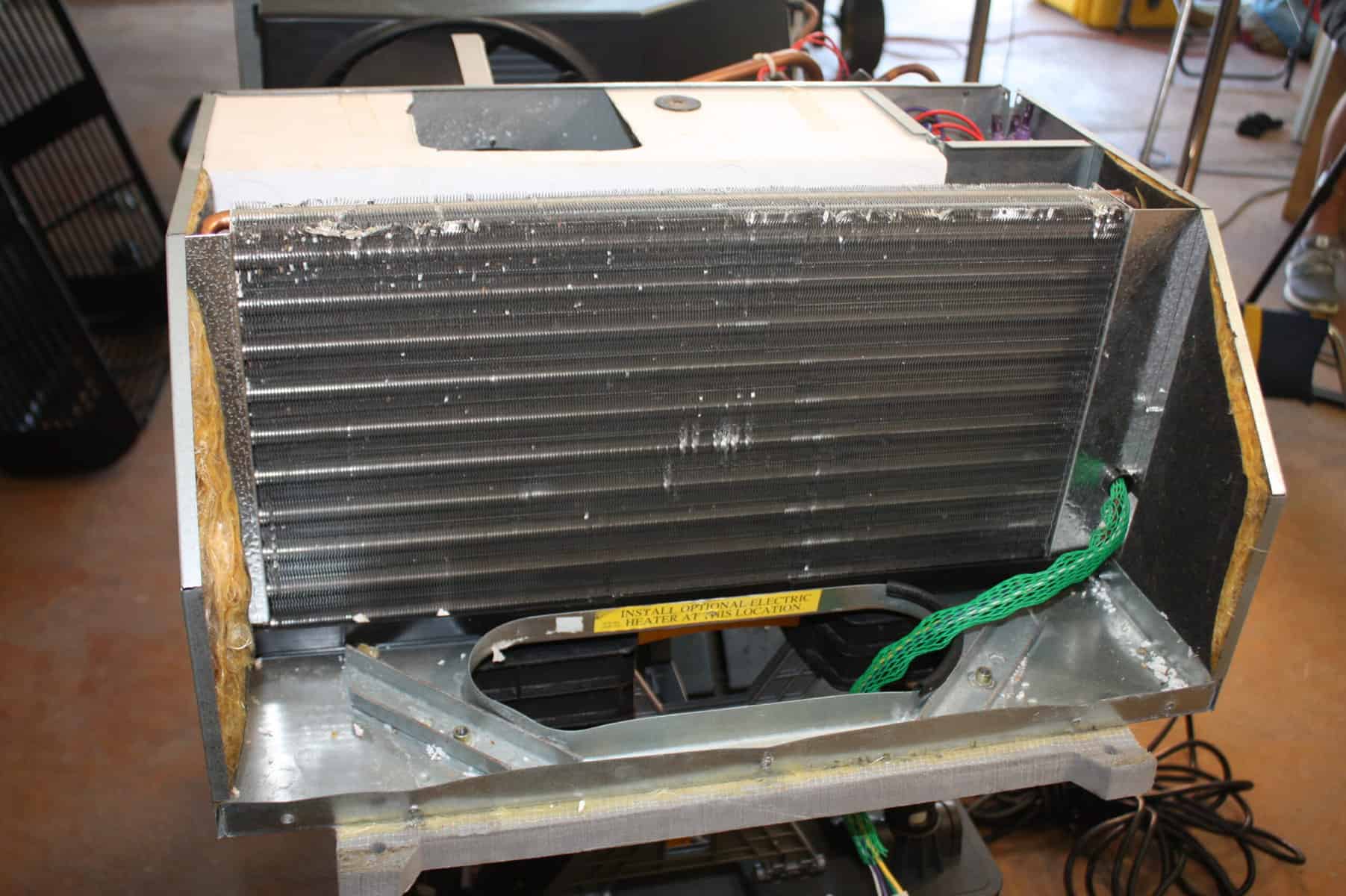
This is the most critical area to address. NO, you should never use EternaBond or any other sealant around the roof air conditioner! A foam gasket is designed to go between the roof air and the roof material and is secured with four mounting bolts in each corner. As the warm, moist air from inside your rig is drawn into the return air and passes through the evaporator coil, heat and moisture are removed and the moisture goes into the front drip pan. This pan has two drain holes on the sides where the moisture drains out and off the roof. If you seal around the roof air conditioner, you will trap the moisture and it will overflow in the drip and into the roof and rig. It is recommended to check the mounting bolts periodically and tighten them to a specific torque. I usually just hand-tighten them using a socket and they are good.
RELATED
- Why you SHOULD NOT use EternaBond to tape your RV roof!
- Two additional uses for EternaBond tape on your RV
Dave Solberg is a leading expert in the RV industry and the author of the “RV Handbook.”
Read more from Dave here.
HAVE A QUESTION FOR DAVE?
We have a popular forum for Ask Dave. Please be as brief as possible. Attach a photo or two if it might help Dave with his response. Click to visit Dave’s forum. Or send your inquiries to him using the form below.
##RVDT2152

Not a easy long term fix. Do it correctly, or pay a price later.
Hey Dave, would be great if the specific torque was known on securing the AC? I’ve looked around but there doesn’t seem to be an answer. I’ve put a lot of thing together & usually torque the bolts to their specific torque! The Verbage of hand tighten kinda worries me as some hands are stronger than others! Or do you suggest to stop 1/4 turn just before the bolt breaks! LOL
Snoopy
Coleman has changed their torque recommendation to this:
Proper tension has been achieved for each bolt when any portion of each gasket indicating tab has been pulled down even with the roof. See Figure 4. The upper unit has now been properly installed with optimum gasket compression.
So I guess that is 1/2 turn before breaking?
I now totally understand that “proper tension” in the new torque specification, totally makes no sense at all!
Snoopy
Call me one of those that will tout Eterna Bond on the roof. I sealed all the edges of my fiberglass roof to include end caps in 2015. It still appears to be in the same condition today as it was in 2015. I can see no drying out or cracking on any of my seams. Guess I will continue to monitor my installation and will get back to you if or when it starts deteriorating.
I am not aware of any lap sealant that will last 8 years without cracking, drying out, and having to be scraped off and replaced.
I’m with you. I have read previously that there were original manufactures that used Eternabond on new units where the front cap meets the roof. Don’t know that for sure, but I know there are at least 2 older units out there that way now! I used the Dicor lap sealer the entire length of where the roof and rain gutter meets and then seal/covered it tightly with the eternabond tape over top of the screw heads.
I believe my Grand Design has it in the outside edge of the slide out, from the factory.
My slide out appears to have black eternabond on the outside edge from the factory. If it will not last why would they use it there?
I’m hoping Dave will join in here with some data to back up the dry out and crack claim. I would settle for a definition of “eventually”.
Thank you, Dave!
I’ve been using Eternabond on my rv’s for 30 years. We have owned our current rv for over 10 years and there is no sign of cracking or drying out. I’ve used it on the seams of 8 motorhomes and never had a seam leak.