


Dear Dave,
I have a rear coach heater that resides by the stairs under the fridge. It is heated by radiator lines that also heat the water heater while you drive. The last time I drove the RV I smelled something that seemed very hot in this area of the coach. When I opened the grate to access this area and felt the metal box that houses the core and fan, it seemed very hot to me. I’m not sure how hot it should be, but it was too hot to hold your hand on! I can’t find anything online to guide me on how to troubleshoot the problem. I unplugged the only electrical plug (fan, I’m assuming) and drove it again. Still super-hot. Any thoughts on how to move forward? Thanks. —Tom, 2015 Winnebago Sightseer 35G
Dear Tom,
Your rear heater was invented by Winnebago back in the late ’70s and called “Motor Aid”. My first job at Winnebago in 1983 was aiming headlights, installing batteries, and hooking up the coolant lines from the engine heater to the Motor Aid hoses going to the back of the rigs on line three. How I got there is a long story, having owned a gas station for a couple of years making no money and just wanting a job that would allow me to pay off the bills and play softball all over the country.
How the “Motor Aid” system works
Anyway, the concept is cutting into the engine coolant line or “antifreeze” and routing it back to the automotive-style heater like the one used for the dash. The coolant will get over 200 degrees, at which time the thermostat opens and allows the coolant to flow throughout the engine and ultimately the hoses to the back of the rig. It is routed through the automotive heater and then connected to the Atwood water heater, that has specially designed piping that wraps around the 6- or 10-gallon tank.
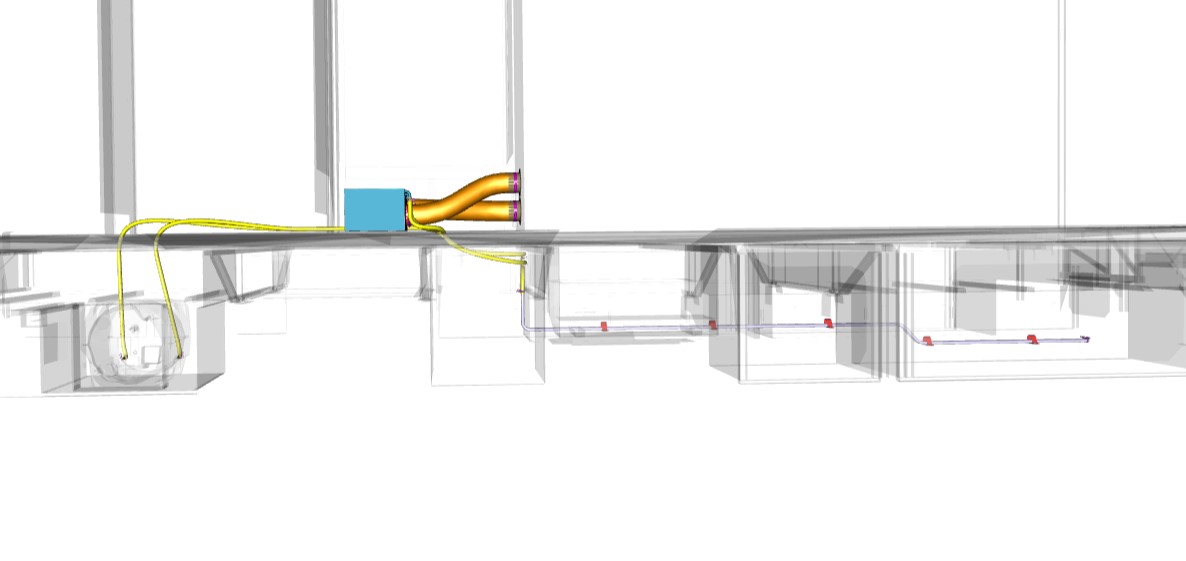
Here is the 3D diagram from the Winnebago website of your rig. It shows the lines coming from the front, going to the heater, then to the water heater, and back to the front. The heater has a coil inside and a fan just like the dash heater, so you have basically free supplemental heat while running down the road. The coolant flowing around the water tank heats the water inside, so there is hot water when you arrive at the campground without the need to run the propane.
Keep in mind that the temperature in the area of the rear furnace and water heater will be close to 200 degrees, which is VERY hot and would most likely burn your fingers if you touched it. That is why it is typically covered and not exposed.
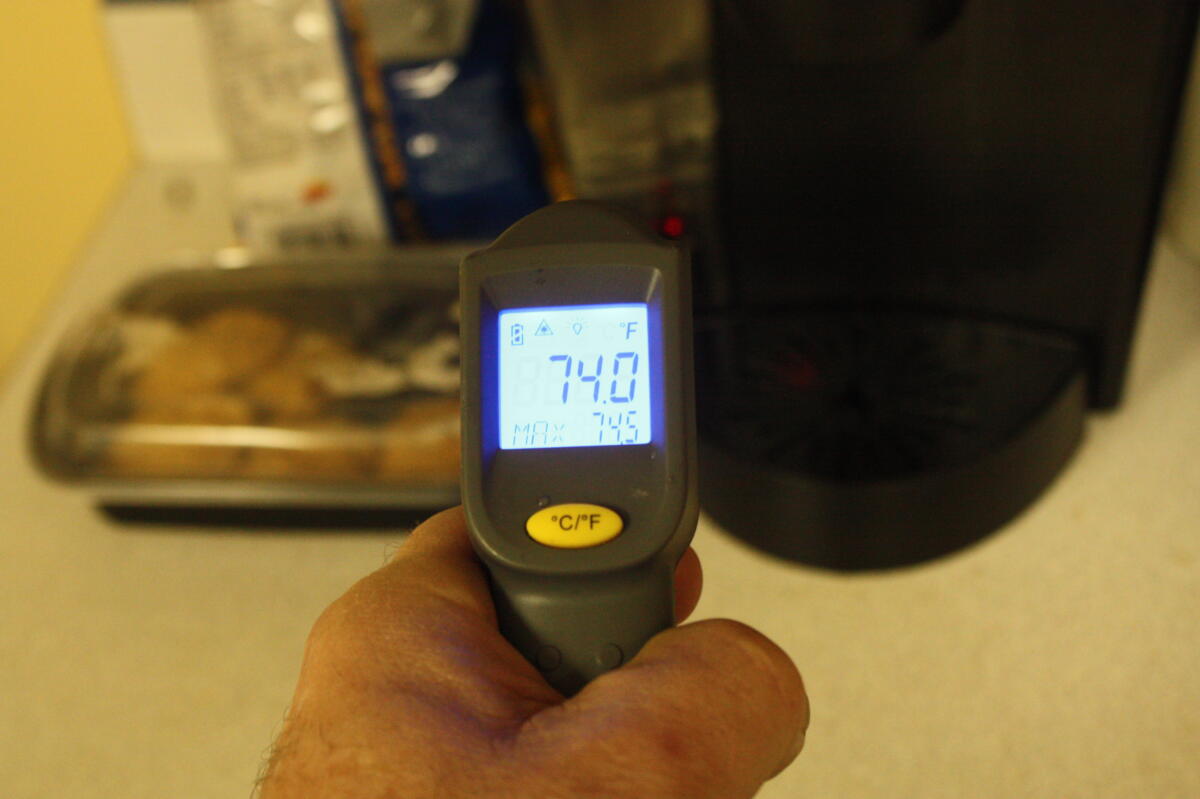
Use an infrared thermometer
As I have stated often, it is important to understand the operation and especially operating temperatures of appliances and components. Therefore, I would recommend getting an infrared thermometer and getting actual temperatures.
The wires you pulled off are just 12-volt power wires going to the fan motor and should not have anything to do with the “hot” smell, unless the bearings of the motor are getting dry.
I would suggest checking out the shroud area to make sure nothing has fallen into the compartment like insulation or a panel that has come loose and is getting hot. I would also check all the fittings of the hoses to verify there is no antifreeze leaking, which would give a hot smell as well.
Next, check the engine temperature on the dash gauge as a stuck thermostat would not allow proper flow of the antifreeze and the entire coolant system would be running hot. As stated earlier, the thermostat should open at somewhere between 192-198 degrees depending on the type. It is not uncommon for the coolant to be over 200 degrees. Your gauge should show the temperature and what is actually too hot.
I remember a trip to Colorado with a prototype 1989 Itasca Sunflyer in the winter with temperatures below zero. The front firewall of the rig had so many holes the engine heater could not keep up, so I had to drive with snowmobile boots on and a sleeping bag wrapped around me. My girlfriend, now my wife, and her daughters had to stay in the bedroom with the door closed. The Motor Aid was the only thing that kept them warm!
You might also enjoy this from Dave
When RV heat is on, cabinets and counters get hot. Why?
Dear Dave,
The drawers and countertops in/on the cabinet that houses the heater for the camper get very warm when the RV heater runs. Is this normal or is there a blockage somewhere that is causing this? We leave the drawers open when the heater is on. —Jeff, Highland Ridge Open Range Light 275RLS
Dave Solberg is a leading expert in the RV industry and the author of the “RV Handbook.”
Read more from Dave here.
HAVE A QUESTION FOR DAVE?
Send your inquiries to him using the form below.
##RVDTxxxx

Thank you, Dave! Always more to learn. Thank you for sharing! 🙂
PS. to Kim. No problem with Dave’s column rendering. All text centered itself in portrait mode. Problem has not been at first level, only when try to read an article, and, as this instance shows, not even all second-level pages. I’m corn-fused. 🤔😯
I have this system on my 94 Vectra. Love it! My only concern is with the aging of the hoses running that distance. I have looked for them however can’t see them from under the frame. I guess no wet spots on the ground is good! Thanks Dave, informative.
Having never had a rear engine coolant heater myself, it seems incorporating a cable operated temperature control somewhere would be reasonable to control the flow of hot engine coolant and bypassing the rear heater. Especially if installed under a refrigerator or traveling on hot summer days.
My 2019 Sightseer has an on/ off switch on the dash for the rear heater. I think the system works great for warming up the coach while driving.
I have a 2008 Itasca that has ( had) this system. I unhooked the water lines at the engine block and connected them together to stop the flow of water. It was very hard for the air conditioner to overcome the heat it produced – Its all a trade off but I have no problem keeping the coach warm while driving and it only takes a few minutes to warm up the hot water tank when I get to where I’m going using propane or 110 power