


Dear Dave,
If a 50 amp is available at the campground pedestal, it will have “two 30-amp legs.“ is there a dogbone-type splitter that provides two 30-amp female plugs: one to go to my camper and the other to go to an outside electric heater? Or is this not recommended? —Joe, 2024 Imagine 2500RL
Dear Joe,
A 50-amp receptacle at a campground source actually has two “hot” wires that provide 120 volts at 50 amps. Here is the wiring for that outlet.
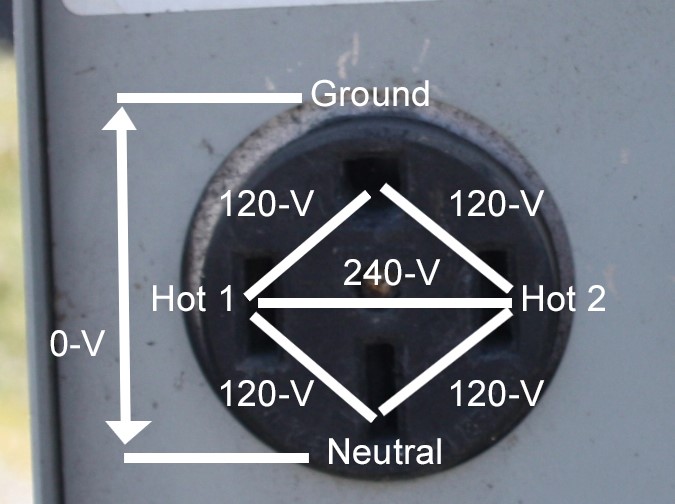
Hot 1 goes to one side of a 50-amp distribution center, while Hot 2 goes to the other side. Each provides 120-volt power to the circuit breakers on the respective side so you can run two roof air conditioners at one time. As I’ve always stated: I am a handyman and not an electrician. So this information came from several discussions with electrical expert Mike Sokol over the years. Here is a good article explaining it.
What the adapter does
So when you are looking to plug into a 50-amp receptacle for use in a 30-amp rig, the adapter basically disconnects the Hot 2 lead and provides 50-amp, 120-volt power to your distribution center. However, you will have a 30-amp circuit breaker as the main breaker.
If you use a 50-amp with a 30-amp Y adapter, it will split the Hot 1 and Hot 2 to the individual 30-amp female adapter. You can find molded adapters on Amazon here.
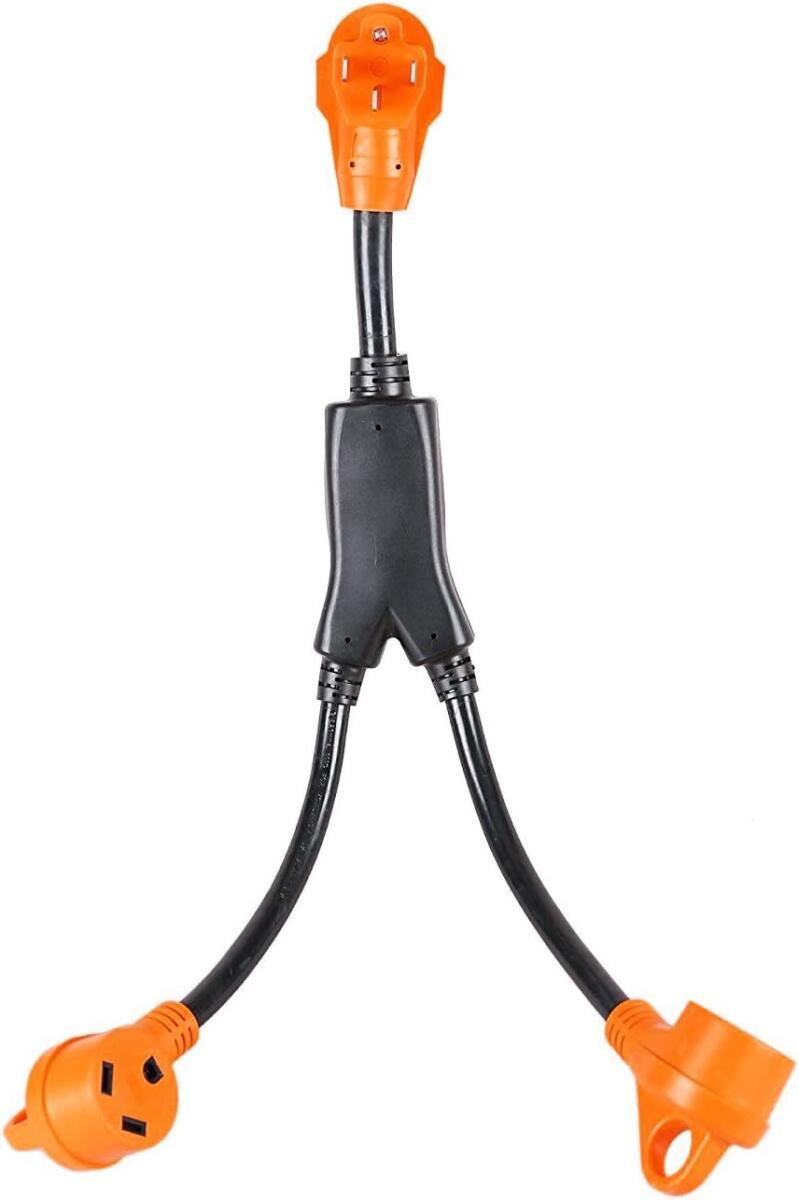
This would give 120-volt power with 50 amps to each plug, and looks like this.
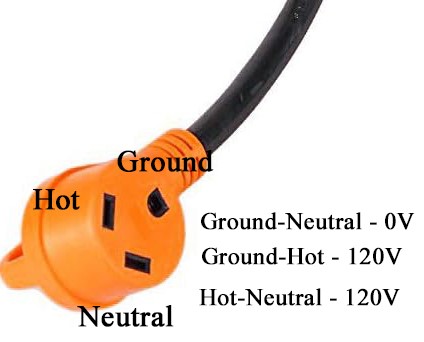
This type of adapter would require another adapter at the female 30-amp plug to connect an outside heater, assuming it is a typical 20-amp male plug in.
Limit the number of adapters and connections
I believe it is best to limit the number of adapters or connections in a given sequence. Therefore, a better option might be a Y that has a 30-amp plug and a 20-amp female plug for your heater. The description is: NEMA 14-50P to TT-30R and 5-15R Dual female V splitter, and you can find a molded one on Amazon here.
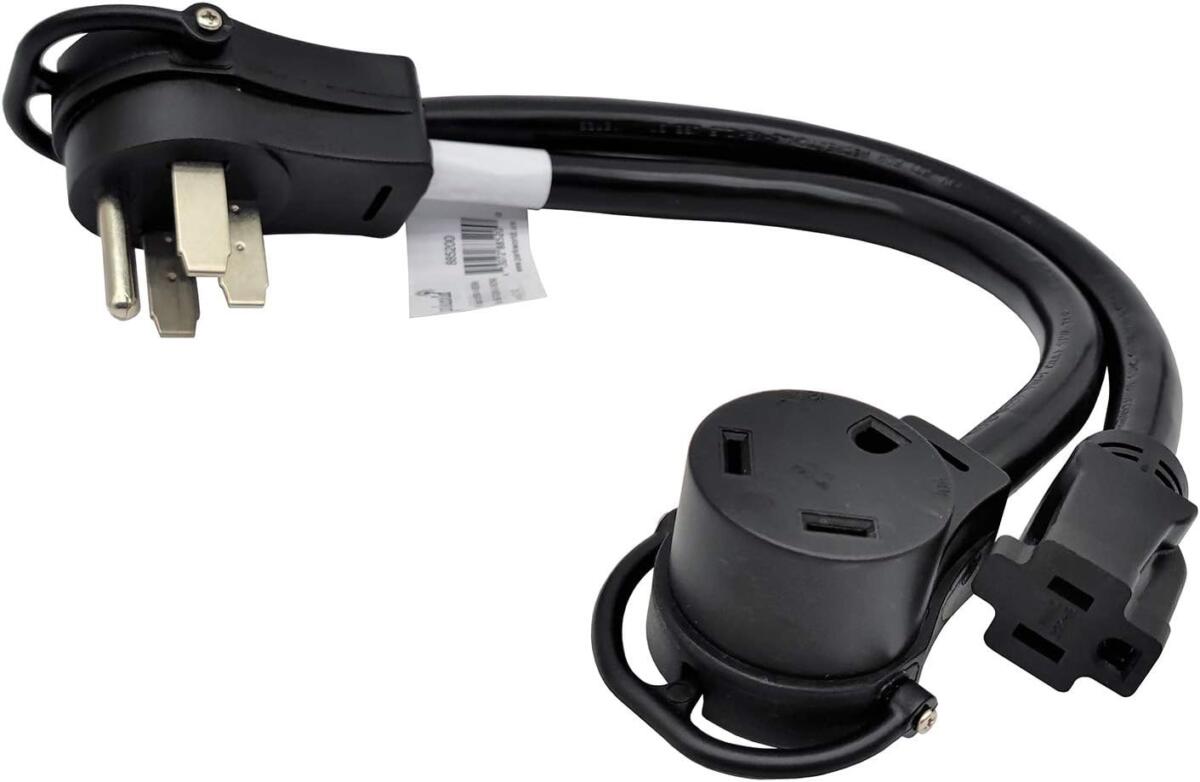
I have seen these in campgrounds and according to etrailer.com, Camco, and several other suppliers, they are safe to use. However, I would suggest using a surge protector and energy management system like a Southwire Surge Guard or Hughes Watchdog.
You might also enjoy this from Dave
The ABCs of RV terminology: Every word and term you should know as an RVer
It is beneficial to know the common terminology of the RV language and its components. Just like any other language, there are many words or descriptions that are either borrowed from other areas or are just plain “slang”. Knowing the nomenclature (no, not the guy from “Jersey”, Norman Clature) will make it easier to communicate with your fellow RVers and even technicians. Here are some of the most common terms and meanings.
Dave Solberg is a leading expert in the RV industry and the author of the “RV Handbook.”
Read more from Dave here.
HAVE A QUESTION FOR DAVE?
Send your inquiries to him using the form below.
##RVDT2409


Sounds like a good idea however does the circuit for the heater have over current protection and since it’s outside and potentially in a wet area also have ground fault protection.
Thank you, Dave! 🙂 I had no idea tbat such splitters exist. Thanks for furthering my education and knowledge! Have a great day and safe travels! 🙂
This is actually a potential fire hazard as there is no protection for overcurrent on the 20 amp outlet. If your RV is plugged into the 30 amp outlet, the main breaker in the RV should limit current on this leg to 30 amps, but without a circuit breaker the 15 or 20 amp cord to the heater would see 50 amps if there was a short circuit, which could easily cause a fire in the cord to the heater.
There seems to be a safety issue here. You have two 30 amp receptacles with 50 amp breakers. This will provide more amps than the wiring can carry, the result is heat and possible fire between the splitter and the breakers in the camper along with the outdoor heater.
The real question is- Can you do it, but should you do it. My answer is NO!