


Dear Dave,
I have 50-amp service. I have a Norcold 4-door refrigerator/freezer with an icemaker. Model 1210IM. If I take the refrigerator plug that goes into a receptacle and unplug and plug into an extension cord directly, and plug into a 20-amp receptacle on my house, would I be able to get my refrigerator cold? I would not be plugging the coach in at all. Or would I still need to have 50 amps to cool the fridge? —Bob, 2022 Winnebago Vista 35N
Dear Bob,
The short answer is yes. However, it is important to understand the power needs of the refrigerator and what you are plugging into.
According to the specifications, the Norcold Model 1210 is a four-door, residential-sized refrigerator designed to operate on either 120-volt power or LP gas. It is designed for RV use and is often called an absorption refrigerator.
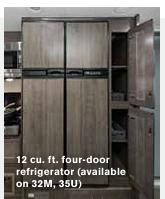
Here is a clip from the Vista brochure which shows this RV fridge model was available on the 32M and 35U. The brochure does not show a 35N available in 2022.
According to the service manual, the 120-volt requirements are as follows:

Your refrigerator is currently plugged into an outlet in the back of the compartment that is wired directly to the distribution center and a 20-amp circuit breaker. Here is the schematic from the Winnebago website. (Have I mentioned I love Winnebago questions?)
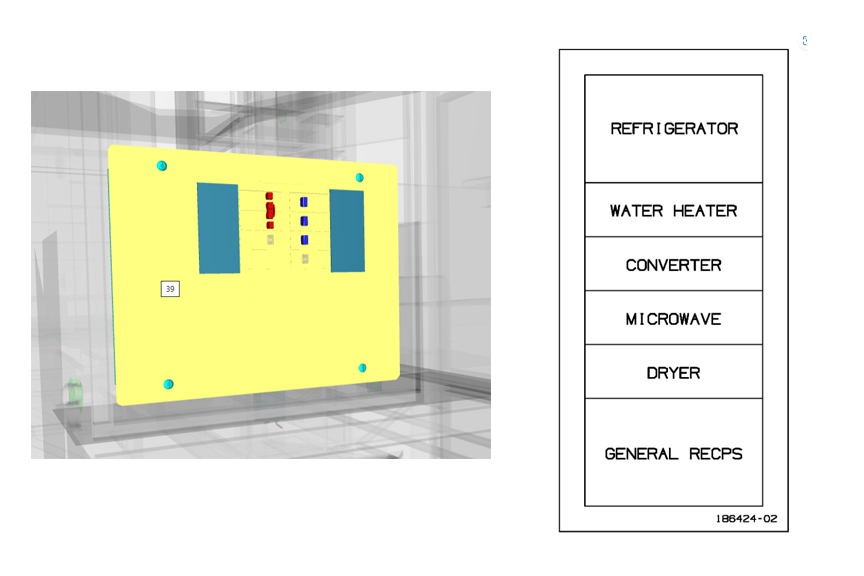
The right, 50-amp circuit breaker feeds the refrigerator, water heater, converter, microwave, dryer, and general receptacles. This is a 15-amp circuit breaker that goes directly to the plug-in with typical Romex wiring. This would be very similar to the outlet you have in the garage.
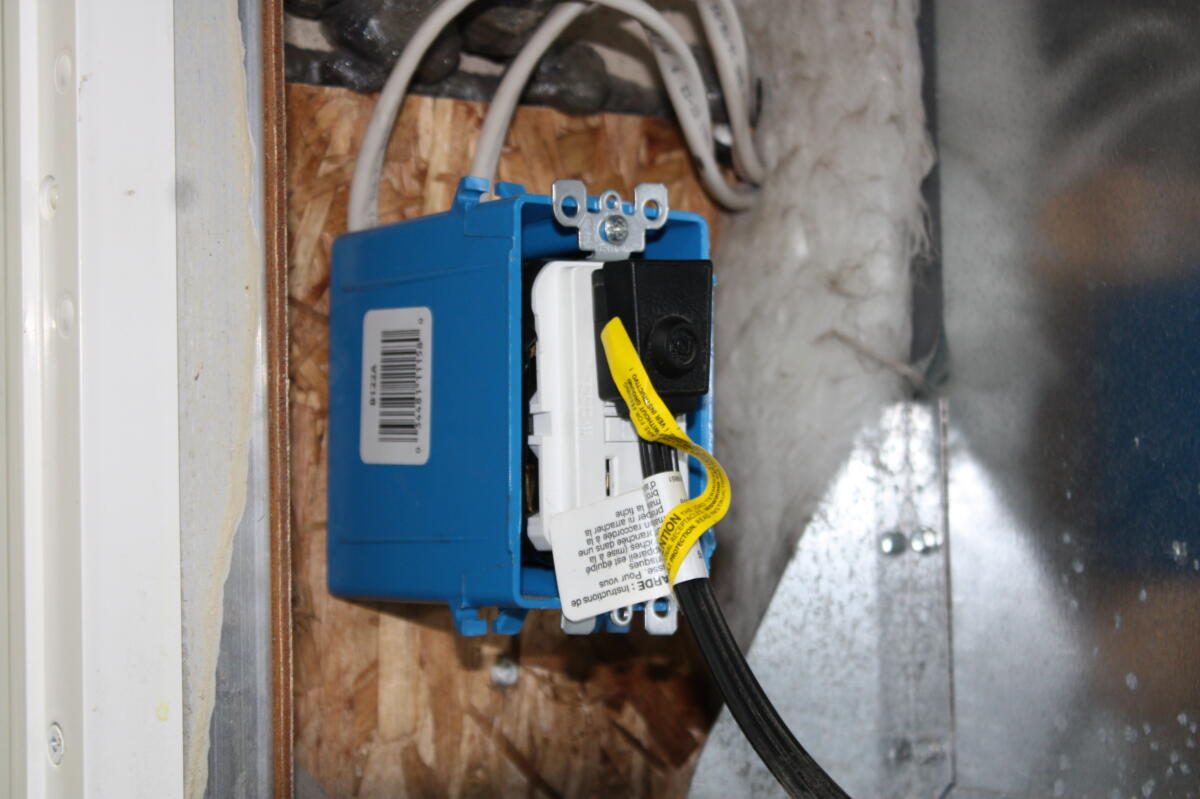
Verify your residential outlet
Most garage or house outlets are on a 20-amp circuit, which, in theory, would be enough power. However, most are also “ganged” or wired to other outlets in the garage, which might have an appliance plugged in that will also draw power. Items such as a freezer, air compressor, or even ceramic heater will be drawing from the same circuit. If they all cycle at the same time, it could overload the circuit. Just the RV fridge alone should not be an issue, so it is a good idea to verify what else might be on that circuit.
Also, make sure you have an extension cord that has the correct gauge for your refrigerator. A 4-door mode will have two heating elements and could draw as high as 10-amps or more. So make sure it is at least a 12/3 heavy-duty cord, which means 12-gauge that is rated for 15-amps and three wires: Hot, Ground, Neutral.
Then, make sure the unit is level to the specifications provided by Norcold, which is 3 degrees side to side, 6 degrees front to back. This will ensure the rich liquid solution used in the absorption process in the RV fridge will flow back down the zigzag cooling unit tubes by gravity. Otherwise, it will pool in a corner, overheat, and start to flake, eventually clogging the tube. This is, unfortunately, a common issue as owners are not always sleeping in the unit and don’t think about leveling the rig in the driveway.
You might also enjoy this from Dave
Can I run RV’s residential refrigerator overnight when not plugged into shore power?
Dear Dave,
How long will the residential refrigerator in my RV run when not traveling or hooked up to shore power? Can I assume it will be fine overnight at a rest area? —Randy, 2022 Flagstaff 8529RLS
You should enjoy these questions Dave answered
- Do ‘Tire Saver Ramps’ prolong the life of RV tires?
- Why did the lithium battery explode and flame up?
- Plugged RV’s 30-amp shoreline cord into 50-amp outlet; now RV won’t run
- How long will an RV 12-volt refrigerator run with two batteries?
- Can I tow a fifth wheel with a 1/2-ton pickup?
Dave Solberg is a leading expert in the RV industry and the author of the “RV Handbook.”
Read more from Dave here.
HAVE A QUESTION FOR DAVE?
Send your inquiries to him using the form below.
##RVDT2578

We always pre-chill the frig before leaving on a RV adventure.
We do too. I start by running the generator for 2 hours (that takes care of the requirement for running the generator for 2 hrs. each month). While the generator runs I turn on the refrigerator to start it cooling. After 2 hours, shut down the generator and plug extension cord from house into the RV to finish cooling down the refrigerator. We do this every month before we leave on a trip; have been doing it this way for 12 years with no problems.
We put frozen gallon jugs of water in the refrigerator and freezer to help pre-cool them the night before. Takes much less time to pre-cool. Plus, you have drinking water available for use when they thaw.
A clarification question- AC & LP absorption RV refrigerators running on AC power still need 12vdc power for the control panel and interior light. If the frig is plugged into an exterior 120vac source and the coach is otherwise not connected to shore power, where does the frig get its 12vdc power? Does the frig have its own converter, or does it draw off the battery?
If the latter, running my battery down before a trip to cool a frig doesn’t seem like a smart idea. I’d be better ahead to plug the whole coach into shore power via an adapter and use the available 20A to run both the frig and the onboard converter. At least, that is what I currently do.
This is a great question Jim. I wonder if the circuit board and lite system have a converter chip or something. Sort of like the small 12v-24v appliances with a plug-in converter for 120 to 12-24. LIke awning lites for example. What say you Dave?
Any12 volt devices including the circuit boards on the fridge, water heater and furnace are powered by the trailers converter when plugged into shore power. The converter also charges the battery. You also need 12 volts for the thermostat.
If not connected to shore power and the battery is depleted, none of these will work.
Hi Bob: I think the question is if the fridge is connected to 120v directly, i.e., with an extension cord, not thru the Rv system – where would you get the 12v-24v to operate it? I guess the battery would provide that……. but the Rv isn’t connected to 120v so the converter wouldn’t work either. ?
But what about the fridge’s 12V requirements? Wouldn’t that eventually run the house batteries down, since the camper can’t be plugged into a receptacle?
1/2 tons are for groceries and mulch.
One unmentioned huge factor is tires. Most original equipment tires on wimpy 6 lug wheels will be like driving on jello with a heavy 5er on top. In my opinion, go for safety with a 1 ton dually and the power train that suits you and your load.
Good point Jim! Yes, the eyebrow board, thermistor, and module board need 12V power to function and just plugging into a 120-volt outlet will not work. The ref will draw from the house batteries in this case and will most likely last for about 2-3 days depending on the state of the batteries. So it would be best to plug in the shoreline cord and shut everything off except the ref and the converter which will keep the batteries charged. Thanks for the catch!
Thank you for the electrical and RV refrigerator discussion, Dave! Thank you, too, for the afterward conclusion!