


If scary movies leave you with nightmares, turn your head away from this paragraph. In 1963, Hitchcock used feathered creatures in “The Birds.” Five years later, swarms of zombies were the plague in “Night of the Living Dead.” If spiders give us the creeps, then what about “Arachnophobia” in 1990? What swarming thing will chill us in 2024? No streaming TV or theatre required—cicadas may be coming to a travel venue near you!
Cicadas—screamers with bloodshot eyes
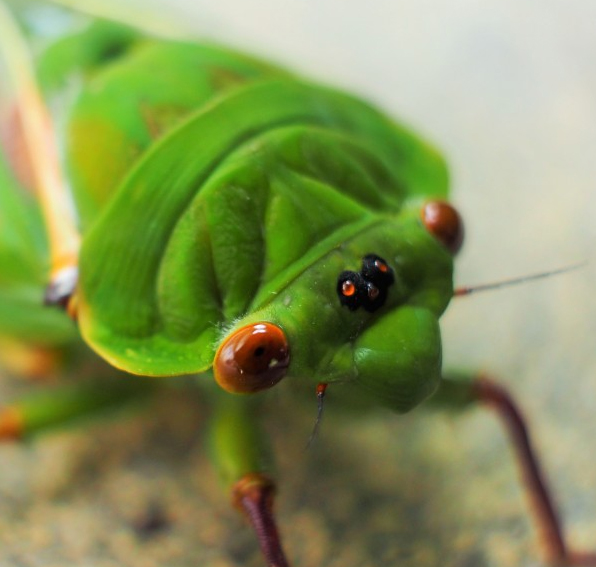 Cicadas are the stuff of a horror film. They’ll light up your screen with bloodshot eyes. And an audio track? A single cicada has a scream that will curdle your blood. Now imagine thousands, tens of thousands, millions of the little buggers going off in your ears, simultaneously.
Some cicadas are insects of a cyclical nature. This year, two groups (known as broods) are going to be seemingly resurrected after long sleeps. Brood XIX, slumbering for the last 13 years, will blast back to noisy life. Not to be outdone, Brood XIII is coming back after a 17-year hiatus. They’ll come back, but unlike zombies looking for victims, they have one thing on their minds: Sex. Yep, find a mate and lay eggs. According to Cicada Safari, “It is not common to have a dual emergence between Broods XIII and XIX. They occur once every 221 years, and the last time these two broods emerged together was in 1803. Thomas Jefferson was President of the United States, and Lewis and Clark started their exploration of the Louisiana Purchase.” [Everything you want to know about cicadas is on Cicada Safari, plus they are asking for the public’s help in tracking them.]
Cicada mania rundown
If your travels take you east of the Mississippi, it may be hard to miss them. Here’s the rundown for cicada mania. Looking at the list, forget we said “east.” At least one state on the west of the ‘Sip will play host.
Brood XIX: Alabama. Arkansas. Georgia. Illinois. Indiana. Kentucky. Louisiana. Missouri. Mississippi. North Carolina. Oklahoma. South Carolina. Tennessee. Virginia. These states will see (and definitely hear) the cicada swarms from mid-May through June.
Brood XIII: Iowa, Illinois. Indiana. Wisconsin. Though only in a small number of states, you won’t be able to escape the onslaught. This brood likewise will debut in mid-May and stay on stage through June.
When the soil gets warm enough, about 64 degrees, cicadas, buried at about 8” underground, come crawling up. As we said, finding a mate is the game plan. And like roosters, you can thank the male of the species for all that noise. As you may have guessed, Mr. Cicada (and all his fellows) “tune up” in order to attract a Mrs. The fact that they synchronize their screeching makes their mating calls all the more deafening.
Cicada nightmare recipe
Is there anything good about your own “Nightmare on RV Travel Street?” Yep. For the culinary adventurous, here’s a note from Montclair University: “Unlike other bugs that can have ‘crunchy exoskeletons and wings,’ teneral cicadas have a nutty, green, almost peeled shrimp-y look, taste and texture similar to the crustaceans.” Says Cortni Borgerson, an Assistant Professor of Anthropology, “You can add them to any of your favorite dishes.” You might add the recipe for “Emergence Cookies” to your list. High in protein, low in fat and cholesterol, you can find it here.
Happily, the screaming nightmare only lasts a few weeks. Mate. Lay eggs. Die. Let the final credits roll. You can relax … for the next 13 to 17 years, when the next brood returns.
##RVT1140b


Thank you, Russ and Tina! Looks as though we’ll host Brood XIX here in Tennessee. Safe travels! 🙂
I LOVE cicada! They’ve always been a sign of a hot lazy summer to me. Also I use them as an unofficial weather predictor- the earlier they start shrilling in the day, the hotter and more humid that day will be.
With my Tinnitus I hear them all the time anyway, so maybe the sounds will cancel each other out this spring.
We actually like the sound. Warm weather is here to stay!
Cicadas only live 2-3 weeks after they emerge from the ground. They do live underground for 2-17 years, hence the 17 year cicada (locust) name. they also do very little damage to plant life. The females do lay their eggs in the tree bark, but it does not hurt the tree.
We have cicadas every year here in Texas, and they don’t “scream”.