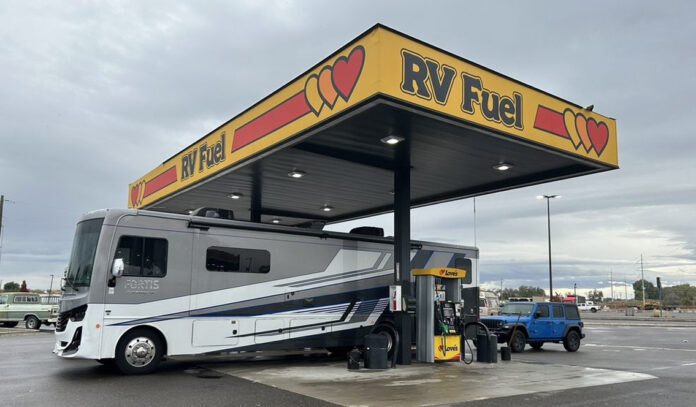
Gas prices have started their annual spring climb—and, yes, we’re right on schedule.
According to AAA, the national average price for regular gasoline has edged higher as refineries begin switching to summer-blend fuel and spring travel demand builds. It happens most years. It rarely feels good when it does.
The increase so far looks modest. But it signals a shift RVers know well: Once March arrives, pump prices tend to drift north.
Why prices rise every spring
Two forces drive the change.
First, refineries transition to summer-blend gasoline. That fuel burns cleaner in warm weather but costs more to produce and distribute. During the switchover, supply tightens.
Second, demand rises. Spring break trips begin. Snowbirds move. Weekend road travel increases. More vehicles on the highway mean more fuel consumption.
When supply tightens and demand grows, prices follow.
The wild card: Middle East tensions
There’s also a geopolitical wild card in play.
Tensions in the Middle East—particularly involving Iran and Israel—have put oil markets on edge. A significant share of the world’s crude oil moves through the Strait of Hormuz. If shipping there slows or faces disruption, crude prices can spike quickly.
Crude oil accounts for roughly half of what you pay at the pump.
Here’s what matters for RVers: Gas prices often move on fear alone. Markets price in risk before any physical supply disappears. Even the threat of escalation can tack on 10, 20, or 30 cents per gallon in short order.
Right now, we’re seeing tension—not interruption. U.S. production remains strong. Supplies are steady. But if conflict widens or tanker traffic tightens, the typical spring bump could turn sharper.
The calendar says “seasonal increase.” The overseas headlines say “watch this closely.”
What this means for RVers
If you’re planning early-season travel, expect fuel costs to run higher than they did in January or February. That applies to gasoline and, often, diesel.
The good news? We’re not seeing panic spikes. Oil markets remain relatively stable compared to true supply-shock periods. That suggests gradual increases rather than sudden jumps—unless global events intervene.
Still, even a 15-cent increase matters when you’re filling a 60-gallon tank. Or two.
How to blunt the impact
A few practical steps can soften the blow:
- Fuel up early in the week when prices often dip slightly.
- Use fuel-price apps to compare stations along your route.
- Fill before crossing into historically higher-price states, if your route allows.
- Ease off the throttle. A few miles per hour can improve fuel economy in a big rig.
None of that stops seasonal trends. But it trims the edges.
Spring travel is almost here.
And the pump knows it.
RELATED
- State fuel taxes inch higher in 2026
- RVers hit harder as diesel climbs past gasoline again. What you can do
- RV need gas? Costco extends fuel station hours for more access
RVT1251b