

This week’s news insights are a bit different for the simple reason that this week has been a bit different in my world. I was invited to a product reveal of a motorhome manufacturer, who shall presently remain nameless, to look over the 2027 offerings, and this happened to be in Alabama.
For a lot of reasons, I don’t fly. I have an RV, but I also own a car, and most of the country isn’t horribly far from my home base in New Mexico. Now, the interesting thing is, the car I have is a VW ID.4, which we bought after the tax incentives disappeared, and used EVs became super bargains.
Our intention was to just piddle around town in a car that was a remarkable bargain used car, but I thought I’d try a long road trip from New Mexico to Alabama in the car. That means two things: A story, of course, and an endless stream of podcasts, including those with RV news to reflect upon. Here are some of the highlights.
NPS / Jonathan Shafer
Our behavior is lousy, and they’re taking away the toys
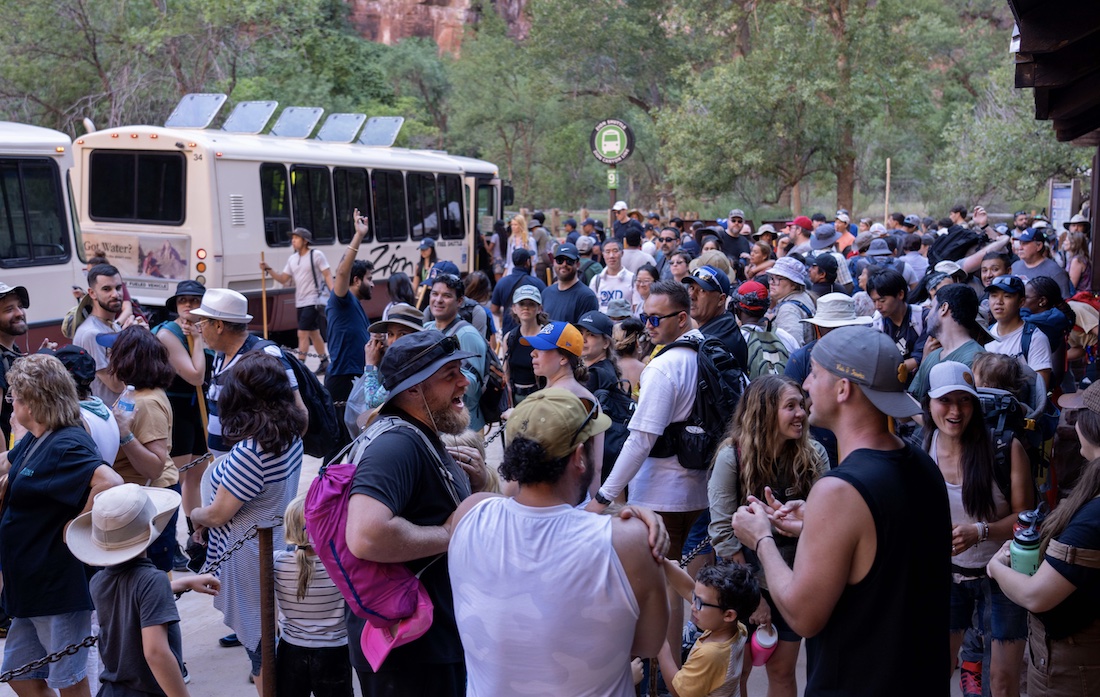
I really like Jason and Abby Epperson’s podcasts—RV Miles and PARKography. This first segment comes from PARKography, where Jason reported that the BLM is proposing major changes to boondocking near Zion National Park.
Boondocking near the entrance is a big pressure relief valve for the very popular destination, where campsites can fill up well in advance. A lot of people choose to use our national lands, managed by the Bureau of Land Management, to stay outside the park.
Their shared story was that the BLM was seeing more damage to the lands, including soil compaction, as well as people leaving trash and even human waste, along with putting up unpermitted fire pits. No surprise, some people are ruining it for many.
The BLM is considering closing off much of the 14,000 acres around Zion and directing people to specific areas, as well as paid campsites. This includes the land around Utah State Route 9—the main gateway to the park. If you’re wondering, yes, this includes Hurricane Cliffs, Gooseberry Cliffs, and Smithsonian Butte.
This is the first story where the moral is that some people’s moms didn’t teach them well.
Stay on the paths already
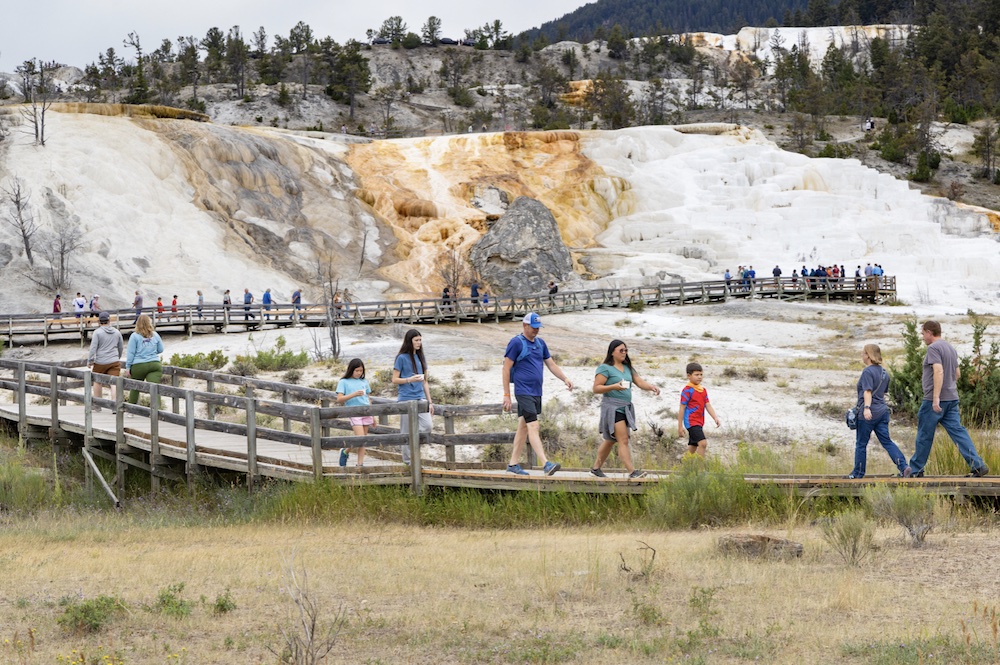
A second story in Jason’s coverage centered around a man from Texas who wandered off the designated paths at Mammoth Hot Springs in Yellowstone, causing damage to the natural landscape. (We covered this last week.) Apparently, he’s not alone.
But he does get to become a guest of the local jail, where he will be spending five days. Apparently, park officials are sick of these misdeeds and are doing more to teach them what their moms should have taught them—common sense and respect for the signs.
From the news report, apparently, some 20 people have died in recent years by doing the same thing as our friend from the Lone Star State, where they break through the potentially thin crust and boil to death in the steamy water.
Also, as for my long drive, why is it every time I curse someone’s driving, they have a Texas plate? Do we need to just put the whole state on a time-out?
 Long drives can be dangerous
My ears perked up when I heard Mike Wendland interview a doctor about the dangers of long drives, since I was listening to an episode of the RV Podcast while enduring a long drive, myself.
What was said was that sitting for hours watching bugs splatter on your windshield can actually be very unhealthy for you. Blood clots can form in your legs, causing arterial problems, but those blood clots can migrate and cause lung problems, too. It’s not good.
Unfortunately for those of us who have to scroll through a lot of years to get to our birth year when filling things out online and who also displace a lot of water in the pool, gulp, it’s especially bad. The doctor shared some tips for taking breaks and also simple exercises that can help potentially minimize the chance that your RV journey might include a ride in a shiny red ambulance.
(Hint: We have a story about this coming in tomorrow’s RV Travel newsletter.)
 Going outside can be good for your health

Finally, on another episode of the RV Podcast, Mike Wendland shared a press release he had been sent by Daniel Stone from TGA Mobility.
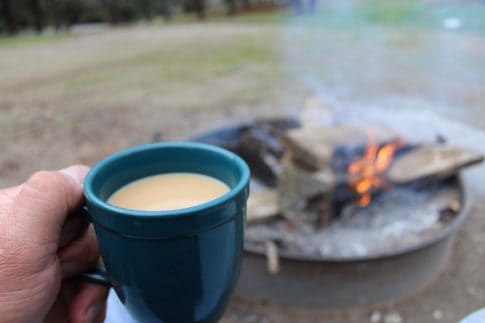
In the press release, Stone said that many of our sleep issues are related to our exposure to daylight. His claim was that you should get at least 10 minutes of genuine outdoorsy sunshine before 10 a.m., which helps your internal body clock establish a rhythm.
You should also experience a darker environment at night than the one you woke up to.
Apparently, doing this simple thing can help you get to sleep at night and sleep better, as well.
Sleep deprivation affects balance and reaction time. According to the news release, fixing your sleep pattern can actually help you in these areas.
This could explain why we just sleep better when camping—we spend more time outside.
To see all recent news for RVers, click here.
RVT1257b


How did the drive go with an EV Tony?
I will have a full report and I just got home about an hour ago, but it was mostly uneventful. The worst part was between my ears where there was a bit of anxiety wondering if an upcoming charge location would actually be functional. It was. Total of about 2,800 miles and zero real issues. Plus whoever invented massaging car seats is my hero!
I am now “of a certain age,” so knee-length compression socks are a necessary part of my travel days to help reduce the risks of blood clots.
Hey Tony. Here in west Texas we have had the same issue with New Mexico drivers. Bad and inconsiderate drivers are everywhere regardless of where they are from. Lately, because of data center construction, we been getting a rash of bad drivers from many states.
Yeah, I found that the bad drivers never seem to be where you are but where you’re visiting! I bet Texans coming to NM wonder how far our heads are…well…you know. 🤣
We are completing our 9th winter in Texas Hill Country. Many Texans can be the sweetest people. Don’t get me wrong, there are also any number with what I will refer to as entitlement issues. Encountered a plumber with this issue day before yesterday. But I agree with Tony. Put Texans behind the wheel and as a group, they can be the most inconsiderate or unobservant drivers I’ve seen. I swear 80% don’t know how to use a turn signal – or more likely don’t care.
I wonder if it’s just people from more populated areas just are more intense drivers? I grew up in L.A. and talk about aggressive drivers! Plus the best barbecue I ever had was in Texas (Hard 8 BBQ is my favorite) and I know lots of Texans who are wonderful people.
No matter where you are, my friend, some people treat the turn signal like a state secret, don’t let anyone know where you are going! 😊
Texas is experiencing a drought. This has caused a shortage of blinker fluid. To conserve the precious blinker fluid, many Texans have stopped using them.
😃 They can’t be telling people where they are going, they may want to follow. Anyway, they figure it is nobody’s business what they are doing next! 🤣🤣 and not ONLY in Texas, they are everywhere.
Not all people driving vehicles with Texas plates are native Texans. We native Texans are polite, caring people and drive with consideration of others. I agree that many drivers with Texas plates drive like they needed to “get there yesterday” and are training for the Indy 500.
I knew I shoulda taken that Texas jab out. I have some goooooood friends in and from the Lone Star State and I know some good drivers who hail from there too.
We are in Texas right now, having driven from the southern Hill Country to the Panhandle in the past week. Only 40 miles of the trip has been on Interstates, the rest on 2- and 4-lane state highways and farm roads. Yes, our RV has been passed by pickups going over the double-yellow line on 2 lanes and inconsiderate drivers have pulled back in 3 feet in front of our front bumper, causing me to slam on the brakes. But those drivers are everywhere we go, not just in Texas. And we have been amazed at the number of 4-lane, divided state highways we have been on in remote rural areas. My beef is with TX DOT for having 75 mph speed limits on narrow, winding, hilly, no shoulder farm roads!
Boiled to death in the steamy water. It is called “natural consequences” and works perfectly to “thin out the herd”.
5 days in jail AND a hefty fine to help recover the cost of cleanup should be the minimum in any boondocking area whether roadside pits (as we have in Newfoundland/Labrador, we call it gravel pit camping) or Crown Lands (similar to BLM).