


Over the weekend, we had a garage sale. As I sat under the tree slowing foot traffic with my uncanny ability to communicate, I felt something crawling on my neck. It was a fairly cool morning and there were no mosquitos in sight, so I thought it might just be some other type of bug and reached up to pull it off.
Caterpillar
What I found was a fury caterpillar that was about two inches long and, unfortunately, I squished it somewhat with my fingers. As I looked at it, I noticed some liquid on my fingers and felt an itch on my neck but didn’t think too much of it. The poor guy did wiggle around and seemed to be OK, so I placed him on a nearby Hosta plant.
The next day, my neck started to itch and, of course, I could not leave it alone. That night, my neck broke out into a rash and the itch was even worse. It is ironic because I had just gotten a post from Birds & Blooms that listed several caterpillars to be aware of. I did not take a picture of the fuzzy beast as it did not seem to be an issue at the time. However, this is what it turned out to be.
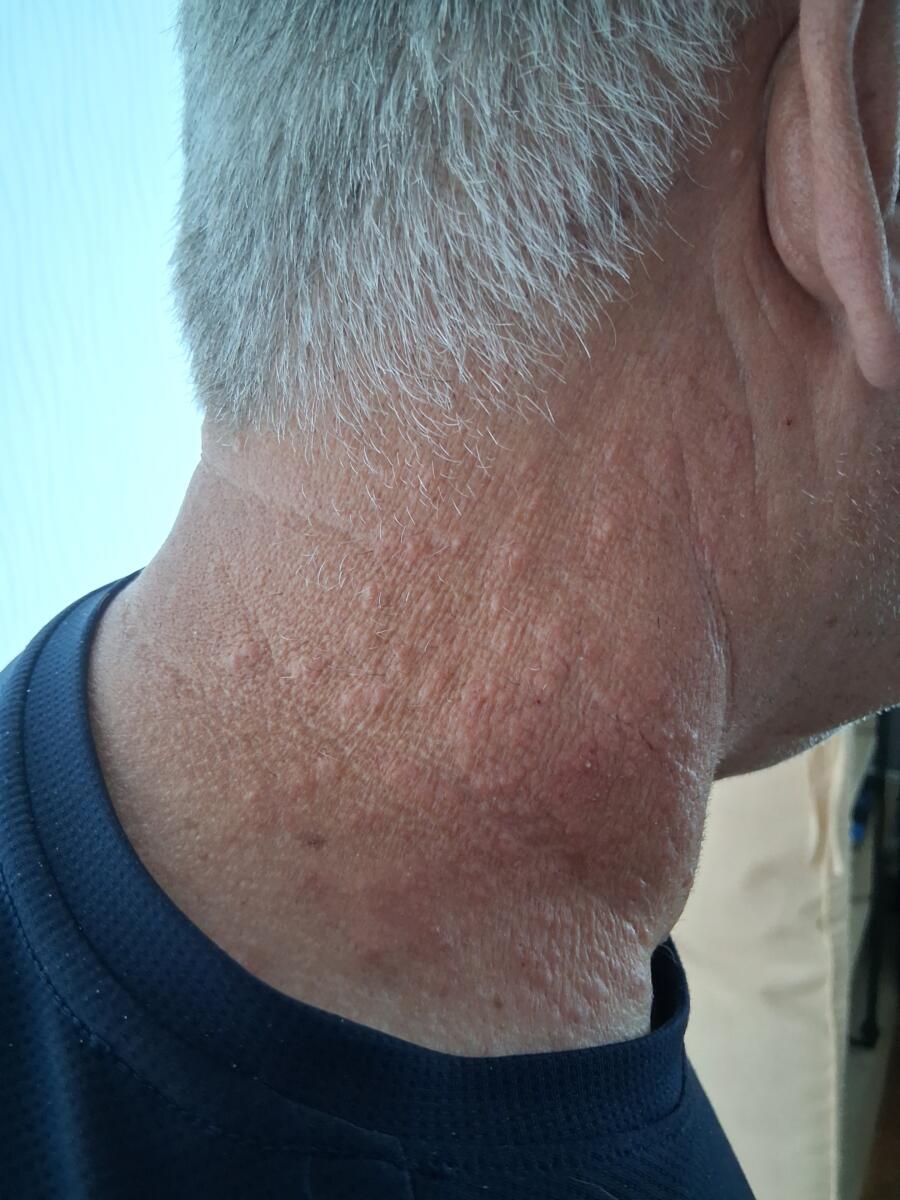
My best guess is that the caterpillar was a white-marked tussock moth caterpillar, that looks similar to this one listed on Birds & Blooms.
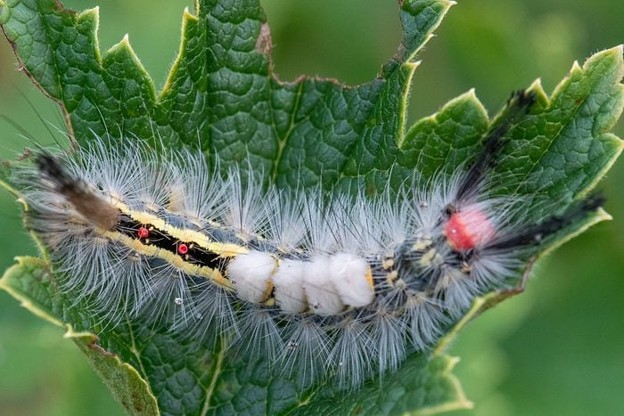
Some caterpillars have barbed bristles
According to my research, the hairs of the white-marked tussock moth caterpillar are actually barbs or spines that are used for defense and will penetrate the skin. They are not poisonous but do create an irritating effect such as fiberglass, and, thus, the rash. I do go into a highly reactive rash state when I come in contact with fiberglass and even some plants such as poison oak and ivy.
The treatment is to use a large piece of tape placed on the area and pull it off to get the barbs out of your skin, wash the area thoroughly, and apply ice for a short period of time. Then treat the area with a rash cream like hydrocortisone.
So, I went back to the article to see what else we should be aware of. There are several caterpillars that can cause irritation.
Saddleback caterpillar
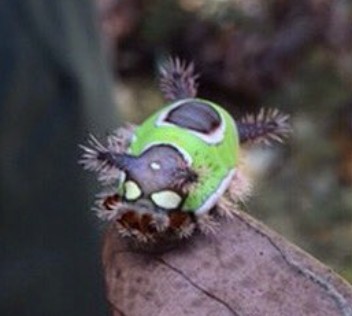
This caterpillar has a green “saddle like” middle, which gives it its name. The spikes are actually poisonous; however, they mostly cause irritation and swelling in humans. The caterpillar turns into a moth called the saddleback moth.
Milkweed tussock moth caterpillar
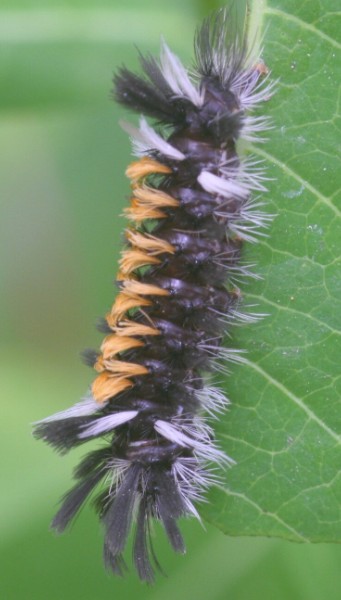
When I was younger, I walked beans for my grandparents and the fields were full of mustard and milkweed. Although this plant is essential for monarch butterfly caterpillars, it also is host to other caterpillars such as the milkweed tussock moth. This caterpillar also has fuzzy hairs that can break off in the skin and cause the same irritating rash symptoms. These barbed bristles are called urticating setae.
There many more caterpillars and bugs that you should be aware of. Therefore, it is important to research the area of the country you will be RVing in and educate yourself on what to look for.
You might also enjoy these posts from Dave
- RV’s warning decals are peeling off. How can I replace them?
- Do I need to change oil in inverter generator as often as recommended?
- How long will an RV 12-volt refrigerator run with two batteries?
- Can I tow a fifth wheel with a 1/2-ton pickup?
- Is it okay to use a pressure washer to clean an RV exterior?
DAVE HAS ANSWERED MORE THAN 1,200 readers’ maintenance and repair questions. Read a directory here. There is so much to learn!
Dave Solberg is a leading expert in the RV industry and the author of the “RV Handbook.”
HAVE A QUESTION FOR DAVE?
Send your inquiries to him using the form below.
RVDT2938
