

When you’re packing, did you ever get that suspicious feeling you forgot something? I get that feeling every time and have had to calm my nerves knowing that I’m not adventuring into the deepest, darkest jungle. I’m staying within the somewhat civilized world. In fact, we had friends over last night, and this is what we talked about.
So there was no issue.
Until I went to share my latest and greatest with all of you, and that’s when I discovered I had left my Starlink dish sitting on my back porch. Ooops.
So that brings up how I get the internet and why I like redundancy.
Don’t use the Internet—You’re camping!
A while back I opined that it might be time to ditch campground Wi-Fi altogether. To be honest, I never use it after some of the experiences I described in that article, so that’s not an option for me.
I do tend to be a heavier user of the internet for a variety of reasons, including updating the podcast and website I create with my wife, Peggy, and also providing content to a number of other places, including right here on RVtravel.com.
We also watch streaming programs rather than over-the-air TV.
I know more than a few people have suggested that I’m in my RV and I should be enjoying nature. But the nature of the trips that we take is generally work-related. While I do enjoy wandering around among the wild and wonderful, there aren’t a lot of days where I just kick back and do little more than that.
In other words, no rest for the wicked.
Because of that, I have several redundant sources of internet, so while I’m really sad that Elon’s brainchild is sitting on my back porch, we have options.
How to get Internet in your RV
Regarding redundancy, my wife and I each have our cell phones on different providers. So we’re able to optimize whichever carrier is strongest where we are. Each phone also has the theoretical “unlimited” data plan that isn’t, but it’s sufficient to be a solid backup.
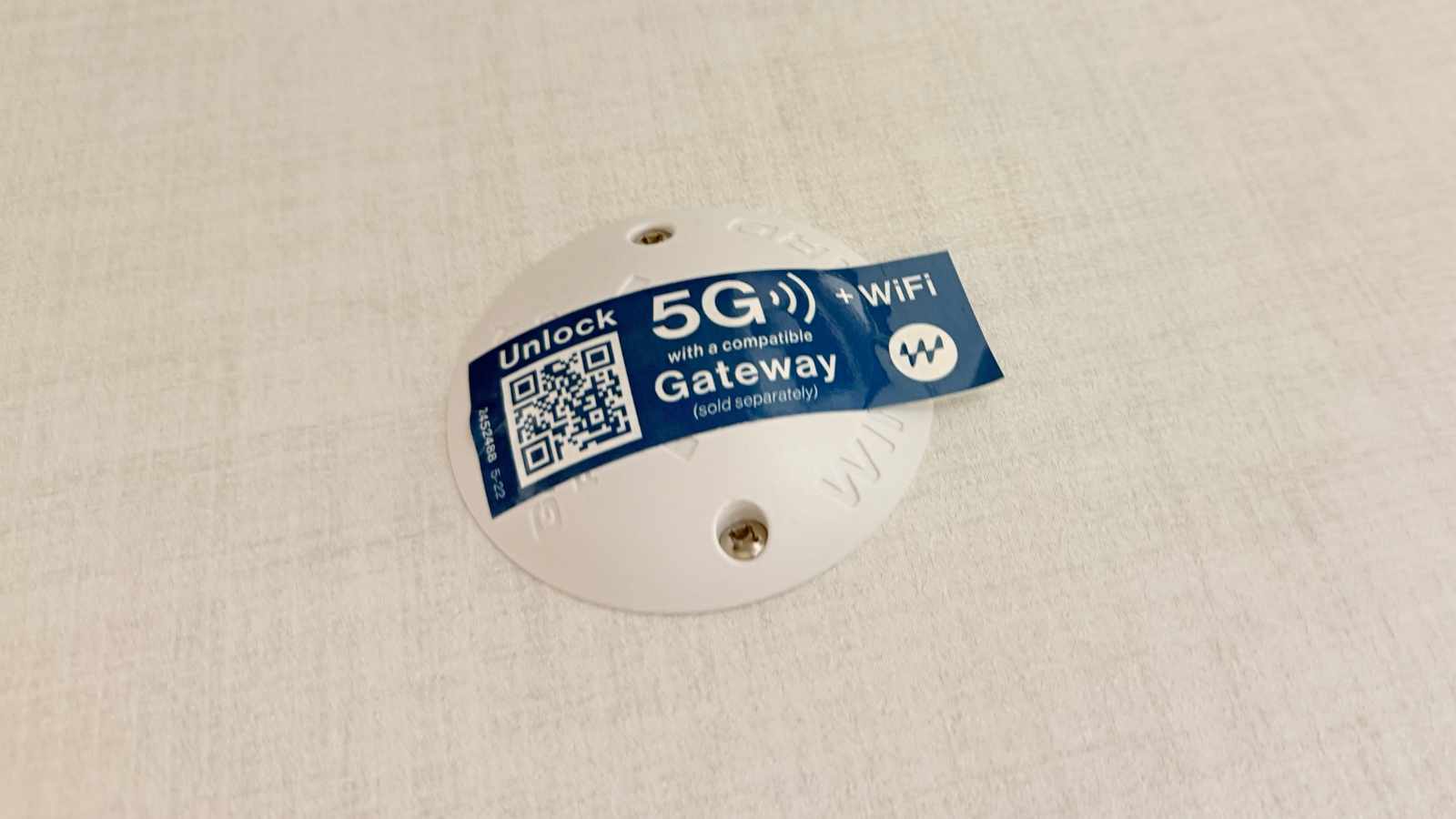
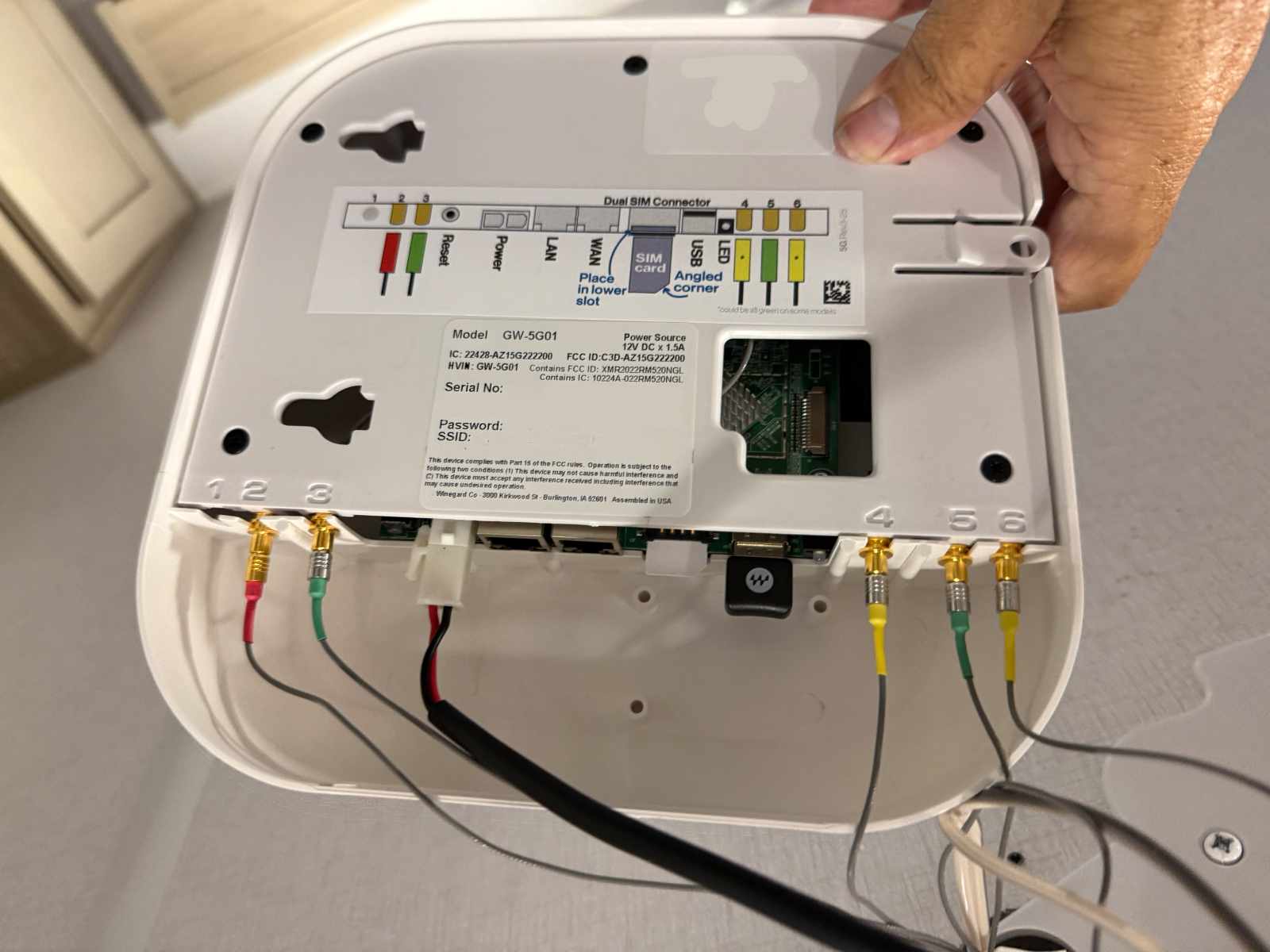
In addition, I worked with Winegard and have a 5G router system in my RV.
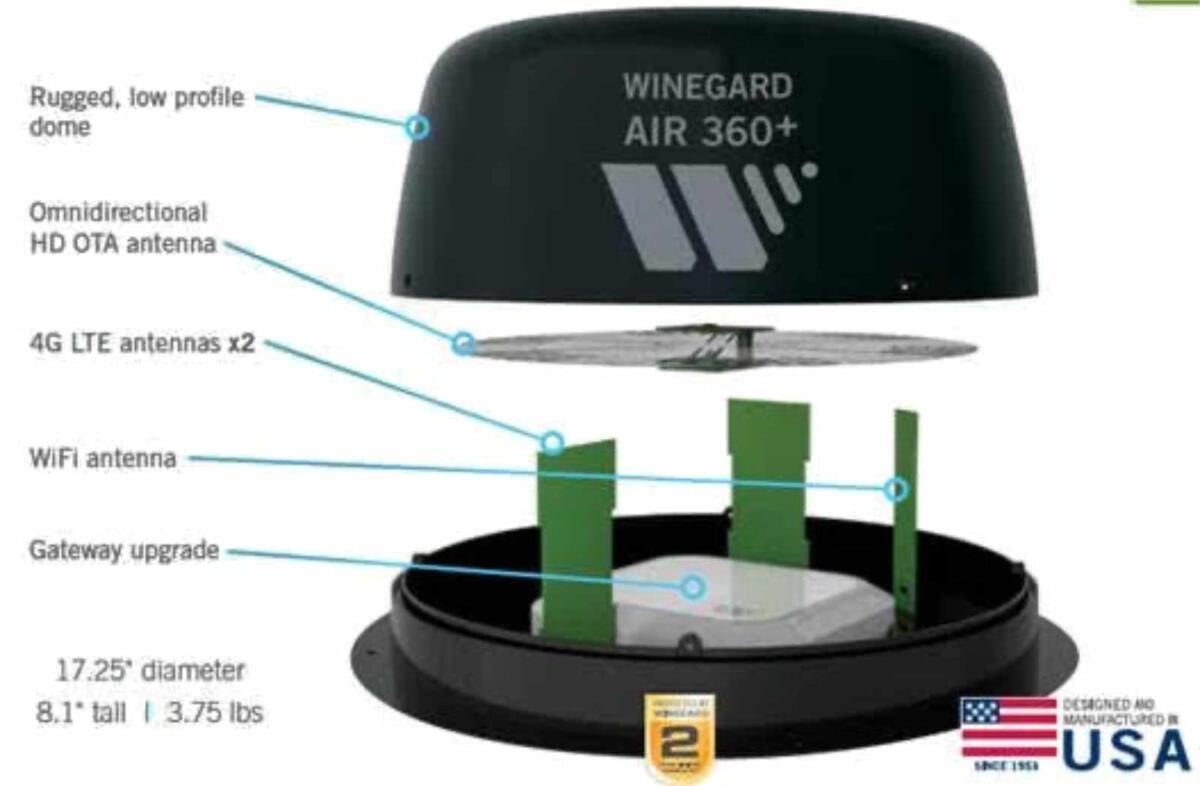
This is interesting because many newer RVs (ours is a 2025) have that round dog dish on the roof, and I have seen lots of questions about it. What’s under that thing are a number of antennae, including an over-the-air (OTA) TV antenna and several cell phone antennae, as well. There are also Wi-Fi antennae, so if you have a reliable source of Wi-Fi, like a Starlink dish, it can pick that up, too.
To make all the connectivity features work in the Winegard unit, you do need to purchase a router. We got the 5G model to best take advantage of the antennae’s performance capabilities.
The Winegard system can also have its own cell-based network, and ours has one from T-Mobile. There are actually provisions for two SIM cards so you could have two cell providers to, again, have redundancies.
So when I got to the campground and realized my goof, I just got on the app and ordered a month’s worth of cell data from the Winegard system. The cost is $99 for truly unlimited data. Not bad.
What else the Winegard system does
When I do have Starlink with me, which is on most adventures, the Winegard system is linked to the Starlink router, and it gets connectivity that way. So, why do I do this?
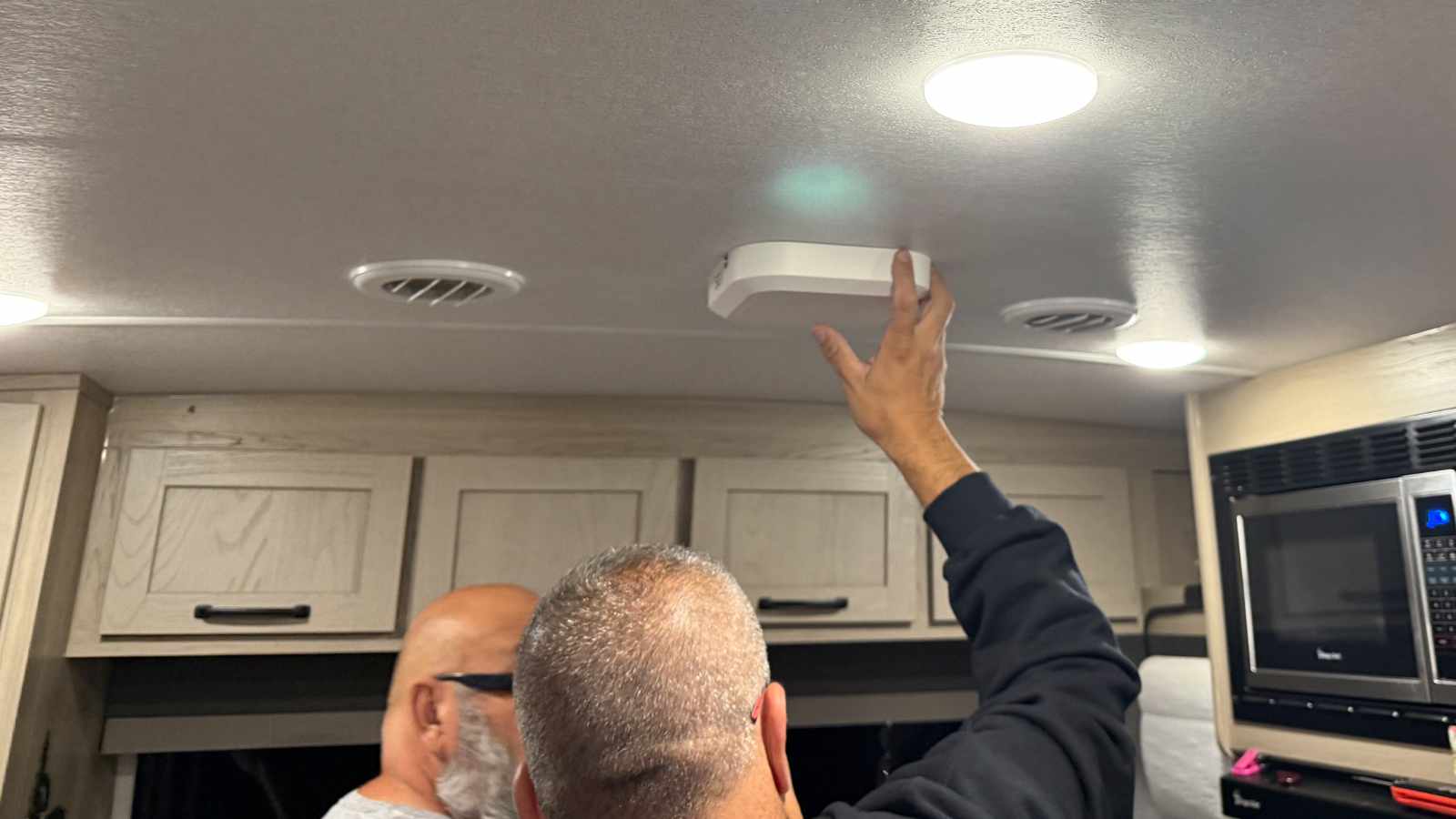
The Winegard system also has a number of remote sensors that it monitors. It monitors temperature and humidity. And I have sensors in various places that monitor for leaks because, well, RV plumbing.
There is a sensor on each entry door and one in the cabinet that holds the solar/lithium components in the trailer. I get notified if that cabinet door is opened or an entry door is opened.
So when it is attached to Starlink, such as at home, I just piggyback on that data and can monitor my trailer from my phone. But, when need be, I can light up the built-in cell system on the antenna, which I have done on this trip.
Now, I could use the Wi-Fi antenna in the Winegard system to jump onto a campground’s Wi-Fi, but we’ve talked about this. However, the provision is there.
T-Mobile works well
While Starlink does work just about everywhere, unless there’s some huge tree canopy or something like that, I’ve also been really surprised at how well T-Mobile has worked.
In fact, it even worked decently well in Quartzsite, which is often a black hole of connectivity except with Starlink.
The argument that we should disconnect when we’re in our RVs has merit. But remember, everybody travels for a different reason. This particular trip is specifically so I can go swap out a component on our trailer for something new and exciting.
Of course, I’ll share it with you when I have more information.
But if you’re needing, or wanting, to be connected on the road, there are so many options, and they seem to be getting better and better.
We also did a podcast episode with the folks from Winegard where we go into more details about the monitoring systems that can be linked to the rooftop antenna. If I had to store my RV in a storage lot, I wouldn’t even hesitate to have some sort of monitoring. Also, you could pair this cell-based antenna with cameras, if you’d like.
In fact, we have these solar-powered Wi-Fi cameras all over our home base. These would work equally well for those who want them for their RV.
So, while I feel silly that I left my Starlink dish on the back porch, it hasn’t slowed me down from sharing this story with you.
RELATED
- Starlink’s growing pains could matter to RVers more than anyone
- Starlink satellites are becoming a problem in space
- Why I will never, ever use campground Wi-Fi again
RVT1260


Been there, done that Tony. On my May 2024 birding trip to the U.P., my usual HH stop is at Harvest Village in Leroy, Michigan. Dan and Arlene are nice folks and very accomodating. Upon arrival, I commenced the setup for the one overnight and couldn’t find the AC power lead to the Starlink router. Turns out, I hadn’t been too particular when pulling the stuff out of its storage container. It’s a specialized lead, so not easily replaceable. So, back to Indian Lake we went! The trip is 2+30 each way, but we (Rosie and I) had enough daylight left in the day. If the destination had been anywhere beside the U.P. where connectivity is very sketchy, more solutions as you say.
I can only imagine the frustration going through stuff thinking “there’s no way I forgot that!”
$99 for unlimited data? Ouch. If you have to always have good access to the internet no matter where you park, yes Starlink is the current leader. We are T-Mobile phone customers (55+ plan); we get a hefty discount on T-Mobile Home Internet. For a much smaller fraction of your $99, we have internet most of the places we stay with our RV. The key with T-Mobile’s Home Internet is to not use it on the move. We always unplug it during travel and plug it back in once we park. Never have a problem.
If we need internet access with non-phone devices while we are driving, we have a generous monthly allotment of hot-spot data from our phones.
Why is using TMobile Home Internet on the move an issue?
You need to name the terminal that you left at home to “Kevin” (from Home Alone) to memorialize your mistake. Leaving a kid behind is understandable but your StarLink? Geez man, get it together! Just kidding, you can name it Nemo if ya want.
I’m curious why you dropped $99 for a temporary month’s worth of cellular data instead of just buying a StarLink Mini for $199 and having a permanent solution. You could put the new unit in the RV, set it to standby when you’re not using it and never transfer back and forth again.
Where were you with this great idea a week ago?
Sorry man, my bad! Here’s an unsolicited tip just in case you’re pondering just how clear of a view your StarLink needs.
Unlike trees, branches and wood that have radio absorbing properties, fiberglass, glass and most plastic is transparent to the StarLink radio waves.
Not convinced? Take a plastic tote, dump it out, lay it over your terminal and then do an obstruction test. You just built something akin to a radar dome.
If you own a hard top Jeep, it’ll work fine through the fiberglass roof. I’ll let your imagination take over on how to use your StarLink without taking it outside….Heh heh
We’ve been quite happy with Travlfi, which uses whatever cellular network is strongest in any given area. The equipment isn’t expensive and the service is reasonably priced. We’ve used it in both the US and Canada and the only limitation we’ve found is that you can’t get unlimited data in Canada.