

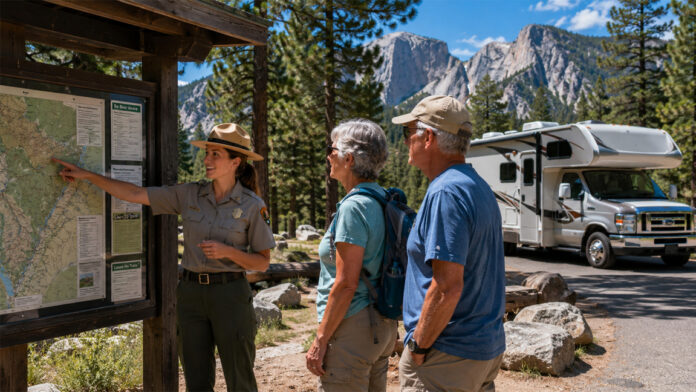
A new Interior Department communications policy changes what park employees can say after fatal accidents. Supporters say it creates consistency. Critics worry visitors could lose valuable safety information.
If you’ve spent much time visiting national parks, you’ve probably seen the news stories.
A hiker dies after falling from a cliff. A visitor succumbs to extreme heat. Someone drowns while trying to cross a swift-moving river.
Those tragedies are heartbreaking. They can also teach other visitors about hazards they might not have considered.
Now, the Department of the Interior has changed how the National Park Service and other federal land agencies communicate after fatal incidents.
Under an internal policy, park employees generally are no longer permitted to publicly confirm a death or discuss the severity of injuries. Instead, they may acknowledge that an incident occurred, identify its general location, say emergency responders are involved and note that the investigation is continuing.
Interior officials say the policy is intended to create a consistent approach across the department while protecting family privacy and allowing investigations to proceed.
The change drew attention after several recent fatal incidents in national parks received little public explanation from park officials.
One example came earlier this month in Yosemite National Park. After a visitor fell to his death from a waterfall, park officials released only limited information about the incident. News organizations reported the fatality, but the Park Service itself provided few details beyond acknowledging that an incident had occurred and that it remained under investigation.
Interior says the policy isn’t about secrecy
The Department of the Interior disputes suggestions that it’s trying to hide information from the public.
In statements to several news organizations, department officials said the guidance was developed to provide a consistent approach to incident communication, while at the same time, respecting family privacy, next-of-kin notifications and ongoing investigations.
Officials also said the policy is not intended to conceal fatalities or delay information. They add that the department will continue issuing public safety information and incident updates when appropriate.
Not everyone agrees
Some current and former National Park Service employees say detailed reports have long served another purpose.
Beyond informing the public, they say those reports often helped visitors understand real-world hazards—from dangerous river crossings and extreme heat, to cliff edges, wildlife encounters and fast-changing weather.
Their concern isn’t necessarily that every tragedy requires a lengthy news release. Rather, they believe factual information about serious accidents can help future visitors recognize risks before they head out on the trail.
What it means for RVers
Most RVers probably won’t notice any difference during a park visit.
Rangers will continue issuing warnings about immediate threats such as wildfires, dangerous weather, road closures and other emergencies.
The difference may come after a serious accident.
Future announcements from park officials may provide fewer details than visitors have become accustomed to seeing. Depending on the circumstances, additional information may instead come from county coroners, sheriff’s offices or other investigating agencies.
“Future announcements from park officials may provide fewer details than visitors have become accustomed to seeing.”
For RVers planning hikes, scenic drives or backcountry adventures, that may simply mean looking beyond the Park Service for a complete picture of what happened if a major incident occurs.
Parks remain remarkably safe
It’s important to keep the change in perspective.
America’s national parks welcome more than 320 million recreation visits every year. Fatal incidents are rare, averaging roughly 350 to 360 annually across the entire park system. Most are linked to medical emergencies, vehicle crashes, falls, drownings or environmental hazards rather than criminal activity.
Whatever your view of the new communications policy, one thing hasn’t changed: National parks remain among America’s safest and most popular places to explore. But they are also places where heat, steep terrain, swift water and wildlife deserve respect.
The best way to avoid becoming part of the next news story is the same as it’s always been: Pay attention to warnings, know your limits and prepare for the conditions may encounter.
Sources
Washington Post
People
Los Angeles Times
RELATED
- National parks could get billions for roads, campgrounds and other overdue repairs
- National parks are busier than ever, but funding hasn’t kept pace
- National parks drop timed-entry reservations in 2026; RVers may pay the price
- National parks avoid major funding cuts, a key concern for RV travelers
RVT1268b
