By Chris Dougherty Chris Dougherty is a certified RV technician. Here is a letter he received from a reader while he was serving as RVtravel.com’s technical editor.
Dear Chris,
What is the best way to find out if there is mold in our rig? What are the steps that need to be taken if mold is found? —Mike
Dear Mike, Mold is sight and mold is smell! Maybe I’ve been around these things too long, but I can usually ID a mildewed and moldy coach from a few feet away.
Aside from smelling the offending fungus, it is often visible, but not always, especially if it has seeped into the carpet and the subfloor is wet and rotting.
A mold test kit is another way to tell if there is something growing in the coach. There are a number of brands available on Amazon.
If mold is found, there are steps which can be taken to remediate the infestation. First and foremost is to find the source of moisture and stop it. In humid tropical climates, mildew and mold are commonplace, and you don’t even have to have a leak to get it. Most of us, however, usually find the fungus growing where there has been some sort of leak. Once the leak is stopped, the area has to be dried and cleaned. If the leak involves the inside of a wall or concealed space, it has to be opened up to air dry or the mold and rot will continue.
Amazon has a number of products and resources for mold remediation, and you can look them over here. Note that a hypochlorite solution (e.g., Clorox bleach) works very well, but can damage certain surfaces and materials, so be careful if you plan to use it.
Larry Dexter can’t seem to get rid of this garden tractor no matter where he travels. The sign says, FOR SALE. Been sitting awhile but should start: $400.
Wherever he camps with his wife Judy, the tractor goes on display out front for all to see. It got my attention as I walked by. I told him I wouldn’t be buying it for $400. “I won’t even give you four dollars,” I said. Larry laughed.
Larry and Judy collect Wheel Horse lawn and garden tractors — the kind you use to mow lawns. They live in Warsaw, Mo., but travel in their Chateau motorhome around the country where they can buy and sell the small tractors. Larry said they currently own 32. — CW
By Chuck Woodbury ROADSIDE JOURNAL
Gail and I were driving on old highway 80 east of Wellton, Arizona. It’s a service road these days along I-8. Yuma is about 25 miles west, hugging the California border.
About five miles east of Wellton we got our first whiff of cows. A stockyard was coming up, I just knew it. I was right. Oh my goodness, there were more cows than you would ever expect to see in one place! Gail said I should call them cattle. I know I should, but I forget. To me a cow is a cow.
The stockyard must cover a square mile. You can see from the aerial photo below (thanks, Google) how big it is. I drove up to the fence to take pictures. Gail mooed like a cow and the cows just came running. I don’t think they were thinking of anything. Cows are not known for their smarts.
ANYWAY, THE SMELL WAS HORRIBLE, real stinky. I could see about 10 houses within smelling distance of the stockyard. I said to Gail that I bet that when the people who live in those houses have guests who mention the terrible smell, they probably say, “Oh, I don’t smell anything.”
The brown area is the stockyard.
The population of Yuma is 91,000. According to the 2015 Arizona State Agriculture Overview, there are about 911,000 cattle in the area. That’s roughly ten to one — cows to people. I said to Gail, “That’s a lot of hamburger.”
I think most of these cows are in this particular cattle yard. Let’s say, just guessing, that there are 600,000. According to Google a cow produces 65 pounds of poop a day. So that’s 37,000 pounds, or more than 18 tons. That’s one and a half times the weight of my 32-foot motorhome — every single day. That’s a whole lot of poopy!
I’m going to take a wild guess and say there are also 2 billion flies.
If you paid me a million dollars to live close to that cattle yard for, say, five years, I’d have to think twice. No, I don’t think I would do it. Maybe for two million.
Two rows from me in the Copper Mountain RV Park in tiny, dusty Tacna, Arizona, a bird named Picaro is singing the theme to Mission Impossible. In between, he wolf whistles. The weather has been gorgeous lately, in the mid 70s, and Picaro has been outside for two days now in a small, shaded cage.
Picaro, Patrick and Terri.
He’s an African Grey parrot, owned for 28 years by Patrick and Terri Donahue of Denver. But they’re on the road now and when they’re on the road, Picaro is on the road — except when they go to Mexico, where it’s a big hassle to bring in a bird. “He used to have his own passport,” said Patrick.
I think Patrick was referring to documents that allowed the bird into the country.
African Greys are smart. My sister has one. She named her Penny because she cost a “pretty penny.” Penny will most likely outlive my sister. So far, I don’t think anybody in our family wants her.
Picaro knows I’m a stranger when I peer into his cage. He stares at me. I think he’s thinking “who is this guy?”
“Come by a few times and he’ll recognize you,” Patrick said.
Patrick and Terri never taught Picaro to talk, but he picks things up. “You’re looking fine, today,” he likes to say.
Once, someone gave Picaro a bite of chocolate. That’s a “no no” for birds, bad for them — can even kill them. But Picaro was fine. Somehow he figured out M&Ms were chocolate. Now, he’s known to ask “Would you like an M&M?” which is his way, Patrick thinks, of hinting that he would like one for himself. — Chuck Woodbury
Exhaust from a portable generator in close proximity to your RV could spell trouble.
My generator is quiet, but never quiet enough. I usually run it on a long cord, away from “Howie,” our motorhome. In fact, I run it very rarely: our solar system usually keeps our batteries charged.
But, as the fortunes of weather would have it, one week was perpetually overcast and rainy, and the batteries finally reached their low threshold after several days’ feeble-to-no sunshine. Out came the generator.
I had recently checked and sealed all the gaps in the RV (for improved heating/insulation), so I was confident that any traces of exhaust would not penetrate our living space. In addition, there was a light breeze that I believed would sweep away any noxious odors. Besides, the generator was brand-new, and I really didn’t expect anything out of the exhaust except CARB-certified CO2 and water vapor.
Cheap insurance for a disaster.
All went well — for about 20 minutes. Then a piercing shriek began emanating from somewhere in the rear of the coach. After the first jolt of panic (“Fire!”), I quickly identified the source: our bedroom CO monitor.
AT THIS POINT we had no symptoms of CO toxicity. No light headache, no smarting of eyes and certainly no nausea or unwell feelings. Just life as usual. But we knew it could not possibly have been a false alarm — much too coincidental. So I relocated the generator 20 feet away under the toad and we opened a couple of windows to air out the coach. Shrieking continued.
And then a couple of more windows. Still shrieking. All the windows and the door. Wind blowing through the cabin. Inside air temperature down to 58 F. Still shrieking.
Well, we knew we had good air by then, so I pulled the batteries out of the CO detector, and we closed up all the doors and windows and turned the heater up full blast. After we stopped shivering I put the batteries back in the CO detector, tucked it back into position and listened to the blissful quiet. Deep breaths.
LESSONS LEARNED We picked up some valuable knowledge from this experience, which I’ll quickly summarize:
• Even the best of generators, in the best condition, warmed up and running properly, will put out CO.
• No matter how tightly an RV is sealed up, CO can get in.
• Nothing short of a strong wind will sweep the exhaust away, and maybe not even then.
• Watch out for light/variable breezes — they can bring the exhaust right back to the RV, even if the generator is farther away.
An exhaust extension sends fumes into the air, not into your RV.
• Depending on how and where you park, exhaust from other generators could get to your coach.
• A good CO detector can and will save your life.
It’s also worth mentioning that even with some built-in generators the exhaust can be swept back under (and into) the coach. Some folks use those “smoke-stack” after-market devices to direct the exhaust safely above the vehicle.
EPILOG At another time, our CO detector went off when we were downwind from a smoky, stinky campfire. We already knew that we were in trouble (stinging eyes, burning lungs). The CO detector confirmed that it was much more serious than discomfort, and we moved.
No coach is manufactured in the United States today without a CO detector. If yours doesn’t have one, I’d highly recommend buying and installing one. It’s cheap life insurance.
DETECTOR NOTES Think you already have a detector? There are smoke detectors, CO detectors, and combination detectors. Be sure which one(s) you have. Also, all detectors have limited life spans, but especially CO detectors, which must be replaced every five years
Highland Ridge RV is recalling 396 model year 2017 Open Range, Mesa Ridge and Roamer fifth wheels and travel trailers. The vehicles are equipped with an outside range that can be stored with the gas valve left open, allowing gas to enter and build up within the vehicle. If that should happen, there is an increase of an explosion or fire.
The cause of the problem was a production line error, where the proper installation of range drawer specifications was not followed.
The outside range was designed so it could not be stored with drawer in without the gas valve turned off. During production process the drawer opening increased which allows the range drawer ability to be stowed with the gas valve open.
“Immediately, inspection of all units still in Highland’s possession was performed and issue was found on all units with the outside range. All units have been placed on hold,” the company wrote in its recall report.
Vehicles affected:
HIGHLAND RIDGE/MESA RIDGE/2017
HIGHLAND RIDGE/OPEN RANGE/2017
HIGHLAND RIDGE/ROAMER/2017
Highland Ridge will notify owners and dealers will install a larger gas valve handle, inspect that the drawer guide rail is in its proper location, repairing it as required, and place a warning label on the range stating the gas valve must be turned off prior to storing the range in the unit. The recall is expected to begin February 28, 2017. Owners may contact Highland customer service at 1-260-768-7771. Highland’s number for this recall is 9904341.
Learn about RV camping, RV travel, RV news and much more. This newsletter, now in its 16th year of continuous publication, is funded primarily through advertising and voluntary subscription contributions from our readers. Thank you!
Issue 779 • Week of Feb. 4–10, 2017
Editor’s corner With Chuck Woodbury Chuck (at) RVtravel.com
There’s only a neighbor close by if that’s what you want. In this area of the La Posa LTVA, most campers have lots of private space.
The best camping deal anywhere is compliments of the United States Bureau of Land Management (BLM). It’s located in six huge areas of the Arizona and Southern California deserts called Long Term Visitor Areas (LTVAs). The cost for seven months of camping is $180. That’s about 85 cents a day. That’s it. No hidden fees.
I briefly mentioned LTVAs last issue. Many readers wrote asking to know more. So here goes:
There are no hookups at LTVAs. You’ll need solar panels and a way to bring fresh water back to your rig. You can transport your holding tank waste to a nearby dump station using a sewer tote called a Blue Boy. Or hail a Honey Wagon for a fee.
“Boondock” close to others or pick a remote spot and be by yourself. Some RVers fix up their campsite with a front yard — rocks that mark paths and boundaries, carpets, solar lights, tables and chairs. Many have shaded patios beneath their awnings, some enclosed.
Me, on top of Q Mountain. A Quartzsite RV park is below. Other short-stay RVers are boondocking in the far distance.
MOST LTVAs ARE LEVEL and sparsely vegetated with plants such as Creosote bushes, Palo Verde trees, Ironwood trees, Mesquite trees and various species of cacti including the saguaro.
La Posa LTVA, on 11,400 acres, is two miles south of Quartzsite along highway 95 and is very popular. Quartzsite is a snowbird haven during the winter with most visitor services — markets, post office, gas stations, restaurants, watering holes, an active senior center and flea markets galore. Hike to town, ride a bike or drive your car or ATV. Verizon’s cell service is strong: I’m not sure about other cell networks, but I suspect they also work.
Typical scene in an LTVA.
LTVAs have handicap accessible vault toilets (10 at La Posa), dumpsters and a few water stations.
Drive around an LTVA and you’ll see every type and size of RV, from $500,000 motorhomes to tiny travel trailers. Many campers, I’m sure, get by on Social Security. It’s do-able for RVers on a budget considering camping is less than a dollar a day.
The LTVA season runs September 15 through April 15. Stay away the other five months, when the temperature seldom dips below 90 and can remain over 100 for weeks on end. Ouch!
Watch my two-minute video where I explain more about LTVAs (lots of photos, too).
Is reading this newsletter worth 10 cents to you? Our staff works hard to bring you a valuable newsletter every Saturday. Readers help make it possible with their voluntary subscriptions. Even a pledge of $5 a year is appreciated — that’s less than 10 cents an issue! Many readers pledge more — $10 a year is less than 20 cents an issue! Your contributions make it possible for us to write about important matters, not just fluff to make advertisers and RV industry big shots happy. Enter a voluntary subscription.Use a credit card, PayPal or mail a check.
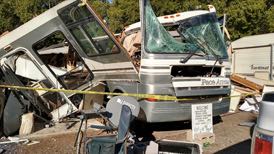
Propane leak blows up motorhome. See pics. Horrible!
It was 2 a.m., when an RV Travel reader named Dave was making his nightly trip to his RV’s bathroom. Suddenly, he said, “the skies lit up and then there was a very large boom from three rows over in our RV park.” Read more.
Reader RVs What RV do you drive or tow? Send us a photo of your RV (and tow vehicle) with a 150-200 word description of where and how often you travel with it, and what you like or don’t like about it. Include your name(s) and hometown. We’ll post them to RVtravel.com. Send to assistant editor Diane McGovern at Diane(at)RVtravel.com .
CLICK HERE to see this week’s RV Travel Reader RVs.
Reduce air drag and boost fuel efficiency — Airtab® your RV! Just peel and stick Airtabs™ to the rear sides and the rear roof of your RV coach or trailer to create swirls of air that reduce aerodynamic drag, save fuel and improve stability. Airtabs™ dramatically reduce trailer ‘fish tailing’ and crosswinds pressure to RVs from passing trucks, while improving fuel efficiency 2% – 5%! Click on the video.
THIS WEEK’S CONTEST! We have our winner. Please hold your entrees. Win these swell salt and pepper shakers. The winner will be chosen randomly out of all correct entries received by noon (Pacific), Sunday. The question: What type of motorhome typically has a bed over the cab? Class A or Class C? Email your answerto RVcontests@gmail.com. We can only ship prizes to addresses with a U.S. Zip Code. Only one entry per household. All entries must include your mailing address and telephone number (only used for mailing if you win) or your entry will be disqualified and we’ll choose the next (correct) entry. Contest ends Sunday at noon (Pacific), at which time a winner will be selected by Random.org. We’ll let you know if you win
If Nevada’s governor has his way, the state could soon have two new state parks. The plans are part of a budget proposal that would create a 12,000-acre state park along the Walker River, southeast of Reno. Camping, hiking and fishing would be recreational features here. Another park would focus on geologic history, the Tule Springs State Park near North Las Vegas. Surrounded by the existing Tule Springs Fossil Bed National Monument, the state’s 315 acres are home to preserved Ice Age critters.
Chicago-based coffee roaster and chain Bow Truss has filed a lawsuit against Marcus Lemonis, CEO of the Good Sam Club and Camping World. According to the suit, Lemonis’ company, ML Food Group, “devised a fraudulent scheme to attempt to purchase the plaintiff at a rock bottom bargain basement giveaway price and failing to accomplish that to destroy the plaintiff.” — SOURCE: Chicago Tribune
RV manufacturer Forest River is keeping tight-lipped as it has come under fire for unkept promises. Forest River moved into White Pigeon, Mich., back in 2015, promising to create 400 new jobs for the community. So far about 80 workers are employed there, and many transferred from other locations. Both government and civic groups have asked FR to explain the issue, but to no avail. The company stood to receive a $1.6 million grant for on-the-job training programs, but recently lost it for failing to submit paperwork.
Virginia joins the trend of state parks reporting record visitation in 2016. The Old Dominion State’s parks saw 12 percent more visitors than in 2015.
Santa Barbara, Calif., city council members met up with some rather unhappy non-campers. A new city ordinance meant to stop RVers from parking on city streets could also make outlaws of non-RVers. The ordinance bans vehicles taller than 82″ from parking on city streets – and owners of Mercedes Sprinter vans complained they’re being tossed into the mix as their vans exceed the height limitation. The owners showed up at a special meeting demanding an exemption from the ordinance.
Officials at Devils Postpile National Monument (Calif.) are having the devil’s own time keeping the campground there open. Last year, the 20-site campground was closed because of problems with water system repairs. This year it looks as though the campground could be closed because of another water problem: A heavy snow load could lead to flooding. If that happens, campers could avail themselves of campgrounds at the nearby regions of the Inyo National Forest.
Some South Carolinians are asking the U.S. Park Service to add Reconstruction Era sites to the National Park system. Five historic sites from the period – from Civil War times down to the dawn of segregation in the 1890s – are being given consideration.
The August 2016 floods that swamped portions of Louisiana are finally ebbing away – in a sense. Tickfaw State Park, west of Springfield, reopened January 30 for day use and RV (improved) camping after extensive flood damage repairs.
Mirror photo, Luca Sartoni on flickr.com
If you’re keeping an eye on the RV industry mega-giants’ moves to gobble up competition, consider this one from Australia. Jayco already has 50 percent of the RV market share Down Under. Now the RV manufacturer is becoming an RV renter. Jayco has bought out Around Australia Motorhomes, which it touts as “Australia’s premium motorhome rental service.” Perhaps U.S. RV rental companies should be looking in their mirrors, as objects seen there are, truly, closer than they appear.
The South Dakota campground that wants to be a town has appealed to the state’s Supreme Court. Buffalo Chip Campground, which was voted in as a town by a 2015 referendum, got shot down as a town by a judge last May. The judge ruled technical violations of voting laws and rulings by a county commission relative to the case were unlawful, all forming the basis of making the new town simply a campground. Buffalo Chip attorneys filed their final briefs with the court early in January, asking the court to overrule the decision.
RV Parts and Accessories
Give Dyers a try on your next purchase of RV parts or accessories. Large selection, great service, low prices and fast shipping. Visit our website.
More News
Not everyone enjoys fireworks. Your dog or cat probably turns into a bowl of jelly when the big boomers start blasting off. Some military veterans dealing with PTSD find the 4th of July season completely nerve-racking. This year, 11 of Michigan’s state parks and recreation areas will offer fireworks-free camping, all at a long distance from community-based fireworks shows. The special non-blaster program runs July 1 through 4. For more information on the parks and on how to reserve a site, visit the state’s website.
If you’re an illegal camper, or one prone to chucking your trash on the ground, watch out! The Canadian government may be spying on you with a wolf. Parks Canada says it has outfitted more of the wolves in Banff National Park with radio-tracking collars, and will use the data showing where wolves travel to pinpoint illegal campers and litter sites. Last year, two wolves from the park had to be shot after they became accustomed to human foods left out by careless campers. The officials say they’ll strictly crack down on illegal or messy campsites to try and prevent wolf-human interaction.
If you’re a sci-fi fan, you may have something new to dream about in Arizona’s desert. Recently the Arizona Geological Survey used a drone to map a fresh desert floor anomaly near Eloy – a huge fissure said to be two miles long, 10 feet wide, and up to 30 feet deep. Did some sort of prehistoric throwback creature crawl out of it? No comment on that. Survey officials think the crack has been there for some time, but the surface may have opened due to last year’s monsoon rains. Meantime, they warn folks to stay back from the edge – it could cave in. Click here for a one-minute video from Business Insider.
An Alberta, Canada, campground that hosted 10,000 guests over six months in 2016 will soon shut its gates. Waterton Springs Campground, just outside Waterton Lakes National Park, was purchased by the Nature Conservancy of Canada in 2007, which has continued to lease the campground. However, the Conservancy says it’s time to restore the land to its natural state and will shut down the campground at the end of this year’s camp season.
A Marathon, Fla., woman lost $8,500 in a scam involving a fake eBay website and the sale of an RV using gift cards. The 67-year-old female victim told Monroe County Sheriff’s Deputy Ryan Chlebanowski she contacted a woman who had listed an RV for sale on the eBay Motors website, and they agreed on $10,000 for the vehicle. The victim was directed to a special “eBay” web page with a “Buy it Now” option, where she was given instructions and was assured that eBay would refund the money under the protection program if anything went wrong. She made the payments but never received the RV. She contacted eBay and was told she’d been scammed, and that the eBay Motors page was a fake. She was able to cancel three of the gift cards before they were cashed, but is still out $8,500. The Sheriff’s Office warns that many fraud schemes utilize payment by gift cards, green dot cards, money orders or money grams, and this should always be red flag. Source: Monroe County Sheriff’s Office, Florida Keys
A Portland, Ore., man got off easy in court after having tossed a pipe bomb under an RV. Jeremy Patrick Kidwell was upset with homeless people in the neighborhood and tossed the bomb under the rig of one such family. Fortunately the bomb didn’t go off. Confronted, Kidwell apologized to the RV owner and later purchased and refurbished a different rig for her. Kidwell got a sentence of two years’ probation after pleading guilty to unlawful manufacture of a destructive device and attempted first-degree arson.
A 40-foot Class A motorhome does not make for a fast getaway. Two not-so-smart crooks were spotted driving down California Highway 1 in Moss Landing in a reportedly stolen Holiday Rambler. Police gave chase through Watsonville, until Alanzo Carrera gave up the pilot seat, and jumped out of the rig with his passenger Andria Ramierz-Olmeda. They tried to make their escape on foot, running down – ironically – Freedom Boulevard, but freedom eluded them in the form of even faster flatfoots.
American RVers are not surprised to run into German tourists in campgrounds – they’ve been a mainstay for years. But time to hone up on your Mandarin: With the improving economy in China, more and more Chinese nationals are renting RVs to tour the U.S. El Monte RV has warmed to the idea of expanding its customer base – and now can equip its rental units with rice cookers and instructional videos in Chinese. Source: ozy.com.
Keep up with RV Industry news throughout the week at RVbusiness.com.
Re-tire with a used tire?
RVers have lots of tires to maintain — for their safety and others on the road. When it comes time to replacing a tire (or several), money talks. Is it safe to buy and run used tires? Consumer Reports recommends against it, but what if you decide you need to buy a used tire or two (or ten)? Here are some things to look for as you carefully examine a potential purchase. Read more.
TV antenna not pulling in the signal? This may help
If you have a Winegard TV antenna but it doesn’t seem to be working as well as it once did, this article from Russ and Tiña De Maris will help you troubleshoot the source of the problem and then fix or replace worn-out parts, step-by-step. Learn more.
Comprehensive list of RV-related recalls for January
The list of latest recalls on RVs and other vehicles and/or products of interest to RVers has been released by the U.S. National Highway Transportation Safety Administration. The list includes models from DRV Suites, Forest River, Gulf Stream, Jayco, Keystone, Thor and others — plus many other vehicles commonly used by RVers. Is your RV or other vehicle on the list? Find out here.
A reason to boondock: The value of personal space
There are at least two primary motivations why RVers boondock: financial and the desire for personal space. While some RVers prefer the campground with lots of neighbors, there are others who prefer a more natural setting, away from the hubbub of campground activity. If you haven’t tried boondocking yet, this article from BoondockBob Difley just might convince you to give it a shot. Read more.
RV buying? Beware badly located electric outlets
When buying an RV don’t forget to check the number and location of electrical outlets. Their locations are often in locations that are awkward to use, or sometimes even missing in areas that beg for a plug. You’d think RV makers would know better. But in too many cases it’s more convenient (and cheaper) to put them in places convenient for them, and not for the consumer. Watch the video.
Renegade RVs recalled for seat belt issue
REV Recreation Group is recalling 886 model year 2016-2017 Renegade RV Verona, Verona LE and Specialty Sprinter vehicles, 2011-2017 Explorer, Ikon and Core vehicles, 2014-2017 XL, Classic with Garage, Toter Home and Villagio vehicles, 2015-2017 Classic-Equine and Vienna vehicles, and 2011-2016 RSV vehicles. In the affected motor coaches and motorhomes, the seat belt anchorage hardware may pull out of the floor framing in the event of a crash. Read more.
Unique RV overnight stops at wineries and farms With membership in Harvest Hosts® you can stay overnight at 500 wineries, farms and attractions across North America. Harvest Hosts offers an exciting alternative to traditional overnight stops where you can meet interesting people and learn about their lifestyle. Learn more at the Harvest Hosts website, or watch an interview with the founders by RVtravel.com editor Chuck Woodbury.
Some Holiday Ramblers, Fleetwood motorhomes recalled
REV Recreation Group is recalling 291 model year 2017 Holiday Rambler Vacationer XE, Admiral XE, Fleetwood Storm and Fleetwood Flair motorhomes. The rear sway bar may not have been properly tightened and, as a result, the sway bar may detach from the vehicle. If the sway bar falls from the vehicle, it can increase the risk of a crash. Learn more.
Sticky black water valve perplexes
Chris Dougherty, certified RV technician, received a letter from a reader while he was serving as RVtravel.com’s technical editor regarding the black water handle sticking, and if there was a way to ease it or prevent it from getting more difficult. Read Chris’ response.
Improve your RV’s automatic levelers RVtravel.com editor Chuck Woodbury talks with Doug Swarts of Drainmaster.com about the RV Snap Pad, a device he helped develop to improve the process of leveling an RV with automatic levelers. Watch the video.
Easy one-pan Mexican meal — works with a variety of ingredients
Being cooped up in the winter, Rich “The Wanderman” says nothing satisfies like cooking a great meal and relaxing while eating it and watching the snow fall outside. Here’s a delicious dish he recently made with simple, fresh ingredients and easy techniques. Read more.
An RV club for baby boomer RVers
RVtravel.com editor Chuck Woodbury ran into a group of baby boomer RVers gathered on the public lands in the Arizona desert near Quartzsite, Arizona. He asked a member of the group to explain what the club is all about and what it offers baby boomer aged RVers. Watch the video.
RV Mods: A place to keep your books in the rig
Start off the new year right by reading books! How about setting a goal for yourself to read two books a month or more? Both weekend and full-time RVers enjoy taking books along on their travels, including reference books — but where do you store them, where they’ll be handy but out of the way? Here’s a great solution.
The New TireTraker™ TT-500 with a Lifetime Warranty The new TireTraker™ TT-500 is the most innovative & user friendly TPMS on the market with an unprecedented “Lifetime Warranty”, the only TPMS company in the industry to do so. The TT-500 features a larger, easier to read display, continuous pressure & temperature monitoring, automatic update, & monitoring up to 22 tires on your motorhome, trailer & tow vehicle from 0-232 psi! Seven day per week sales & technical support & over 12 years of experience. List price (4 tires) $389. Our price only $289. SAVE $100! (Additional Sensors $35 each). Learn more or order. Read testimonials.
This week in history Week of Feb. 4–10 Compiled by Dell Bert
1938 — Disney releases “Snow White and the Seven Dwarfs.”
1942 — Daylight saving time instituted.
1964 — Beatles arrive in New York.
1974 — Patty Hearst kidnapped by the Symbionese Liberation Army.
1983 — Karen Carpenter dies of anorexia.
1984 — First human satellite, Capt. Bruce McCandless, flies outside of space shuttle Challenger.
1996 — Kasparov loses a chess game to a computer (but wins match).
2014 — Iconic child star Shirley Temple dies at 85.
Cold hands? Keep ’em toasty with this Zippo hand warmer This Zippo 12-hour hand warmer will keep your hands warm even when the temps get downright cold! It provides up to 12 hours of flameless, gentle heat before refueling. Runs on Zippo warmer fuel or lighter fluid. Sturdy, metal construction. Sleek, thin design. Stay warm this winter! Learn more or order for about $20.
Bumper sticker of the week
Caution, I drive like you do.
Funny/clever business slogan
We don’t know if this is true, but here’s the claim: “My brother, tired of being a taxidermist after 15 years, went to veterinarian school. His new business never got off the ground so he decided to operate both his taxidermy and vet business together to save money. His new slogan was ‘No Matter What Happens – You Get Your Cat Back!'”
Have you seen a funny bumper sticker or business slogan? Send it to Diane(at)RVtravel.com
Endorsed by Roger Marble of RVtireSafety.com! An excellent tire pressure gauge The Accutire MS-4021B digital tire pressure gauge has an easy-to-read LCD display that provides pressure readings from 5-150 PSI. It’s ergonomically designed with an angled head and a rubber-coated easy-grip handle. If you forget to turn off the gauge, don’t worry, it will automatically shut off. The included lithium battery never needs to be recharged or replaced. And all this for about $13! Learn more or order.
2017 Traveler’s Guideto the Firearm Laws of the 50 States JUST PUBLISHED: Learn how to prepare, carry & transport your firearm during travel in all 50 states, Canada & Mexico. Includes state breakdowns of firearms ownership, semi-auto gun ownership, castle doctrine, right to protect, open carry, concealed carry, state & national parks, permit reciprocity, loaded vs. unloaded, interstate transport restrictions, traffic stops, universal restricted areas, motorhome & RV issues, preemptive local laws & more. Learn more or order.
Websites of the Week Here are two we like:
Free things to do in every state
Here’s a great list of fun things to see, do and indulge in for free while you’re exploring the U.S., including museums, concerts, hikes, tours, food and beverages, and lots more. From GOBankingRates and msn.com.
10 U.S. towns that are older than America
Do you enjoy learning about history? Do you want to feel young again? Well, there’s no guarantee of that, but these cities that are several hundred years old would be fascinating to explore and you would certainly feel young in comparison. From Bob Vila and msn.com.
Here is our “master list” of more than 700 websites we like, which we have compiled over the years.
Microwave cover collapses for easy storage When heating your food you don’t want to spend 10 minutes later cleaning the splatters inside the microwave. Here’s the solution — perfect for RVers: It pops down flat for easy storage. Lid perforations allow steam to escape to keep food moist. Doubles as a strainer! Learn more or order.
Good reading from RV123.com
• While there are many great locations across the country for RVers to escape to, Blackwater River State Park is one of the best.
• The Pack This Pad from People Magazine can make packing easy and painless!
• Experience Oregon’s natural beauty and learn about humanity’s greatest achievements all in one trip!
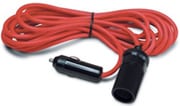
Extend your 12-volt power source Sometimes you need to use a 12-volt device, but the plug is too far away. For less than $8, this is the answer. This extension cord plugs into your cigarette lighter or 12-volt socket to easily extend your reach. Learn more or order.
Ask the RV Shrink
What if one RVing spouse retires but the other keeps stalling?
Dear RV Shrink:
I was laid off from my auto parts manufacturing job a few years ago and decided to take an early retirement. My husband was still working but we figured we would both retire soon and try the RV lifestyle. He keeps dragging his feet. I should have gotten another job but the industry is still pretty slow. How do other people handle this situation? One retires and the other can’t seem to make the move. We have already bought a fifth-wheel that we use on weekends and holidays. He loves it, but is so used to working it scares him to think of giving it up. —Lady in waiting in Waterton
Read the RV Shrink’s response, and be sure to check out his song, “UAW Rag,” about so many jobs lost during the Great Recession. It’s linked in the article. (He admitted he was feeling “a little goofy” when he posted the song, which he performs, on YouTube.)
Easy way to level your RV! The RVtravel.com motorhome packs along two of these and, boy, are they handy! Camco’s RV Yellow Tri-Levelers are designed to raise the RV up to 3-7/8″ on any tire for a more level position. The lightweight levelers are durable and have a resin non-slip surface with a load capacity of 3,500 pounds. Learn more or order for a great price!
RV Tech Tips from Mark Polk
Buying an RV generator
When looking to purchase a generator, the best way to determine the proper size generator is to add the total amount of wattage you plan to use at the same time and size the generator based on your needs. There are generator sizing charts to assist with this.
Mark Polk is the owner of RV Education 101, the premiere source of educational DVDs about buying, maintaining and using an RV. Learn more.
Keep insects and bird nests out of your RV furnace Wasps, mud daubers, birds and rodents pose a serious threat to the furnace on your RV. They can enter through the furnace vents. Their nests can interfere with air flow and cause serious damage. Camco 42141 (Model FUR 200) Flying Insect RV Furnace Screen fits Duo-therm and Suburban furnace vents. Camco offers several furnace screens so check that this screen will fit your vent. Learn more or order at Amazon.com.
Latest fuel prices Here are the latest U.S. average prices per gallon of gasoline and diesel fuel: Regular unleaded gasoline: $2.30 (on Jan. 30). Change from week before: Down 3 cents; Change from year before: Up 47 cents. Diesel: $2.56 (on Jan. 30). Change from week before: Down 0.7 cent; Change from year before: Up 53 cents.
Fix it in Foil! Tasty Recipes. Easy cleanup! Easy prep, great taste, good nutrition, quick clean-up! “Fix it in Foil” includes 51 fantastic recipes to make in foil — plus instructions for cooking in an oven, on an outdoor grill, or on a campfire. Fix it in foil and forget about scrubbing pots and pans. And, with plenty of substitution suggestions, enjoy a whole new list of recipe possibilities! Great for RVing! Learn more or order.
The RV Kitchen with Janet Groene
Lemon Puff Pie Lip-smacking lemon dessert
The cook can chill, too, while this showy dessert chills. Then bring it out with a ta-DAH. Make it with one large or two small graham cracker pie shells, or a dozen miniature shells. For extra tang, add a few shreds of lemon zest to the mix. It works just as well with sugar-free or regular pudding, whole or nonfat milk and regular or “lite” whipped topping. Get the recipe.
Quick, simple, no-mess way to cook eggs Perfect for RVing! Cook your favorite egg recipe in a breeze, mess-free with the Egg-Tastic Microwave Egg Cooker & Poacher. Crack the eggs right in the ceramic pot, add ingredients & microwave for fast, fluffy, flavorful eggs! The vented lid allows steam to escape while the ceramic pot circulates heat for even cooking! Prep, cook & enjoy your meal in the same dish. Dishwasher safe. Read a review by our blogger or click here to learn more or order for about $8
RV Fire Safety Tip
Check rubber fuel lines monthly
Rubber fuel lines are commonly used to connect metal lines to the electronic fuel injection system, or to the carburetor in older coaches. Check all the lines and connections between the fuel tank and the engine on a monthly basis. If there is any sign of a leak, have the lines replaced and the entire system inspected by a qualified mechanic as soon as possible. Courtesy:Mac “The Fire Guy” McCoy
Editor’s note: Choose from a wide selection of fire extinguishers at Amazon.
Organize your RV’s shower! Quit hassling with shampoo & conditioner bottles RV showers are small! Hassling with bottles of shampoo, conditioner and soap are a pain! Make it easy with this Better Living Classic 3-Chamber Dispenser. It utilizes a “patented pump technology” and comes with a lifetime warranty. The liquid is stored in three 15 oz. refillable chambers. The right amount of product is dispensed with a stroke or two of the pump. Installs in minutes without tools. Learn more or order.
RV Quick Tips
Fire extinguisher placement tips
We travel in a motorhome which is typical in that the bedroom is in the rear and the exit door is in the front. The fire extinguisher is mounted by the exit door. I bought another fire extinguisher that I mounted next to the bed. If a fire is severe then we will bail out of a bedroom window, but for anything else I would rather fight the fire on the way to the exit door. The prospect of climbing out the window and dropping six feet to the ground is something that I would rather avoid. I also keep a fire extinguisher in one of my storage bays. Thanks to Bill Olsen.
Pothead. Lockport, New York
Water pump cycling too frequently?
While water pump cycling is one sign of a plumbing system leak, it is also caused by air in the hot water tank. Thanks to L. Cataneo for the reminder
Toilet water conservation and cleaning tips
We have a Thetford Tecma macerating toilet in our class A. It has a large porcelain toilet bowl. The toilet flushes using either the large flush button or the small flush button. The large flush uses a lot of water. Well, I soon found out that I had to dump way more often than when we had a regular RV toilet like in the fivers we had. We decided that we should operate on the “when it’s yellow let it mellow, when it’s brown flush it down” rule. It increased time between dumps by days. We also found that usually the small flush works fine even if it is brown. You can keep the urine smell down to a reasonable level by closing both toilet lids. But, we also noticed that the uric acid sitting in the bowl for hours would stain the toilet bowl, and eventually we couldn’t completely remove the stains with whatever product we tried to clean the bowl with. Remembering my high school chemistry that baking soda is a good acid-neutralizing base, we tried putting in a half tablespoon of baking soda three or four times per bowl fill. No more stains and the bowl looks nice and shiny. Thanks to Bill Newman.
Do you have a Quick Tip? Send it to Diane (at) RVtravel.com and you just might see it here!
Avoid moisture damage to your RV
DampRid FG50T Hi-Capacity Moisture Absorber, 4-Pound Tub eliminates musty odors in RVs and other spaces, protecting them from moisture damage for up to 60 days in areas up to 1000 square feet, and up to 6 months in a 250-square-foot area. Don’t let your rig get damaged from moisture this winter. Learn more or order.
Ask the RV Doctor The RV Doctor, Gary Bunzer, answers your questions
RV’s gas oven won’t heat up
Dear Gary: The gas oven in our motorhome just quit working. We have an Amana range/oven in a Winnebago. The burners on the range still work great, and I can light the pilot light in the oven. However, when I turn up the temperature control knob to set the oven temperature, nothing happens. The pilot light remains on but it seems that no larger volume of gas comes into the burner. Any ideas of what we might check? Thanks in advance! —Linda N.
Good Sam Campground Guide With more than 12,500 locations listed across the USA and Canada, the Good Sam RV Travel & Savings Guide is the only print directory of RV parks and campgrounds. The 2017 edition features an expert rating system with all evaluations completed on site in the past 12 months. Park listings include amenities, services, restrictions, rates, contact info, Good Sam discount locations, hundreds of dollars’ worth of Camping World savings and pages of helpful information. Learn more or order.
Ask BoondockBob with Bob Difley
Is it boondocking, dry-camping or blacktop boondocking?
Hi, Bob,
I’m confused. I’ve heard the terms boondocking, dry-camping, blacktop boondocking, and others. Do they all mean the same thing or is there a difference? —Alan F.
SAVE MONEY! Don’t toss away good batteries! Most RVers rely on battery-powered devices while on the road, whether flashlights, radios or cameras. But sometimes you just can’t tell how much life a battery has remaining so you toss it to “be sure.” This small, inexpensive tester will alert you in an instant to the condition of a battery, saving you money from needlessly tossing ones with plenty of remaining life! Works on AA, AAA, C, D, 9V and button-type batteries. Learn more or order.
Gizmos and Gadgets
Dehumidifier reduces mold, mildew in small confined spaces
Guardian Technologies™ announced the launch of its PureGuardian® DH201WCA Small Space Dehumidifier targeted for small spaces such as bathrooms and laundry rooms, and in RVs and boats where moisture collects due to high humidity and poor air circulation. The tank of the dehumidifier collects up to approximately 360 ml of water per day at 80% humidity, and there is no filter so it’s maintenance free. Read more.
Essential for big RVs! 2017 Rand McNally Motor Carriers’ Road Atlas If you drive a big RV — extra long or extra tall — then this truck driver’s road atlas will be a huge help in knowing where you can drive without encountering a low bridge or getting stuck hanging over a cliff. This is an essential aid even if you have a GPS! Coverage: United States, Canada, and Mexico. Learn more or order.
Upcoming RV Shows
• Cincinnati-Dayton RV Show, February 2-5, Vandalia, OH • Fort Wayne RV & Camping Show, February 2-5, Fort Wayne, IN • St. Louis RV Vacation & Travel Show, February 2-5, St. Louis, MO • Hamilton RV Show & Sale, February 3-5, Stoney Creek, ON, Canada • Seattle RV Show, February 9-12, Seattle, WA
• Jacksonville RV Show, February 9-12, Jacksonville, FL • Minneapolis/St. Paul RV, Vacation & Camping Show, February 9-12, Minneapolis, MN • Salem Spring RV Show, February 9-12, Salem, OR • Ottawa RV Expo & Sale, February 9-12, Ottawa, ON, Canada • San Antonio Boat & Travel Trailer Show, February 9-12, San Antonio, TX • Montana RV, Boat & Powersports Show, February 10-12, Great Falls, MT • Columbus RV Show, February 10-12, Columbus, OH • Richmond Camping RV Expo, February 10-12, Richmond, VA • Houston RV Show, February 15-19, Houston, TX • Austin RV Super Sale, February 16-19, Austin, TX • Chicago RV & Camping Show, February 16-19, Palatine, IL • West Palm Beach RV Show, February 16-19, West Palm Beach, FL • Atlantic City RV & Camping Show, February 17-19, Atlantic City, NJ • Maryland RV Show, February 17-19, Timonium, MD • Vermont State RV & Camping Show, February 17-19, Essex Junction, VT • Northeast RV New Product Show, February 17-20, Suffern, NY • Indianapolis Boat, Sport & Travel Show, February 17-26, Indianapolis, IN
See the list of all upcoming RV shows.
Liquefy solid wastes in sewer holding tanks Happy Campers Treatment liquefies solid waste and household tissue. It’s a natural formula that’s environmentally friendly and biodegradable, with no formaldehyde or harsh chemicals. Basically, the good bacteria overtakes the bad bacteria to eliminate odor and accelerate the natural decomposition of waste. Because it is totally organic and odor free, you won’t be embarrassed by bad odors inside or when you dump. Learn more or order at Amazon.com.
RV Short Stop
Fulton Mansion by Julianne G. Crane
Fulton Mansion State Historic Site Aransas Bay, Rockport, Texas
Fulton Mansion is an imposing three-story Victorian villa in Rockport, Texas, about 30 miles northeast of Corpus Christi. It is a perfect RV Short Stop destination for Winter Texan snowbirds or for Texas families on a weekend trip to the Gulf Coast. The 2.7-acre site is a Recorded Texas Historic Landmark and listed in the National Register of Historic Places. Due to deterioration, the mansion underwent an almost-three-year restoration, completed in 2015. Read more in Julianne G. Crane’s article.
GREAT FOR FINDING OVERNIGHT STOPS Learn about services for RVers at Truck Stops This annual directory lists 6,700 U.S. & Canadian “big rig” fueling locations and the services they provide. Services include RV parking, propane availability, truck wash, scales, laundry, food, diesel and RV accessible gasoline. Locations are listed in Interstate exit order as well as alphabetically by city and state. Learn more or order.
Stupid Statements of Yesteryear
“There is no reason anyone would want a computer in their home.” —Ken Olson, president, chairman and founder of Digital Equipment Corp., 1977
Be prepared for a roadside emergency! Forget messing around with flares. You’ll be thankful to have this set of three emergency flashers along with you if you’re forced to the side of a busy highway with a flat tire, mechanical or other issue. One FlareAlert™ provides about 20 hours of safety before a battery change (three AAAs in each). You’d need to strike 80 incendiary flares, one after another, to achieve the same thing.Learn more or order.
Videos you’ll like
•Is your RV stove top a magnet for mice and ants?
Chris Dougherty explains how this appliance can attract unwanted and potentially harmful pests. Watch the video.
•Device makes electric connection between truck and RV safe
EZ Connector is a safe, convenient way to make an electric connection between a truck and trailer or a truck and fifth wheeler. Gary Bunzer, the RV Doctor, has more. Watch the video.
Visit our YouTube Channel.
More than 500 great videos about RVing!
Random RV Thought Why do many RV parks have sites that are not level? If they go to all the trouble to create a park, then they should make sure the pads are level.
Trivia
Oxford University, where teaching was begun in 1096, is older than the Aztec Empire (1428-1521).
Strengthen your hands, fingers and forearms Here’s a great, easy way to build up the strength in your hands, fingers or forearms. Perfect for RVers. If you suffer from arthritis, carpal tunnel, tendonitis or tennis elbow this is for you. It’s also great for simply building up the strength of your grip. This is a best-seller and costs about $8. Learn more or order.
Worth Pondering
“The power of a book lies in its power to turn a solitary act into a shared vision. As long as we have books, we are not alone.” —Laura Bush
RV Travel staff Editor and Publisher: Chuck Woodbury. Assistant editor: Diane McGovern. Contributing editor: Russ De Maris. Contributing writers: Greg Illes, Bob Difley, Richard Miller, Richard Mallery, Janet Groene, Roger Marble, Julianne Crane and Chris Guld.
ADVERTISE on RVtravel.com and/or in this newsletter. Contact Chuck Woodbury at Chuck(at)RVtravel.com.
About the RVtravel.com editor Chuck Woodbury has explored America by RV for three decades. In the ’90s he published the quirky travel newspaper Out West, and was an “on the road” writer for the New York Times Syndicate. His book, “The Best from Out West” is available at Amazon.com. Woodbury’s RVing adventures have been profiled on ABC News, CNN, NBC’s Today Show, and in People Magazine, USA Today and in hundreds of newspapers. He is the host of the Better Business Bureau DVD “Buying a Recreational Vehicle,” the definitive guide to purchasing an RV the right way.
Everything in this newsletter is true to the best of our knowledge. But we occasionally get something wrong. We’re just human! So don’t go spending $10,000 on something we said was good simply because we said so, or fixing something according to what we suggested (check with your own technician first). Maybe we made a mistake.Tips and/or comments in this newsletter are those of the authors and may not reflect the views of RVtravel.com or this newsletter.
Our offices are located at 610 5th Ave. S, Suite F, Edmonds, WA 98020.
This website utilizes some advertising services. Sometimes we are paid if you click one of those links and purchase a product or service. Regardless of this potential revenue, unless stated otherwise, we only recommend products or services we believe provide value to our readers. Amazon and the Amazon logo are trademarks of Amazon.com, Inc . RVtravel.com is a participant in the Amazon Services LLC Associates Program, an affiliate advertising program designed to provide a means for sites to earn advertising fees by advertising and linking to Amazon.com.
RVtravel.com includes links to other websites. We cannot control the content and/or privacy policies of those sites. Please be aware when you leave this newsletter or any other section of RVtravel.com to read the privacy statements of any of those websites that collect personally identifiable information. Our own privacy policy applies only to RVtravel.com and its affiliated blogs.
It was 2 a.m., when an RV travel reader named Dave was making his nightly trip to his RV’s bathroom. Suddenly, he said, “the skies lit up and then there was a very large boom from three rows over in our RV park.”
The owner of the motorhome, Dave wrote, had reportedly tried to light a leaky propane heater, which led to the devastating explosion.
Dave reported that a retired pastor received burns over 85 percent of his body, and had been given a five percent chance to survive. His wife and their two dogs were shaken, but okay. The incident occurred at the Riverfront RV Park in Yuma, Arizona.
UPDATE: The pastor died from his injuries.
Editor’s note: Although we have no idea whether this family had a working propane detector on board, this serves as a reminder to always have one to be safe (and to be sure its batteries are good).
Guardian Technologies™, a leader in home environment products, announced the launch of its PureGuardian® DH201WCA Small Space Dehumidifier targeted for small spaces such as bathrooms, laundry rooms, and in RVs and boats where moisture collects due to high humidity and poor air circulation.
Humidity can promote the growth of airborne allergens such as mold spores and dust mites which can wreak havoc on allergy sufferers. “Humidity levels above 50% can breed dust mites, mildew, and mold, triggering allergies or other health problems,” says Consumer Reports.
Excess moisture will encourage mold and mildew, and can also cause that unpleasant musty odor on clothing, towels, furniture, or anything that is stored in small, damp spaces. Moisture in small, confined spaces is not your friend.
I set up the dehumidifier in a bathroom with no air circulation (at least in winter with the small window closed) and showered with the door closed, which usually leaves surfaces damp with moisture from the excess humidity, especially on the mirror, which fogs up so much it is unusable until the bathroom is cleared out or it is wiped off.
With the dehumidifier running, at the end of my shower the dampness and fog on the mirror were diminished. I can’t say it was entirely due to the dehumidifier, though had I let it run for awhile after I finished it likely would have added to the water it had already collected in the collection tank. The test will be to see how much moisture (water) the tank collects over a period of time (I will update in a month or so).
The tank of the dehumidifier collects up to approximately 360 ml of water per day at 80% humidity. There’s never any need to worry about an overflowing tank and the mess it brings, as the indicator lights up when the tank is full and the unit will automatically shut off.
No filters are required for the unit, which is treated with Silver Clean Protection to fight the growth of slimy mold and mildew on the surface of the water tank, making the unit maintenance-free.
In Arizona, when a guy wants to dress up, he should forget about a traditional (boring) tie. In Arizona, men wear bola ties.
Arizona, in fact, is the only state with official state neckwear, which just so happens to be a bola. A bola is a rope with weights attached used in South America to lasso cattle by entangling their legs. The bola tie similarly entangles the wearer’s neck in ornamentation. Sometimes bola ties are spelled bolo ties.
Designed as dress-up neckwear by a Mr. Cedarstaff of Wickenburg, Arizona, a bola is a whole lot more comfortable in hot weather than an ordinary tie. It became the official state neckwear in 1973. It is usually made by silversmiths and leather makers in almost every size and shape, most often with silver and turquoise.
The cool one pictured hereis available at Amazon.com for less than $9 — a lot cheaper (and more impressive) than any ol’ regular men’s tie.
Send a photo of your RV and a 150- to 200-word description of it, how and where you use it, and what you like or don’t like about it, to Diane (at) RVtravel.com . Be sure to include your name(s) and hometown, or if you’re a full-timer. (These are posted in the order received.)
The RVs of RVtravel.com readers and how they use them
Issue 71; Posted Feb. 4, 2017
Fran Pearson (LMT, Gold Miner Extraordinaire) and Steve Rosenlund, Full-timers
This is our unit. It is a 2013 41-foot Crossroads Elevation pulled by a beefed up 2008 Dodge 3500. The trailer is a toyhauler with three slides, including opposing slides in the living area. It includes a half bath in the garage.
We have been full-timers since 2014, and have traveled to 41 states. Our 42nd state will be Alaska in May 2017, where we’ll be camphosting, which we love. In October we’ll be in Key West as volunteers at Fort Zachary Taylor Historic State Park. We primarily spend our winters in Arizona, just south of Phoenix in Casa Grande. Loving the RV life!
Gary and Susie Stone, Federal Way, Washington
After years of tent- and car-camping it was finally time to upgrade! We’re still spry enough to enjoy more rigorous outdoor activities. So, the Forest River R-Pod (Hood River Edition) has served for four seasons as our base camp for ski and snowshoe trips in the winter and hiking/biking trips in the summer.
This photo show us camped out at Summer Lake Hot Springs in south-central Oregon near Paisley … a laid back, rustic, full hook-up RV park. This is a stopover point coming down from Seattle en route to the Burning Man festival in the Black Rock Desert in Nevada.
We love the convenience of the smaller-sized trailer, which allows us to get into some fairly tight spots. We are even able to travel a bit off-road since the trailer is rigged with 4-inch axle risers. This gives us clearance over bumpier dirt roads. As with all trailer travel, we take it slow! We like everything about it!
Good Sam Campground Guide With more than 12,500 North American locations, the Good Sam RV Travel & Savings Guide is the only print directory of RV parks and campgrounds. The 2017 edition features expert ratings completed in the past year. Park listings include amenities, services, restrictions, rates, contact info, Good Sam discount locations, hundreds of dollars’ worth of Camping World savings and pages of helpful information. Learn more or order.
Bruce and Chris Stephenson, Full-timers
We are the proud owners of a 2013 Newmar Mountain Aire and tow a 2006 Toyota 4-Runner on a Look aluminum trailer. One of the things I love about our Newmar is the 24/7 phone support I receive. I can ask questions and get answers on just about any support issue.
We just sold our home in the Atlanta area and are now full-timers. We are heading to the Southwest for now, but as weather permits we want to explore the Northwest as well.
Thanks for all the info we get from RVtravel.com. (You’re welcome.)
How about setting a goal for yourself to read two books a month or more? RV parks usually have a free book exchange where you can trade in books you’ve finished for some you haven’t read.
If you are like me, you probably have several books you like to keep around for reference. Both weekend and full-time RVers enjoy taking books along on their travels, but where do you store them?
If you put them deep in the back of a cupboard you will forget about them, but if you have them somewhere at the ready, you’re likely to read more.
Some time back, I met up with James and Colleen White from Mt. Carmel, Illinois. They both enjoy reading and like having their books handy so they installed a simple retaining rack in the space over the driver side and passenger side windows. This decorative railing is available at any big box hardware store. This is a handy place for both reference books as well as casual reading.
Reading is one of the greatest gifts we have, so please, read with abandon! —Jim Twamley, Professor of RVing
We use cookies to ensure that we give you the best experience on our website. By continuing to use our site, you consent to accepting cookies. We NEVER have or will sell reader's data. For more info, please see our privacy policy page.


 Mold is sight and mold is smell! Maybe I’ve been around these things too long, but I can usually ID a mildewed and moldy coach from a few feet away.

 Larry Dexter can’t seem to get rid of this garden tractor no matter where he travels. The sign says, FOR SALE. Been sitting awhile but should start: $400.
 By Chuck Woodbury
 The stockyard must cover a square mile. You can see from the aerial photo below (thanks, Google) how big it is. I drove up to the fence to take pictures. Gail mooed like a cow and the cows just came running. I don’t think they were thinking of anything. Cows are not known for their smarts.


 Highland Ridge RV is recalling 396 model year 2017 Open Range, Mesa Ridge and Roamer fifth wheels and travel trailers. The vehicles are equipped with an outside range that can be stored with the gas valve left open, allowing gas to enter and build up within the vehicle. If that should happen, there is an increase of an explosion or fire.


 Watch my
 •Did you miss last week’s RV Travel?
 Is reading this newsletter
 Propane leak blows up motorhome. See pics. Horrible!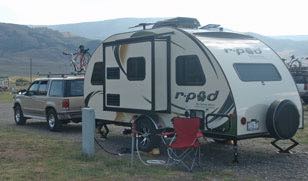
 Send us a photo of your RV (and tow vehicle) with a 150-200 word description of where and how often you travel with it, and what you like or don’t like about it. Include your name(s) and hometown. We’ll post them to RVtravel.com. Send to assistant editor Diane McGovern at Diane(at)RVtravel.com .

 If Nevada’s governor has his way, the state could soon have two new state parks. The plans are part of a budget proposal that would create a 12,000-acre state park along the Walker River, southeast of Reno. Camping, hiking and fishing would be recreational features here. Another park would focus on geologic history, the Tule Springs State Park near North Las Vegas. Surrounded by the existing Tule Springs Fossil Bed National Monument, the state’s 315 acres are home to preserved Ice Age critters.


 If you’re an illegal camper, or one prone to chucking your trash on the ground, watch out! The Canadian government may be spying on you with a wolf. Parks Canada says it has outfitted more of the wolves in Banff National Park with radio-tracking collars, and will use the data showing where wolves travel to pinpoint illegal campers and litter sites. Last year, two wolves from the park had to be shot after they became accustomed to human foods left out by careless campers. The officials say they’ll strictly crack down on illegal or messy campsites to try and prevent wolf-human interaction.
  A 40-foot Class A motorhome does not make for a fast getaway. Two not-so-smart crooks were spotted driving down California Highway 1 in Moss Landing in a reportedly stolen Holiday Rambler. Police gave chase through Watsonville, until Alanzo Carrera gave up the pilot seat, and jumped out of the rig with his passenger Andria Ramierz-Olmeda. They tried to make their escape on foot, running down – ironically – Freedom Boulevard, but freedom eluded them in the form of even faster flatfoots.
 Keep up with RV Industry news
 Unique RV overnight stops at wineries and farms
 The new TireTraker™ TT-500 is the most innovative & user friendly TPMS on the market with an unprecedented “Lifetime Warranty”, the only TPMS company in the industry to do so. The TT-500 features a larger, easier to read display, continuous pressure & temperature monitoring, automatic update, & monitoring up to 22 tires on your motorhome, trailer & tow vehicle from 0-232 psi! Seven day per week sales & technical support & over 12 years of experience. List price (4 tires) $389. Our price only $289.
 Cold hands? Keep ’em toasty with this Zippo hand warmer

 Endorsed by Roger Marble of RVtireSafety.com!

 Microwave cover collapses for easy storage
 When heating your food you don’t want to spend 10 minutes later cleaning the splatters inside the microwave. Here’s the solution — perfect for RVers: It pops down flat for easy storage. Lid perforations allow steam to escape to keep food moist. Doubles as a strainer!
 Extend your 12-volt power source
 Easy way to level your RV!
 Keep insects and
 Fix it in Foil! Tasty Recipes. Easy cleanup!


 Organize your RV’s shower!
 Fire extinguisher placement tips

 Avoid moisture damage to your RV
 Good Sam Campground Guide


 Liquefy solid wastes in sewer holding tanks

 Stupid Statements of Yesteryear


 Strengthen your hands, fingers and forearms


 In Arizona, when a guy wants to dress up, he should forget about a traditional (boring) tie. In Arizona, men wear bola ties.
 This is our unit. It is a 2013 41-foot Crossroads Elevation pulled by a beefed up 2008 Dodge 3500. The trailer is a toyhauler with three slides, including opposing slides in the living area. It includes a half bath in the garage.
  We are the proud owners of a 2013 Newmar Mountain Aire and tow a 2006 Toyota 4-Runner on a Look aluminum trailer. One of the things I love about our Newmar is the 24/7 phone support I receive. I can ask questions and get answers on just about any support issue.