


Here is our monthly summary of RV recalls for January 2017 and related equipment we feel are of interest to our readers. This information has been gleaned from the U.S. National Highway Transportation Safety Administration. This is NOT a complete list of all vehicles and related equipment recalled.
UNITED STATES RECALLS
RECREATION VEHICLES
DRV Suites (DRV) is recalling certain model year 2016-2017 Elite Suites and Mobile Suites fifth wheel recreational trailers manufactured January 29, 2016, to November 14, 2016. The brake caliper bolts may loosen, causing a loss of braking capability. DRV has notified owners, and dealers will replace the caliper bolts and sleeves using a thread adhesive, free of charge. The recall began on January 11, 2017. Owners may contact DRV customer service at 1-260-562-3500. DRV’s number for this recall is 99.02.08.
DRV Suites (DRV) is recalling certain model year 2017 Full House recreational trailers, models JX450, LX410, LX450 and LX455, manufactured August 29, 2016, to November 30, 2016. The affected vehicles have rear cargo door hinges with welds on the hinge pin and hinge plate that may be insufficient, and as a result, the top of the door may swing down with more force than normal. DRV will notify owners, and dealers will inspect the weld thickness, and if necessary replace the hinge, free of charge. The manufacturer has not yet provided a notification schedule. Owners may contact DRV customer service at 1-260-562-3500. DRV’s number for this recall is 99.02.07.
Forest River, Inc. (Forest River) is recalling certain model year 2017 XLR Toyhauler and Prime Time Spartan recreational fifth-wheel vehicles manufactured August 21, 2016, to December 12, 2016. The affected vehicles have rear cargo door hinges with welds on the hinge pin and hinge plate that may be insufficient, and as a result, the top of the door may swing down with more force than normal. Forest River will notify owners, and dealers will replace the ramp door hinge, free of charge. The recall is expected to begin February 27, 2017. For more information, XLR owners may call 1-574-642-0432 and Spartan owners may call 1-574-862-1025. Forest River’s number for this recall is 51-12312016-0310.
Gulf Stream Coach, Inc. (Gulf Stream) is recalling certain model year 2017 B Touring Cruiser motorhomes, model 5210, manufactured May 16, 2016, to July 15, 2016. The Certification label on the affected vehicles may contain incorrect front and rear Gross Axle Weight Rating (GAWR) and Gross Vehicle Weight Rating (GVWR) information. As such, these vehicles fail to comply with the requirements of 49 CFR Part 567, “Certification.” Gulf Stream will notify owners and will provide a corrected Certification label, free of charge. The recall began on January 4, 2017. Owners may contact Gulf Stream customer service at 1-800-289-8787.
 Now available!
Locate services at Interstate exits
The 2017 Next Exit is the most complete USA Interstate highway exit directory ever published for every exit of major and most minor routes. Find what’s located at upcoming exits on your route — gas, food, lodging, camping, shopping, hospitals, Walmarts and much more. A best-seller year after year. Learn more or order.
Jayco, Inc. (Jayco) is recalling certain model year 2016 Alante and Precept motorhomes manufactured August 10, 2015, to March 15, 2016. The wiring for the entrance steps may be incorrectly installed and, as a result, the steps may unexpectedly retract. Jayco will notify owners, and dealers will inspect the entrance step wiring, correcting the wiring as necessary, free of charge. The recall began on January 18, 2017. Owners may contact Jayco customer service at 1-800-517-9137. Jayco’s number for this recall is 9903340.
Keystone RV Company (Keystone) is recalling certain model year 2016-2017 Alpine fifth-wheel recreational trailers manufactured August 10, 2015, to December 1, 2016, and Avalanche fifth-wheel recreational trailers manufactured September 11, 2015, to December 1, 2016. The Federal Placard on the affected vehicles may have incorrect spare tire load range information. As such, these vehicles fail to comply with the requirements of 49 CFR Part 567, “Certification.” Keystone has notified owners, and dealers will replace the Federal Placard, free of charge. The recall began on January 17, 2017. Owners may contact Keystone customer service at 1-866-425-4369. Keystone’s number for this recall is 17-275.
Keystone RV Company (Keystone) is recalling certain model year 2017 Keystone Carbon and Raptor fifth wheel recreational trailers, and 2016-2017 Fuzion and Dutchmen Voltage fifth wheel recreational trailers. The affected vehicles have rear cargo door hinges with welds on the hinge pin and hinge plate that may be insufficient, and as a result, the top of the door may swing down with more force than normal. Keystone will notify owners, and dealers will replace the ramp door hinge, free of charge. The recall began on January 13, 2017. Owners may contact Keystone customer service at 1-866-425-4369. Keystone’s number for this recall is 16-274.
KZRV, L.P. (KZRV) is recalling certain model year 2016-2017 Venom and Durango Gold toyhaulers and fifth wheel trailers manufactured January 11, 2016, to December 2, 2016. The affected vehicles have rear cargo door hinges with welds on the hinge pin and hinge plate that may be insufficient, and as a result, the top of the door may swing down with more force than normal. KZRV will notify owners, and dealers will inspect the weld thickness, and if necessary replace the rear door hinges, free of charge. The recall began on January 13, 2017. Owners may contact KZRV customer service at 1-800-768-4016 extension 154 or 153.
Starcraft RV is recalling certain model year 2017 Comet, Satellite, Launch, and Autumn Ridge mini trailers manufactured June 21, 2016, to November 18, 2016, and equipped with the extreme package. The Federal labels on the affected vehicles may state incorrect tire and rim sizes. As such, these vehicles fail to comply with the requirements of Federal Motor Vehicle Safety Standard (FMVSS) number 110, “Tire Selection and Rims.” Starcraft has notified owners and mailed corrected labels to the affected owners, free of charge. The recall began on December 22, 2016. Owners may contact Starcraft customer service at 1-800-945-4787. Starcraft’s number for this recall is 9902339.
Thor Motor Coach (TMC) is recalling certain model year 2016-2017 Outlaw motorhomes, models 37BG, 37LS, 37RB, 38RE and 38RF, manufactured January 13, 2016, to December 8, 2016. The affected vehicles have rear cargo door hinges with welds that may be inadequate for securing the hinge pin to the hinge plate. TMC will notify owners, and dealers will inspect the hinge weld thickness, replacing the hinge as necessary, free of charge. The recall is expected to begin February 8, 2017. Owners may contact TMC customer service at 1-877-500-1020.
Triple E Recreational Vehicles (Triple E) is recalling certain model year 2017 Serenity S24CB recreational vehicles manufactured June 1, 2016, through November 23, 2016. In the affected vehicles, the circuit wire leading from the coach’s power system to the battery is incorrectly connected to a 150 amp fuse, however, the wire is only rated for a maximum load of 120 amps. Triple E will notify owners, and dealers will correct the wires at the fuse holder, free of charge. The recall was expected to begin in January 2017. Owners may contact Triple E customer service at 1-877-992-9906. Triple E’s number for this recall is CA #8495-1.
 Good Sam Campground Guide
With more than 12,500 locations listed across the USA and Canada, the Good Sam RV Travel & Savings Guide is the only print directory of RV parks and campgrounds. The 2017 edition features an expert rating system with all evaluations completed on site in the past 12 months. Park listings include amenities, services, restrictions, rates, contact info, Good Sam discount locations, hundreds of dollars’ worth of Camping World savings and pages of helpful information. Learn more or order.
DO YOU HAVE A NORCOLD REFRIGERATOR?
If so, watch this important video about a critical recall. A class action lawsuit has just been settled. Click on this page for the settlement website and a link to the court ruling.
OTHER VEHICLES
Chrysler (FCA US LLC) is recalling certain model year 2009 Dodge Durango and Chrysler Aspen vehicles manufactured January 17, 2007, to December 18, 2008, and 2010 RAM 3500 cab chassis manufactured September 25, 2009, to February 1, 2010. The affected vehicles are equipped with a dual-stage driver frontal air bag that may be susceptible to moisture intrusion which, over time, could cause the inflator to rupture. Chrysler has notified owners, and dealers will replace the driver’s frontal air bag inflator, free of charge. The recall began January 11, 2017. Owners may contact Chrysler customer service at 1-800-853-1403. Chrysler’s number for this recall is S92. Note: This recall covers vehicles that were accidentally excluded from recall 15V-313.
Daimler Trucks North America LLC (DTNA) is recalling certain model year 2008-2009 Sterling Bullet 4500 and 5500 cab chassis vehicles manufactured November 1, 2007, to November 7, 2008. The affected vehicles have a 220 amp alternator that may develop a short circuit. DTNA will notify owners, and DTNA dealers will replace the alternator, free of charge. The recall was expected to begin February 3, 2017. Owners may contact DTNA customer service at 1-800-745-8000. DTNA’s number for this recall is FL-729.
—–
Daimler Vans USA, LLC (DVUSA) is recalling certain 2012 Freightliner 2500 and 3500 Sprinter and Mercedes-Benz 2500 and 3500 Sprinter vehicles originally sold, or ever registered, in Alabama, California, Florida, Georgia, Hawaii, Louisiana, Mississippi, South Carolina, Texas, Puerto Rico, American Samoa, Guam, the Northern Mariana Islands (Saipan), and the U.S. Virgin Islands, or “Zone A.”
Additionally, DVUSA is recalling certain 2009 Dodge 2500 and 3500 Sprinter and Freightliner 2500 and 3500 Sprinter vehicles originally sold, or ever registered, in Arizona, Arkansas, Delaware, District of Columbia, Illinois, Indiana, Kansas, Kentucky, Maryland, Missouri, Nebraska, Nevada, New Jersey, New Mexico, North Carolina, Ohio, Oklahoma, Pennsylvania, Tennessee, Virginia, and West Virginia, or “Zone B.”
These vehicles are equipped with certain air bag inflators assembled as part of the passenger frontal air bag modules, and used as original equipment or replacement equipment. In the event of a crash necessitating deployment of the front air bags, these inflators may rupture due to propellant degradation occurring after long-term exposure to absolute humidity and temperature cycling. DVUSA will notify owners, and dealers will replace the front passenger air bag module, free of charge. Interim letters informing owners about the recall and telling them that parts are not yet available are expected to be mailed in February 2017. Owners will receive a second notice when remedy parts become available. Owners may contact DVUSA customer service at 1-877-762-8267.
—–
Ford Motor Company (Ford) is recalling certain 2017 Ford F-250 and F-350 Super Duty trucks manufactured August 10, 2016, to September 17, 2016. The frame reinforcement bracket may not have been attached to the front fuel tank strap, allowing the fuel tank strap to separate from the frame. Ford will notify owners, and dealers will inspect and, if necessary, install the reinforcement bracket, free of charge. The recall is expected to begin February 6, 2017. Owners may contact Ford customer service at 1-866-436-7332. Ford’s number for this recall is 16S45.
Ford Motor Company (Ford) is recalling certain model year 2016 Ford Taurus, 2016-2017 Ford Flex, Lincoln MKT, 2017 Ford Explorer and Ford Explorer Police Interceptor Utility vehicles equipped with 3.5L GTDI engines. Improperly brazed turbocharger oil supply tubes may leak oil on engine components. Ford will notify owners, and dealers will inspect and, if necessary, replace the turbocharger oil supply tubes, free of charge. The recall was expected to begin on January 23, 2017. Owners may contact Ford customer service at 1-866-436-7332. Ford’s number for this recall is 16S46.
Honda (American Honda Motor Co.) is recalling certain 2005-2006 Acura MDX and Honda CR-V vehicles, 2005-2011 Honda Element vehicles, 2005-2012 Acura RL vehicles, 2006-2012 Honda Ridgeline vehicles, 2007-2008 Honda Fit vehicles and 2005-2008 Honda Pilot vehicles originally sold, or ever registered, in Alabama, California, Florida, Georgia, Hawaii, Louisiana, Mississippi, South Carolina, Texas, Puerto Rico, American Samoa, Guam, the Northern Mariana Islands (Saipan), and the U.S. Virgin Islands, or “Zone A.”
Additionally, if not included in “Zone A” above, Honda is recalling certain 2005-2006 Acura MDX and Honda CR-V vehicles, 2005-2009 Acura RL and Honda Element vehicles, 2007-2008 Honda Fit vehicles, 2005-2008 Honda Pilot vehicles and 2006-2009 Honda Ridgeline vehicles originally sold, or ever registered, in Arizona, Arkansas, Delaware, District of Columbia, Illinois, Indiana, Kansas, Kentucky, Maryland, Missouri, Nebraska, Nevada, New Jersey, New Mexico, North Carolina, Ohio, Oklahoma, Pennsylvania, Tennessee, Virginia, and West Virginia, or “Zone B.”
Additionally, if not included in “Zone A” or “Zone B” above, Honda is recalling certain 2005-2006 Acura MDX and Honda CR-V vehicles, 2005-2008 Acura RL, Honda Element and Honda Pilot vehicles, 2007-2008 Honda Fit vehicles and 2006-2008 Honda Ridgeline vehicles originally sold, or ever registered in Alaska, Colorado, Connecticut, Idaho, Iowa, Maine, Massachusetts, Michigan, Minnesota, Montana, New Hampshire, New York, North Dakota, Oregon, Rhode Island, South Dakota, Utah, Vermont, Washington, Wisconsin, and Wyoming.
These vehicles are equipped with certain air bag inflators assembled as part of the passenger frontal air bag modules used as original equipment or replacement equipment. In the event of a crash necessitating deployment of the front air bags, these inflators may rupture due to propellant degradation occurring after long-term exposure to absolute humidity and temperature cycling. Honda will notify owners, and dealers will replace the front passenger air bag inflator, free of charge. The manufacturer has not yet provided a notification schedule. Owners may contact Honda customer service at 1-888-234-2138. Honda’s numbers for this recall are KD9 and KE0.

 Keep rodents out of your RV!
The overwhelmingly positive reviews on this make it a best bet for keeping your RV rodent-free. This is the only plant-based rodent repellent registered for inside use by the EPA. It effectively repels rodents up to 100 days with a “woodsy” scent that’s pleasant to humans but offensive to rodents. It’s safe around kids and pets so no safety warning is required. 98% biodegradable. Tested and endorsed by the Good Sam Club. Learn more or order.
Honda (American Honda Motor Co.) is recalling certain 2009-2012 Acura TSX, 2011-2012 Acura TSX Wagon, 2010-2012 Acura ZDX, 2008-2012 Honda Accord, 2010-2012 Honda Accord Crosstour and Honda Insight, 2009-2012 Honda Fit, 2009-2012 Pilot, 2007-2011 Honda CR-V, 2012 Honda FCX Clarity and 2006-2011 Honda Civic, Civic Hybrid, Civic NGV vehicles originally sold, or ever registered, in Alabama, California, Florida, Georgia, Hawaii, Louisiana, Mississippi, South Carolina, Texas, Puerto Rico, American Samoa, Guam, the Northern Mariana Islands (Saipan), and the U.S. Virgin Islands, or “Zone A.”
Additionally, if not included in “Zone A” above, Honda is recalling certain 2009 Acura TSX, Honda Fit and Pilot, 2008-2009 Honda Accord, 2006-2009 Civic, Civic Hybrid and Civic NGV, and 2007-2009 Honda CR-V vehicles originally sold, or ever registered, in Arizona, Arkansas, Delaware, District of Columbia, Illinois, Indiana, Kansas, Kentucky, Maryland, Missouri, Nebraska, Nevada, New Jersey, New Mexico, North Carolina, Ohio, Oklahoma, Pennsylvania, Tennessee, Virginia, and West Virginia, or “Zone B.”
Additionally, if not included in “Zone B” above, Honda is recalling certain 2008 Honda Accord, 2006-2008 Honda Civic, Civic Hybrid and Civic NGV and 2007-2008 Honda CR-V vehicles originally sold, or ever registered, in Alaska, Colorado, Connecticut, Idaho, Iowa, Maine, Massachusetts, Michigan, Minnesota, Montana, New Hampshire, New York, North Dakota, Oregon, Rhode Island, South Dakota, Utah, Vermont, Washington, Wisconsin, and Wyoming.
These vehicles are equipped with certain air bag inflators assembled as part of the passenger frontal air bag modules used as original equipment or replacement equipment. In the event of a crash necessitating deployment of the front air bags, these inflators may rupture due to propellant degradation occurring after long-term exposure to absolute humidity and temperature cycling. Honda will notify owners, and dealers will replace the front passenger side air bag inflator, free of charge. The manufacturer has not yet provided a notification schedule. Owners may contact Honda customer service at 1-888-234-2138. Honda’s numbers for this recall are KE1 and KE2.
—–
Honda (American Honda Motor Co.) is recalling certain model year 2011-2016 Odyssey vehicles manufactured August 17, 2010, to October 1, 2015. The affected vehicles have second row outboard seats that have a release lever that allows the seats to move for easier access to the third row of seats. This release lever may remain in the unlocked position allowing the seats to move unexpectedly. Honda will notify owners, and dealers will install an additional bracket and spring to both second row outboard seats, free of charge. The recall was expected to begin January 23, 2017. Owners may contact Honda customer service at 1-888-234-2138. Honda’s number for this recall is KD5.
Honda (American Honda Motor Co.) is recalling certain model year 2016 Odyssey vehicles manufactured September 23, 2016, to October 24, 2016. The affected vehicles have a second row center seat with a horizontal adjuster bar that may stick in the unlocked position, allowing the seat to unexpectedly slide. As such, these vehicles fail to comply with the requirements of Federal Motor Vehicle Safety Standard (FMVSS) number 207, “Seat Systems.” Honda will notify owners, and dealers will inspect the slide function and replace the horizontal position adjustment bar, as necessary, free of charge. The recall was expected to begin January 23, 2017. Owners may contact Honda customer service at 1-888-234-2138. Honda’s number for this recall is KD4.
Honda (American Honda Motor Co.) is recalling certain model year 2017 Ridgeline AWD vehicles manufactured April 1, 2016, to August 11, 2016. Water may enter the rear wiring harness through the connector located under the truck bed drain hole, possibly causing the connection terminals to corrode. Honda will notify owners, and dealers will inspect the rear wiring harness and related components, replacing them as necessary, free of charge. The recall was expected to begin January 24, 2017. Owners may contact Honda customer service at 1-888-234-2138. Honda’s number for this recall is KD3.
 Essential for big RVs!
2017 Rand McNally Motor Carriers’ Road Atlas
If you drive a big RV — extra long or extra tall — then this truck driver’s road atlas will be a huge help in knowing where you can drive without encountering a low bridge or getting stuck hanging over a cliff. This is an essential aid even if you have a GPS! Coverage: United States, Canada, and Mexico. Learn more or order.
Hyundai Motor Company (Hyundai) is recalling certain model year 2017 Hyundai Elantra vehicles manufactured April 15, 2016, to September 13, 2016, and Sonata vehicles manufactured May 27, 2016 to September 16, 2016. In these vehicles, the end seal for the driver’s frontal air bag inflator may not have been properly installed, possibly resulting in reduced inflation of the frontal air bag in the event of a crash. Hyundai will notify owners, and dealers will replace the driver’s frontal air bag module, free of charge. The recall is expected to begin February 13, 2017. Owners may contact Hyundai customer service at 1-855-371-9460. Hyundai’s number for this recall is 156.
—–
Mazda North America Operations (Mazda) is recalling certain 2009 B-Series trucks sold, or ever registered, in the states of Arizona, Arkansas, Delaware, District of Columbia, Illinois, Indiana, Kansas, Kentucky, Maryland, Missouri, Nebraska, Nevada, New Jersey, New Mexico, North Carolina, Ohio, Oklahoma, Pennsylvania, Tennessee, Virginia, and West Virginia, or “Zone B.”
Additionally, unless included in “Zone B” above, Mazda is recalling certain 2007-2008 B-Series trucks sold, or ever registered, in the states of Alaska, Colorado, Connecticut, Idaho, Iowa, Maine, Massachusetts, Michigan, Minnesota, Montana, New Hampshire, New York, North Dakota, Oregon, Rhode Island, South Dakota, Utah, Vermont, Washington, Wisconsin, and Wyoming.
These vehicles are equipped with certain air bag inflators assembled as part of the passenger frontal air bag modules used as original equipment or replacement equipment. In the event of a crash necessitating deployment of the passenger frontal air bag, these inflators may rupture due to propellant degradation occurring after long-term exposure to absolute humidity and temperature cycling. Mazda will notify owners, and dealers will replace the front passenger air bag inflator, free of charge. The recall is expected to begin March 7, 2017. Owners may contact Mazda customer service at 1-800-222-5500. Mazda’s number for this recall is 0817A.

RV Camping in Corps of Engineers Parks
The U.S Army Corps of Engineers manages more than 12 million acres of land and water nationwide. In fact, it’s the largest federal provider of outdoor recreation in the nation. This book will guide you to more than 600 Corps-managed campgrounds with sites suitable for RV camping on nearly 200 lakes around the country. Many RVers believe Corps campgrounds are among the best out there! Learn more or order.
Mazda North America Operations (Mazda) is recalling certain 2012 CX-7, CX-9 and Mazda6 vehicles sold, or ever registered, in the states of Alabama, California, Florida, Georgia, Hawaii, Louisiana, Mississippi, South Carolina, Texas, Puerto Rico, American Samoa, Guam, the Northern Mariana Islands (Saipan), and the U.S. Virgin Islands, or “Zone A.”
Additionally, unless included in “Zone A” above, Mazda is recalling certain 2009 CX-7, CX-9 and Mazda6 vehicles sold, or ever registered in the states of Arizona, Arkansas, Delaware, District of Columbia, Illinois, Indiana, Kansas, Kentucky, Maryland, Missouri, Nebraska, Nevada, New Jersey, New Mexico, North Carolina, Ohio, Oklahoma, Pennsylvania, Tennessee, Virginia, and West Virginia, or “Zone B.”
Additionally, unless included in “Zone A” or “Zone B” above, Mazda is recalling certain 2007-2008 CX-7 and CX-9 sold, or ever registered in the states of Alaska, Colorado, Connecticut, Idaho, Iowa, Maine, Massachusetts, Michigan, Minnesota, Montana, New Hampshire, New York, North Dakota, Oregon, Rhode Island, South Dakota, Utah, Vermont, Washington, Wisconsin, and Wyoming.
These vehicles are equipped with certain air bag inflators assembled as part of the passenger frontal air bag modules used as original equipment or replacement equipment. In the event of a crash necessitating deployment of the passenger frontal air bag, these inflators may rupture due to propellant degradation occurring after long-term exposure to absolute humidity and temperature cycling. Mazda will notify owners, and dealers will replace the front passenger side air bag inflator, free of charge. The recall is expected to begin March 7, 2017. Owners may contact Mazda customer service at 1-800-222-5500. Mazda’s number for this recall is 0717A.
Subaru of America, Inc. (Subaru) is recalling certain 2005-2006 Baja, 2009 Forester, Legacy and Outback and 2006-2009 Impreza (including WRX and STI models) and Tribeca vehicles originally sold, or ever registered, in the states of Arizona, Arkansas, Delaware, District of Columbia, Illinois, Indiana, Kansas, Kentucky, Maryland, Missouri, Nebraska, Nevada, New Jersey, New Mexico, North Carolina, Ohio, Oklahoma, Pennsylvania, Tennessee, Virginia, and West Virginia.
These vehicles are equipped with certain air bag inflators assembled as part of the passenger frontal air bag modules used as original equipment or replacement equipment. In the event of a crash necessitating deployment of the front air bags, these inflators may rupture due to propellant degradation occurring after long-term exposure to absolute humidity and temperature cycling. Subaru will notify owners, and dealers will replace the passenger front air bag inflator, free of charge. The manufacturer has not yet provided a notification schedule. Owners may contact Subaru customer service at 1-800-782-2783. Subaru’s number for this recall is TKB-17.
—–
Subaru of America, Inc. (Subaru) is recalling certain 2005-2006 Baja, 2006-2008 Impreza (including WRX and STI models), Tribeca, and 2006 Saab 9-2X vehicles, originally sold, or ever registered, in the states of Alaska, Colorado, Connecticut, Idaho, Iowa, Maine, Massachusetts, Michigan, Minnesota, Montana, New Hampshire, New York, North Dakota, Oregon, Rhode Island, South Dakota, Utah, Vermont, Washington, Wisconsin, and Wyoming.
These vehicles are equipped with certain air bag inflators assembled as part of the passenger frontal air bag modules used as original equipment or replacement equipment. In the event of a crash necessitating deployment of the passenger frontal air bag, these inflators may rupture due to propellant degradation occurring after long-term exposure to absolute humidity and temperature cycling. Subaru will notify their owners. General Motors will notify Saab owners. Dealers will replace the front passenger air bag inflator, free of charge. The manufacturer has not yet provided a notification schedule. Subaru owners may contact Subaru customer service at 1-800-782-2783. Saab owners may contact the Saab Customer Assistance Center at 1-800-955-9007. Subaru’s number for this recall is TKC-17.
Keep robbers out of your storage compartments!
 Did you know that many if not most keys to RV storage compartments are exactly the same — a key for your coach will open the storage compartment doors of others? So how do you keep your compartments secure from bad guys? Easy. Gary Bunzer, the RV Doctor, shows you how. Watch the video for a demonstation or order at Amazon.com.
Subaru of America, Inc. (Subaru) is recalling certain 2005-2006 Subaru Baja, 2006-2011 Impreza (including WRX and STI models), 2006-2012 Tribeca, 2009-2012 Forester, Legacy, Outback, and 2012 WRX vehicles originally sold, or ever registered, in the states of Alabama, California, Florida, Georgia, Hawaii, Louisiana, Mississippi, South Carolina, Texas, Puerto Rico, American Samoa, Guam, the Northern Mariana Islands (Saipan), and the U.S. Virgin Islands.
These vehicles are equipped with certain air bag inflators assembled as part of the passenger frontal air bag modules, and used as original equipment or replacement equipment. In the event of a crash necessitating deployment of the front air bags, these inflators may rupture due to propellant degradation occurring after long-term exposure to absolute humidity and temperature cycling. Subaru will notify owners, and dealers will replace the front passenger air bag inflator, free of charge. The manufacturer has not yet provided a notification schedule. Owners may contact Subaru customer service at 1-800-782-2783. Subaru’s number for this recall is TKA-17.
Good Sam Campground Guide
BRAND-NEW! With more than 12,500 locations listed across the USA and Canada, the Good Sam RV Travel & Savings Guide is the only print directory of RV parks and campgrounds. The 2017 edition features an expert rating system with all evaluations completed on site in the past 12 months. Park listings include amenities, services, restrictions, rates, contact info, Good Sam discount locations, hundreds of dollars’ worth of Camping World savings and pages of helpful information. Learn more or order.
Toyota Motor Engineering & Manufacturing (Toyota) is recalling certain 2012 Toyota 4Runner, Corolla, Corolla Matrix, Sienna, Yaris, Scion xB, Lexus ES350, GX460, IS-F, IS250, IS350, IS250C, IS350C, and Lexus LFA vehicles originally sold, or ever registered, in Alabama, California, Florida, Georgia, Hawaii, Louisiana, Mississippi, South Carolina, Texas, Puerto Rico, American Samoa, Guam, the Northern Mariana Islands (Saipan), and the U.S. Virgin Islands, or “Zone A.”
Additionally, unless included in “Zone A” above, Toyota is recalling certain 2009 Toyota Corolla, Corolla Matrix, Yaris, Yaris HB, Scion xB, Pontiac Vibe, Lexus, ES350, IS250, IS350, and IS-F vehicles originally sold, or ever registered, in Arizona, Arkansas, Delaware, District of Columbia, Illinois, Indiana, Kansas, Kentucky, Maryland, Missouri, Nebraska, Nevada, New Jersey, New Mexico, North Carolina, Ohio, Oklahoma, Pennsylvania, Tennessee, Virginia, and West Virginia, or “Zone B.”
Additionally, unless included in “Zone A” or “Zone B” above, Toyota is recalling certain 2006-2008 Lexus IS250 and IS350, 2007-2008 Lexus ES350, Toyota Yaris, Yaris HB, and 2008 Lexus IS-F and Scion xB vehicles originally sold, or ever registered in Alaska, Colorado, Connecticut, Idaho, Iowa, Maine, Massachusetts, Michigan, Minnesota, Montana, New Hampshire, New York, North Dakota, Oregon, Rhode Island, South Dakota, Utah, Vermont, Washington, Wisconsin and Wyoming.
These vehicles are equipped with certain air bag inflators assembled as part of the passenger frontal air bag modules used as original equipment or replacement equipment. In the event of a crash necessitating deployment of the passenger frontal air bag, these inflators may rupture due to propellant degradation occurring after long-term exposure to absolute humidity and temperature cycling. Toyota will notify the Toyota, Scion and Lexus owners. General Motors will contact the Pontiac owners. Depending on the model, dealers will replace the passenger frontal air bag inflator or the air bag assembly, free of charge. Interim letters informing owners that parts are not yet available were expected to begin January 30, 2017. Owners will receive a second notice when remedy parts become available. Owners may contact Toyota customer service at 1-800-331-4331, or Pontiac customer service at 1-800-762-2737. Toyota’s numbers for interim notification for this campaign are G1P (Toyota Zone A), G1R (Toyota Zone B), H1A (Toyota Zone C), G2G (Lexus Zone A), G2H (Lexus Zone B) and H2A (Lexus Zone C). Toyota’s numbers for final remedy for this campaign are G0P (Toyota Zone A), G0R (Toyota Zone B), H0A (Toyota Zone C), GLG (Lexus Zone A), GLH (Lexus Zone B) and HLA (Lexus Zone C).
 Protect your RV’s slideout
with this rubber seal lubricant
If you don’t take care of your slideout you’re asking for problems including dangerous, costly water damage. This rubber seal lubricant from Thetford prevents fading, cracking and deterioration. It cleans, conditions and shines, keeping seals flexible and protected from sunlight destruction. It is also useful on door seals and window seals. It’s a mineral oil product and also acts as a lubricant. Learn more or order.
OTHER EQUIPMENT AND TIRES
Nothing significant to report this month.
Please note: This is only a list of recalls we feel may be of interest to the RVing community. There may be other recalls which may affect you — please make it a point to visit appropriate government sources for more information.
What is a recall?
When a manufacturer or the National Highway Traffic Safety Administration (NHTSA) determines that a car or item of motor vehicle equipment creates an unreasonable risk to safety or fails to meet minimum safety standards, the manufacturer is required to fix that car or equipment at no cost to the consumer. That can be done by repairing it, replacing it, offering a refund (for equipment) or, in rare cases, repurchasing the car.
What should I do if my vehicle is included in this recall?
If your vehicle is included in this recall, it is very important that you get it fixed as soon as possible given the potential danger to you and your passengers if it is not addressed. You should receive a separate letter in the mail from the vehicle manufacturer, notifying you of the recall and explaining when the remedy will be available, whom to contact to repair your vehicle or equipment, and to remind you that the repair will be done at no charge to you. If you believe your vehicle is included in the recall, but you do not receive a letter in the mail from the vehicle manufacturer, please call NHTSA’s Vehicle Safety Hotline at 1-888-327-4236, or contact your vehicle manufacturer or dealership.
Thank you for your attention to this important safety matter and for your commitment to helping save lives on America’s roadways.
Did you miss last week’s issue of RV Travel? You can read it here.
This newsletter is copyright © 2017 by RVtravel.com.
 Dear Gary,
 Usually when the thermostat calls for heat, a signal is sent to a component called the oven safety valve. The safety valve allows the gas to flow to the oven burner. The signal, however, is triggered by the thermostat. If the pilot flame does not get larger when the thermostat calls for heat, the faulty component is usually the thermostat.


 Here’s a question from a reader of RVtravel.com about boondocking.
 REV Recreation Group is recalling 886 model year 2016-2017 Renegade RV Verona, Verona LE and Specialty Sprinter vehicles, 2011-2017 Explorer, Ikon and Core vehicles, 2014-2017 XL, Classic with Garage, Toter Home and Villagio vehicles, 2015-2017 Classic-Equine and Vienna vehicles, and 2011-2016 RSV vehicles. In the affected motor coaches and motorhomes, the seat belt anchorage hardware may pull out of the floor framing in the event of a crash. As such, these vehicles fail to comply with the requirements of Federal Motor Vehicle Safety Standard (FMVSS) number 207, “Seating Systems,” and 210, “Seat Belt Assembly Anchorages.”
 Bless the heart of old John Winegard. A “Depression Era” child, Winegard started his fortune in the 1950s when he designed, marketed and manufactured his first television antenna for home use. But it wasn’t until the 1970s that the Winegard family “discovered” the RV market. The technology for the Sensar TV antenna was John Winegard’s, but it wasn’t until the patent on the original technology had come near to expiring that Winegard’s progeny acted to introduce it to RVers.
 Don’t sing on the wrong cord: Roll the tire around and examine the entire length of tread. You shouldn’t see any cord, nor any trace of wire coming through.
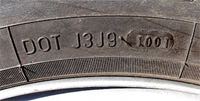 Hot dates: A tire may be undamaged and have loads of tread left on it, but if it’s aged, it’s not a safe tire. When we say “aged,” it’s recommended you never buy a used tire that’s any older than five or six years. A tire that’s seven years or older really needs to be replaced. How do you know how old the tire is? Look on the sidewall for the DOT code: the letters DOT, followed by several numbers are the code. The numbers are the key: The first two are the identification code of the tire plant where the tire was made. The next four numbers are the date of manufacture – the first two of those are the week, the next two are the year. So the four digits “1001” tell you the tire was made in the 10th week of 2001.

 You must visit Quartzsite. It’s in the middle of nowhere in the Arizona desert. Technically it’s where I-10 and state route 95 intersect, about 20 miles east of Blythe, California. It’s no place to be in the blazing hot summer unless you’re a lizard.


 P.S. Check out my recent video. . .
  •Did you miss last week’s RV Travel?


 America’s Largest


 Winter Differently in Yuma, AZ!
 With 7 resorts to choose from, book your stay in one of the sunniest places on earth, Yuma, Arizona! Whether you are looking to book an RV site or relax in one of our beautiful rentals, we have something for everyone. Stay a week, a month, all season or all year long!

 Keep up with RV Industry news
 Organize your RV’s shower!
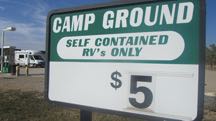 Website lists thousands of free and cheap spots to stay with an RV
 Work campers: Earn up to $2,500 in 2 weeks at sugar beet harvest
  Essential equipment for many RVers!


 Liquefy solid wastes in sewer holding tanks
 Improve performance
 Riding the rails! Tourist Trains Guidebook


 Fix it In Foil! Tasty Recipes. Easy cleanup!

 Use handy silicone lids for cooking & storage
 Strengthen your hands, fingers and forearms
 The Most Scenic Drives in America


 Mike Sokol is an electrical and professional sound expert with 40 years in the industry. Visit


 Camco’s Heated Water Hose provides safe drinking water in freezing temperatures by combining a drinking-water-safe hose with a self-regulating heat source encapsulated in an all-weather, PVC coating. Operates on 120VAC/1.3 AMPs. Made in the USA.
  Joke of the Week
 Keep your fridge in order when you travel
 Stay warm, save money
  2016 RVer’s Friend

 Hey M.,
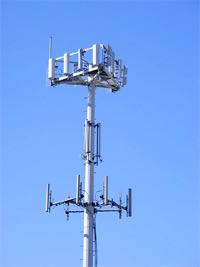 When the snowbirds descend on Quartzsite every winter, capacity is put to the max. Long lines at the LP outlets, no place to sit at McDonald’s, and at the top of the list, a short supply of broadband capacity, at least for folks who rely on Verizon Wireless as a carrier.