Dear RV Doctor: We have a 2007 Damon RV with a leaking “hex” shower stall. It is leaking somewhere in the glass section framing or where the shower sides, glass and plastic connect to the bottom section. The water appears at the bottom of the glass framing where it connects to the plastic shower stall, which is nearly inaccessible. I have half a tube of silicone caulk spread over and through the connection points on the inside, but it is still leaking. Would it be beneficial and easy to take the framing out and really caulk the areas? —John W.
Dear John: It’s tough to choose a repair path without actually having the benefit of looking at the shower enclosure in question, but in past experiences with single-sided enclosures, it was always proven best to disassemble, clean off the old sealant and reassemble with new sealant. One troubling aspect with this method is that some manufacturers are likely to install the shower enclosure before attaching other cabinetry in the lavatory making it nigh impossible to disassemble and reassemble after the fact.
Before attempting anything yourself, I would suggest seeking out a Damon dealer near you. It may even be worth a day trip to find one. Perhaps Damon issued a service bulletin if this problem was chronic. A selling dealer would be on that mailing list. And just perhaps they’ve seen this symptom previously and will know exactly where the leak is originating. It certainly doesn’t hurt to ask.
One thing you might try: Saturate the enclosure in sections, only allowing the water to pour down one section at a time. This may isolate the offending portion and help pinpoint where the water is entering before exiting. My guess is that it is coming out of the enclosure at the very bottom so it probably doesn’t matter where it actually enters. I’m thinking the seal under the bottom frame is where the leak originates. If there is any “play” in that bottom frame member, perhaps it will be possible to carefully pry it up a fraction of an inch and squirt some silicone under the frame member all the way around.
Again, without seeing it firsthand, it’s difficult to diagnose. A long shot is that the enclosure itself is cracked somewhere allowing the water to escape. This is unlikely unless the enclosure was installed in place while under stress. This could happen if the factory secured a cabinet up against the enclosure after the original installation. Stressing the enclosure at any time after the initial installation can cause the plastic to flex enough to break the sealant. I hope some of these suggestions will help, John. Plus, our readers may have some ideas as well.
In this day and age of RV parks with tightly packed campsites, unwanted noise can be irritating, or worse keep you awake at night.
Here are a few ways to get rid of unwanted noise or at least mask it.
•If the noise is from your neighbors, ask them politely to talk softer or turn down their music (or outdoor TV). If the noise is well beyond what should be acceptable, notify the park management or camp hosts.
If that fails, here are a few ways to mask unwanted noise:
•Close your windows if you don’t need them open. Or at least close them on the side of your RV where the sound is originating.
•Wear earplugs. This is probably best only at bedtime. Alas, some people don’t like anything in their ears, so this option won’t work for them. Wax earplugs that mold into your ear work best.
•In the summer, use your air conditioner to mask outdoor sounds. Other times, use its fan-only option. An overhead exhaust fan will also mask some noise.
•A portable fan can also provide white noise.
•If you enjoy sleeping to the sound of a TV or music, that can drown out other sounds. Wear earphones at night or even other times.
•There are many apps, some free, that work on your mobile phone to provide soothing sounds to mask noise. I have two on my iPhone —Sleep Pillow and Sleep Bug. Most free apps will include the sound of a pounding surf, gentle rain or a crackling fireplace. Pay a few dollars and get more exotic sounds. One night I overhead my neighbor’s app: it sounded like his RV was infested with crickets.
White noise machines are available at big box stores and online. I use one from LectroFan that provides 20 different sound combinations, all based on either white noise or the sound of a fan. I’m a light sleeper: the sound from the machine has helped me sleep soundly many a noisy night.
If you have other methods of combating unwanted sound, please leave a comment. I’m sure there are many ways that I didn’t mention here.
Dear RV Shrink: We just bought two solar panels for our motorhome. My husband said it would eliminate the need for hookups. We spent almost $2,000, and now two weeks later he wants electricity.
We have been parked in Montana for two weeks in a national forest campground. Mostly it has been cloudy and rainy. I guess he didn’t plan thoroughly enough. Our batteries have slowly died until last night everything shut down. So much for solar.
Am I being too hard on him? Do most people find these sun catchers sometimes helpful? —Mostly upset with a slight chance of forgiveness in Lincoln
Dear Lincoln: It would be my guess that your stormy disposition has been brought on by bad timing. They are solar panels, which is pretty self-explanatory. “That lucky old sun has nothin’ to do, but roll around heaven all day.” It is true that the sun shines every day at 72,000 feet, depending on high cumulus clouds, but that is not always helpful to solar panels.
You don’t say what your battery bank is made up of, but for two grand I’m going to guess you bought some good batteries to enhance your system.
Go find some sunshine. You will feel a lot better.
We run 300 watts of solar into four 6v golf cart batteries from Sam’s Club. It is budgeted with a real good controller. In five years I can only think of a half dozen times that it was dreary long enough to put a big dent in our solar savings account. In those same five years it has paid for itself more than once in electricity and convenience.
If you travel often you will become an appreciator of the magic of the sun to continually top off your batteries.
I am sitting in a National Park right now listening to several generators around me sucking fuel, making noise and pollution to accomplish the same thing my quiet panels are doing.
Hang in there. I see sunny days in your future. —Keep Smilin’, Richard E. Mallery a.k.a Dr. R.V. Shrink
If you act fast you can own your own RV park. It’s in Tennessee, just outside scenic Pigeon Forge — 10 miles east of Great Smoky Mountains National Park and a mile from Dollywood, one of the most popular attractions in the South.
It can be yours for a mere $8.2 million. That’s the asking price, anyway. Maybe you can pick it up for a less. Bear Cove Village RV Resort has 100 sites and 20 cabins. Good Sam gives it a rating of 9, which is really good.
If you’re interested you need to act fast — by Monday (Oct. 3, 2016) to be specific. Just submit a signed letter of intent via email to Chris Clay at chris.clay@cbre-raleigh.com. There are some other requirements, which will be explained.
We received this letter from RV Travel reader Neida Perrie asking for advice. What would you do in this situation? Here is what she wrote:
“We are in a beautiful RV park. In addition to our coach facing a golf course we also enjoy large patios and grass surrounding the entire site. Like most RVers we enjoy spending time on our patio. We just had a Beaver motorhome with a basement air conditioner pull in next door. There are two large vents on the bottom of the RV that face our patio. When they turn on their air conditioning there is the continuous noise from the blowers and hot air is blown out through these hoses.
“We had friends over one evening and we had a hard time hearing each other as the noise was so bad. I understand that when it is hot they need to run their air conditioning. But, this makes it difficult for us to enjoy our patio.
“I don’t know why any manufacturer would do something like this – maybe this is part of the reason that Beaver is no longer in business. But, I would love some suggestions as to how to handle this difficult situation.”
My short response:
Dear Neida, Noise pollution is a problem, whether you are experiencing it from an outdoor TV, stereo, generator or simply loud conversation. I’ll post your letter and urge our readers to respond. Let’s see what they say. But, basically, there isn’t much you can do but request they move to another site, perhaps one away from others. Also, maybe there is a problem with their AC that is causing the extra noise. You could talk to them about that.
What advice would you give Neida? Please leave a comment.
Experienced RVers agree: Do your homework before buying an RV. By all means, do not buy the first RV you see or buy on impulse.
It’s 2016 and RV manufacturers are cranking out RVs faster than ever, more than 400,000 new models will be sold this year — an all-time record. In way too many cases, those RVs are leaving the production line with serious problems. The general thinking among RVers is that if you buy “new,” expect to spend some time in the shop later getting production mistakes fixed.
RV dealers these days are often so overbooked and overworked that they don’t fix things right. In some cases, their technicians are downright incompetent, frequently due to a severe shortage of qualified help. It may take a dealer a month or two (or even longer) to get an RV into the shop, and then, even after pronouncing the RV fixed, only have the owner drive away to then discover the problem still exists. This situation is epidemic.
That’s why many RVers are buying low-mileage used units, where the bugs have (hopefully) been worked out.
So what to do? First, new buyers should spend a lot of time browsing the Internet for information about vehicles, manufacturers and dealers. Soak up as much information as possible. If it’s RV show season (Fall and Spring, mostly), by all means attend a show and compare models. Visit RV dealerships, but vow not to buy on impulse. Just look. Pick up literature.
Perhaps most important is to check with other RVers about their experiences with an RV model the new buyer is considering. Once they settle on a particular RV, they need to find the best place to buy it. Many dealers really do care about their customers. But, sadly, many do not. They care about the sale: What happens later doesn’t matter.
Two valuable online resources are worth checking for clues about an RV dealer’s reputation. First, check with the Better Business Bureau to see a dealer’s rating. If it’s not A or A+, consider looking elsewhere. I’d avoid doing business with a dealer that is not a member of the BBB.
Another source is PissedConsumer.com. This is where consumers let off steam. Be aware that what you read here are one-sided accounts: The person complaining may have a chip on his or her shoulder or simply be a chronic complainer. Still, if you read countless complaints, all posted recently, then be cautious when dealing with the business in question. Here are a few RV dealers with a substantial number of comments:
Keep in mind, the larger the dealership, the greater the chance that some customers will not be happy. It’s impossible, after all, to please everyone and typically those who feel they’ve been wronged scream the loudest even when they’re at fault, not the business.
If you want to dig deeper, contact the state Attorney General’s office where the business is located. This is also where to go if you believe you have a victim of fraud or other illegal business practices.
Finally, there is no Consumer Reports for RVs. Some websites claim to be, but we cannot recommend any as comprehensive, credible buying resources.
The Winegard ConnecT is a long range, high-performance WiFi extender allowing users to get WiFi where others can’t. Designed for the mobile environment, this WiFi extender increases the range of existing WiFi hotspots. It improves the overall customer experience by connecting from the comfort of your own vehicle.
Setup is easy with the step-by-step instructions, which can be set up on any mobile device. It provides a secure personal connection and allows users to connect to the internet with the maximum speed available, utilizing three high-gain antennas.
The Winegard ConnecT captures available WiFi signals providing maximum security and RV internet speed.
The Winegard ConnecT helps you keep mobile devices, media players and computers connected to WiFi. Get ready for a consistent, reliable connection and expanded coverage wherever the road may take you.
Simple to Setup & Use
Step-by-step on screen instruction makes setting up a breeze. Anyone can do it!
Scan for and select WiFi network
Connect your WiFi devices to your new extended network instantly
Easily connects your mobile devices, smart TVs and gaming controls
Secure RV Internet
Always secure. Set-up your secure network once and you are done.
ConnecT Advanced WiFi protected access (WPA and WPA2 – PSK)
Guest Network Access – separate and secure
Double Firewall protection (SPI and NAT)
Denial-of-service (DoS) attack prevention
Increased Range & Speeds
Increase the range for mobile devices inside your RV
Multi-user MIMO-ready for faster performance to each device
Powerful amplifier and three hi performance external antennas increase WiFi range
Easily connects all your devices to secure WiFi in seconds
Available mid-October, 2016. For more information visit the Winegard website.
You can find Bob Difley’s RVing ebooks on Amazon Kindle.
In the early days when many of us were just starting our RV lifestyle, keeping our RVs repaired usually required a trip to the RV tech or mechanic knowing it was going to take a chunk out of our wallets.
Our alternate options at the time were to seek help from a friend (often more harm than help), or go to the library and pour over repair manuals — if you could find one that you needed for a particular job.
But that all changed with the internet age, especially with search engines like Google and Bing, and altruistic RVers who post clear and concise step-by-step directions, photos, even videos of everything from testing and analyzing your RV systems and appliances to completing the necessary repairs or replacements — including the tools and parts you will need to do it.
If you haven’t tried it yet, the next time you have something fail, Google it. Look at several different web pages and find the one that makes the most sense to you. You will be surprised how much maintenance and repair you will be able to take care of yourself with proper instructions — as well as all the money you can save on shop repairs.
By Chris Dougherty Chris Dougherty is a certified RV technician. Here is a letter he received from a reader while he was serving as RVtravel.com’s technical editor.
Dear Chris, I’m having a dilemma with my Onan generator. It won’t stay running and it quits when I take my finger off the START button, or cuts out and dies if it decides to run at all. It has been professionally tuned, has a new control panel, fuel pump is fine, etc., etc. No one can figure out the problem. HELP! It’s limiting the use of our RV. —Deb
Hi Deb, It looks as though you’ve had this thing looked at professionally, but there are a couple of possibilities that are easy. First, how much fuel do you have in the coach? The generator uses a separate pick-up tube in the fuel tank which is higher than the engine tube. So, once your tank gets down to about 1/4, the genset will stop working so as not to use up all the fuel and stranding the coach. Second, make sure the oil is full. Onan gensets have a low oil cut-off that can affect the unit’s operation.
The newer Onan gensets will flash a code on the start switch light if they encounter a problem. If you go to www.cumminsonan.com they have a manual section which should give you additional troubleshooting options and a guide to deciphering the codes.
There are additional causes of these symptoms, which require specific testing of the system. I would recommend seeking out a Cummins Onan service center to have it looked at.
There’s one thing that many Class A motorhome owners don’t have that plenty of other RVers do have – a spare tire. Manufacturers often leave spare tires off the list of factory-provided equipment with an explanation: “Spare tires for big motorhomes are just too heavy and too bulky for owners to deal with. Just let the road service company help you.”
The sad case of letting the road service company “help you” typically translates into a hostage situation. You’re hostage to whatever price the service company charges for the new tire – provided they can even hand off the tire you need. You may be stuck waiting beside the road for several hours while the road service folks try and find the right tire. Maybe it’s worse – they send out a tire that’ll “get you back to civilization,” but then when you limp in, you’re stuck buying the right tire.
There may be a solution. Roadmaster, Inc., the tow-bar manufacturing company, has a spare tire carrier specifically designed for the needs of big motorhomes. Designed to slip into your rig’s receiver hitch, the Roadmaster carrier eliminates the problem of “where” to stow a big spare. But what about getting the thing off the carrier without damaging your own human body parts? The carrier has a patented hinge system that allows you to slowly move the tire from the travel position, right down to ground level. Once there, it’s a relatively simple job to roll the tire to where it’s needed.
Will your tire fit? It will, provided it’s a 16, 16.5, 19.5, 22.5, 24 or 24.5-inch wheel. But what about the toad car? There’s a built-in 2″ receiver hitch in the system, allowing you to take your spare and your toad. The carrier has a 10,000-pound maximum capacity and 400-pound maximum tongue weight.
Depending on your viewpoint, the weight on your pocketbook for the new carrier shouldn’t be too difficult to bear – the suggested retail price is $695.00, but you’ll find it “street priced” at about $100 less. Roadmaster representatives are quick to point out that the price easily outweighed by the opportunity to stay in control of how much you pay for a tire, the ability to keep a matched tire for emergencies, and the time and frustration you’ll save.
Learn about RV camping, RV travel, RV news and much more. This newsletter, now in its 16th year of continuous publication, is funded primarily through advertising and voluntary subscription contributions from our readers. Thank you!
Issue 760 • Week of Sept. 17–23, 2016
Editor’s corner With Chuck Woodbury Chuck (at) RVtravel.com
I’ve been at the Hershey (Pennsylvania) RV Show now for four days. Right now, I’m typing on a balcony overlooking the floor of Giant Arena, the home of the Hershey Bears hockey team.
The big thing at this year’s show are RVs with one-and-a-half bathrooms. Apparently, one is no longer adequate.
The big rig RVs are the main attractions — Class A motorhomes and fifth wheel trailers. They’re more luxurious than ever.
In this year’s 2017 models, three or even four TVs are common, with one mounted outside. Four or five slides are common. Outdoor kitchens are common. Plenty of RVs have built-in washer/dryers. Some have dishwashers and residential refrigerators. King-size beds are more popular than queens. Master bedrooms have walk-in closets, some cedar-lined. More fifth wheels than ever include bunk beds and/or two bedrooms. Some second bedrooms double as a home office.
Save money! This illustrates the large markup on RVs sticker price!
Some Winnebago motorhomes have a big mirror in the bedroom. Push a button and it turns into a TV: a type of one-way glass performs the magic. Some RVs have lofts, great for kids. Even the smallest RVs — the ones like the old Teardrop trailers — have air conditioners.
Class B motorhomes are getting bigger, some closely resembling class Cs but without the bunk over the cab.
Lightweight towables are everywhere. Take your pick. They look great. But be warned — corners are cut to save weight with these RVs, as well as others that are not necessarily trying to reduce weight, but the price point of the RV itself to stay competitive.
It appears to me that a high percentage of the RVs are for extended or full-time living.
More dishwashers this year than ever before!
“Camping” is not what people do with the bigger RVs. They’re really mobile residences. PR people with the Recreation Vehicle Industry Association (RVIA) don’t like it when someone calls an RV a “mobile home.” But, really, what do you call a vehicle that is drivable or easily towable with plush furniture, an island kitchen, two bedrooms (one with a king-sized bed), a washer/dryer, dishwasher, two or three air conditioners, an outdoor kitchen and four TVs? To loosely quote Cousin Eddy, “That there’s a mobile home.”
I’m racing to see as much as I can, and in between I’m visiting with all my buddies — fellow writers, bloggers, editors and publishers. We meet after hours to talk shop and sip Yuengling beer. A couple dozen subscribers have stopped me to say hi. That’s been a lot of fun.
I’ll write more in the weeks ahead about what I’ve seen. For now, I must go. I have one more day here (I’m flying home Saturday) and a lot more to see. This show is huge. You have to keep moving to see it all. If you’re looking for an RV — big, small or medium — this is the place: 1,300 on display. Wow!
P.S. This newsletter is now officially in its 16th year! Some readers have been along for the full ride. Nearly 1,800 of you are voluntary subscribers (thanks!!). Without you, my staff and I would be unable to continue. The nature of the Internet is changing dramatically, making a web-based publication tougher to pull off and earn a profit. I’ll explain more another time.
Happy Birthday! Happy Anniversary!
Wish your special someone a Happy Birthday or Happy Anniversary and we’ll post your well-wishes and your short comment right in this newsletter. It’s super easy to leave your greeting. Just click here.
See this week’s greetings near the bottom of this newsletter.
Clean your RV… with beastly-good results! Your RV’s not your car, it’s your “beast.”
Your RV’s large surface area makes it a beast that collects more bugs, grit, grime, soot and industrial pollution than your car does. And it may have different surfaces of paint, fiberglass, vinyl and aluminum. Click on the video to see Wade clean, shine and protect EVERYTHING with Beast Wash. Click here to buy, or learn more about, Beast Wash at the Wade Maid website.
Is reading this newsletter worth 10 cents to you? Our staff works hard to bring you a valuable newsletter every Saturday. Readers help make it possible with their voluntary subscriptions. Even a pledge of $5 a year is appreciated — that’s less than 10 cents an issue! Many readers pledge more — $10 a year is less than 20 cents an issue! Your contributions make it possible for us to write about important matters, not just fluff to make advertisers and RV industry big shots happy. Enter a voluntary subscription. Use a credit card, PayPal or mail a check.
Unique RV overnight stops at wineries and farms With membership in Harvest Hosts® you can stay overnight at 500 wineries, farms and attractions across North America. Harvest Hosts offers an exciting alternative to traditional overnight stops where you can meet interesting people and learn about their lifestyle. Learn more at the Harvest Hosts website, or watch an interview with the founders by RVtravel.com editor Chuck Woodbury.
Keystone recalls nearly 52,000 trailers due to faulty A/C wiring
Keystone RV Company is recalling certain model year 2011-2017 Bullet and Passport recreational trailers. The affected vehicles are equipped with an air conditioner LCD thermostat that may not be properly wired. If the thermostat is wired improperly, any damage to the thermostat wiring may result in an electrical short, increasing the risk of a fire. There are 51,585 trailers involved. Read more.
America’s Largest RV Consignment Dealer Buy or sell your used motorhome, diesel pusher, fifth wheel or travel trailer hassle free at PPL Motor Homes. And check our huge selection of parts! PPL is the largest RV consignment dealer in the USA, selling more than 24,000 consigned RVs since 1972. Visit the PPL website.
Reader RVs
What RV do you drive or tow? Send us a photo of your RV (and tow vehicle) with a 150-200 word description of where and how often you travel with it, and what you like or don’t like about it. Include your name(s) and hometown. We’ll post them to RVtravel.com. Send to assistant editor Diane McGovern at Diane(at)RVtravel.com .
CLICK HERE to see last week’s RV Travel Reader RVs.
Sales of new towable RVs rose slightly in July, according to Statistical Surveys Inc. As a group, sales moved up almost 2 percent, compared to July 2015 sales. Travel trailers were up close to 5 percent. All other towable sectors sank: Fifth wheels dropped nearly 5 percent, pop-ups plummeted more than 16 percent, and park models declined 12 percent.
New motorhome sales flatlined in July. Overall, the sales rate was the same as in July 2015, with Class A motorhome sales actually falling more than 5 percent. Keeping it level, Class C sales perked up 5 percent, largely due to sales to RV rental companies. Source: Statistical Surveys Inc.
After suffering a couple of bad months, sales of used towable RVs showed August to be a good month, according to industry watcher Black Book. Wholesale prices for towables jumped 11 percent from July, with an average sale price of $11,984. Motorhomes moderated the picture, up less than 1 percent from the prior month, showing an average $39,701 sale price. Compare these to August 2015 prices, where towables sold for $10,844 and motorhomes at $40,237.
Plans to turn 120 acres of land with views of Lake Tahoe (Calif.) into a campground have been scrubbed. Now the developers say they’ll put the property into the hands of the U.S. Forest Service — via sale. Public backlash against the development was strong and the developers say, “We have listened to the community and have decided the parcel should be permanently protected through a sale to the forest service.”
Officials at Great Basin National Park (Nev.) are mulling potential fee increases. Fees at several campgrounds, now running $12, could see a hike to $15. Free camping at Snake Creek would pass away and become $5 per night. Fees could also hike up to for cave tours.
Amid complaints of campsite reservation scalping and a lack of available sites, British Columbia, Canada, provincial park officials report 2016 was a high-water year for use. The agency says 182,000-plus reservations were made this year for camping, up 16 percent from 2015.
Photo: Go Fund Me
A family of Arizona RVers are struggling to recover after their motorhome caught fire. Jeannie Withrow and Craig Winters stalled out on California Interstate 8, grabbed their son, Justin, and dogs and bailed out. Justin was clear of the rig, but Jeannie and Craig were running past the rig’s propane tank just when it blasted flames, seriously injuring them both and two of their dogs. Craig was released after eight days in the hospital; Jeannie is in a medically induced coma with burns to 60 percent of her body. An Internet fund has been established to help the family with medical bills. Vet bills for their two Chinese Cresteds now amount to more $30,000 — both were badly burned. Donations for their care can be directed to VCA Emergency Animal Hospital, 2317 Hotel Circle, San Diego, CA 92108, ATTN: Izzy and Pandora Medical. [Update Monday, Sept. 19: Sadly, according to an update from Craig on the Go Fund Me page, Pandora did not survive her injuries.]
A cell phone warning may have saved the lives of 15 people from Tropical Storm Hermine. Edward Kain was roused from sleep by an alert on his cell phone 1:00 a.m. on Labor Day weekend. He and his family were in their RV at Hatteras Village, N.C. The storm — which grew much bigger than weather forecasters originally foresaw — blasted its way onto the coast. Edward got his family up, alerted other family members camping in their rigs nearby, and all took cover in a concrete block-walled restroom for two hours at the Hatteras Sands Campground. At least two of the group’s rigs were tossed by the storm.
Image: j.j. at Wikipedia
A recent editorial published by RV club Escapees joins the rising chorus of concern about the swallowing up of smaller RV manufacturing companies. Using the term “oligopoly” (where a select few firms dominate the market), the editorial doesn’t specifically name outfits, but it’s clear Thor Industries and Forest River, which now control more than 80 percent of RV manufacturing in the U.S., are two key players the club points to. In the statement, the club’s Board of Directors writes, “When a few companies dominate an industry, less competitive pressure exists. If there are only a few RV manufacturers and few distributors, then consumers have a limited number of choices as to where they can buy RVs and which RVs are available for purchase. Essentially, consumers may find themselves in a take-it-or-leave-it situation.”
On Wednesday on Interstate 26 in South Carolina, a Class A motorhome towing a truck blew a front tire and ended up on the other side of the freeway driving into oncoming traffic. Jim Fisk was driving behind the RV and got a video of it losing the tire and crossing the median. No one was injured. (Wow!) Fisk provided the video to TV station WYFF. Watch the video. And here’s an update from WYFF from the three passengers in the red car you see get run off the road by the RV. Watch the video.
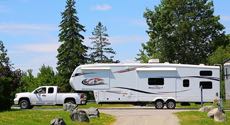
Hit the Road this Fall!
Thousand Trails campgrounds are located in the country’s most desirable vacation destinations. Find a lifestyle of leisure and activities – from picturesque nature to fun themed weekends. Most of our sites have full hook ups, as well as fire pits and picnic tables. We can accommodate a wide variety of RVs, from pop-ups to Class A rigs. Click to receive 10% off your next RV stay!
More News
Photo: Thomas Shahan on Wikimedia.org
First it was the Boy Scout troop leaders who knocked down an ancient rock formation in Utah’s Goblin Valley State Park. Now Oregon state park police are on the lookout for people who took down Duckbill Rock at Cape Kiwanda. The seven-foot formation looked all the world like a duck’s bill, and had been quite an attraction. When it was found smashed to bits, park officials thought time and gravity were the culprits, but a film clip shot by a drone operator shows vandals toppled the ancient Hoodoo. When the drone owner confronted the vandals, they claimed they’d done a public service: A friend of theirs had broken his leg on the rock, and it needed to be taken down. An investigation is underway.
A slip twixt finger and keyboard nearly cost a British Columbia man $1,100 in a provincial campground reservation foul-up. In July, Michael Dixon was attempting to reserve a campsite on the BC Parks website for August 2017. Woops! He put in “2016” instead of “2017” and clicked the confirm button. Then he recognized he had the wrong date. With the system “thinking” it would be a matter of days before Dixon was to turn up for his site, policy indicated he’d forfeit the entire amount if he cancelled. An appeal to live human beings at BC Parks yielded only a “sorry Charlie” response. After Dixon asked a news media consumer helper program to intervene, BC Parks finally relented and refunded Dixon’s dollars.
Insult to injury? A man who was arrested in his RV parked at a Mountain View, Mo., Walmart apparently took advantage of the company for more than free overnight camping. Stuart E. Thurber, age 55, has copped a guilty plea in U.S. District Court to charges of counterfeiting $100 bills — some of which he used to “purchase” items at Walmart. From January 2014 until his arrest in June 2016, Thurber allegedly worked the scam out of his travel trailer, “washing” the ink of genuine U.S. currency, then reprinting them as C-notes. It appears that Thurber could spend the next 25 years “full-timing” — not in his RV, but in a federal pen.
It’s been more than six years since the disappearance of Lyle and Marie McCann, two elderly Canadian RVers whose burned-out motorhome was found but whose bodies never have been located. On Thursday a Canadian Crown Court justice ruled that Travis Vader was guilty of second degree murder, and sentenced him to a life sentence without the possibility of parole for at least 10 years. But Peter Sankoff, a University of Alberta law professor who specializes in legal issues in criminal trials, said Queen’s Bench Justice Denny Thomas used a section of the Criminal Code in his decision which was found unconstitutional in 1990 by the Supreme Court, although it has never been repealed. Lawyers for Vader have filed an appeal and are seeking an acquittal.
A wildfire caused the closure of the south gate of Yellowstone National Park for the second time. It’s the same fire that closed the entrance for nine days last month, but it came back to life due to strong winds on Sunday. The road between Lizard Creek Campground in Grand Teton and Lewis Lake in Yellowstone was closed until Tuesday. The fire burned more than 32 square miles.
Photo: Mecum Auctions
A motorhome once owned by “The Greatest,” wasn’t the greatest at auction. A 2005 Winnebago previously owned by Muhammad Ali went up for auction last weekend — but bidding went only to $22,500 — below the $45,000 minimum bid level set by its current owner. John Bennett bought the rig from the boxing legend a few months before his death for $27,000. Auction managers say they think the rig didn’t do better — despite the fact that it included a pair of autographed boxing gloves — because few bidders knew the rig was once Ali’s. Bennett says he’ll keep the coach — for now.
If it’s September, then it’s RV tailgating party time at Louisiana State University. But wait, in the aftermath of flooding in the Pelican State, there’s been a significant change at LSU’s RV parking lots. One attendee told news media that on a typical Friday morning, the lot is occupied by nearly 60 RVs. Last Friday, there were only about 30. Many LSU fans apparently lost their RVs in the floods, or perhaps they were tied up as emergency housing.
A big rig driver with a bad attitude is facing charges of dangerous driving and assault with a weapon in a scary incident out of Alberta, Canada. An older couple driving a motorhome attempted to pass a slower-moving 18-wheeler on Highway 753 out of Lodgepole. Not only did the big rig driver not allow them to pass, he deliberately smashed his rig into the motorhome. When the couple pulled to a stop, he came after them, threatening them with a hammer. The couple wasn’t physically hurt, but their coach was much worse for wear.
Are you looking over your shoulder? You should be, if you’re the RVer who was stupid enough to dump your holding tanks down a storm drain at Lowe’s in Brunswick, Maine. Yep, police are looking for you — courtesy of the Walmart next door, whose parking lot security cams got a good view and recorded your license plate number.
Keep up with RV Industry news throughout the week at RVbusiness.com.
Reduce air drag and boost fuel efficiency — Airtab® your RV! Just peel and stick Airtabs™ to the rear sides and the rear roof of your RV coach or trailer to create swirls of air that reduce aerodynamic drag, save fuel and improve stability. Airtabs™ dramatically reduce trailer ‘fish tailing’ and crosswinds pressure to RVs from passing trucks, while improving fuel efficiency 2% – 5%! Click on the video.
Clean black marks off your rig
Black marks on your rig? Give it a shot of WD-40, rub it with a rag, and many of those black marks will vanish. Wear gloves when using WD-40.
Important torque wrench tips
A cautionary note for those who use a click-type torque wrench: Don’t force the wrench past the point at which it clicks, or on manual pointer-style either, as this will lead to losing the calibration. Recalibration can cost as much as a cheap torque wrench. When re-torquing a wheel, it’s wise to back off a wheel nut or any bolt slightly before rechecking torque or you may inadvertently over-tighten said bolt and cause failure. Wheel nuts must be torqued evenly in a criss-cross manner (as shown in owner’s or shop manuals). If not, brake rotors can be tightened unevenly causing warping, leading to shuddering brakes and possible brake failure. Thanks to Bill Rocks for the reminders.
Extend the life of your awning
Awning stretched and sagging? You may be able to avoid the costly awning replacement with a less-expensive addition of a center rafter support from your RV dealer.
Do you have a Quick Tip? Send it to Diane (at) RVtravel.com .
Light up your RV with Boogey Lights! RV accent lighting is all the rage! Just look around the RV park! Enter Boogey Lights®! These robust, super-bright, state-of-the-art LED lights with hi-tech controller technology represent the next generation in LED lighting for RVs. The AWNING & UNDER-GLOW LIGHT KITS are specifically designed to withstand harsh operating environments. Don’t waste your money on junk! Get Boogey Lights! You can even control them with your Smart Phone! Learn more or click the video for a demonstration.
Some 2014-2017 Winnebagos recalled for fire hazard
Winnebago Industries, Inc., is recalling certain model year 2014-2017 Itasca Cambria, 2015-2017 Winnebago ERA, Travato, Fuse, Aspect, and Vista recreational vehicles, and 2015-2016 Itasca Sunstar recreational vehicles manufactured May 6, 2014, to April 22, 2016. The affected vehicles have a power cord connection to the automatic transfer switch (ATS) that may not be properly tightened. Approximately 3,800 vehicles are involved in the recall. Learn more.
Got enough battery to power that inverter?
If you’re considering adding an inverter to your rig, or already have one, it’s important to keep in mind the battery power you have available. Nothing can ruin a spot of boondocking quicker than killing off your “house” batteries. Replacing deep-cycle batteries is an expensive proposition, and a bit of quick math can help you prevent the problem. Here’s how to figure it all out.
Winter camping in “summer” locations
There are definite advantages to camping in normally popular areas in winter over summer — such as no crowds, wonderful solitude, and a lot more wildlife to see. Sometimes campgrounds remain open in winter but shut off services such as hookups, which, along with the winter weather, discourages many RVers. But it can be a terrific time to visit state parks, forest service campgrounds and boondocking locations. Read more.
RV Armor has tough skin! RV Armor’s tough skin was featured recently in Trailer Life. Read the full story here. RV Armor offers a unique, liquid applied roof system that is Guaranteed for the Life of the RV! No more maintenance, seams, or headaches. Nationwide mobile service. We come to you. To learn more, call 1-855-782-7667 or click here. Click the video to see our 2-day process in 6 minutes!
The joys of plastic locking tubs — More organized RV storage
Since lots of RVers don’t have much storage space on board their RVs, they make the most of what they have — and that includes Rich “The Wanderman.” At first, he just crammed as much as he could into each storage bay, cabinet or area, but the stuff shifted while underway and everything ended up a tangled mess. Then he discovered plastic tubs. Find out why Rich says, “Organized storage is your best friend in an RV.” Learn more.
What to ask when buying a tire pressure monitoring system
Daryl Lawrence of TireTraker Tire Pressure Monitoring Systems offers a few tips about what to ask when buying a system for your vehicle. Watch the video.
Black streaks from A/C weeping causing weeping
Chris Dougherty, certified RV technician, received a letter from a reader while serving as RVtravel.com’s technical editor. The reader was annoyed with the streaks down the side of the RV (in fact, every one he has owned since 1974) caused by running the air conditioner. He wonders if there is any way to tap the drainage and divert it elsewhere. Read Chris’ answer.
Is your RV refrigerator cooling unit really dead?
Have you ever reached into your RV refrigerator for a nice cold drink and found it tepid, and then noticed everything in the produce drawer is wilted? A lot of RV cooling units are declared DOA by the service tech at the shop when they really may not be “bad.” Here’s an easy way almost any RVer faced with a warm refrigerator can find out in just a few hours whether there’s really something wrong with the cooling unit, or if it’s some other, less expensive problem. Read more.
RVs & Electric Bikes – the perfect match! An Electric Bike is the perfect, simplest and most affordable way of sorting all the ‘challenges’ of RV’ing. Get around camp effortlessly, visit the sites or town nearby without unhooking or simply enjoy a fun ride with fellow campers! Click here to discover our electric bikes and get free shipping & returns, and 0% financing on any new EVELO.
Ask the RV Doctor The RV Doctor, Gary Bunzer, answers your questions
Water heater — electric or propane, or both?
Dear RV Doctor: I have a Jayco trailer that has a dual electric/propane water heater. The propane heats the water faster, but the electric is at no cost to us when using the power that our state park provides. We don’t need hot water right away, so we have been using the electric mode for the first year we have used the unit. Is one method better for the long-term life of the water heater? And why? Thanks! —Larry G.
SnapPad – World’s only permanently attached jack pad for RVs Install it just once, then leave it on — forever! No more crawling under your RV to set up! SnapPad XTRA installs in seconds and will not retain any standing water. Widens your jack’s footprint on any terrain, yet dampens vibrations when you move inside your RV, giving a feel that’s solid, but soft. Compatible with LCI’s ‘Level Up & Ground Control 3.0’ leveling systems.Learn more here.
RV Club of the Week Here is an RV club/organization we like. We hope you do, too!
Boondockers Welcome
“Be my guest RV parking.” Overnight boondocking on fellow RVers’ property — around the world! Find a free* RV parking spot for a night or two on a host member’s property that’s on the way to your final destination, and meet new people and make friends in the process. *Very reasonable annual membership fee.
How can you end the “military” RV shower?
You know the routine, constantly turning off the shower to conserve hot water. That’s because most RVs have tank heaters with limited hot water. You never have to run out of hot water with a hybrid instant hot water heater. Find out how the Truma AquaGo® gives you a real shower in your RV. Learn more here.
Old postcard
Bumper sticker of the week
If attacked by a mob of clowns, go for the juggler.
Funny/clever business slogan
“Let us remove your shorts” —Art’s Electric, Pullman, Wash. (from several years ago)
Trivia
Pigeons can fly at altitudes above 6,000 feet at an average speed of 77.6 mph. The fastest recorded speed was 92.5 mph.
Have you seen a funny bumper sticker or business slogan? Send it to Diane (at) RVtravel.com .
Walmart Locator: Find stores for shopping and overnight stays This is a valuable aid for RVers who occasionally spend a night in a Walmart parking lot. State maps identify where the stores are located in the USA. Detailed information includes city or town where each store is located, type of store (Walmart or Supercenter), availability of gas and diesel fuel, distance from Interstate if within 10 miles, and more. Published 2016. Learn more or order.
Good reading from RV123.com
• The Audible app offers more than 150,000 audiobooks accessible right from your phone.
• If you are looking for rest and relaxation in western Kentucky, Duck Creek RV Park has everything you will need.
• Super Bowl MVP promotes high tech headphones.
Temperature gun is ‘essential equipment’ for many RVers! Just aim this non-contact IR temperature gun to measure the temperature of your refrigerator, tires, A/C output, or, heck, even your oven (and the list goes on). It turns on and begins reading the temperature in Celsius or Fahrenheit with one press of the trigger. A laser light aids in aiming, and can be turned on or off. Many RVers consider this essential equipment. Learn more or order at a huge discount.
Ask the RV Shrink
Hot off the press! RV Shrink’s brand-new book for all RVers
Dear RV Shrink:
We are jumping on the RV travel bandwagon. We just retired but my husband has been reading your column for a couple years. There are many things we never considered until we read your postings. Now as we have begun the journey we laugh at situations we have read about in your column. Our son just sent us a link to your e-book on Amazon. We had no idea it was even available. He actually works for Amazon in Seattle and knew we would be interested when he saw it.
Thanks for all the humorous insight into this life on wheels. We are truly enjoying every minute of it. A new adventure around every curve in the road. —Newbies in Newport
Get ready for winter Keep your water flowing in freezing temps with heated hose Camco’s Heated Water Hose provides safe drinking water in freezing temperatures by combining a drinking-water-safe hose with a self-regulating heat source encapsulated in an all-weather, PVC coating. Operates on 120VAC/1.3 AMPs. Made in the USA. Learn more or order at Amazon.
RV Tech Tips from Mark Polk
Help keep ants out of the RV RVs and ants always seem to go together. Whether you’re at the campground or the RV is in storage, ants are always where the RV is. The problem is that they can quickly get in the RV by way of any part of the RV that contacts the ground. To avoid this from happening take ant spray or a granular product and spray or sprinkle the granules around any part of the RV that makes contact with the ground, i.e., tires, stabilizer jacks, tongue jacks, hydraulic jacks, power cords, hoses or anything that may be leaning against the RV. If you’re concerned about pets, I’ve been told that you can use cayenne in place of chemical pesticides to keep ants out.
Mark Polk is the owner of RV Education 101, the premiere source of educational DVDs about buying, maintaining and using an RV. Learn more.
Latest fuel prices Here are the latest U.S. average prices per gallon of gasoline and diesel fuel: Regular unleaded gasoline: $2.20 (on Sept. 12). Change from week before: Down 2 cents; Change from year before: Down 17 cents. Diesel: $2.40 (on Sept. 12). Change from week before: None; Change from year before: Down 12 cents.
Keep stuff in place in your cupboards These spring-loaded bars are incredibly handy for keeping the contents of your cupboards in place while you travel. They extend from 10 to 17 inches. Good for fridge, too. Inexpensive. Come in three-pack. Learn more or order.
RV Travel Reader Pets
Do you travel with a pet? We’d love to introduce your pet(s) to fellow readers. Send a photo or two of Fido or Boots and a 150-200 word description of your furry friend(s), along with your name(s) and hometown to Diane(at)RVtravel.com .
Click here to see the last issue of RV Travel Reader Pets.
Essential for big RVs! 2017 Rand McNally Motor Carriers’ Road Atlas If you drive a big RV — extra long or extra tall — then this truck driver’s road atlas will be a huge help in knowing where you can drive without encountering a low bridge or getting stuck hanging over a cliff. This is an essential aid even if you have a GPS! Coverage: United States, Canada, and Mexico. Learn more or order.
The RV Kitchen with Janet Groene
Great Pumpkin Butter A versatile spread for fall camping.
Cool autumn days, camping trips into hills crowned with red and yellow leaves, chilly evenings warmed by a campfire, and acres of pumpkins waiting for the harvest. Thanks to canned pumpkin you can celebrate the season with this healthful, shortcut spread without having to start at the pumpkin patch. Get the recipe.
Keep rodents out of your RV!
This is the only plant-based rodent repellent registered for inside use by the EPA. It effectively repels rodents up to 100 days with a “woodsy” scent that’s pleasant to humans but offensive to rodents. It’s safe around kids and pets. 98% biodegradable. Tested and endorsed by the Good Sam Club. Learn more or order.
App of the Week
Audible books are great for drive time
Listening to books being read to you is such a great way to pass the time when you have long drives. Chris Guld, of Geeks on Tour, remembers buying cassette tapes, then CDs to listen to “books on tape” over the years. Now all you need is an App on your phone and a way to get the sound to play through your vehicle’s stereo system. Starting September 13, 2016, you can get free audio books with your Amazon Prime membership. Find out how in this article from Chris Guld.
Learn about smartphones and tablets
… every Sunday on a live webcast from Geeks On Tour. This Sunday’s topic is: Does your smartphone need an anti-virus app? Plus more. Watch live or archives of past programs.
The special offer for RV Travel readers is back!
Become a member of Geeks on Tour and get a 20% discount. Click here.
Avoid stink!
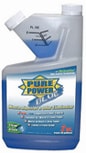
RV Travel’s favorite
Waste Digester & Odor Eliminator Pure Power Blue has long been the favorite toilet treatment in the RV Travel motorhome. Just add a mere two ounces of the biological enzyme/bacterial formula per 40 gallon black or gray water tank treatment. Accepted at all campgrounds and enhances septic tanks. Highly recommended. Learn more or order.
This week in history Week of Sept. 17–23 Compiled by Dell Bert
1806 — Lewis and Clark return to St. Louis, Mo., from first recorded overland journey.
1934 — Actress Sophia Loren born.
1938 — The Great New England Hurricane kills 600.
1973 — Billie Jean King beats Bobby Riggs in “Battle of the Sexes” tennis match.
1985 — Actor George Clooney makes first appearance on TV sitcom “The Facts of Life.”
1985 — First “Farm Aid” concert is held in Champaign, Ill.
1994 — TV sitcom “Friends” debuts.
Essential equipment for many RVers! Camco TastePURE Water Filter with Flexible Hose Protector This best-selling product reduces bad taste, odor, chlorine and sediment in drinking water with a 100 micron fiber filter. Its durable in-line, exterior mount filter has a wider body to increase flow. Use it at your campsite to keep sediment out of your RV water tank and to improve the taste and smell of your drinking water for a whole season. Many RVers consider this essential equipment. Learn more or order at a big discount.
Boondocking tips with Bob Difley
Extend the time between dumping your tanks
Many state, county, public utility and Corps of Engineers campgrounds provide water and electricity but not a sewer hookup. You can extend the time between dumping your gray water tank by putting less into it. Do this by: using a campground’s bathroom facilities whenever possible; draining the gray tank into a portable waste tank (sometimes called a “Blue Boy”) and then dumping that, and by not letting water run when brushing teeth or rinsing dishes (use a dishpan of water). If you have children, teach them about water conservation.
Record your camping trip’s bike rides for later viewing
Miniwing has introduced a brand-new bike camera called the Camile, built specifically for cyclists featuring an integrated GPS Cyclocomputer. Cyclists can easily capture the beauty of their ride or document an unforeseeable incident, and immediately download, view, or stream their footage with any mobile device. The special “Long Distance Trip” function can record each and every journey using Smart Edit to put them together, and ready to share at any time. The Camile is only 6.2 cm x 4.35 cm x 1.6 cm and weighs about 2 ounces. Read more.
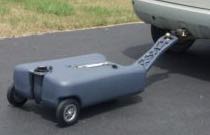
If you camp off the grid you can use one of these If you like to boondock for a few days or weeks, you know that conserving your resources, enabling you to stay longer without hook-ups, will add to the enjoyment of your chosen campsite before you have to pull up stakes and find water and a dump station. One handy gizmo that enables you to extend your stay is a portable holding tank, into which you can dump your rig’s holding tanks and then tow off with your tow vehicle or truck to the nearest dump station without having to pack up your whole rig and drive it to the dump station. Learn more.
Easily clean those stubborn bugs off your RV The Microfiber Mesh Bug and Tar Sponge has millions of tiny fibers embedded in the microfiber cloth that grabs and holds the dust and dirt. It is so effective it even cleans without chemicals, saving both time and money. The secret of this sponge lies in its unique, double-layer microfiber mesh. Older nylon bug sponges can harm your clear coat, but this one is completely paint safe. Learn more or order.
Upcoming RV Shows
• America’s Largest RV Show, Sept. 14-18, Hershey, PA
• Fall Maryland RV Show, Sept. 15-18, Timonium, MD
• Portland Fall RV & Van Show, Sept. 15-18, Portland, OR
• Southwest RV SuperShow, Sept. 15-18, Dallas, TX
• Greater Iowa RV Show, Sept. 16-18, Des Moines, Iowa
• Springfield RV Mega Show, Sept. 16-18, Springfield, MO
• Georgia RV & Camper Show, Sept. 23-25, Atlanta, GA
• Indianapolis Fall Boat & RV Show, Sept. 23-25, Indianapolis, IN
• Great American RV Show, Sept. 29-Oct. 1, Colorado Springs, CO
• Panhandle RV Show, Sept. 29-Oct. 2, Ft. Walton Beach, FL
• Washington State Evergreen Fall RV Show, Sept. 30-Oct. 2, Monroe, WA
See the list of all upcoming RV shows.
Visit our YouTube Channel.
More than 500 great videos about RVing!
Videos you’ll like
How to adjust the temperature
of a motorhome’s hot water
Gary Bunzer, the RV Doctor, shows how you can get complete control over the temperature of the water delivered to the hot water faucets in your motorhome using a kit available as a retrofit to Atwood propane water heaters. Watch the video.
Tips for towing a vehicle behind a motorhome
Walter Cannon, Executive Director of the RV Safety and Education Foundation, offers advice about safely towing a vehicle behind a motorhome. Watch the video.
Random RV Thought When is the last time you checked your RV’s fire extinguisher? It’s probably time to check it again. At the very least, remove it from where it’s stored and give its bottom a few smacks against the pavement to shake up the insides. Better yet, if you haven’t even touched it in a year or more, replace it. And while you’re at it, get a second one for extra safety. Editor’s note: Choose from a wide selection of fire extinguishers at Amazon.
Worth Pondering “I will never be an old man. To me, old age is always 15 years older than I am.” —Francis Bacon
SAVE MONEY! Don’t toss away good batteries! Most RVers rely on battery-powered devices while on the road, whether flashlights, radios or cameras. But sometimes you just can’t tell how much life a battery has remaining so you toss it to “be sure.” This small, inexpensive tester will alert you in an instant to the condition of a battery, saving you money from needlessly tossing ones with plenty of remaining life! Works on AA, AAA, C, D, 9V and button-type batteries. Learn more or order.
Readers’ Birthday and Anniversary Greetings
Happy Birthday! • September 17: To Zara from Fred D. Peters. Happy Birthday ZZ! We’ll go camping again soon! Love, Grandpa.
• September 18: To Marlon from Charlotte.Happy Birthday to my traveling companion and the Love of my life.
• September 19: To Kelly from Debbie. Happy Birthday, my love.
• September 19: To Paul Sherrick from Sherrie Sherrick. Happy birthday, my loving and thoughtful husband. I hope you and I will have many birthdays together, traveling and meeting new people. I love you so very much. I hope your day is blessed.
• September 20: To Judy from Ian McMillan. Happy Birthday, My Love • September 23: To Tony from Kathy and Chig Chigbrow. Happy 70th Tony! Welcome to the club! Hope you are enjoying your trip with Chig and the Baby Boomers!
Happy (belated) Anniversary!
• September 2: To Christine from Robert Fedor. Happy anniversary to my beautiful wife of 26 years, and a great camping partner. She makes it all worth it. • September 10: To Diane from Dave. Happy 45th Anniversary to my wife, partner, best friend, and soul mate. Thanks for 45 wonderful and interesting years. Dave
RV Travel staff Editor and Publisher: Chuck Woodbury. Assistant editor: Diane McGovern. Contributing editor: Russ De Maris. Contributing writers: Greg Illes, Bob Difley, Richard Miller, Richard Mallery, Janet Groene, Roger Marble and Julianne Crane.
ADVERTISE on RVtravel.com and/or in this newsletter. Contact Chuck Woodbury at Chuck(at)RVtravel.com.
About the RVtravel.com editor Chuck Woodbury has explored America by RV for nearly three decades. In the ’90s he published the quirky travel newspaper Out West, and was an “on the road” writer for the New York Times Syndicate. His book, “The Best from Out West” is available at Amazon.com. Woodbury’s RVing adventures have been profiled on ABC News, CNN, NBC’s Today Show, and in People Magazine, USA Today and in hundreds of newspapers. Nowadays, he lives near Seattle, where he drinks massive amounts of coffee and travels often in his motorhome and sometimes by plane when vast expanses of saltwater would turn his RV into a leaky submarine. He is the host of the Better Business Bureau DVD “Buying a Recreational Vehicle,” the definitive guide to purchasing an RV the right way.
Everything in this newsletter is true to the best of our knowledge. But we occasionally get something wrong. We’re just human! So don’t go spending $10,000 on something we said was good simply because we said so, or fixing something according to what we suggested (check with your own technician first). Maybe we made a mistake.Tips and/or comments in this newsletter are those of the authors and may not reflect the views of RVtravel.com or this newsletter.
Our offices are located at 610 5th Ave. S, Suite F, Edmonds, WA 98020.
This website utilizes some advertising services. Sometimes we are paid if you click one of those links and purchase a product or service. Regardless of this potential revenue, unless stated otherwise, we only recommend products or services we believe provide value to our readers. Amazon and the Amazon logo are trademarks of Amazon.com, Inc . RVtravel.com is a participant in the Amazon Services LLC Associates Program, an affiliate advertising program designed to provide a means for sites to earn advertising fees by advertising and linking to Amazon.com.
RVtravel.com includes links to other websites. We cannot control the content and/or privacy policies of those sites. Please be aware when you leave this newsletter or any other section of RVtravel.com to read the privacy statements of any of those websites that collect personally identifiable information. Our own privacy policy applies only to RVtravel.com and its affiliated blogs.
This newsletter is copyright 2016 by RVtravel.com
TODAY’S DEALS ON RV PARTS & ACCESSORIES AT AMAZON.COM. Click.
Dear RV Doctor,
I have a Jayco trailer that has a dual electric/propane water heater. The propane heats the water faster, but the electric is at no cost to us when using the power that our state park provides. We don’t need hot water right away, so we have been using the electric mode for the first year we have used the unit. Is one method better for the long-term life of the water heater? And why? Thanks! —Larry G.
Dear Larry,
Well, as you use the electric heating element, over time it may fatigue slightly just from constant use. And as you operate the propane function to heat the water, those components will require some maintenance over the course of time.
As to which is better for the heater itself? It probably makes no difference. In fact, it is entirely plausible to operate both the electric element AND the propane burner at the same time for a faster heating cycle and a quicker recovery rate. But the prudent thing to do is to take advantage of the free electricity and conserve the propane for the other appliances.
Other than keeping the connection clean, dry and tight, there is no maintenance to be concerned about using the electric element, but the propane components will need some cleaning annually. I say keep using the electric and save on propane costs! In fact, there is an aftermarket kit available that will convert your forced air furnace to operate on electric heat. Produced by RV Comfort Systems, the CheapHeat™ electric add-on kit enables the user to use electricity instead of propane to heat the entire RV, and then to switch back to propane when necessary. Check it out here.
We use cookies to ensure that we give you the best experience on our website. By continuing to use our site, you consent to accepting cookies. We NEVER have or will sell reader's data. For more info, please see our privacy policy page.


 Dear RV Doctor:
 Before attempting anything yourself, I would suggest seeking out a Damon dealer near you. It may even be worth a day trip to find one. Perhaps Damon issued a service bulletin if this problem was chronic. A selling dealer would be on that mailing list. And just perhaps they’ve seen this symptom previously and will know exactly where the leak is originating. It certainly doesn’t hurt to ask.
  White noise machines are available at big box stores and online. I use one from
 We just bought two solar panels for our motorhome. My husband said it would eliminate the need for hookups. We spent almost $2,000, and now two weeks later he wants electricity.


 It’s 2016 and RV manufacturers are cranking out RVs faster than ever, more than 400,000 new models will be sold this year — an all-time record. In way too many cases, those RVs are leaving the production line with serious problems. The general thinking among RVers is that if you buy “new,” expect to spend some time in the shop later getting production mistakes fixed.


 I’m having a dilemma with my Onan generator. It won’t stay running and it quits when I take my finger off the START button, or cuts out and dies if it decides to run at all. It has been professionally tuned, has a new control panel, fuel pump is fine, etc., etc. No one can figure out the problem. HELP! It’s limiting the use of our RV. —Deb
 There may be a solution. Roadmaster, Inc., the tow-bar manufacturing company, has a spare tire carrier specifically designed for the needs of big motorhomes. Designed to slip into your rig’s receiver hitch, the Roadmaster carrier eliminates the problem of “where” to stow a big spare. But what about getting the thing off the carrier without damaging your own human body parts? The carrier has a patented hinge system that allows you to slowly move the tire from the travel position, right down to ground level. Once there, it’s a relatively simple job to roll the tire to where it’s needed.
 I’ve been at the Hershey (Pennsylvania) RV Show now for four days. Right now, I’m typing on a balcony overlooking the floor of Giant Arena, the home of the Hershey Bears hockey team.


 P.S. This newsletter is now officially in its 16th year! Some readers have been along for the full ride. Nearly 1,800 of you are


 Unique RV overnight stops at wineries and farms
 America’s Largest
 Sales of new towable RVs rose slightly in July, according to Statistical Surveys Inc. As a group, sales moved up almost 2 percent, compared to July 2015 sales. Travel trailers were up close to 5 percent. All other towable sectors sank: Fifth wheels dropped nearly 5 percent, pop-ups plummeted more than 16 percent, and park models declined 12 percent.


 Hit the Road this Fall!


 Insult to injury? A man who was arrested in his RV parked at a Mountain View, Mo., Walmart apparently took advantage of the company for more than free overnight camping. Stuart E. Thurber, age 55, has copped a guilty plea in U.S. District Court to charges of counterfeiting $100 bills — some of which he used to “purchase” items at Walmart. From January 2014 until his arrest in June 2016, Thurber allegedly worked the scam out of his travel trailer, “washing” the ink of genuine U.S. currency, then reprinting them as C-notes. It appears that Thurber could spend the next 25 years “full-timing” — not in his RV, but in a federal pen.
 Are you looking over your shoulder? You should be, if you’re the RVer who was stupid enough to dump your holding tanks down a storm drain at Lowe’s in Brunswick, Maine. Yep, police are looking for you — courtesy of the Walmart next door, whose parking lot security cams got a good view and recorded your license plate number.
 Keep up with RV Industry news

 RV accent lighting is all the rage! Just look around the RV park! Enter Boogey Lights®! These robust, super-bright, state-of-the-art LED lights with hi-tech controller technology represent the next generation in LED lighting for RVs. The AWNING & UNDER-GLOW LIGHT KITS are specifically designed to withstand harsh operating environments. Don’t waste your money on junk! Get Boogey Lights! You can even control them with your Smart Phone!
  RV Armor has tough skin!
 An Electric Bike is the perfect, simplest and most affordable way of sorting all the ‘challenges’ of RV’ing. Get around camp effortlessly, visit the sites or town nearby without unhooking or simply enjoy a fun ride with fellow campers!


 Get ready for winter



 Keep stuff in place in your cupboards



 This week in history
 Essential equipment for many RVers!



 As to which is better for the heater itself? It probably makes no difference. In fact, it is entirely plausible to operate both the electric element AND the propane burner at the same time for a faster heating cycle and a quicker recovery rate. But the prudent thing to do is to take advantage of the free electricity and conserve the propane for the other appliances.