Dear RV Shrink: We are 3/4 timers. We go back to our home base once a year to maintain our property, work on our rig and see friends and family. My husband wants to stop traveling because he says it is too hard to winterize and wrap our home up every season. I say we should just go full-time and we wouldn’t have to do any of it.
I know people have bigger problems than we do, but it is getting harder to own a home and still travel as we age. Any comments? —Skipping Town in Tumwater
Dear Skipping: The first response that comes to mind is compromising. Go home each year, but don’t move into the house. Live in your RV in the driveway. Better yet, rent the house with the understanding that you can come home for a few months a year and use the utilities. This would work out best if you had a good-sized lot with some privacy for you and your tenants.
Another suggestion would be to streamline your place to make firing it up and shutting it down easier. Perhaps a few plumbing changes to make winterizing simple.
You might want to consider downsizing to a more convenient property that would still allow you to do the things you enjoy, yet eliminate much of the work like landscaping, painting, cleaning and repair.
We have a simple place to return to each year which allows us to do precautionary maintenance on our rig, enjoy the solitude of our property, invite friends to visit with their RV, and enjoy the area for a couple months.
We live in our motorhome and use the house for guests. Being a landlord does not appeal to us, but it could be a great way to earn extra income and keep the property occupied for those who would not mind dealing with renting.
All the things your husband seems to be tiring of can get old after awhile. You both have to sit down and decide what your next move will be. Hopefully you can come up with a solution that makes you both happy and healthy. —Keep Smilin’, RV Shrink
As RVers, we’re all in favor of saving money. And for RVers that handle whatever maintenance and repair work they can, here’s a possible source of big savings. It’s called Harbor Freight Tools.
hotcouponworld.com on flickr.com
We know, there’s apt to be a little backlash from some. We’ve heard the jeers: “Horrible Freight Tools.” “More Chinese Junk!” But after listening to the opinions and experiences of a fair number of RVers, and after some amount of shopping and use of Harbor Freight stuff, we’re here to outline “a humble opinion.”
The old expression, “You get what you pay for,” just doesn’t seem to fit. For years one of our dads was a big “Snap-On Tools” man – he made his living with those tools, and he swore by them. Another father, when he bought hand tools and a lot of power tools would invariably run on into Sears and pick up stuff from the Craftsman line. Said he could always count on them to replace things that broke.
But then again, that was a few years back. Today, plenty of people no longer “swear by” Craftsman, many “swear at” them. Why so? It’s the same sad story. Rather than holding to tools made in the U.S., much of the Craftsman stuff is said to come from – you know where — China. What about the “if it breaks, bring it back,” promise? That depends on which Sears you buy the tool from. The nearest Sears “retailer” from our home base is 25 miles away. They’re happy to sell you any Craftsman tool – but never bring it back. They flatly WILL NOT replace a broken Craftsman tool.
What about Harbor Freight? Countless RVers say that they’ve purchased tools and equipment from that discount retailer, and yes, sometimes those tools break. But when they’ve brought the bad boy back, they’ve never been given a run-around; rather, they’re given a replacement.
The consensus that we’ve seen works out like this: If you need a tool or a piece of equipment that you may only use once in a while, don’t hesitate. You’ll save big dollars, and be happy with the results. If you’re buying things that you may need regularly, it’s a matter of “know what you’re shopping for, and what Harbor Freight offers.” Here are some ‘cases in point.’
Hand tools get rave reviews, save for screwdrivers. Some grumble that the tolerances aren’t as “tight” as the big name retailers. Tools that you expect to “wear out” over time, like drill bits, come in for a mixed review. Drill bits, at least in the lower price range, get a thumbs down, but the higher-end bits are acceptable. Blades for saws? Circular and table saw blades seem to get a good review, but forget about reciprocating blades, like for saber saws or “Sawzall” type cutters. Here, many say they buy the tool itself, but trot around to a Big Box store like Home Depot and by the blades for the equipment there.
Universally agreed – shy away from sandpaper. It seems that while the Colonel got his recipe for “seven secret herbs and spices down” just fine, Harbor Freight hasn’t figured out how to make sand stay on sandpaper.
Over the years we’ve personally bought electrical testers, flashlights, and heavenly days, RV specific equipment with good results. Need to stabilizer jack for your travel trailer? Harbor Freight has ’em, and they work very well, and far less expensive that you can buy them from just about anyone else. And after a nasty experience with a very close “jackknife” situation, we wiped out a “brand name” sway controller. For less than a third (or maybe closer to a half) of the price for a “major label” controller, we picked up one at HF and it’s worked just as well.
An RV area we will advise caution on: Shy away from the solar panel kits, unless you really do want low-output. Shopping around in the solar panel market these days does put Harbor Freight to shame, and the efficiency of panels from other outfits is just so much greater.
And don’t forget the coupons! Some RV magazines, and of course, AARP magazine, carry monthly full-page Harbor Freight advertisements with loads of coupons. Sure enough, some of the stuff you may never buy, but invariably there’s a “20% off the item of your choice” stuck in there too.
The slide-out has become a popular feature with American RV manufacturers in recent years but the idea is by no means new. Even 70–80 years ago British caravan constructors were making models with slide-outs to extend sleeping space or create toilet or kitchen wings. One such development was the Extensicar, patented in 1930 by John and Mary Purdey of Wolverhampton, England. A rack-and-pinion mechanism operated by a handle at the rear of the caravan (RV) wound out extensions on both sides of the body.
D H Morgan, who made ‘Fairway’ caravans at Deganwy in Caernarfonshire, designed a slide-out toilet compartment and then, under a license to use the Extensicar patent, went for more ambitious extensions. In 1937 he built a caravan for the actor Claude Dampier which boasted four slide-outs, two each side to the front and the rear of the wheel arches. Dampier was a comedy actor, famous for his nasal drawl and portrayal of country yokel types.
The illustration above was found in postwar World War II editions of The Caravan Manual from Link House, publishers of The Caravan magazine. The Bedford Carlight wears the headlight masks which were obligatory during the wartime “blackout.”
By Chris Dougherty Chris Dougherty is a certified RV technician. Here is a letter he received from a reader while he was serving as RVtravel.com’s technical editor.
Dear Chris, I am told that it is not a good idea to use propane and electric at the same time to heat water. Any thoughts? —Jim
Dear Jim, It is absolutely fine to use both at the same time to heat water. Both the Suburban and Atwood water heaters are designed to operate this way, and it reduces the the amount of time it takes to refresh the hot water supply.
With summertime on us, where do you want to go? To the mountains for fresh air and cooler nights? To the forests with abundant shade? How about the beach? Yeah, break out the umbrellas, the beach towels, and sunscreen – but be careful about the trailer or the motorhome.
infomatique on flickr.com
Every year coastal tow companies gear up for the summer visitor season wherein there’s more to buckets of sand on the beach – there’s buckets of money to be made when hapless visitors get their cars, trucks, and, yes, RVs stuck in the sand. It’s a real trick to try and beat the tide if your rig is buried in that soft stuff up to the axles. Here are a few quick words about beach driving.
First, most seasoned sand drivers will warn you – getting stuck is an inevitability. Hence, if you think you want to pull your trailer with you onto the beach, be prepared to get it stuck. Getting an SUV or a truck unstuck is one thing, but getting a travel trailer or fifth wheel out of beach sand, well, that’s likely to wind up with the need of professional (spell that “expensive”) help. Hence, the safest rule for RVers and sand is this one: Don’t go where you couldn’t use a pogo stick.
What about taking your sightseeing rig to the beach? The SAFEST bet to staying out of trouble is, sure, if it’s a four-wheel-drive capable rig. Second best rigs for beach driving – rear-wheel drive. For some reason, front-wheel drive rigs are almost a sure bet for getting stuck. Full time 4×4 rigs beware — you may be too low to the ground and your “low” gear not low enough for crawling out of a sticky situation.
When you do “hit the beach,” STAY OFF dry sand. Dry sand is analogous to quicksand, and a sure bet for getting trapped. But even before you venture onto wet sand, which by its water-filled nature is a more firm and less likely cause of a hang-up, REDUCE your tire air pressure. By letting a few pounds out of your tires, you’ll tend to roll the sidewalls of the tire out, giving a wider surface to “float” over the sand. BEWARE: Before you hit firm ground again you MUST reinflate those tires, so you’ll need an efficient air pump you can use right there on the beach. Don’t try to drive on solid ground with reduced pressure – you can “drive right out of the tires.” How much pressure to let out of the tires? Popular Mechanics magazine recommends you reduce pressure in the typical SUV tire to 12 to 15 PSI – pretty low, but you’ll need that extra width.
When on the sand, technique is important. Keep the pressure on the accelerator smooth and steady. If you start to bog, this is not the time to get off the gas, nor to jazz it, but rather, try keeping the pressure steady with a slow increase in speed. Don’t try to make sharp turns – it’s a surefire way of digging into the sand. If you get stuck, first try backing out gently. Still stuck? Take the floor mats out of the car and put them under the drive wheels for added traction. Rocking may help: Put the car in first gear, accelerate GENTLY to foll forward, stop before you hit the slip point, then let it roll back. The trick is to flatten the sand under your tires to give you a surface you can crawl out of. Try doing it a few times – but don’t overdo it lest you risk damaging a transmission.
Learn about RV camping, RV travel, RV news and much more. This newsletter, now in its 15th year of continuous publication, is funded primarily through advertising and voluntary subscription contributions from our readers. Thank you!
Issue 754 • Week of Aug. 6-12, 2016
Editor’s corner With Chuck Woodbury Chuck (at) RVtravel.com
My entry into the ranks of full-time RVers has been delayed. I thought I had my condo sold, but the deal fell through at the last minute. Another offer came the next day and should stick. The result is I do not need to vacate my condo until August 31.
I am happy for the extra time. I’ve given away 80 percent of what I own, but still have another 10 percent to go, so I can now slow down a bit. Deciding what to do with family items has been the hardest. In the end, I will have parted with most everything I own including things that weren’t all that precious once I thought about it.
What remains will go into the motorhome — my new “house.” Most of it will be clothing, cameras and my computer. In the process of purging my belongings, I have rid myself of “keepsakes” that I have kept from as far back as college. Going through closets, I opened boxes that I had put away decades ago, most of the contents of no relevance to my present life. If I did not decide to go full-time, I would have died with most of those boxes still unopened.
I am a minimalist, and always have been. I’m not a shopper. I detest knickknacks except for things like scorpion paperweights, fuzzy jackalope toys and other small roadside kitsch. I have a basic rule about what I buy: if I can’t wear it or eat it, I don’t need it.
When I go on foreign trips, I typically return home with a few postcards and maybe a couple of tacky trinkets. Three years ago I spent two weeks in Ireland. I came home with one souvenir: a place mat featuring a 3-D photo of a pig. On my trips to Europe, I always visit castles. When I leave, I say to myself, “I would rather live in my motorhome.”
So, parting with my belongings is not terribly difficult for me. People who collect things, or who live to shop, would likely find it impossible to do what I have done. My sister is like that. She collects things. Her house is packed — stuff everywhere. She visits a giant Goodwill store once a week that sells goods by the pound, not the item. On the rare occasion that I buy something at a place like that it’s to give away to a friend or a child.
Now that most of my possessions are gone, I feel unencumbered and very peaceful. The other day I watched two crows perched on a cedar tree outside my window. “All they have is themselves and their mate,” I thought. “Wherever they are is their home.” Ah, the freedom!
In less than a month, all that remains of my belongings will be what’s important to me. My life will not be as simple as the crows’, but it will be light-years simpler than a year or two ago.
One thing I look forward to in my new nomadic life is having more time to find interesting things to write about, to share with you. I am so addicted to writing this newsletter that I would be lost without it.
Thanks to the dozens of you who pledged voluntary subscriptions last week. You are wonderful! I hope to keep writing to you for many years to come.
Congratulations RV Doctor! I’d like to congratulate my friend and Seattle neighbor Gary Bunzer for his recent induction into the RV Hall of Fame. Gary’s name is synonymous with RV technical education and training beginning nearly 40 years ago with his consumer column, the “RV Doctor.” He was the first RV educator to write, produce and direct specific RV service training videos and DVDs for the professional RV technician and the RV owner. Gary’s column has appeared in this newsletter for most of the last decade. Many of his videos appear on our RV Travel Channel at YouTube.
P.S. My 2008 Winnebago View is now officially for sale. See the listing.
* * * RVers are still reporting major problems with newly purchased RVs as well as difficulty finding available campgrounds. Read what they are saying. It’s amazing the shoddy quality of RVs rolling off the line today.
Dish TV Discount Program for Military and Veterans
DISHForMyRV.com is your partner for getting DISH HDTV in your RV. We offer the hardware solutions including a wide variety of portable satellite antenna solutions. Our specialized agents are experienced with RV setups and equipment and are knowledgeable in the DISH Pay As You Go programming options. This month we are honoring our Military Active Duty and Veterans with our new Military Discount program. Learn more
Ready to plan
your next camping vacation?
The CampUSA™ App allows you to quickly search, book and camp at more than 170 Encore and Thousand Trails RV resorts and campgrounds nationwide! Click here to see how it works!Download the app and receive 10% off your next stay! Use code CAMPUSA.
RV and RV-related recalls for July
The latest recalls on RVs and other vehicles and/or products of interest to RVers have been released by U.S. National Highway Transportation Safety Administration. The list includes models from Crossroads RV, Entegra, Forest River, Gulf Stream, Heartland, Jayco, Keystone, Newmar, Spartan, Thor, Winnebago and others — plus cars and trucks commonly used by RVers. Is your RV or other vehicle on the list? Read more.
Unexpected cause of Dometic fridge fire discovered
Greg Gerber reports in RV Daily Report that an RV technician trying to diagnose a problem with an older model RV watched as the unit’s Dometic refrigerator caught fire. His subsequent investigation traced the source to an electrical problem not related to the gas leak commonly cited as the source of refrigerator fires. The flaw could impact RVs built in the mid-1980s to present with Dometic LP gas refrigerators. Learn more.
THIS WEEK’S CONTEST Win the CD album “Meet the Beatles”
This is the album that set off Beatlemania in 1964. Songs include “I Want To Hold Your Hand,” “I Saw Her Standing There,” “All My Lovin’,” “Till There Was You,” “This Boy,” … and many more all-time Beatle favorites.
We’re giving away TWO CDs with the winners picked at random out of a maximum of 600 entries. The contest ends at midnight Sunday (PDT) or earlier after both albums have been awarded. You can only enter once, so hurry so you don’t miss out! It takes about 20 seconds to participate. You’ll know instantly if you win. Only residents of the 50 United States or the District of Columbia are eligible to enter. We’ll announce the winners in our August 20 issue.
Winners of our previous contest: Paul W Sternett and Gene Hultman. Both won a pair of very cool Hobbit Feet slippers.
Reader RVs
What RV do you drive or tow? Send us a photo of your RV (and tow vehicle) with a 150-200 word description of where and how often you travel with it, and what you like or don’t like about it. Include your name(s) and hometown. We’ll post them to RVtravel.com. Send to assistant editor Diane McGovern at Diane(at)RVtravel.com .
CLICK HERE to see last week’s RV Travel Reader RVs.
America’s Largest RV Consignment Dealer Buy or sell your used motorhome, diesel pusher, fifth wheel or travel trailer hassle free at PPL Motor Homes. And check our huge selection of parts! PPL is the largest RV consignment dealer in the USA, selling more than 24,000 consigned RVs since 1972. Visit the PPL website.
If you think national parks are crowded this year, travel club AAA says you’re right — and to expect the trend to continue. A recent club survey shows 79 percent of those polled are at least as likely or more likely to visit a national park in the next year. Of those responding to the poll, 41 percent said they had camped at a national park recently.
A heightened sense of security is in place at New York’s Niagara Falls State Park, following two armed robberies in the park on July 26. In one case, three men flashed a gun and stole cash and cell phones from three others on a trail on Goat Island. Later that day, a large group of young people held up another group of people, stealing cell phones and cash. No indication that the two robberies were related.
Feel a little nervous when an 18-wheeler begins to tailgate your RV? You may have good reason. An unannounced commercial truck inspection on May 4th hit truckers in 31 states and Canadian provinces. Of the rigs inspected, 12.4 percent were ordered off the road for brake violations. Another 13.9 percent were sidelined for other violations.
Visits to Montana’s state parks increased by one million during the first half of the year compared to the same time last year, with nearly 1.3 million visitors from January through June 2016. There were more than 422,000 visitors to state parks in June, an increase of 28,000 over June 2016.
Are you a young couple ages 20-39 who live in an RV full-time? If you love traveling to fun events, cools spots or festivals around the United States, BCII TV wants you for a network pilot! Tell them about yourself and your travels and send pictures to Cynthia at cynthia@bciitv.com. BCII TV is an independent television and film studio producing programs for The Travel Channel and Great American County channel, among others, including “Flippin’ RVs” and “Rock My RV.”
Early morning winds near Cloquet, Minn., did more than just wake up RVers at Big Lake — for several it brought huge damage. The July 28 winds caused Tom Getchell to wake up his wife, suggesting they bring in their slideout, which contained their kitchen. No need — a huge tree fell on the slideout, removing it neatly from the rig. Others found branches, limbs and whole trees creating various levels of damage to their RVs. Says Getchell, “It was interesting.”
Photo: Annish33 on Wikimedia commons
Last October a number of storms ripped through Death Valley, Calif. The U.S. Park Service says Badwater Road, which connects the national park to Shoshone, Calif., has finally reopened. While most other park roads are up and running, Scotty’s Castle Road is not one of them. Access to Scotty’s Castle and Grapevine Canyon is closed, and the Service hopes to have the historic district accessible again — in 2019.
Some weeks ago we reported on the man whose classic Airstream motorhome had crashed into a house in Tillamook, Ore. The driver, Jerry Bahles, has been released from the hospital after several surgeries and an amputation, and is recovering at a rehab center. Oregon State Police are still investigating the cause of the crash and have not filed any charges. The family whose home was the unwelcome recipient of the motorhome is still waiting on insurance company issues, and is currently displaced.
RVs & Electric Bikes – the perfect match! An Electric Bike is the perfect, simplest and most affordable way of sorting all the ‘challenges’ of RV’ing. Get around camp effortlessly, visit the sites or town nearby without unhooking or simply enjoy a fun ride with fellow campers! Click here to discover our electric bikesand get free shipping & returns, and 0% financing on any new EVELO.
More News
For the first time since 1980, Denali National Park (Alaska) officials had to euthanize a bear which had charged visitors on several occasions. After several occurrences, officials had used “aversive” training to discourage the bear’s behavior, and it apparently worked — the bear hadn’t been seen in a couple of weeks. But the bear turned up again, and it was captured. Unfortunately, the bear had broken its leg and nose, and was in such poor condition it was deemed necessary to put it down.
A woman is expected to be okay after being run over by an RV in north Spokane, Wash., Monday afternoon. Police say a man was working on his RV and didn’t notice his wife standing in front of it. Officers say somehow the RV rolled forward and over the woman. Emergency crews said she should recover and officers say they don’t expect to file any charges. From Fox 28 news.
Heading into the Yukon? You can expect weekend camping to be tight near Whitehorse. Camping in territorial parks overall has ramped up 30 percent since 2008, but at popular campgrounds like Kusawa Lake, Wolf Creek or Marsh Lake, and even the new Conrad campground, space is at an even greater premium.
As we reported previously, Ronald David Johnson, 50, of Corcoran, Minn., told investors he had a great plan: He’d build large warehouses on properties he owned in Bakken oil country (N.D.) and lease out space in the warehouses for oil field workers to move in their RVs to escape the winter cold. Johnson is accused of taking more than $2.1 million from four investors to help pay for construction and management of the projects, but he spent about $1.8 million of that on personal items. He has been charged with money laundering and five counts of wire fraud. Trial starts Oct. 3 in St. Paul, Minn.
Photo: Nicko-margolies at English Wikipedia
Campers in Ontario, Canada, got a bit of a shock after setting up a camera to monitor their picnic table. It all started when one accused the others of leaving the lid off the nut jar, and nobody would confess. Setting up the camera they later returned to find the violated nut jar — and film proving a clever squirrel had actually unscrewed the lid and was helping itself to the contents. The squirrel was evidently a teetotaler, leaving a nearby bottle of whiskey alone. Full story with video.
It’s not so much what Leroy James Carl Jr. took that he may regret as much as what he left behind. Police in Lakeland, Fla., allege that Carl is the serial burglar who broke into RVs and sheds in storage yards — enough so that they’ve charged him with 138 counts. In one instance, Carl swiped a bottle of Gatorade at a crime scene, guzzled it down and left the empty behind — along with his DNA.
When Karis Farish was just 12, her father, an Arkansas State Police captain, died while assisting at a car accident. After years of traveling around with her dad and mom, that era came to an end about 15 years ago when her dad died and the family RV was sold. Now married and a mother, one can only imagine Karis’ reaction when her husband, Micah, marched her — eyes covered — out the front door of their Arkansas home and showed her the trailer of her youth. Micah tracked the rig down in California and convinced the owners to sell, bringing home the rig for a tearful reunion.
TODAY’S DEALS ON RV PARTS & ACCESSORIES AT AMAZON.COM. Click.
Keep up with RV Industry news throughout the week at RVbusiness.com.
The New TireTraker™ TT-500 with a Lifetime Warranty The new TireTraker™ TT-500 is the most innovative & user friendly TPMS on the market with an unprecedented “Lifetime Warranty”, the only TPMS company in the industry to do so. The TT-500 features a larger, easier to read display, continuous pressure & temperature monitoring, automatic update, & monitoring up to 22 tires on your motorhome, trailer & tow vehicle from 0-232 psi! Seven day per week sales & technical support & over 12 years of experience. List price (4 tires) $389. Our price only $289. SAVE $100! (Additional Sensors $35 each). Learn more or order. Read testimonials.
RV Quick Tips
Always drive with your “lights on for safety”
“RVers do well to drive with their lights on at all times, especially in ‘low visibility’ situations. A gray vehicle on a gray day is tough to see — and headlights make a huge difference. If you don’t have DRLs (daytime running lights) reach down and pop on the headlight switch. Of course, don’t forget to turn ’em off later!” Thanks to Mel Goddard! [Editor: Seann F. adds: “Even if you do have DTR’s TURN ON YOUR LIGHTS. That way you will be visible from the back and sides as well … as your marker lights will be on too.”]
No-mess method to haul your potted plants while traveling
Carole carries her RV “house” plants in the shower while traveling. Concerned about getting dirt in the shower drain, she corrals the plants in disposable aluminum baking pans. Depending on the number of plants she’s put in the shower, she’ll stuff dirty laundry around them to keep them steady over those road bumps. Thanks, Carole!
Bake without a traditional oven
Laura McKinney writes: “We opted out of having an oven in our second RV, but here’s a great alternative. It’s called the Omnia Stove Top Oven. It sits on the top of any gas, alcohol or electric stove, or electric hotplate. It works incredibly well — our friends introduced us to it with offerings like apple strudel and canned biscuits.” Thanks, Laura!Learn more or order on Amazon.
SnapPad – World’s only permanently attached jackpad for RVs Install it just once, then leave it on — forever! No more crawling under your RV to set up! SnapPad XTRA installs in seconds and will not retain any standing water. Widens your jack’s footprint on any terrain, yet dampens vibrations when you move inside your RV, giving a feel that’s solid, but soft. Compatible with LCI’s ‘Level Up & Ground Control 3.0’ leveling systems.Learn more here.
Can you “contain” a tire failure? Roger Marble, from RVtireSafety.com, read a story about someone that had a couple of tire failures on their trailer so was trying to build a solid steel shield over the tires in the wheel well in an attempt to contain the “exploding” tire. Read Roger’s take on the matter, and click on the link in his article to watch a very scary video of exploding tires. Wow! Read more.
Dunedocking — RVing in the sand! Sand dunes exist throughout the western states and offer great camping opportunities for boondocking. Many of the inland dunes are administered by the Bureau of Land Management or a similar government agency. The majority of these dunes permit free camping and the use of off-road vehicles. With the off-road crowd being weekend warriors, you will typically have the dunes all to yourself during the week. Read more.
Even the simple mods — adding lights to gauges
Rich “The Wanderman” likes to be able to see his engine and other gauges when he’s driving — as most of us do — since it’s always a good idea to monitor your systems while underway. So being able to see the gauges at night without a flashlight is very helpful, but some gauges come from the factory unlit. He found out it’s pretty easy to wire them into the existing dash dimmer. Find out how.
Photo courtesy The Standard
Bear rips apart side of RV, enter bedroom
RVers Roland and Rita Foisy got a surprise after returning to their RV. What they discovered was one side of their trailer ripped open. The culprit: a bear! Read more.
Full-timing doesn’t necessarily mean major eating change
Despite the fact that a lot of “high-end” motorhome builders have eliminated the “old fashioned” oven, it seems many full-timers still eat much the same as before they went on the road. In a question posted on a full-timer’s forum, a huge majority of respondents said they pretty well stuck with the way they cooked “back home.” How’s that? Here’s a sampling of some of the “menu items” full-timers enjoy.
Airtight food containers
are perfect for the RV kitchen
These Snapware Airtight plastic food containers are 100% airtight and leak-proof — perfect for your RV cupboards, helping prevent food odors that can attract rodents and ants. Their stackable design is convenient and space-saving over typical round containers. Microwave, dishwasher and freezer safe, too. Comes in two pack. Learn more or order.
Jayco recalls travel trailers for brake defect
Jayco is recalling certain model year 2016-2017 Jay Feather, Jay Flight, Jay Flight SLX, Eagle, White Hawk, and Octane travel trailers manufactured January 5, 2016, to July 18, 2016, equipped with a Sway Command anti-sway system. When connected to certain tow vehicles that have an integrated brake controller, and after the anti-sway system has applied the trailer brakes in response to a sway event, the trailer brakes may no longer function to slow or stop the trailer. Read more.
What you may not know about your RV spare tire, but should
Roger Marble of RVtireSafety.com has advice about RV spare tires. Do you know where yours is? Do you have the tools to remove it or to furnish to an emergency road service person? And do you really need to carry a spare? If so, Roger has a tip that will save you weight and space. Watch the video.
Newmar recalls motorhomes for brake problem
Newmar Corporation (Newmar) is recalling certain model year 2014-2016 Dutch Star and Mountain Aire and 2015-2016 London Aire and Essex motorhomes manufactured January 28, 2013, to December 14, 2015, and built on a Daimler Trucks North America (DTNA) chassis. The throttle pedal position sensor on the affected vehicles may not return to zero, causing the engine brake to suddenly not activate as expected, reducing the vehicle’s deceleration ability. Learn more.
Orange range burner flame — what gives?
Chris Dougherty is a certified RV technician. He received a question from a reader while he was serving as RVtravel.com’s technical editor about the reader’s RV’s kitchen stove flame being orange/yellow instead of its normal blue. He tried everything he could think of to fix it, to no avail. Here are Chris’ suggestions.
SAVE MONEY! Don’t toss away good batteries! Most RVers rely on battery-powered devices while on the road, whether flashlights, radios or cameras. But sometimes you just can’t tell how much life a battery has remaining so you toss it to “be sure.” This small tester, for about $8, will alert you in an instant to the condition of your batteries, saving you money from needlessly tossing ones with plenty of life left! Works on AA, AAA, C, D and 9V and button-type batteries. Learn more or order.
Which tank lever do I pull?
A reader wrote, “I can’t seem to remember which of the tank levers on my RV is for black water, and which is for gray. Any suggestions?” This situation could actually become an issue and the answer has a couple of variables, which Russ and Tiña De Maris explain.
RV Industry Death Spiral
Part 6: Associations can influence change
If there is any hope of having a serious discussion about the many problems facing the RV industry, the hope lies in the ability of the RV industry’s associations to muster courage to work toward common solutions. The problem is that the associations are deeply focused on their own special interests. Worse, the voices within the groups are being silenced as big players buy up smaller players and remove their seats from the table. Read more.
From renting an RV to buying one, many frustrations
After renting three RVs and concluding the rigs’ shoddy conditions offered a poor introduction to RVing, Bryon Nevis and his family decided to buy one. Alas, the process was tedious, filled with frustrations. Read his experience.
Multipurpose Microfiber Duster No more car wipes to dry up — this duster replaces all interior car products. The 10-inch dusting head is big enough to get your dash dust-free quickly, but small enough to leave in your glove box. The back of the duster doubles as a scrubbing sponge. Great for interior or exterior use on cars, RVs, motorcycles or in the home! Learn more or order.
This week in history Week of Aug. 6-12 Compiled by Dell Bert
1821 — Missouri becomes 24th state.
1911 — Lucille Ball is born.
1973 — “American Graffiti” is released.
1974 — Nixon resigns.
1990 — Skeleton of Tyrannosaurus rex discovered in S.D.
1995 — Jerry Garcia dies at 53.
2014 — Oscar-winning actor Robin Williams dies at 63.
Reduce air drag and boost fuel efficiency — Airtab® your RV! Just peel and stick Airtabs™ to the rear sides and the rear roof of your RV coach or trailer to create swirls of air that reduce aerodynamic drag, save fuel and improve stability. Airtabs™ dramatically reduce trailer ‘fish tailing’ and crosswinds pressure to RVs from passing trucks, while improving fuel efficiency 2% – 5%! Click on the video.
Here are some RV clubs from our extensive directory which you may be interested in:
Northwood RV Owners Association.
“The purpose of NROA is to help you make the most out of your Northwood product. Whether you’re a full-time or weekend RVer this website is for you.” “Northwood RV Owners Association is an independently owned and operated website and is not affiliated with Northwood Mfg. nor does Northwood Mfg. have any control over this site.”
Prevost Owners Group (POG).
Prevost Owners Group is a paid membership club for Prevost motor coach owners. “This site is available on a 24/7 basis to any POG member with information for Prevost owners or anyone with an interest in Prevost ownership, lifestyle or general information.”
RVing Women.
RVing Women is a National network whose members come from across the U.S. and Canada. Established by and for women who are interested in RVing, the group has chapters across the country that offer camping, educational and social events. It’s a diverse group of women who enjoy many indoor and outdoor activities and hobbies.
RV Parts and Accessories
Give Dyers a try on your next purchase of RV parts or accessories. Large selection, great service, low prices and fast shipping. Visit our website.
Bumper sticker of the week When it’s raining cats and dogs, don’t step in a poodle.
Funny/clever business slogan
Seen on a roadside seafood stand along the northern Oregon coast: “Free Range Crab!”Thanks to Al Aslakson!
Have you seen a funny bumper sticker or business slogan? Send it to Diane(at)RVtravel.com
Easily clean those stubborn bugs off your RV The Microfiber Mesh Bug and Tar Sponge has millions of tiny fibers embedded in the microfiber cloth that grabs and holds the dust and dirt. It is so effective it even cleans without chemicals, saving both time and money. The secret of this sponge lies in its unique, double-layer microfiber mesh. Older nylon bug sponges can harm your clear coat, but this one is completely paint safe. Learn more or order.
Upcoming RV Shows
See the list of upcoming RV shows for 2016.
Websites of the Week
We like these websites. Check ’em out. More next week. Here’s a sample: Under-the-radar RV parks in each state. (And lots of stuff for summertime, including up-to-the-minute information on wildfires.)
Endorsed by Roger Marble of RVtireSafety.com! An excellent tire pressure gauge The Accutire MS-4021B digital tire pressure gauge has an easy-to-read LCD display that provides pressure readings from 5-150 PSI. It’s ergonomically designed with an angled head and a rubber-coated easy-grip handle. If you forget to turn off the gauge, don’t worry, it will automatically shut off. The included lithium battery never needs to be recharged or replaced. And all this for about $12! Learn more or order.
Good reading from RV123.com
• Great Basin National Park is one of the hidden gems of the national park system.
• Try this quick and easy snack after a long day of hiking!
• Watch this video to learn about some exciting new camping gear!
Mount your mobile device where you can easily see it
This windshield and dash mount will come in very handy, especially when you’re using your iPhone or other device for navigation. The arms are easily adjustable and can accommodate most mobile devices up to 3.5 inches wide. Super strong sticky suction pad is reusable over and over. Order at a big discount.
Ask the RV Shrink
Invest in RV A/C? Wife says “yes”; hubby says “no”
Dear RV Shrink:
We love our new trailer. We are teachers and take each summer off and head to the mountains. Our kids love the many National Parks we visit and learn so much from our travels. One thing we never considered when planning our purchase was the summer heat.
My wife wants me to add an air conditioner to our rig. I think it would be a waste of money as we spend the majority of our time camped in National Forests and Parks with no electricity. She has become very insistent on this point especially on hot days when we do have access to power. Could you give me your take on this point? —Hot tongue and Cold shoulder in Sandpoint
JUST PUBLISHED! Essential for big RVs! 2017 Rand McNally Motor Carriers’ Road Atlas If you drive a big RV — extra long or extra tall — then this truck driver’s road atlas will be a huge help in knowing where you can drive without encountering a low bridge or getting stuck hanging over a cliff. This is an essential aid even if you have a GPS! Coverage: United States, Canada, and Mexico. Learn more or order.
RV Tech Tips from Mark Polk
Some tips about generators
A generator that comes equipped on an RV gets its fuel supply from the same fuel tank the engine uses. When the fuel tank reaches 1/4 tank of fuel, the generator will shut down to prevent you from possibly using all the fuel without realizing it. The generator will either have an automatic transfer switch to sense whether you are using shore power or the generator, or you will need to plug the RV power cord into a generator receptacle to use the generator. It is perfectly OK to use the generator while you are traveling.
Mark Polk is the owner of RV Education 101, the premiere source of educational DVDs about buying, maintaining and using an RV. Learn more.
Latest fuel prices Here are the latest U.S. average prices per gallon of gasoline and diesel fuel: Regular unleaded gasoline: $2.16 (on Aug. 1). Change from week before: Down 2 cents; Change from year before: Down 53 cents. Diesel: $2.35 (on Aug. 1). Change from week before: Down 3 cents; Change from year before: Down 32 cents.
Protect your RV’s slideout with this rubber seal lubricant If you don’t take care of your slideout you’re asking for problems including dangerous, costly water damage. This rubber seal lubricant from Thetford prevents fading, cracking and deterioration. It cleans, conditions and shines, keeping seals flexible and protected from sunlight destruction. It is also useful on door seals and window seals. It’s a mineral oil product and also acts as a lubricant. Learn more or order.
RV Travel Reader Pets
Do you travel with a pet? We’d love to introduce your pet(s) to fellow readers. Send a photo or two of Fido or Boots and a 150-200 word description of your furry friend(s), along with your name(s) and hometown to Diane(at)RVtravel.com .
Click here to see the last issue of RV Travel Reader Pets.
Best guide to using the Internet on the road This comprehensive guide to mobile internet covers cellular data, public WiFi, satellite, ham, cable/DSL, enhancing signals, installation, managing bandwidth, traveling to Canada & Mexico, entertainment options, cellular phone plans and much more. If you’re on the road a lot and need the Internet, this is the best guidebook by far about to how to use it & get the most from it. Learn more or order.
The RV Kitchen with Janet Groene
Flicker Stew Just a flick of the wrist. [Editor: not the bird 😉 ]
One burner or campfire, one pot and a half hour are all you need to make this backwoods stew. There is no need to brown the beef first or boil gallons of water to cook pasta. Best of all, the recipe can be varied from here to Sunday by using different shapes of pasta and different ground meats or poultry each time. Get the recipe.
Effective against Zika virus Best protection from mosquitoes
The Repel 100 uses a 98.1-percent DEET formula to provide complete protection from mosquitoes, ticks, gnats, chiggers, no-see-ums & biting flies. Use in areas of high infestation or prolonged periods of up to 10 hours. Repels mosquitoes that may transmit Zika and other dangerous viruses. Learn more or order.
App of the Week
Where am I? A useful app for frequent travelers
Ever watch a weather alert that tells you about a tornado warning in xxxyyy county but you have no idea what county you’re in? Now you do! All you need to do is tap the icon for an App called “Where Am I?” and it will tell you the city, zip, county, state, area code, sunset/sunrise time and more about your location. It’s so simple! Learn more in this article from Chris Guld of Geeks on Tour about this handy app.
The special offer for RV Travel readers is back!
Become a member of Geeks on Tour and get a 20% discount. Click here.
Casino Camping: Guide to RV-Friendly Casinos
Discover hundreds of RV-friendly casinos throughout America. Learn which casinos have an RV park and which ones allow free overnight parking. RV parks at casinos are popular because they offer modern, upscale facilities at reasonable rates (and often free!). Boondockers seek casinos for a quiet, safe place to park. Learn more or order.
Ask the RV Doctor The RV Doctor, Gary Bunzer, answers your questions
Keep RV tires clean and dry
Dear Gary,
You have taught me so much over the years — thank you. You have discussed every aspect of vehicle care, including the importance of taking proper care of the RV tires. In some of those articles, it has been mentioned that something should separate your tires from the concrete. Would you be kind enough to either tell me, or make mention of it in one of your columns, the type of material that should be used? —Harry A.
Battery Organizer Never find yourself digging through drawers again when you need a new battery with the Battery Organizer. With specially designed slots, it keeps batteries organized and easy to find. Holds 12 AAA, 12 AA, 6 C and 4 D batteries — each size has its own slot making it easy to find the right size. Great for the RV, kitchen or garage. Holds up to 34 batteries. Learn more or order.
Boondocking tips with Bob Difley
Solar panel tips
It takes a bit of ingenuity when boondocking in the summer in a forest and trying to get the maximum benefit from solar panels. Whatever you do will be a compromise. You have to get direct sun on the panels for best efficiency, yet park in the shade to keep your rig cool. Try this: Situate your rig so that the sun hits your panels when the sun is the highest (overhead) in the sky. This will give you the best charging rate. When the sun moves on leaving your panels in shade, it will be shading your rig and allow it to cool down during the remaining heat of the day.
Best roasting sticks for marshmallows, hot dogs These non-toxic stainless steel telescoping roasting sticks are perfect for roasting marshmallows, s’mores and hot dogs. The 10 sticks in this kit extend to 30 inches, keeping you comfortably away from the campfire. They’re FDA approved and easy to clean. Learn more or order at a big discount.
Gizmos and Gadgets
Level your trailer or fiver easily with ReVo Leveler
The ReVo Leveler was developed for both bumper pull trailers and fifth wheels, so that when you locate your trailer on a site a simple press of a button will tell you the board thickness needed under the wheel and which side needs raising to be level. Another button tells you when the trailer is in the correct disconnect position, another for level front to back, and a fourth for connect position. Read more.
Keep your RV above ground with Stabilizer Jack Pads
Never place yourself under or behind unstable vehicles again. Camco’s Stabilizer Jack Pads are specifically designed for use with stack jacks, fifth wheel stabilizers, swing down stabilizers and awning arms to keep them from sinking into soft ground. Place the Jack Pad where you need it. Lower the stabilizer carefully onto the Jack Pad. When you’re done, raise the stabilizer and remove the Jack Pad. Learn more.
Be safe alongside a busy highway It will happen one day. Your RV will blow a tire or you’ll have a mechanical problem that will force you to stop alongside a busy highway. It’s dangerous out there, and that’s why highway workers wear a reflective safety vest to be extra sure they’re seen! Amazon has a large selection of safety vests for as low as about $5. Keep one of these in your RV and one in your car or truck. Be seen, not smashed. Learn more.
Stupid statements
from yesteryear “640K ought to be enough for anybody.” —Bill Gates, 1981
Liquefy solid wastes in sewer holding tanks Happy Campers Treatment liquefies solid waste and household tissue. It’s a natural formula that’s environmentally friendly and biodegradable, with no formaldehyde or harsh chemicals. Basically, the good bacteria overtakes the bad bacteria to eliminate odor and accelerate the natural decomposition of waste. Because it is totally organic and odor free, you won’t be embarrassed by bad odors inside or when you dump. Learn more or order at Amazon.com.
Videos you’ll like
Toilet overflows while RVers are away: RV is total loss!
See what happened when a couple left their fifth wheel trailer, not knowing that their toilet was running and would soon flood the RV. Watch the video.
Top 20 trailer towing tips
The folks at Long, Long Honeymoon offer excellent advice. Watch the video.
Random RV Thought On those occasions when you’re traveling by car and not with an RV, and you pull into a rest area, you can get a little bit depressed. It happens when you see happy RVers walking in and out of their RVs, or maybe you see them inside having a snack. You stare at them and realize that all you have is a car, which is totally boring compared to an RV.
Guide to RV Camping in State Parks Learn about more than 1,730 state parks, forests & recreation areas for RVers. Book includes maps, locator charts, reservation & fee info, contact details & website. Plus park location, directions, GPS coordinates, type of hookups, season, RV length limit & availability of showers, dump station, Wi-Fi, etc. Learn more or order.
Trivia
Ravens in captivity can learn to talk better than parrots.
Batteries last a long time! Motion detection nightlights can last a year on a set of batteries When you need a nightlight when without hookups, these are great: they light only when they sense motion, shutting off after 30 seconds of no movement. They use no wires & install in less than 5 minutes. Use outdoors, too. Lights come in a 3-pack. Other battery-powered nightlights that stay on full time are power hogs & don’t last long. These can last up to a year! Watch the short video for a demonstration or learn more or order at Amazon.com at a great price.
Worth Pondering
“If you don’t know where you are going, you might wind up someplace else.”—Yogi Berra
This RV water hose never kinks
This RV drinking water safe hose self straightens with a reflex mesh design to prevent kinking. Solid brass octagon female coupling ensures a tight no-leak connection. The highly rated hose is FDA approved with a limited lifetime warranty. Fed up withwater hoses that are always kinking? This is the answer. Comes in various lengths. Learn more or order.
Readers’ Birthday and Anniversary Greetings
Happy Birthday! • August 6: To My Mustache Not from Blondie. You’re my world, my life. Nine years full-timing with many more to go. Happy Birthday! I love you THIS MUCH! • August 7: To Billie from John, The Old Guy.Happy Birthday; Enjoy and hope you have a nice day. Glad you picked me to spend most of those years with. Love You, John, The Old Guy • August 9: To Judith Ann from Bill Johnson.Happy Birthday to my wonderful better half! • August 11: To Pam from Jim and Karen.Happy Birthday to the best sister ever in N.C. Love Jim and Karen in Florida.
Happy (belated) Birthday! • August 2: To Melissa from your dad. Happy 21st birthday to my daughter Melissa. Love always. • August 5: To Debbie from Walt.Love ya, babe. You have made it a wonderful 42 years.
Happy Anniversary! • August 6: To Patty from Mike. Happy Anniversary 40 years. You are so beautiful, caring and one heck of a co-pilot. Love You, Patty.
RV Travel staff Editor and Publisher: Chuck Woodbury. Assistant editor: Diane McGovern. Contributing editor: Russ De Maris. Contributing writers: Greg Illes, Bob Difley, Richard Miller, Richard Mallery, Janet Groene, Roger Marble and Julianne Crane.
ADVERTISE on RVtravel.com and/or in this newsletter. Contact Chuck Woodbury at Chuck(at)RVtravel.com.
About the RVtravel.com editor Chuck Woodbury has explored America by RV for nearly three decades. In the ’90s he published the quirky travel newspaper Out West, and was an “on the road” writer for the New York Times Syndicate. His book, “The Best from Out West” is available at Amazon.com. Woodbury’s RVing adventures have been profiled on ABC News, CNN, NBC’s Today Show, and in People Magazine, USA Today and in hundreds of newspapers. Nowadays, he lives near Seattle, where he drinks massive amounts of coffee and travels often in his motorhome and sometimes by plane when vast expanses of saltwater would turn his RV into a leaky submarine. He is the host of the Better Business Bureau DVD “Buying a Recreational Vehicle,” the definitive guide to purchasing an RV the right way.
Everything in this newsletter is true to the best of our knowledge. But we occasionally get something wrong. We’re just human! So don’t go spending $10,000 on something we said was good simply because we said so, or fixing something according to what we suggested (check with your own technician first). Maybe we made a mistake.Tips and/or comments in this newsletter are those of the authors and may not reflect the views of RVtravel.com or this newsletter.
Our offices are located at 610 5th Ave. S, Suite F, Edmonds, WA 98020.
This website utilizes some advertising services. Sometimes we are paid if you click one of those links and purchase a product or service. Regardless of this potential revenue, unless stated otherwise, we only recommend products or services we believe provide value to our readers. Amazon and the Amazon logo are trademarks of Amazon.com, Inc . RVtravel.com is a participant in the Amazon Services LLC Associates Program, an affiliate advertising program designed to provide a means for sites to earn advertising fees by advertising and linking to Amazon.com.
RVtravel.com includes links to other websites. We cannot control the content and/or privacy policies of those sites. Please be aware when you leave this newsletter or any other section of RVtravel.com to read the privacy statements of any of those websites that collect personally identifiable information. Our own privacy policy applies only to RVtravel.com and its affiliated blogs.
This newsletter is copyright 2016 by RVtravel.com
TODAY’S DEALS ON RV PARTS & ACCESSORIES AT AMAZON.COM. Click.
An Elliot Lake, Ontario, couple got a surprise after returning to their RV after a long weekend, according to the Elliot Lake Standard. What Roland Foisy and his wife Rita discovered was one side of their trailer ripped open. The culprit: a bear!
The RV was parked near Ajax, northeast of Toronto, in a populated area that backs up to the bush.
Roland Foisy reported that a neighbor heard a bear at approximately 3 a.m. on Sunday.
When it was done, it had ripped open a section on one side of the trailer and entered through the hole it created in the bedroom. “I never thought they would do that in town,” said Roland Foisy. “They have to be really hungry.”
Foisy said while there was some food in the trailer, it was mostly cans.
Ever ask someone to write down a local phone number and later notice they didn’t include the area code? Or how about watching a weather alert that tells you about a tornado warning in xxxyyy county? If you travel all the time like we do, you have no idea what county you’re in, or what the area code is for local phone numbers. Now you do! All you need to do is tap the icon for an App called “Where Am I?” and all the information in the screenshot here will be displayed.
We use this all the time, mostly for the county name, zip code, and sunset/sunrise time. It’s so simple!
Another feature that could come in very handy in an emergency, is the ability to tap on the share icon and send your location to a friend via email. If your friend opens it on their smartphone, they can tap on your location and Google Maps will navigate there!
Dear RV Shrink: We love our new trailer. We are teachers and take each summer off and head to the mountains. Our kids love the many National Parks we visit and learn so much from our travels.
One thing we never considered when planning our purchase was the summer heat. My wife wants me to add an air conditioner to our rig. I think it would be a waste of money as we spend the majority of our time camped in National Forests and Parks with no electricity. She has become very insistent on this point especially on hot days when we do have access to power.
Could you give me your take on this point? —Hot tongue and Cold shoulder in Sandpoint
Dear Hot and Cold: I would look at it this way. AC is not a bad investment. Even if you do not use it that often, it is wonderful to have when you need it and have access to power. It would also help in resale value.
Another option would be a swamp cooler. They can cost as much as an air conditioner, but allow you to operate on 12 volt power. They are simple to install on an existing roof vent.
Until you work this decision out I would suggest you find a shady campsite on hot days, make use of 12 volt fans, and pick a site that may offer lake frontage or a breeze.
Another thing for people to consider on very hot days are their pets. If you’re going off for the day and leave a pet in your rig, consider the extreme temps that can build in an RV if you do not take precautions.
We have a 12V fan made by the Fan-Tastic Vent company called “Endless Breeze.” It was designed for pets but we enjoy it as much as our cat.
By the way, I grew up just like your kids. My parents took us to the mountain parks each summer, in an Airstream, on great adventures. It has had a continual and dramatic impact on my life, as I am sure it will on your children. I applaud you. —Keep Smilin’, RV Shrink
Editor: Here’s a link with more info on the Endless Breeze fan at Amazon.
Camco’s Stabilizer Jack Pads are specifically designed for use with stack jacks, fifth wheel stabilizers, swing down stabilizers and awning arms to keep them from sinking into soft ground.
Engineered with a patented design to optimize both strength and weight, they can support loads up to 6000 lb. when used with Camco’s Stack Jacks on solid ground.
Use Camco’s Stabilizer Jack Pads (four pack) with the flat side down and grid side up to help prevent slipping and sinking. The square inset fits Camco’s Stack Jacks perfectly, so there is no annoying slipping or misalignment when using with Jacks.
Resin is UV stabilized and built to last even when exposed to sunlight for extended periods of time. Bright, visible yellow color helps you see them so you don’t accidentally leave them behind. If dirt or debris builds up, just knock it off and hose it out before storage. They have a convenient built-in handle to assist in use and cleaning. They are also designed to interlock to stay in place. A Velcro strap is included to hold them all together when not being used.
How it works Place the Jack Pad where you need it flat side down. Lower the stabilizer down carefully onto the Jack Pad. When you’re done, raise the stabilizer and remove the Jack Pad. Jack Pads nest together and can be secured for storage using the Velcro strap. Never place yourself under or behind unstable vehicles.
NOTE: Electrical expert Mike Sokol reports that this news story has inaccuracies, so please keep that in mind when reading it.
By Greg Gerber RV Daily Report
SUN CITY, Ariz. — An RV technician trying to diagnose a problem with an older model RV watched as the unit’s Dometic refrigerator caught fire. His subsequent investigation traced the source to an electrical problem not related to the gas leak commonly cited as the source of refrigerator fires.
The flaw impacts RVs built in the mid-1980s to present with installed Dometic LP gas refrigerators, he told RV Daily Report. It is caused when RV owners attempt to use an adapter to connect a 30-amp, 110-volt RV to a 15-amp, 110-volt power source, whether in a campground or at home.
Adapter plug to allow a 30-amp cord to be used on a 15- or 20-amp power source.
Many RV owners use adapters like the one pictured above, he noted. But, without proper power management, attempting to use an air conditioner and refrigerator together will cause the neutral lug in the plug to get hot.
Once this happens, the Dometic refrigerator control boards will melt down as the current seeks a new neutral connection, the technician explained. That causes the electricity to jump to the earth ground connected to the chassis via the incoming shore earth ground.
“Surprisingly, no fuses of any type blow and the Dometic control boards will catch fire,” he said. “Since they are made of plastic cases, they burn fast and quickly.”
Evidence the circuit board started burning can be seen in right side of the image. Even without an adapter, an RV park’s well-used shore power pole may have older burned up female plugs from the massive electric use required for things like air conditioning and microwave ovens, he noted.
“Many times we have seen the RV’s male plug’s 30-amp neutral side burned from bad connections caused by the RV not being bonded at the 110-volt box,” he explained. “This recipe for disaster is possible for any RV using the Dometic refrigerator prior to 2000, and possibly beyond.
“However, Dometic did replace the non-warranty board, heating elements and thermistor at my request for the customer,” he explained.
RV Daily Report consulted with two other experienced technicians, who both said it appears the scenario described above is plausible.
One of the technicians, Gary Motley, with Motley RV Repair in Oklahoma City, said he and one of his technicians analyzed the problem in conjunction with a review of Dometic’s home study course.
“Proper voltage and polarity are very important. This refers to 12-volt DC power as well as 115-volt AC power,” said Motley. “The use of a 30-to-15-amp adapter is not good when running an air conditioner.
“Over time, this can cause the connections to overheat and become corroded,” he explained. “When this happens, voltage can be lost over these connections. I have measured this while ‘playing’ in the shop and detected as much as a 9-volt drop.”
The Dometic home study course book specifically points the importance of a good neutral connection and not grounding it through the chassis, Motley noted. The manual also states all connections must be clean and tight.
“This is very important because a loose connection can produce too much heat which can create a fire,” he said.
Technicians looking into situations like this should investigate whether the refrigerator’s heating element was the correct size for that specific model and ensure that the output on the RV’s converter is showing the proper levels, Motley said.
“There are many variables that could cause the problem in this situation that are outside of the control of Dometic,” he explained. “I have never heard of this happening before.”
UPDATE: READ DOMETIC’S RESPONSE.
Article courtesy of RV Daily Report, the most comprehensive online RV industry news source.
The ReVo Leveler was developed for both bumper pull trailers and fifth wheels, so that when you locate your trailer on a site a simple press of a button will tell you the board thickness needed under the wheel and which side needs raising to be level. Another button tells you when the trailer is in the correct disconnect position, another for level front to back, and a fourth for connect position.
Features: – No guessing and no trial and error. – Indicating arrows visible from driver side mirror enable leveling left to right a one-person job without getting out of tow vehicle. – Installs in seconds. No holes in your RV. – No need to drive your RV to a “level” spot for the initial set up. The software allows the initial setup to take place anywhere you are able to level left and right using boards or ramps. – Works regardless of the terrain and tow vehicle to RV relationship. – In the disconnect mode, it shows the amount of jack extension needed before you disconnect so you can retract enough jack to reach level front to back when the camp site is uphill. – You may want to get boards 1/4” and 1/8” thick to level left and right because the display will show values in tenths of an inch. It’s easy to be exact when you know what to use. – Rechargeable battery. 12v car charger adapter and cable included. – Large display. – Easy set-up. – Designed by an experienced RVer. – Does not affect any factory wiring. Use the trailer manufacturer’s installed method to move the RV up and down. ReVo Leveler tells you which way to go and when to stop. – ReVo Leveler nests on a permanent mount when in use and removed for storage when not.
Fivers – Watch the truck suspension or king pin no more to find disconnect height – regardless of the terrain. Connect your 5th wheel without stopping, getting out to reposition the RV, then back into the truck to connect. You’ll be at the right height regardless of terrain.
Travel trailers – why move the tongue jack more than you have to – manual or electric. Less travel means more life for the motor or your arm.
We use cookies to ensure that we give you the best experience on our website. By continuing to use our site, you consent to accepting cookies. We NEVER have or will sell reader's data. For more info, please see our privacy policy page.


 We are 3/4 timers. We go back to our home base once a year to maintain our property, work on our rig and see friends and family. My husband wants to stop traveling because he says it is too hard to winterize and wrap our home up every season. I say we should just go full-time and we wouldn’t have to do any of it.
 D H Morgan, who made ‘Fairway’ caravans at Deganwy in Caernarfonshire, designed a slide-out toilet compartment and then, under a license to use the Extensicar patent, went for more ambitious extensions. In 1937 he built a caravan for the actor Claude Dampier which boasted four slide-outs, two each side to the front and the rear of the wheel arches. Dampier was a comedy actor, famous for his nasal drawl and portrayal of country yokel types.
 I am told that it is not a good idea to use propane and electric at the same time to heat water. Any thoughts? —Jim

 What remains will go into the motorhome — my new “house.” Most of it will be clothing, cameras and my computer. In the process of purging my belongings, I have rid myself of “keepsakes” that I have kept from as far back as college. Going through closets, I opened boxes that I had put away decades ago, most of the contents of no relevance to my present life. If I did not decide to go full-time, I would have died with most of those boxes still unopened.
 I’d like to congratulate my friend and Seattle neighbor Gary Bunzer for his recent induction into the RV Hall of Fame. Gary’s name is synonymous with RV technical education and training beginning nearly 40 years ago with his consumer column, the “RV Doctor.” He was the first RV educator to write, produce and direct specific RV service training videos and DVDs for the professional RV technician and the RV owner. Gary’s column has appeared in this newsletter for most of the last decade. Many of his videos appear on our
  Dish TV Discount Program
 Ready to plan

 Win the CD album “Meet the Beatles”
 Didn’t win?
 America’s Largest
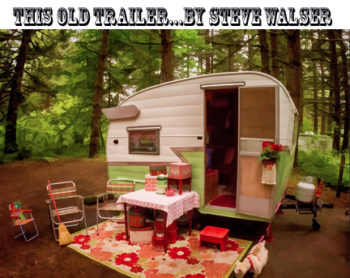

 An Electric Bike is the perfect, simplest and most affordable way of sorting all the ‘challenges’ of RV’ing. Get around camp effortlessly, visit the sites or town nearby without unhooking or simply enjoy a fun ride with fellow campers!
 Heading into the Yukon? You can expect weekend camping to be tight near Whitehorse. Camping in territorial parks overall has ramped up 30 percent since 2008, but at popular campgrounds like Kusawa Lake, Wolf Creek or Marsh Lake, and even the new Conrad campground, space is at an even greater premium.
 It’s not so much what Leroy James Carl Jr. took that he may regret as much as what he left behind. Police in Lakeland, Fla., allege that Carl is the serial burglar who broke into RVs and sheds in storage yards — enough so that they’ve charged him with 138 counts. In one instance, Carl swiped a bottle of Gatorade at a crime scene, guzzled it down and left the empty behind — along with his DNA.
  Keep up with RV Industry news
 The new TireTraker™ TT-500 is the most innovative & user friendly TPMS on the market with an unprecedented “Lifetime Warranty”, the only TPMS company in the industry to do so. The TT-500 features a larger, easier to read display, continuous pressure & temperature monitoring, automatic update, & monitoring up to 22 tires on your motorhome, trailer & tow vehicle from 0-232 psi! Seven day per week sales & technical support & over 12 years of experience. List price (4 tires) $389. Our price only $289.
  Always drive with your “lights on for safety”
 Bake without a traditional oven


 Airtight food containers
 What you may not know about your RV spare tire, but should


 Easily clean those
 Endorsed by Roger Marble of RVtireSafety.com!



 Battery Organizer
 Best roasting sticks for marshmallows, hot dogs


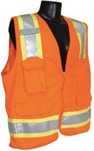 Be safe alongside a busy highway
 Liquefy solid wastes in sewer holding tanks
 Guide to RV Camping in State Parks
 When you need a nightlight when without hookups, these are great: they light only when they sense motion, shutting off after 30 seconds of no movement. They use no wires & install in less than 5 minutes. Use outdoors, too. Lights come in a 3-pack. Other battery-powered nightlights that stay on full time are power hogs & don’t last long. These can last up to a year! Watch the short video for a demonstration or


 and later notice they didn’t include the area code? Or how about watching a weather alert that tells you about a tornado warning in xxxyyy county? If you travel all the time like we do, you have no idea what county you’re in, or what the area code is for local phone numbers. Now you do! All you need to do is tap the icon for an App called “Where Am I?” and all the information in the screenshot here will be displayed.

