A Smartphone and a Wireless Drive is a Complete Computing System
You probably know about Travel Drives for storing computer data files, photos, videos, music, etc. We call them by various names, Thumb drives, Flash drives, USB drives, Data Sticks, and more. But we’ve always needed a computer with a USB port in order to use them.
Now you can get a wireless drive that will work with your smartphone or tablet, Android or iOS! There has never been a more fully appointed office that fits in the palm of your hand! We did a Beginner’s Lesson on this drive, in Episode 80 of the Geeks on Tour What Does This Button Do? show, May 8, 2016. You can watch the entire 45 minute show, or use this link to jump to the point where we demonstrate using the drive with an iPad and then an Android phone.
The drive comes in 16GB, 32, 64, 128, and even 200GB storage size. Wow! Think about it – you can have all the power and all the storage capacity of a laptop computer, without the laptop! With this setup, there are many things you can do:
Have your complete library of music, videos, and photos with you. Even full-length movies if you want entertainment. You can stream them to your phone or tablet for listening/viewing anywhere.
Be able to back up all photos taken by your phone or tablet. The App that comes with the drive has an option for backing up all photos and videos. All you have to do is check the box to turn it on and from then on, anytime the drive is nearby and turned on, it will check for new photos and make copies.
Carry all your important documents that you may need for Doctors, Lawyers, etc., and copy them to/from your phone or tablet to the professional’s computer (this is a regular USB drive as well).
Carry the complete library of Geeks on Tour’s tutorial videos to watch at your leisure on any smartphone or tablet – without an Internet connection!
We use the Sandisk WirelessFlash drive and its accompanying App for both Android and iPhone/iPad. We bought from Amazon. The 32GB model is $29.99, and the 64GB is $39.99.
Dear RV Shrink: One of the comments someone made under last week’s column caught my attention.
We have not spent much time in campgrounds during the past 30 years. Now that we have retired, that has all changed. One thing we notice constantly is the disrespect to public property. We do not remember so much blatant graffiti, vandalism, defacing and littering. It is sad to think that so many people find pleasure in degrading infrastructure for no apparent reason. —Bewildered in Butte
Dear Bewildered:
Graffiti is nothing new, but I agree we have moved way beyond the obscene bathroom stall scratch art stage. More parks now use reflective metal in bathrooms because they cannot afford to continually replace mirrors. Try finding your face with a razor while staring into a poorly reflective, graffiti scratched metal plate.
We all suffer because of the actions of a minority of people I can only describe as “puppy minded.” They must have the same mental capacity of a puppy that insists on chewing shoes.
As a long-distance hiker I know that this tendency is not exclusive to the front country. I am amazed at how many people spend the time and energy to get into remote country and have so little respect for not only trail and signage work, but the landscape itself. You will find trailhead kiosk displays scratched beyond recognition, gates crushed, signage broken and trash scattered to the wind.
We can only combat this behavior by being good stewards ourselves and overwhelming this deviate behavior with spontaneous voluntary service. Picking up trash is our main contribution. Most of the abuse you encounter is already beyond repair.
A sad state of affairs, but I assure you there are hundreds of good stewards for every poor one. You just never see the evidence of them because they practice LNT (Leave No Trace).
Depending on the campground host, or the management philosophy, you can find a campsite pristine or trashed. But in many cases a campsite needs some tender loving care after the last tenants have vacated.
When you leave a site, consider how you would like to find it on arrival. —Keep Smilin’, RV Shrink
Certified RV technician Chris Dougherty shows what he believes are the best tools to carry in an RV to deal with routine maintenance and emergency repairs. You’ll be mighty happy to have these along if ye ol’ RV or tow vehicle starts causing you mechanical trouble.
If your RV has been sitting “in the mothballs” all winter and you’re readying it for travel season, don’t neglect the fresh water tank. It only takes about one mouthful of “yecchh!” water to convince you that water can go stale. What’s to do? Well, this is the same trick we recommend when you buy an RV prior to using it.
You’ll need to completely drain your fresh water holding tank, and run the water pump until all water is out of the system. If your water heater is “in the circuit” (meaning not winterized, but holding water) drain it too, using the drain cock on the heater. Of course, you’ve shut it off first.
Determine the fresh water tank’s capacity — easy if you have the rig’s owner manual. If not, locate the fresh water tank and measure it. Break down the feet and inches to decimals, i.e., a 4′ 6″ run is 4.5′. Multiply the height, width, and depth figures to come up with total cubic feet of capacity. Now multiply the capacity times 7.48051945, which is the conversion factor for cubic feet to gallons.
With gallon capacity on hand, drag out the household bleach — NOT the scented variety. In a clean container (a one-gallon cleaned juice jug is ideal) pour 1/4 cup of bleach for every 15 gallons of tank capacity. Top off the jug with clean, fresh water.
Be sure your fresh water drain valve is closed (and the water heater if applicable), and pour this bleach solution into the holding tank. Now completely fill the fresh water holding tank with clean, fresh water. At this point if you can, move your RV around the block to thoroughly swish and mix the solution in the tank.
Now turn on the water pump and pump the bleach solution through all the plumbing. You’ll know when you’ve pumped enough as you should smell the bleach solution at the fixture. Let solution stand in the plumbing and fresh water tank overnight. Next day, drain the fresh water tank (and again, water heater if applicable), and refill the fresh tank with clean, fresh water. If you’re concerned about the chlorine taste or odor, mix up a solution of 1 quart of cider vinegar for every five gallons of tank capacity and dump it in the fresh tank, repeating the same process you did for the bleach job.
As Federal Highway Administration funds get tighter, the condition of America’s roads reflects this budgetary bulimia: Potholes and rough roads abound, and you and your RV are the recipients. Those washboard workouts are not only hard on your dentures, but your RV gets thoroughly rattled as well.
One area not often thought about: the RV air conditioner. Sitting up there on the roof, all by its little lonesome, the AC unit is subject to vibration and rattle like everything else. And buried under the “inside cover” are four bolts that hold all that machinery tight on the roof. Those bolts, sadly enough, can get shaken (not stirred) by rough roads and vibration from running. In time they can loosen, and may first make you aware of the situation by allowing the passage of precipitation from the roof to fall into your rig. Not a happy situation!
What’s to do? Remove the inside housing of your air conditioner and carefully check the tension of the four bolts that hold the unit in place. Torque them down carefully and live without rain another day. After weeks of frustration, and long days with the rig covered with a blue tarp, the light came on: We torqued ours and a couple of days later, Maw Nature put it to the test: Rain, rain, rain, all night long, and not a drop inside. Now the family RV tech feels like an old fool, but at least he’s a dry old fool.
A guy, a stranger, walks into Kelcy’s Cafe in Tehachapi, Calif., and asks, “How would you like 100 free ceramic coffee mugs?”
Then he walks into two other cafes in the small town and asks the same thing. They all say yes. Free is good.
Then he knocks on doors around town offering business people ad messages on the cups. He sells six ads. He orders the 300 coffee mugs. After awhile, the finished cups come back. He delivers them to the cafes. They place them on tables. In them, they serve coffee and tea and other hot beverages. Theoretically, the locals and tourists read the ads, respond once in awhile, and everybody is happy.
The guy, meanwhile, pays for the cups with the ad revenue and keeps what’s left over as profit. Then he heads down the road to the next down and repeats the process.
Well, this is pretty much what happened awhile back in Tehachapi, a once thriving railroad town in the shadow of a thousand giant windmills in the Tehachapi mountain range midway between Bakersfield and Mojave.
The cafe looks like it has not changed in 50 years. Same with the adjacent formal dining room, where the cups with the advertising are placed on tables right along with silverware and neatly rolled paper napkins. Locals out for a night on the town dine here and probably high school kids on prom night, too. The tables are not bare, but no tablecloths. Instead, they’re plastered with ad messages as you can see in the picture.
Stop by Kelcy’s. The food is good. The waiters are friendly. And check out the clock above the counter — ads there, too.
How do you keep your slideout happy? A little bit of maintenance and forethought will go a long way to making sure your RV experience doesn’t get unhappy when your slideout room won’t slide like it should.
First, when opening or closing a slideout room, check the floor. Sand, grit, or other “foreign” substances can get under the slideout and scratch the flooring. Doesn’t make Mama happy, and if she ain’t happy–well, you know the rest. Likewise, before retracting the slideout, check up topside. Branches, leaves, bird nests, all manner of odd things can wind up on the outside of your slideout, even if you have a retracting slideout awning. If this “junk” gets trapped in the retraction process, you can be in a world of hurt.
Read and follow the instructions provided with your rig. Some hydraulic slide mechanism builders suggest you keep the extend/retract button pushed for a few seconds after the slide has made the full travel–somehow keeping the hydraulic system pressurized. Others simply tell you to get off the button when the room is in or out. Others are “death” on changing room movement direction unless the slideout has gone full cycle. In other words, if you’re in the middle of retracting the room and change your mind, they don’t want you to try and extend the room until after you’ve retracted it all the way.
In terms of periodic maintenance, seals certainly need to be looked after. Seals can dry out, leaving you without protection from the elements. What does your manufacturer recommend? There are some commercial nostrums available, but we’d suggest you be careful of something that contains silicone. We’ve been on this lectern before, silicone can dry rubber out.
What about the slide mechanism? Here’s where things can get contrary. Nearly everyone agrees that slides should be lubricated regularly, it’s just what lube to use is where it gets dicey. One prominent RV technician says you should never use a “wet” lube like WD-40. He feels that the lube may well attract dust and dirt to the mechanism. Others suggest using silicon sprays. Ach! Again, what’s your manufacturer recommend? If you’re under warranty, best to use what they call for in case you develop a problem that they’ll need to fix.
Hydraulic reservoirs should be checked regularly. If they’re low, you’ll need to find out why. Is there a system leak? Follow the lines from the hydraulic fluid reservoir through the pump, and out to the actuating cylinders. If you need to ‘filler’up’ then again, be sure to use what the factory calls for. Some slideouts call for transmission fluid, others specialty hydraulic fluids. Know what you need before you pour!
Finally, this golden rule applies to ALL types of slideouts. KEEP THE BATTERY CHARGED! There’s nothing more difficult than being in the middle of nowhere and having that slide refuse to go back in because your battery is low or kaput. Cranking that slideout back in by hand is a long, and slow process.
For a “heart sinking into your stomach” experience, there’s nothing like looking in the rearview mirror and finding your travel trailer isn’t there. Friends of ours recall one such occasion when theirs “got loose” and rolled off the road and into the brush. Theirs was a “good” experience of a runaway trailer—nobody got hurt and the damage was minimal. But every year innocent folks are killed by runaway trailers. How can you ensure your travel trailer trip comes off without a hitch? Start with safety at the hitch.
The correct equipment is at the heart of the matter. The hitch ball must not only be the correct physical size to match the trailer hitch, but needs to be able to tote the weight of the trailer. There are three different sizes of hitch balls: 1 7/8 inches, 2 inches and 2 5/16 inches.
Illustration courtesy maricopa.gov
The smallest might be found on a lightweight pop-up trailer; the 2-inch balls are typically used on mid-sized trailers, and the largest balls—well, sure enough—on large trailers. The large size hitch balls have different weight capacities, and you need to be sure the capacity of the ball is greater than the total weight of your loaded trailer. You MUST match the size of the hitch ball on your tow rig to the size required by the coupler. Going with too small a hitch ball is to invite a disaster.
Hitch balls attach to the tow vehicle with a nut and lock washer. The larger the ball, the greater the torque required for a safe attachment. The hitch ball mounts through a drawbar and the thickness of the drawbar determines how long the shank, or threaded portion of the hitch ball, needs to be. Rule of thumb: At least one thread should be visible beneath the lockwasher and nut when the ball is installed in the drawbar.
When installing a hitch ball the philosophy of “just throwing a wrench on it and tugging” isn’t a safe one. If in doubt, have a hitch shop attach your tow ball. Trailer couplers need to be kept lubricated with grease. We prefer lithium grease, and we keep our hitch ball greased, and we cover it with a ball cover when not in use.
WHEN HOOKING UP, you’ll need to spot the ball directly under the trailer coupler. Set the coupler in the open or loose position and make sure the clamp inside the coupler is open. If you haven’t hitched up in a while, or the coupler isn’t well lubricated, the coupler clamp may not open properly. Lower the coupler onto the hitch ball. Some couplers have levers that slide shut to indicate the clamp has closed down over the ball. Don’t take it for granted. A physical inspection—looking or feeling to make sure the coupler clamp is securely clamped around the bottom of the hitch ball—is essential. If it isn’t, the only thing holding your trailer and tow rig together is gravity, and a bump in the road will break you loose in a hurry.
Next, connect the safety chains securely to the trailer hitch or tow rig by crossing them underneath the coupler in an X formation. That is, the trailer’s left chain should attach to the tow rig to the right of the hitch and vice versa. Safety chains should only be long enough to allow for tight turns; if they are longer they may not work if there is a breakaway. Don’t allow the safety chains to drag the ground. Not only can you damage the chains, but chains dragging the pavement can produce sparks – which in turn, can set fire to dry grass.
Hooking up the breakaway switch lanyard is critical. If the trailer does break loose and the safety chains fail, the breakaway switch system should activate the trailer brakes, stopping the trailer. Make sure the lanyard is long enough for tight turns—we’ve watched one RVer lock up the trailer brakes pulling a tight corner after an improperly routed lanyard pulled the safety switch open.
The breakaway system only works if the trailer battery is charged and the brakes are adjusted properly. You can test this in an empty section of a parking lot. With your rig hitched up, pull the breakaway switch open and drive forward with a spotter walking beside the rig. The trailer brakes should literally lock up if adjusted properly.
Dear R.V. Shrink:
We enjoyed your column on investing in gas. We don’t go that far, but we do like the instant gratification of not having to pay for services that are often free. We use every travel app available to find inexpensive camping, dump stations, gas and propane. We recently went to a Loves Truck Stop in California that our app said, “Free dump with a fill-up.” After filling up we found that the dump costs $5, with or without a fill-up. I feel it was a bait and switch tactic. Do you agree they should honor the promise you find on their website? Maybe I am being petty? Just down the expressway we found a free state dump station at the next rest area. —Down five bucks in the dumps
Dear Down:
I think I see your mistake. Correct me if I am wrong, but I have only made a mistake once in my life. I thought I was wrong once, but I was mistaken. Having used both Loves dump stations and many dump Apps, I know that the apps are not always correct. You should always check with management before assuming the app is correct. Businesses change management and policies all the time. Apps may not always be up to date. They are great if used as a reference, but not gospel.
It seems I have had free dumps at Loves in the past, but not recently. They do offer a very convenient island that has a dump, water and propane all in the same location. A convenient pit stop can be well worth five bucks. They often have good fuel pricing, so a single stop can be very efficient. You can’t expect them to honor old or out of date information, but often they will with the least bit of complaint. My suggestion would be to check with the attendant before proceeding. Armed with up-to-date information, you should be able to make the best decision. Next time you are down in the dumps, be sure to use sanitizer. —Keep Smilin’, R.V. Shrink
Dear Chris,
I have a question about a tire on a 5th wheel we own. The back left tire wears on the inside. We bought the RV less than a year ago. Camped in it a few times at local area parks. Noticed the back left tire was worn on the inside. Bought a new tire, camped a few times and just got back home last night and noticed the same tire was worn badly on the inside. My husband also noticed on the way home, smoke coming from the tire, got out and checked, but said the tire was not hot.-Joy
Dear Joy,
Thanks for writing in. Sorry to hear about your problem. It should be looked at professionally as soon as possible. For just one tire/wheel position to be exhibiting these symptoms, I would think that it could be a hub/bearing problem. If the bearing has worn or broken, and/or the hub is loose, the wheel when weighted will tilt outward and backward causing this kind of scuffing. This is dangerous and doing damage the more you use it.
There are other possibilities, which include worn spring bushings, loose or broken axle bolts, the trailer could be overloaded (which it still could be, leading to the bearing failure), mis-aligned axle (but this would likely cause the other tire to show wear as well). and a bent axle or spindle, especially if that wheel hit something hard.
You best option would be to get it to you RV or trailer repair center for diagnosis and repair.
For many RVers who travel a lot or even full-time, Internet access is hit and miss. For RVers who want to be online whenever they want to, the choice is often a cell phone used as a WiFi hotspot, a mobile hotspot, or the Wifi at an RV park or other public place, like McDonald’s or Starbucks.
At an RV park, the access speed is often very slow, making it difficult and frustrating to watch a YouTube video. Many RV parks also ask their guests to not watch videos: there is only so much bandwidth to go around and if someone hogs it watching a video, other campers may not be able to get on or if they do at a snail’s pace.
RVers who get online with a plan from Verizon, AT&T or other carriers are often very limited in the amount of data they can use. For them, watching a video takes just too much bandwidth. So they seldom watch.
In this video, I show you how to watch YouTube videos using very little bandwidth. There are two ways to do it, and I show you both. I recorded this at standard definition, so watching won’t use much data. #rvt742
Learn about RV camping, RV travel, RV news and much more. This newsletter, now in its 15th year of continuous publication, is funded primarily through advertising and voluntary subscription contributions from our readers. Thank you!
Issue 741 • Week of May 7-13, 2016
Editor’s corner With Chuck Woodbury Chuck (at) RVtravel.com
First, welcome to the more than 1,600 people who subscribed since we updated our website a few weeks ago. It’s great to see all you new readers!
Last weekend I attended the last RV show of the spring season here in the Seattle area. I was impressed with the variety of RVs, yet very disappointed when I realized that about half the motorhomes on display had built-in outdoor TVs, most with boombox-style stereo systems. The good ol’ days of camping, where we interacted with nature, are apparently quickly transforming into the modern age of camping where we interact with noisy electronic devices. I had planned to devote this essay to what I thought of the outdoor TVs and stereos but decided to instead post them in my Roadside Journal, where I feel more comfortable whining.
Now, some more positive news! Our new two-minute Spin and Win game show for RVers went live early this morning on our YouTube Channel. I’m the host with lovely Gail as our “Vanna.” We’re having lots of fun with it. It’s terribly corny — that’s the way we intended it. You can watch the first show here (watch in low definition if you have limited bandwidth). Maybe you’ll win a prize (some of which are worth more than $100). Keep in mind that you can enter once a day until the contest ends Tuesday night.
We’re doing the game show not just for fun, but for an important reason. Click here if you would like to know more. If you have an RV-related business and would like to be a sponsor (very reasonable) or donate a prize, please let me know at chuck (at) RVtravel.com.
We are continuing to post new articles on this website every day, with at least a couple thousand more to go. When we are done, sometime in the fall, this should be the largest, most valuable resource about RVing on the Web.
That’s all for me for this week.
Happy Mother’s Day to all the Moms reading! We love you! To the sons and daughters who still have a Mom, cherish her! If you can’t visit her on Sunday, call her!
Happy Birthday! Happy Anniversary!
Wish your special someone a Happy Birthday or Happy Anniversary and we’ll post your well-wishes and your short comment right in this newsletter. It’s super easy to leave your greeting. Just click here.
See this week’s greetings near the bottom of this newsletter.
RVs & Electric Bikes – the perfect match! An Electric Bike is the perfect, simplest and most affordable way of sorting all the ‘challenges’ of RV’ing. Get around camp effortlessly, visit the sites or town nearby without unhooking or simply enjoy a fun ride with fellow campers! Click here to discover our electric bikesand get $100 off, free shipping & returns, and 0% financing on any new EVELO using the code RVTRAVEL during checkout!
Is this newsletter worth 10 cents to you? Our staff works many hours bringing you an entertaining and informative newsletter every Saturday. The readers of the newsletter increasingly help make it possible with their voluntary subscriptions. Even a pledge of $5 a year would be appreciated — that comes out to less than 10 cents an issue! Many readers pledge more — $10 a year is less than 20 cents an issue! If you care to chip in, please know we will appreciate it very much. Just contribute what you think is fair. Enter a voluntary subscription.
Reduce air drag and boost fuel efficiency — Airtab® your RV! Just peel and stick Airtabs™ to the rear sides and the rear roof of your RV coach or trailer to create swirls of air that reduce aerodynamic drag, save fuel and improve stability. Airtabs™ dramatically reduce trailer ‘fish tailing’ and crosswinds pressure to RVs from passing trucks, while improving fuel efficiency 2% – 5%! Click on the video.
Seventy million vehicles at risk of exploding airbags
The seemingly never-ending safety concerns of the automotive industry have been further complicated by the vastly expanded airbag recall involving parts made by Takata. At risk, according the National Highway Traffic Safety Administration, are now as many as nearly 70 million vehicles from nearly every major and some niche manufacturers. Read more.
Reader RVs
What RV do you drive or tow?
Please send us a photo of your RV with a 150-200 word description of where and how you travel with it, and what you like (or don’t like) about it. (If you want, just send us your notes and we’ll put your story together for you.) If you have a photo of it in a scenic setting, that’s great. Be sure to include your name(s) and your hometown (unless you’re a full-timer). We’ll post them to RVtravel.com. Send to assistant editor Diane McGovern at Diane(at)RVtravel.com .
CLICK HERE to see last week’s RV Travel Reader RVs.
This Week’s Spin and Win Contest
Our contests have a new format. And is it fun! — the only game show for RVers! It’s a quickie, just two minutes. You don’t need to participate at a specific time of day. Answer anytime, and then again once a day through Tuesday if you want to increase your chances of winning. Hosted by RV Travel editor Chuck Woodbury. GREAT PRIZES!
This week’s show sponsored byTireTraker, the only RV tire pressure monitoring system with a lifetime warranty.
Nearly 41,000 new RVs rolled from factories to dealers in March, making for the biggest shipment month since March 2006. Leading the movement, Class C motorhomes rolled up nearly 30 percent and travel trailers up 15 percent – both when comparing March 2016 to March 2015. Source: Recreation Vehicle Industry Association.
How big is the economic impact of outdoor recreation? Almost as much as the combined spending on cars and drugs in the U.S. That’s the conclusion of U.S. Interior Secretary Sally Jewell, who announced Uncle Sam will, for the first time, directly study just how much outdoor recreation is worth. Results could lead lawmakers to invest a bit more in public lands.
It could be the centennial celebration of the nation’s parks; it could be lower gas prices. Regardless of cause, expect more folks to be camping out on National Forest lands this year. Officials with Custer Gallatin National Forest (Montana) say visitation was up 20 percent last year compared to 2014, and they foresee even more this year.
Napa County, Calif., fairgrounds officials think RVers are a hit — and the most consistent moneymaker for their operation. In a six-year period, the fairgrounds’ RV park generated the “highest amount of annual operating revenue per acre,” says an official report. With that in mind, commissioners are considering creating a new high-end RV park on the fairgrounds, possibly with an “executive golf course.”
Mesquite, Nev., residents turned up in large numbers April 21 to give a thumbs-down to a proposed RV park. A 14-acre bank-owned lot between a church and a commercial mall on West Pioneer Boulevard would become a 116-site RV park, if two Utah developers had their way. Citizens unanimously catcalled the idea. Given an alternative of having condos built on the site, opposers suggested having “nothing” on the property would be better than either suggestion. The city council will entertain a rezone proposal for the site on May 24.
A shooting led to car crashing into a motorhome Wednesday morning in Mesa, Ariz. The driver of the BMW that slammed into the RV told police he was in the neighborhood to resolve a dispute over a videogame console when someone starting shooting at him. He was not hit. The alleged shooter or shooters took off on foot. No report of injuries or arrests.
Rhode Island is pumping $800,000 into campground improvements at George Washington Memorial Campground near Glocester. Expect 35 new sites, fully accessible showers, and restrooms. Officials say the average camper stay is two days; after the rehab project is completed in 2017, they anticipate that stay lengths will increase to a week or more.
Canada’s Revenue Agency has thrown a curve ball to the country’s small campground owners — announcing that they are no longer able to claim a small business tax credit. The backlash could be big, as evidenced by the fate of Sage Campgrounds in Cambridge, Ontario. The owners of the 80-site park got a bill from the agency for two years’ taxes without the credit — $36,000 more than they’ve already paid.
Public domain image.
There was plenty of fear among campers at the Bottomless Lakes campground near Roswell, N.M. — but extraterrestrials, who some say once crash landed in the area, had nothing to do with it. An April 28 wildfire a mile away from the campground put campers on high alert to be ready to evacuate. Thankfully, firefighters were able to contain the outbreak within a few hours.
While sales of recreational vehicles are up in the U.S., overnight stays in national parks and on public lands has actually declined. Industry group Recreation Vehicle Industry Association lays the discrepancy on poor campground design, management and marketing. The group also points the finger at lack of desirable amenities like Wi-Fi, utility hookups, showers and more. Two recreation industry giants, Airstream Inc. and The Coleman Company USA, are moderating a discussion on the topic June 13 at Wyoming’s Jackson Lake Lodge.
No more roof leaks, for life, guaranteed!
Now with locations in TX, FL, MI, AZ and NC!
RV FlexArmor® is a sprayed RV roof that is 187 mils thick, has no more caulking joints and is the proven RV roof alternative for over a decade. Guaranteed not to leak for your RV’s lifetime! “Your company gets an A+.” —Marsha G., customer. Click on our new video showing how we handle air conditioners.
The Red Rock Search and Rescue team, based in Las Vegas, Nev., needs a rescue. The group’s motorhome, used to keep the families of missing persons sheltered on search-and-rescue scenes, was wiped out by a fire that destroyed a Vegas-area storage facility. The team is hoping someone will donate a suitable rig to replace the lost 30-footer.
Photo: Princess Mérida on flickr.com
It’s not unusual to hear of RV parks being closed down for other uses — so here’s a twist from Pelican Rapids, Minn. The 42-acre Rolling Hills Golf Course is now set to be closed down and transformed into a 150-site RV park. The local township board voted to allow a conditional use permit for the proposed park, but a local property owners’ group could challenge the action.
A Yuma, Ariz., attorney has filed suit against local dealer, RV Peddler, charging deceit and fraud. He represents two couples who say they traded in rigs on other units, and allege they later found out the dealer hadn’t paid off the titles on their traded-in rigs, nor on the rigs they received in the deal. Attorney David Karnas says he’s heard from the state’s DMV that nearly 100 people have been harmed by deals made with RV Peddler. The outfit had dealerships in both Yuma and Bakersfield, Calif. — both of which are now closed.
Photo: Ingrid Taylar on flickr.com
RVers are accused of being less-than-honorable in Saratoga, Wyo. The local sewer board says it will install a dump station payment kiosk at the town’s sewage treatment plant. One member says only one-in-five RVers dumping there are paying the “honor system” fee. The new system won’t allow hooking up to the dump until a credit card payment of $5 is made.
Minnewaska State Park in upstate New York has reopened after a wildfire toasted 2,000-plus acres of the park in Ulster County. Hundreds of visitors were chased out when the fire broke out in brush at Sam’s Point Preserve. No cause determined.
More info on our previous report: For decades RVers attending New York’s Adirondack Balloon Festival have dry camped for free at the Queensbury airport. No more. This year, Warren County officials say RVers will have to pony up $10 to camp at the festival; those who come in cars to watch the hot-air-lift can park for free. RVers already pay a $55 membership to join a club that supports the festival, but the county says it needs a way to help defray its expenses.
The 258-site, family-owned Jellystone Park in Mill Run, Penn., is installing a fully furnished, two-story tree house cabin that will be available beginning Memorial Day weekend. Looking like something out of a children’s storybook, the tree house will initially sleep four. The park also has many other rental accommodations, including 48 cabins and one park model RV. Click here for more information.
Feathers are flying at the Point Mallard Park in Decatur, Ala. The campground there is often “full up,” and to alleviate the situation, the local park’s director had a gravel loop put down in the fireworks field to accommodate overflow camping. A few days later, at least one outraged local complained loudly to city councilmen. Result? The 560 feet of gravel is being pulled up, and the $10-a-night dry camping overflow area is gone with the wind. Opponents said the overflow area was too close to parking, and is a shaded portion of a walking and bike trail.
Keep up with RV Industry news throughout the week at RVbusiness.com.
Brighten your taillights
Taillights dim? First, check to make sure the electrical contacts on bulbs and sockets are free of crud (use steel wool or fine sandpaper). Plastic lenses clean? One more option: Stick aluminum foil behind the bulbs to push more light out of the lens.
Better organization for a small RV refrigerator
Small RV refrigerator? Use a sharp kitchen knife to slice your “dozen egg box,” lengthwise down the middle. Now you’ve got two, smaller “half dozen” boxes that fit into smaller areas of the reefer.
Help for cleaning built-up crud out of RV holding tanks
Too much crud growing inside your holding tanks? Just before you head off for a destination with a dump station, load up the tanks to almost full with fresh water and the cleaning agent of your choice – even empty a sack of ice cubes down the black water tank. Drive to your stop, dump the tanks first thing. The sloshing will help clear the crud.
Light up your RV with Boogey Lights! RV accent lighting is all the rage! Just look around the RV park! Enter Boogey Lights®! These robust, super-bright, state-of-the-art LED lights with hi-tech controller technology represent the next generation in LED lighting for RVs. The AWNING & UNDER-GLOW LIGHT KITS are specifically designed to withstand harsh operating environments. Don’t waste your money on junk! Get Boogey Lights! You can even control them with your Smart Phone! Learn more or click the video for a demonstration.
Tire temperature always seems to be a hot topic
Roger Marble, RV tire expert, explains that hot tire temperature is important to know about, but the problem is in learning what the actual temperature is. You can have a tire failure from extreme heat in one location of a tire while another location only inches away can be perfectly OK, so you can’t rely on your tire pressure monitoring system to tell you if you have a hot tire. Learn more.
Editor of RV Travel interviewed by RV industry magazine
RVtravel.com editor Chuck Woodbury was featured in Friday’s online edition of RV Business Magazine. The periodical, the largest trade journal serving the RV industry, asked Woodbury for his opinion of the current state of the RV industry from his unique perspective as a leading voice of the RV consumer. Read what he had to say. Does anyone still read traditional books? Why? Rich “The Wanderman” loves to read — a lot! He once carried 20 or 30 books around so he wouldn’t run out of reading material — and then his home started overflowing with them. Then he discovered e-books, and he wondered why anyone would read a book on paper anymore. Read more and you, too, may decide to switch.
April RV and RV-related recalls
The latest recalls on RVs and other vehicles and/or products of interest to RVers have been released by U.S. National Highway Transportation Safety Administration. The long list includes models from Cruiser RV, Forest River, Heartland, Jayco, Winnebago and more — plus other vehicles and equipment. Is your RV on the list? Find out here.
Discover the RV Warranty Taking the Community by Storm!
The best RV warranty coverage just got better: Introducing the Viking Protection Plan, a policy designed for maximum coverage and ease of use, all backed by the customer satisfaction guaranteed by RVer Favorite Wholesale Warranties. Ready to see what the ultimate in Peace of Mind might cost you? Get your FREE Quote for coverage today!
New RVer asks: What happened to my fuel economy?
A gent new to RVing was in a bit of a quandary: Looking for good economy he bought himself a “hybrid” travel trailer and felt his new, lightweight rig would tow with good economy. But his miles per gallon went from 16 to about 10 mpg. What happened? And what can be done about it? Find out here.
How to fix an RV awning that will not retract properly
In this brief video, the RV Doctor, Gary Bunzer, explains how to determine what might be causing an awning to not retract fully when not in use, and how to repair it. Watch the video.
Is there life after the dump station?
Well, according to an anonymous writer (we’re trying to locate their name), there is. Find out his solution to this sometimes-messy problem. You may, unfortunately, be able to relate to this “story,” which was written, we think, with tongue firmly in cheek! Read more.
Save thousands on RV refrigerator replacement
Of all of the things that can break in your RV, one of the most expensive issues you’ll face is if your refrigerator goes kaput. When that happens, what do you do? The standard answer is, “Buy a new refrigerator.” But many RVers have found that there may be alternatives. Learn more.
This week in history Week of May 7-13 Compiled by Dell Bert
1901 Gary Cooper is born.
1907 Katherine Hepburn is born.
1914 Woodrow Wilson proclaims first Mother’s Day holiday.
1940 Churchill becomes British prime minister.
1945 V-E (Victory in Europe) Day is celebrated.
1971 Last “Honeymooners” episode airs.
1977 Joan Crawford dies.
1984 Soviets boycott Olympics in L.A.
Unique RV overnight stops at wineries and farms With membership in Harvest Hosts® you can stay overnight at 500 wineries, farms and attractions across North America. Harvest Hosts offers an exciting alternative to traditional overnight stops where you can meet interesting people and learn about their lifestyle. Learn more at the Harvest Hosts website, or watch an interview with the founders by RVtravel.com editor Chuck Woodbury.
RV Clubs Here are a couple of RV clubs from our extensive directory which you may be interested in:
Country Coach International Club.
“The original Country Coach owners club” and “the fourth largest FMCA chapter,” with more than 1,000 members across the country and internationally, and with lots of benefits, including discounts.
North American Truck Camper Owners Association. Part of the International Truck Camper Owners Association. A non-profit RV organization dedicated to promoting the truck camper as an RV lifestyle, with forums, rallies and more.
America’s Largest RV Consignment Dealer Buy or sell your used motorhome, diesel pusher, fifth wheel or travel trailer hassle free at PPL Motor Homes. And check our huge selection of parts! PPL is the largest RV consignment dealer in the USA, selling more than 24,000 consigned RVs since 1972. Visit the PPL website.
Bumper sticker of the week
“5/4 of all people have trouble with fractions.” Thanks to George Bliss!
Funny/clever business slogan
Sign outside convenience store in Wesley Chapel, Fla., says “Cold Ice” on one side and “Wet Beer” on the other. Thanks, Bob Gaston!
Have you seen a funny bumper sticker or business slogan? Send it to Diane(at)RVtravel.com
Easily brew a single cup of coffee This is great for RVers! Brew a single cup of coffee without the high cost of an expensive coffee maker with the MyJo Single Cup Coffee Maker! Just fill reservoir with hot water from tea kettle, or heat water in a microwave. Assemble, place K-Cup pack in base, attach the water reservoir and pump. Watch the video for a short demonstration or learn more or order at a big discount.
Upcoming RV Shows
See the recently updated list of upcoming RV shows for 2016.
Websites of the Week
We like these websites. Check ’em out. More next week.
Essential for big RVs! 2016 Rand McNally Motor Carriers’ Road Atlas If you drive a big RV — extra long or extra tall — then this truck drivers’ road atlas will be a huge help in knowing where you can drive without encountering a low bridge or getting stuck hanging over a cliff. This is an essential aid even if you have a GPS! Coverage: United States, Canada, and Mexico. Learn more or order.
Good reading from RV123.com
• Top 10 RV Destinations
• Featured App: TV Food Maps
• Lemon Bars
Rub cooking odors from your hands While many people love to cook with freshly minced garlic or onions, very few appreciate the lingering scent on their hands. It seems like no matter how many times you wash your hands, the odor lingers. Luckily, Amco has the answer — the Rub-Away Bar. Rubbing the stainless steel bar removes any odor from your hands — great for use after working with onions, fish, or garlic. Learn more or order.
Ask the RV Shrink
Birdwatchers, others, want earlier access to campgrounds
Dear RV Shrink:
We are avid birdwatchers and full-timers. This makes us full-time birdwatchers. Our travel lifestyle puts us into a lot of boondocking/dry camping situations. What we have discovered, especially in the spring, is a lack of opportunities to use public campgrounds in excellent birding areas. Many state and federal campgrounds are gated off and do not open until mid-May or even June. These are pit toilet, self-pay sites. Why can’t they just open the gate and let us early bloomers in? I hear all the whining about budget restraints, so why not make some early spring revenue and give us access? I guess I am whining, but doesn’t it just make sense to open these areas earlier? —Fenced out in the Outback
Endorsed by Roger Marble of RVtireSafety.com! An excellent tire pressure gauge The Accutire MS-4021B digital tire pressure gauge has an easy-to-read LCD display that provides pressure readings from 5-150 PSI. It’s ergonomically designed with an angled head and a rubber-coated easy-grip handle. If you forget to turn off the gauge, don’t worry, it will automatically shut off. The included lithium battery never needs to be recharged or replaced. And all this for less than $13! Learn more or order.
RV Tech Tips from Mark Polk
Why it’s important to take care of your RV’s tires Every weight rating on an RV is based on the weakest link in the system. The tires on your RV are by far the most important and most neglected link in the system. I can’t begin to tell you how many times I’ve heard people say that the tires on their RV were defective, or “my tires only had 12,000 miles on them when I had a blowout.” In the majority of cases, the truth of the matter is that tire maintenance has been neglected. The only thing between your RV and the road surface is your tires and the air that is in them. Some of the leading causes of premature tire failure are: overloading the tires, under-inflated tires, ozone and UV rays, age of the tires, and not rotating tires.
Mark Polk is the owner of RV Education 101, the premiere source of educational DVDs about buying, maintaining and using an RV. Learn more.
Visit our YouTube Channel. More than 500 great videos about RVing!
Latest fuel prices Here are the latest U.S. average prices per gallon of gasoline and diesel fuel: Regular unleaded gasoline: $2.24 (on May 2) Change from week before: Up 8 cents; Change from year before: Down 42 cents Diesel: $2.27 (on May 2) Change from week before: Up 7 cents; Change from year before: Down 59 cents
Temperature gun is ‘essential equipment’ for many RVers! Just aim this non-contact IR temperature gun to measure the temperature of your refrigerator, tires, A/C output, or, heck, even your oven (and the list goes on). It turns on and begins reading the temperature in Celsius or Fahrenheit with one press of the trigger. A laser light aids in aiming, and can be turned on or off. Many RVers consider this essential equipment. Learn more or order at a huge discount.
RV Travel Reader Pets Do you travel with a pet? We’d love to introduce your pet(s) to fellow readers. Here’s what we need: a photo or two of Fido or Boots (or you with your pet) and a 150-200 word description of your furry friend(s) — name, breed, age, how long you have traveled together, what makes them special? Go ahead and brag about them if you wish! Do you have any tips for other RVing pet lovers about traveling with pets that you’ve learned along the way? Don’t forget to give us your name(s) and hometown. Send to Diane(at)RVtravel.com .
Click here to see this week’s issue of RV Travel Reader Pets.
Conair 1600-watt folding handle hair dryer This mini turbo hair dryer has a folding handle for compact storage, is lightweight and has 1600 watts with 2 heat/speed settings. Dual voltage for worldwide travel. Perfect for the RV or anyone with limited storage space. Learn more or order.
The RV Kitchen with Janet Groene Your Own Lemon Curd
When life hands you lemons.
Commercially bottled lemon curd is frightfully expensive but I love its wake-up tang on toast, muffins, fish, crumpets, chicken — you name it. This from-scratch method takes time but is worth it in taste and in money saved. Get the recipe.
Trunk Organizer Keep your car, SUV or RV organized with this handy organizer. Multiple compartments allow you to separate food, drinks, sports objects, tools, gadgets and work related stuff, all stored in the same trunk yet separated. Four mesh pockets allow you to see through and easily access the frequently needed objects by making them quick to find. Folds flat to only a few inches, occupying very little space. Learn more or order.
Beginners’ guide to RVing
QUESTION:Can I leave my RV’s refrigerator running on propane while traveling?
ANSWER: While some RVers do, most RV safety experts as well as the Recreation Vehicle Industry Association (RVIA) recommend turning it off at the tank when traveling. By all means, do not leave the refrigerator operating on propane at a gas station. One gas fume blown across the fridge’s pilot light could blow up your RV and everything and everybody in it, not to mention the gas station. This does happen. For many years, a gas station in Lone Pine, Calif., posted photos of such an incident — not a pretty sight.
Help stabilize and keep your RV steps safe The RV Save-A-Step Brace is designed to be placed under RV entry steps for safety. It stabilizes the RV steps and helps keep the coach from rocking — preventing sag and wear. The brace is made of heavy-gauge steel with a 3/4″ solid metal screw thread, 1000-pound load rating and 7-5/8″ to 14″ adjustment range. Learn more or order at Amazon.com.
RV Fire Safety Tip
Check fire extinguishers’ gauges monthly
During your monthly inspection, check the fire extinguisher gauge to determine if there is pressure in the extinguisher. If the gauge indicates empty or needs charging, replace or recharge the extinguisher immediately. To test non-gauged extinguishers, push the plunger indicator (usually green or black) down. If it does not come back up, the extinguisher has no pressure to expel its contents. If you need help testing your fire extinguishers, check with your local fire department. Courtesy:MacTheFireGuy.com
Editor’s note: Choose from a wide selection of fire extinguishers at Amazon.
Jumper cables essential for a dead battery emergency! Don’t let a dead auto battery ruin your trip You carry a set of jumper cables in your car or RV, right? If you don’t, you’re asking to be stranded in the middle of nowhere with a dead battery and no way to charge it back up! These AAA Heavy-Duty, 16-foot, Six-Gauge Booster Cables are top-rated on Amazon and deliver 100 percent more power than light-duty cables. And they even come in a nice storage bag. Learn more or order at a discount.
RV Short Stop
Allegheny National Park, firefly.org
Synchronous fireflies put on magical show
It’s almost time for thousands of fireflies to flash all at the same time, although, according to scientists, it is impossible to predict exactly when lightning bugs will begin flashing each year. These rare synchronous displays are magical and there are less than a handful of locations in the United States — the three main locations are in Tennessee, Pennsylvania, and South Carolina.
Locate services at Interstate exits The 2016 Next Exit is the most complete USA Interstate highway exit directory ever published for every exit of major and most minor routes. Find what’s located at upcoming exits on your route — gas, food, lodging, camping, shopping, hospitals, Wal-Marts and much more. A best-seller year after year. Learn more or order.
Ask the RV Doctor The RV Doctor, Gary Bunzer, answers your questions
Why do RV generators surge?
Dear Gary:
I recently purchased a toy hauler with a generator with only 27 hours on the meter. At first the governor appeared to be sticking, due to what I believe was bad fuel (varnished). I sprayed the carburetor with a cleaner and it ran fine for a while. The idle still surges with no load applied, and if I put a heavy load on it, it seems to get better. The butterfly plate at the front of the carburetor, when pushed down manually, makes it run smooth. Any ideas? —Mike C., Newbury Park, Calif.
Multipurpose Microfiber Duster No more car wipes to dry up — this duster replaces all interior car products. The 10-inch dusting head is big enough to get your dash dust-free quickly, but small enough to leave in your glove box. The back of the duster doubles as a scrubbing sponge. Great for interior or exterior use on cars, RVs, motorcycles or in the home! Learn more or order.
Gadgets and Gizmos
Help keep your RV warm or cool with a vent pillow
Roof vents are a terrific feature of RVs, but they also have their drawbacks. During hot and cold days and nights, without insulation they are like having a hole in the roof that lets unwanted heat or cold in when you don’t want it, or heat out when you’re trying to stay warm inside. However, the Sunshield Vent “pillow” helps to resolve some of these comfort zone dilemma. Read more.
Protect your pets with a Sun & Bug Blocker suit
With summer and increased outdoor activities fast approaching, there is now a way to protect your pooches from possible cancer-causing UV radiation, dangerous insect bites and grass burrs. The Sun & Bug Blocker suit is constructed from a lightweight, breathable and flexible material that makes it easy to put on and allows the dog unrestricted freedom of movement. Learn more.
Protect your RV’s slideout with this rubber seal lubricant If you don’t take care of your slideout you’re asking for problems including dangerous, costly water damage. This rubber seal lubricant from Thetford prevents fading, cracking and deterioration. It cleans, conditions and shines, keeping seals flexible and protected from sunlight destruction. It is also useful on door seals and window seals. It’s a mineral oil product and also acts as a lubricant. Learn more or order.
The Dying Art of Proofreading In a Laundromat
WASHING MACHINES: “PLEASE REMOVE ALL YOUR CLOTHES WHEN THE LIGHT GOES OUT” (and when the light comes back on you are sure to attract a lot of attention!)
2016 The Milepost This is THE mile-by-mile guidebook for RV or auto travelers headed to Alaska, the Yukon Territory, British Columbia, Alberta and the Northwest Territories. First published in 1949 as a guide about traveling along the Alaska Highway, today’s Milepost includes more than 600 pictures, more than 100 maps and details every place travelers might eat, sleep or pull off the road for scenic viewing. Learn more or order.
Random RV Thought When hitting the road, before pulling out, double-check that the doors of your cupboards and refrigerator are closed. Otherwise, you could have a big mess on your hands (not to mention your floor).
Batteries last a long time!
Motion detection nightlights can last a year on a set of batteries When you need a nightlight when without hookups, these are great: they light only when they sense motion, shutting off after 30 seconds of no movement. They use no wires & install in less than 5 minutes. Use outdoors, too. Lights come in a 3-pack. Battery-powered nightlights that stay on full time are power hogs & don’t last long. These can last up to a year! Watch the short video for a demonstration or learn more (or order) at Amazon.com at a great price.
Trivia
When your doctor performs an auscultation on you, don’t worry; he or she will just be using a stethoscope.
Mini Pop-Up Utility Container Camco’s RV Mini Pop-up Utility Container measures 9-1/2 inches by 13 inches. It is handy to use as a small trash can or storage container. It collapses down to 2-1/2 inches for storage and has a built-in storage strap. The base has hook-and-loop tape to help hold it in place. Learn more or order.
Worth Pondering “If you’re going to put yourself above everybody else, you might end up alone.” —Joseph Gordon-Levitt
Make your toad or trailer happy! If your toad or trailer could talk it would say, “Please get me a license frame like this!” So, to make that vehicle very happy you should probably go ahead and get this very cool license plate frame. Shipping is free, so there is hardly any reason not to order one, or even two. Learn more or order.
Readers’ Birthday and Anniversary Greetings
Happy Birthday! •May 7: To Walter from Norma. Happy Happy Birthday. Love you with all my heart, body and soul. •May 9: To Allan from Silvana. Allan, Thanks for being the one and only driver as we full-time across the country for Royal Family KIDS. Love you!
•May 10: To Harold from Tom. Happy 70th old man! From your much younger brother 🙂
•May 11: To Dwight from Mickie. Happy Birthday with all my love to my wonderful husband and best friend.
•May 11: To Susie from Steve. Happy Birthday. Looking forward to many more RV trips with you. •May 11: To Kristin from the RV Travel Staff. We’re glad you’re with us!
•May 13: To Patrica from Bill. Happy Birthday my Beautiful Wife.
•May 13: To Chuck from the RV Travel Staff. Happy Birthday!
Happy (belated) Birthday
•April 29: To Sugar Bear from Charles. Happy BD, you young thing! Big RV adventures await.
•April 30: To Joy from Larry Marshall. Happy Birthday my Little Princess. How many years you’ve remained age 39…aka Jack Benny…Your Little Prince, Larry
•May 1: To Sue and Stacy from Elliot. Happy birthday to the both of you. Have a wonderful day enjoying it to the max keep – smiling too.
•May 2: To K C from Dad. Happy Birthday to my Happy camper.
•May 4: To Gayle from Carl. Happy Birthday to the best RV co-driver! I. Love. You. !
Happy Anniversary! •May 9: To Cindi from Herb. Happy 31 years. Celebrate on the road in Montana and North Dakota. LV YA Herb
•May 9: To Chris & Debbie Good from Garry & Charmayne Robertson. Happy anniversary to very special camping friends we consider family. Hope you have many more years together, with us camping.
•May 11: To Jeanne (Sugarbear) from Gene (Feisty Frog). 33 three years together, 25 years Married and a lifetime to go. Let’s go camping is another way to say I Love You.
•May 13: To Evelyn from Dick Kramer. Happy 57th Wedding Anniversary to the best wife a guy could wish for. Retired over 20 years and 170,000 miles of RV travel and still talking to each other. With all my love.
Happy (belated)Anniversary •April 12: To Mary Lou from Ben. Don’t know about 47 more, but the rest will be with you!
RV Travel staff Editor and Publisher: Chuck Woodbury. Assistant editor: Diane McGovern. Contributing editor: Russ De Maris. Contributing writers: Greg Illes, Bob Difley, Richard Miller, Richard Mallery, Janet Groene, Roger Marble and Julianne Crane. Office manager: Jody Allcott.
ADVERTISE on RVtravel.com and/or in this newsletter. Contact Chuck Woodbury at Chuck(at)RVtravel.com.
About the RVtravel.com editor Chuck Woodbury has explored America by RV for nearly three decades. In the ’90s he published the quirky travel newspaper Out West, and was an “on the road” writer for the New York Times Syndicate. His book, “The Best from Out West” is available at Amazon.com. Woodbury’s RVing adventures have been profiled on ABC News, CNN, NBC’s Today Show, and in People Magazine, USA Today and in hundreds of newspapers. Nowadays, he lives near Seattle, where he drinks massive amounts of coffee and travels often in his motorhome and sometimes by plane when vast expanses of saltwater would turn his RV into a leaky submarine. He is the host of the Better Business Bureau DVD “Buying a Recreational Vehicle,” the definitive guide to purchasing an RV the right way.
Everything in this newsletter is true to the best of our knowledge. But we occasionally get something wrong. We’re just human! So don’t go spending $10,000 on something we said was good simply because we said so, or fixing something according to what we suggested (check with your own technician first). Maybe we made a mistake. Tips and/or comments in this newsletter are those of the authors and may not reflect the views of RVtravel.com or this newsletter.
Our offices are located at 610 5th Ave. S, Suite F, Edmonds, WA 98020.
This website utilizes some advertising services. Sometimes we are paid if you click one of those links and purchase a product or service. Regardless of this potential revenue, unless stated otherwise, we only recommend products or services we believe provide value to our readers. Amazon and the Amazon logo are trademarks of Amazon.com, Inc . RVtravel.com is a participant in the Amazon Services LLC Associates Program, an affiliate advertising program designed to provide a means for sites to earn advertising fees by advertising and linking to Amazon.com.
We use cookies to ensure that we give you the best experience on our website. By continuing to use our site, you consent to accepting cookies. We NEVER have or will sell reader's data. For more info, please see our privacy policy page.


 One of the comments someone made under last week’s column caught my attention.
 You’ll need to completely drain your fresh water holding tank, and run the water pump until all water is out of the system. If your water heater is “in the circuit” (meaning not winterized, but holding water) drain it too, using the drain cock on the heater. Of course, you’ve shut it off first.
 Then he walks into two other cafes in the small town and asks the same thing. They all say yes. Free is good.
 Well, this is pretty much what happened awhile back in Tehachapi, a once thriving railroad town in the shadow of a thousand giant windmills in the Tehachapi mountain range midway between Bakersfield and Mojave.
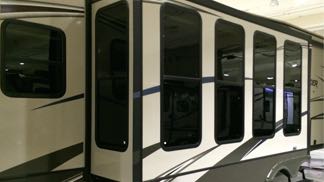 First, when opening or closing a slideout room, check the floor. Sand, grit, or other “foreign” substances can get under the slideout and scratch the flooring. Doesn’t make Mama happy, and if she ain’t happy–well, you know the rest. Likewise, before retracting the slideout, check up topside. Branches, leaves, bird nests, all manner of odd things can wind up on the outside of your slideout, even if you have a retracting slideout awning. If this “junk” gets trapped in the retraction process, you can be in a world of hurt.

 Last weekend I attended the last RV show of the spring season here in the Seattle area. I was impressed with the variety of RVs, yet very disappointed when I realized that about half the motorhomes on display had built-in outdoor TVs, most with boombox-style stereo systems. The good ol’ days of camping, where we interacted with nature, are apparently quickly transforming into the modern age of camping where we interact with noisy electronic devices. I had planned to devote this essay to what I thought of the outdoor TVs and stereos but decided to instead post them in my
  Now, some more positive news! Our new two-minute Spin and Win game show for RVers went live early this morning on our YouTube Channel. I’m the host with lovely Gail as our “Va
 nna.” We’re having lots of fun with it. It’s terribly corny — that’s the way we intended it. You can

 Featured categories
 An Electric Bike is the perfect, simplest and most affordable way of sorting all the ‘challenges’ of RV’ing. Get around camp effortlessly, visit the sites or town nearby without unhooking or simply enjoy a fun ride with fellow campers!
 Our staff works many hours bringing you an entertaining and informative newsletter every Saturday. The readers of the newsletter increasingly help make it possible with their voluntary subscriptions. Even a pledge of $5 a year would be appreciated — that comes out to
 Seventy million vehicles at risk of exploding airbags
 This Week’s Spin and Win Contest
 Nearly 41,000 new RVs rolled from factories to dealers in March, making for the biggest shipment month since March 2006. Leading the movement, Class C motorhomes rolled up nearly 30 percent and travel trailers up 15 percent – both when comparing March 2016 to March 2015. Source: Recreation Vehicle Industry Association.
 A shooting led to car crashing into a motorhome Wednesday morning in Mesa, Ariz. The driver of the BMW that slammed into the RV told police he was in the neighborhood to resolve a dispute over a videogame console when someone starting shooting at him. He was not hit. The alleged shooter or shooters took off on foot. No report of injuries or arrests.
 No more roof leaks, for life, guaranteed!


 The 258-site, family-owned Jellystone Park in Mill Run, Penn., is installing a fully furnished, two-story tree house cabin that will be available beginning Memorial Day weekend. Looking like something out of a children’s storybook, the tree house will initially sleep four. The park also has many other rental accommodations, including 48 cabins and one park model RV.
  Keep up with RV Industry news
 Brighten your taillights
 RV accent lighting is all the rage! Just look around the RV park! Enter Boogey Lights®! These robust, super-bright, state-of-the-art LED lights with hi-tech controller technology represent the next generation in LED lighting for RVs. The AWNING & UNDER-GLOW LIGHT KITS are specifically designed to withstand harsh operating environments. Don’t waste your money on junk! Get Boogey Lights! You can even control them with your Smart Phone!
  Does anyone still read traditional books? Why?
 How to fix an RV awning that will not retract properly

 Unique RV overnight stops at wineries and farms
 America’s Largest

 Secret phrase for

 Rub cooking odors from your hands
 Endorsed by Roger Marble of RVtireSafety.com!


 Temperature gun is ‘essential equipment’ for many RVers!

.jpg) Conair 1600-watt folding handle hair dryer
Conair 1600-watt folding handle hair dryer


 QUESTION: Can I leave my RV’s refrigerator running on propane while traveling?
 Help stabilize
 Jumper cables essential for a dead battery emergency!


 Protect your RV’s slideout
 2016 The Milepost
 When you need a nightlight when without hookups, these are great: they light only when they sense motion, shutting off after 30 seconds of no movement. They use no wires & install in less than 5 minutes. Use outdoors, too. Lights come in a 3-pack. Battery-powered nightlights that stay on full time are power hogs & don’t last long. These can last up to a year! Watch the short video for a demonstration or

 Make your toad