


Dear Dave,
I last wrote you about replacing my old Norcold fridge. I went with your suggestion of a simple 12V DC option from Norcold for two main reasons. First, it fits. 🙂 Second, I have eight 200-amp wet batteries, a good solar charger, and two huge 4×8 solar panels—so I have the power.
I replaced my hot water tank system with a tankless one and now I am wondering about the roof vent which was for the fridge (and maybe the hot water, not sure) when running on propane.
So, my question is: Now that I have tankless hot water and soon a 12V DC fridge, what about the huge vent on top of the roof? Should I just leave it? Should I cover it over? Or do you have a suggestion? As always, thanks Dave. —Larry, 1996 Winnebago Luxor

Dear Larry,
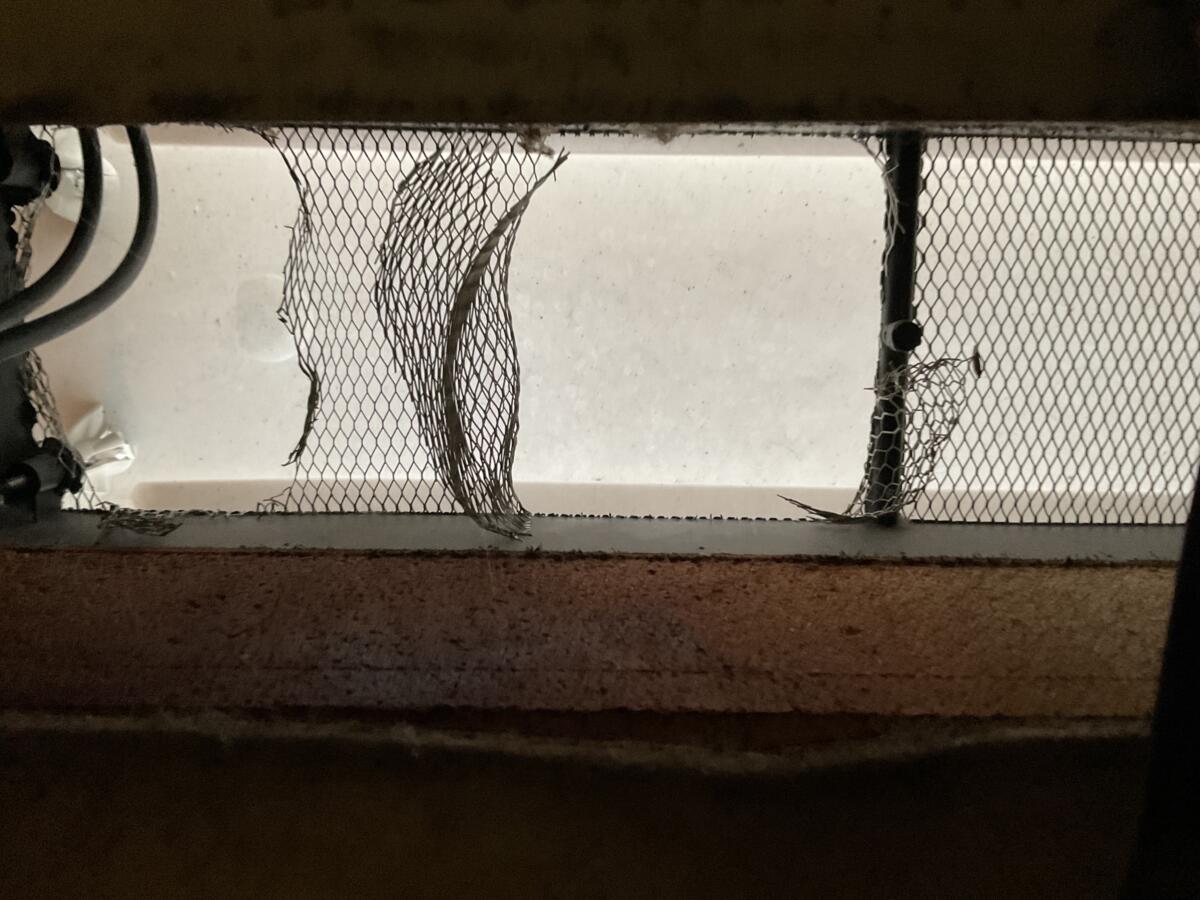
I would leave the roof vent, as it will help dissipate heat from the rear of the refrigerator and not affect the interior of the coach. However, I would fix the screen that covers the roof top vent, as you can see it is torn. This is designed to keep “critters” from getting inside your rig and tearing it up. The original water heater did not vent through that, but rather through the side and the cover with the vent slots.
Plenty of house battery power
You state that you have eight 200 AH “wet” batteries. I assume they are Flooded Lead Acid (FLA), which will allow you 50% capacity. This means 8 x 200 is 1,600 AH, which means you have 800 AH available. According to testing done by several experts in the industry, including Mike Sokol for an RVtravel.com article, that compressor can run for almost 40 hours on a 100 AH lithium battery in 70-degree ambient temperatures. You have 800 AH, which means 320 hours of run time. However, this does not factor in any other 12-volt components running. But I do believe you can go a long time on that huge battery bank.
One other factor is the watt size of your solar panels. You indicated they are huge 4’ x 8’ units but did not provide the wattage. I would suggest getting that information and check the charts at the Go Power! website here to see what your charging capacity is. Looking forward to seeing the finished product and what you are seeing for dry camping times.
You might also enjoy this from Dave
My RV’s absorption refrigerator died. What replacement would be best for dry camping?
Hey Dave,
First, I, like many, wish to thank you for ALL of your help and advice. My 3-way Norcold fridge is finally done. I replaced the main board this past summer ($700 CDN) and was told if that didn’t work I would need to replace the fridge. It worked for about 3 months and now doesn’t. The front panel on the fridge won’t light up and I can’t turn it on. The shop I use is great and told me this might happen. So, my question is, what do I replace it with? I do a lot of boondocking, have two huge solar panels and eight batteries, so have a lot of power. But I feel I need propane also for those cold, cloudy, Canadian days; however, I am open to suggestions. —Larry, 1996 Winnebago Luxor
Dave Solberg is a leading expert in the RV industry and the author of the “RV Handbook.”
Read more from Dave here.
HAVE A QUESTION FOR DAVE?
Send your inquiries to him using the form below.
##RVDT2396

Years ago we replaced the absorption refrigerator in our Class C with a 120v apartment refrigerator. I left the side and roof vents figuring they would help dissipate any heat from the refrigerator.
Waterless hot water system?
be carefull, those dry cleaning chemicals can be a bear on skin.
i know it’s a typo but I can’t resist it
It’s the new “bluetooth” version that sends two hydorgen molecules by WiFi and it then interacts with an existing oxygen molecule. Cutting edge technology, I think it was made by Lippert!
OK. It’s been fixed, but I’m leaving these comments here because they’re entertaining.😅 Have a great day. 😀 –Diane
I want one! Does camping world sell them?… 😉 …..
Thank you, Dave! 🙂 Have a great week and safe travels! 🙂
He says he has 8 x 200AH FLA batteries. These are most likely 6V GC style batteries which in a series parallel configuration would give him 800AH @ 12V. 50% of that is approx. 400AH of safely usable capacity. Still plenty for his purposes but not the 320 hours you indicate. More like 160 hours.