

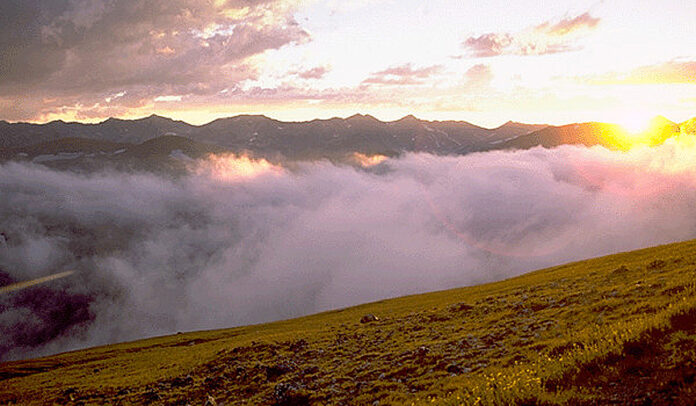
John Denver famously sang about the glories of the Colorado Rocky Mountain high. The question is, will people sing the praises of a permanent timed-entry reservation system into the Rocky Mountain National Park? It’s something the Park Service wants to know.
“High season” not just the summer anymore
Visits to the park have shot up in recent years. Staff says a peak of 4.6 million visits were made to the park in 2019. Despite the COVID pandemic, forest fires, and a pilot program to admit visitors on a timed reservation system, the numbers have kept steady. In 2021, 4.4 million visits were recorded—a mere 4% decrease from the peak.
In practice, Rocky Mountain’s “high season” for visits isn’t just in summertime. Both spring and fall see flocks crowding the park. Over a three-year period, park staff asked visitors for their views on their Rocky Mountain National Park experience so that workers could better plan how to alleviate negative impacts.
Timed entry? Amenity fees? Temporary closures?
An official environmental assessment has been the result for permanent timed-entry reservations. It includes four proposed plans to help with visitor management. They cover a variety of approaches including timed-entry reservations, “amenity fees,” and temporary closures. The plan’s slated purposes are to achieve and maintain desired conditions so that visitors can enjoy natural and cultural resources. Further, they would provide park managers with a long-term approach to manage day-use visitor access.
Most of the proposed alternatives include a timed-entry reservation system. It would apply to the Bear Lake Road Corridor. That corridor on the park’s east side receives a large number of visitors.
“After much discussion and much thinking about these alternatives, there is no way that we can meet the purpose in need of this plan without having the timed-entry system on the Bear Lake Road Corridor,” said John Hannon, a Rocky Mountain National Park employee, during a public webinar. “Bear Lake Road Corridor is the most popular section of the park. About 60% of the park’s parking capacity is located within that corridor, as well as a variety of very popular trails.”
Permanent timed-entry reservation system variations
 All of the park’s permanent timed-entry reservation systems would use Recreation.gov. The system would be funded “through an expanded amenity fee that is applied to every reservation that would be approximately $3-4 per reservation.” This new fee covers the costs of managing and operating the system and any fees associated with the Recreation.gov platform.
The proposed alternatives for managing visitors are named A, B, C and D.
Alternative A: No action
Alternative A is going back to how park staff managed visitors before the pilot timed-entry reservation system. That was how things were done before 2020. Access would be on a first-come, first-served basis. The Service would close areas when visitor demand for parking lots exceeds supply. Wilderness areas would continue to be managed according to park guidelines.
In this scenario, use is predicted to be concentrated in popular areas and during the peak times of 9 a.m. to 3 p.m. To maintain roadway safety access, park staff would close areas to vehicles that have reached parking capacity. Bear Lake Road, Wild Basin, and the Alpine Visitor Center are all popular spots that could close under this option. Closures won’t be predictable, and their length would depend on visitation numbers. The expected daily vehicle volume under Alternative A is 8,800 vehicles.
Alternative B: Timed-entry reservations
This alternative proposes that when timed-entry reservations are in effect, visitors would obtain one of two reservations: either a reservation for the Bear Lake Road Corridor, or a reservation for the rest of the park. This is currently the Park Service’s favored plan.
All visitors in private vehicles would need to acquire a timed-entry reservation for the Bear Lake Road Corridor. Or they could acquire a “rest-of-park timed-entry reservation.” This would give access to areas outside of the Bear Lake Corridor like Trail Ridge Road on the west side of the park. The reservations would allow for entry during a specific time frame, on a specific day.
The timed-entry system would be in place from May to October, from 9 a.m. to 2 p.m. every day. Unless visitor patterns drastically change, a future where a timed-entry system would be necessary in the winter season isn’t in the cards. This system would move visitation more evenly throughout the day. This is a favorable plan because it maximizes park entry to the fullest extent, while also allowing visitors to obtain a reservation without competing with those who want to visit the Bear Lake Road Corridor and its associated trails.
Under this alternative, 2,940 daily reservations would be available for the Bear Lake Road Corridor and 1,875 reservations for the rest of the park. The daily expected volume of vehicles is 7,300. In comparison to Alternative A, there is a decrease of 8% to daily visitation in Alternative B.
Alternative C: Daily reservations
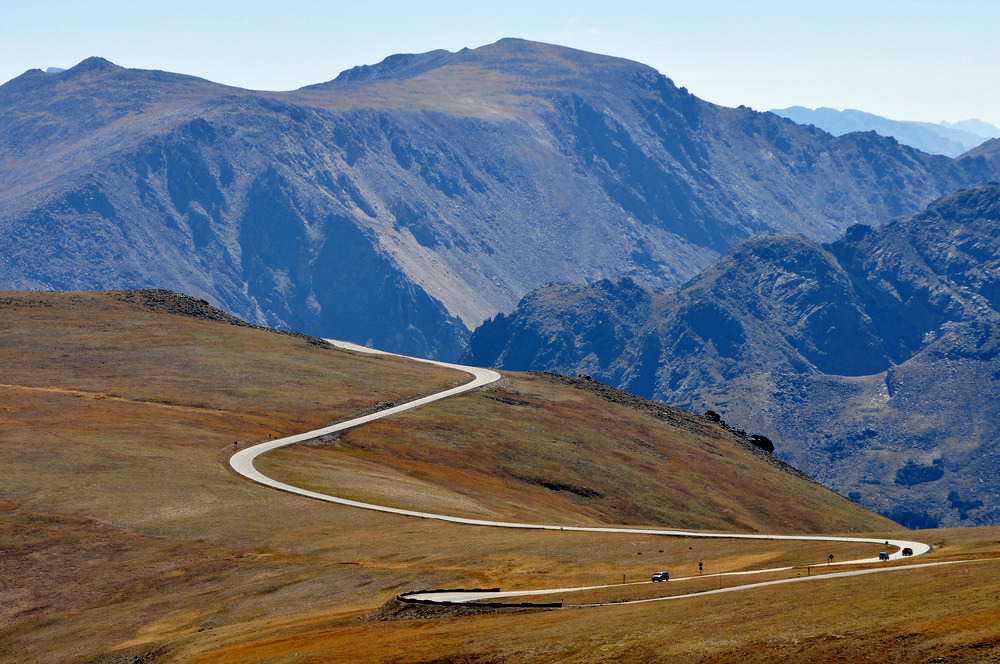 Alternative C proposes a timed entry for the Bear Lake Road Corridor and daily reservations for the rest of the park. During peak season and peak days, visitors would be required to obtain one of two reservations. People would show up anytime between 9 a.m. to 3 p.m. after making their reservation. This would allow more opportunity for flexibility and spontaneity. These daily reservations would be in effect for the park, excluding the Bear Lake Road Corridor, from May through October, daily.
Under this plan, the park would also implement a required educational permit to access areas from the Longs Peak Trailhead. No other proposed alternative includes this. This is because the areas accessed from this trailhead include extensive alpine landscapes with several safety hazards and resources that are especially sensitive to visitor impacts. If implemented, it could lead to a decrease in the number of annual search and rescue operations.
Under Alternative C, the Bear Lake Road Corridor would have around 2,940 reservations available and the rest of the park would have 940 reservations. The amount of daily vehicles is 7,000. The park estimates that daily visitations would decrease by 21% in comparison to Alternative A, under this plan.
Alternative D: Temporarily closing entrance stations
In this scenario, the park would require timed-entry reservations for the Bear Lake Road Corridor. It would use temporary closures at entrance stations to manage access for visitors in private vehicles who want to access areas outside of Bear Lake. Temporary closures would be triggered by the number of vehicles that had entered the park that day. Once a set number of vehicles have entered the park, the entrance stations would close and remain closed until identified areas would be able to accommodate more visitors.
Visitors would face uncertainty regarding closures. Based on previous patterns, daily closures would be likely at the Beaver Meadows, Fall River, Grand Lake, and the Wild Basin entrances from May through October. Closures would last from two to four hours. Those arriving at closed entrance stations would be asked to leave and return to the entrance when the stations reopen—this due to traffic and safety concerns. Frustration among visitors is likely.
Reopening would be hard to predict and visitors would need to monitor park information through social media or the park information line for gate status. When sufficient parking in key lots open, they would open again.
Visitors with a timed-entry reservation for the Bear Lake Road Corridor could still enter Bear Lake during their reservation time at the Beaver Meadows, Fall River, or Grand Lake entrances. The Bear Lake Road Corridor is still predicted to have 2,940 daily reservations available. It is unknown what the daily vehicle volume would be, but it’s predicted to be less than 6,600 vehicles. This would mean a decrease of 25% in daily visitations in comparison to Alternative A.
NPS seeks comments
The Park Service is holding public meetings and civic engagement events to hear from communities. When completed, staff plans on finalizing a plan and the environmental analysis by 2024.
Some open house sessions have already been held. The remaining sessions will be held at Grand Lake Center in Grand Lake on Monday, November 27. The last will be from 5-7 p.m. at the Estes Valley Community Center in Estes Park.
Individuals can also provide feedback online through the National Park Service website— click here. Comments can be made through December 14.
##RVT1132b


I feel blessed after reading this story. During my college years in Ohio, for my summer breaks, I used to hitchhike out to Colorado and the Rocky Mountain park. I would normally leave the trailhead and up to Bluebird Lake and spend several days wandering around at 13,000 feet. Sometimes there wouldn’t be any one else on the trail or anywhere near where my campsite was. It seems that I had the park to myself! No trash ever seen. Those days are gone! 😞