

By Andrew Herrick
Unpopular opinion: RV roof coatings don’t stop roof leaks.
Okay, okay, I overstate my case. RV roof coatings can stop leaks—but that’s not why you should apply them…
Why were RV roof coatings invented?
Let’s back up a minute and ask, “Why do RV roof coatings exist in the first place?” It’s because RV membrane roofs are made of thin plastic sheeting no thicker than a dime. Whether EPDM rubber, TPO, or PVC, all these membranes eventually wear out from UV exposure. EPDM, in particular, will flake and chalk, and eventually, the white upper layer will wear away to expose the black base below.

Unfortunately, you can re-shingle a house in less time than it takes to re-roof an RV. Just like a close-out sale, “Everything must go!” All air conditioners, fans, antennae, skylights, trim, and plumbing vents must be pulled off the roof. In some cases, the roof decking must be overlaid or replaced before the new membrane can be adhered to it. It’s a big, messy job.
And that, in a nutshell, is the reason RV roof coatings exist. They are the halfway point between coughing up for a brand-new RV roof or saying, “No problem, she’s got a few more years!” When the roof membrane itself—emphasis my own—is showing some gray hair and wrinkles, that’s the time to apply a new roof coating (plastic surgery, if you will) to keep the old roof going strong. (Some Arizona/Texas/Florida dwellers will apply a bright, shiny roof coating just to keep down the heat gain!)
RV roof coating vs. resealing: Can a coating actually stop leaks?
Unfortunately, as an RV service technician, I have noticed that many RV customers are confused about the difference between resealing, reconditioning, and recoating a roof. They often ask for a recoating because their neighbor got one, and when I explain they don’t need one (yet), I get the side-eye.
P.S. Before I continue, I should clarify when I say “roof recoating,” I’m talking about DIY roofing-in-a-can coatings like Heng’s Rubber Roof Coating, Dicor CoolCoat, RVRoofMagic, etc. I’m not referring to full-system professional spray coatings like FlexArmor, nor am I referring to EPDM “conditioning” coatings that don’t form a permanent film.
If you have a persistent roof leak, the problem is likely not an aging roof membrane—the problem is probably a failed gasket or a tear or hole in the membrane itself. Almost everything on the roof relies on a butyl tape gasket (or a foam gasket, in the case of the air conditioner) to keep it watertight. Self-leveling caulk is used on top as a backup flashing. If something is leaking, then not only has the self-leveling caulk failed, but so has the gasket underneath (which you usually can’t see).
The correct fix for a leaking roof component, such as a skylight or vent cap, is usually to remove and re-install the component. Applying self-leveling sealant or EternaBond over the suspected point of ingress is only a Band-Aid solution.
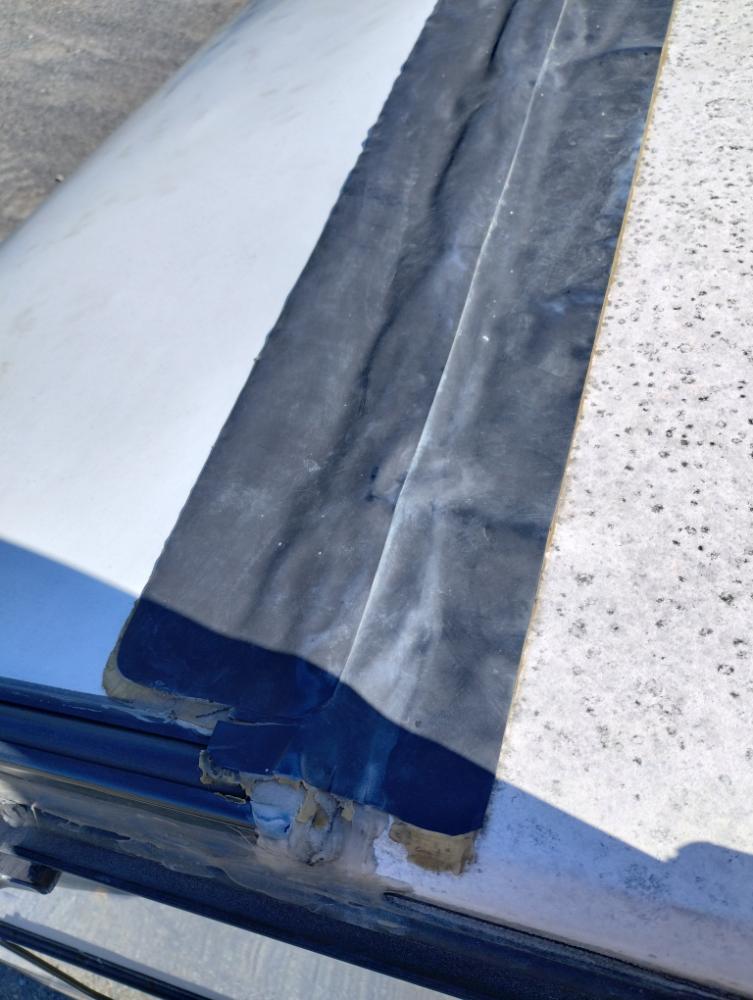
Case in point: In many cases, the problem with a leaking roof is insufficient sealing on the roof-edge corner joint, which can only be resolved by pulling off the aluminum moulding and properly resealing and reinstalling.
When should I reseal, and when should I recoat?
So, yes, recoating an RV roof can stop leaks—incidentally. Here are some examples:
- Pinholes and tiny tears in the membrane are inadvertently patched when a thick coating is applied.
- Previous damage covered by, say, EternaBond tape receives an extra layer of flashing.
- Deep cracks in self-leveling sealant are partially filled with the liquid coating.
Again, yes, there are incidental water-sealing benefits, but if you’re recoating your RV roof specifically because you have a roof leak and don’t know where it’s coming from, you’ll likely be disappointed. The purpose of a coating-in-a-can is to extend the lifespan of a degraded RV roof membrane, not to chase unsolved leaks. Fix the latter before applying the former!
RELATED
- Why you should consider applying an RV roof coating
- Applying a roof coating to your RV: How to do it and why you should
- RV roof replacement from start to finish; the worst roof we’ve ever seen!
- The hidden danger of RV roof leaks and what you need to know to prevent them
- Why you SHOULD NOT use EternaBond to tape your RV roof!
##RVT1218

Good advice. A little maintenance can prevent a lot of repair. Don’t wait for the light to come on before you check your oil.
I agree fix the leak first then consider some sort of coating. What ever a person does the roof still requires some sort of maintenance there is no apply it and forget it.
THANK YOU. I see so many folks with 2-3 year old rigs putting on a paint on coating.
Thank you for the explanation and distinctions, Andrew! All needed and welcomed information. Have a great week and safe travels!
I did ours 3 years ago. Used this product. 3 coats.
https://shopliquidrubber.com/