

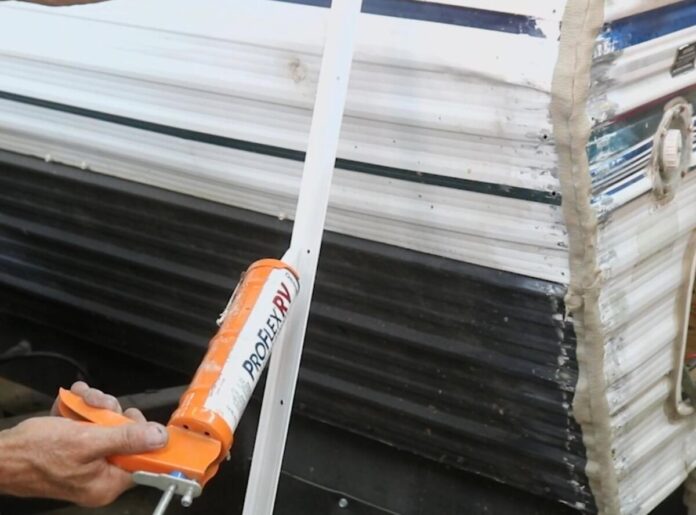
RV owners hear this phrase constantly: “Don’t use silicone on your RV”—and they assume it means NEVER use silicone anywhere. This is where the confusion starts.
When manufacturers warn against silicone, they are almost always referring to RV roofs. Roof seams require RV-specific products (like self-leveling lap sealants or urethane sealants) because RV roofs flex, move, expand, vibrate, and live outdoors under UV exposure constantly.
Residential bathroom silicone simply isn’t designed for that environment. It shrinks, peels, creates leak pathways, and is almost impossible to remove cleanly later.
So where DOES silicone belong?
There is such a thing as RV-grade silicone, and it is used all the time—correctly—on fiberglass, gelcoat, metal, aluminum sidewall seams, and exterior trim areas where water sheds OFF the surface vertically rather than pools or stagnates horizontally.
• Bathroom silicone = house use
• RV-grade silicone = RV sidewall use
• Lap sealant/urethane = RV roof use
Most RV owners only get taught the first part—“don’t silicone the roof”—and never get the second half—that silicone is used, just in the right locations only.
Quick breakdown
| Sealant type | Use location | Good for |
|---|---|---|
| Residential silicone | Homes, windows, tubs | NOT for RV roof |
| RV-grade silicone | RV sidewalls, trim, fiberglass | Flexible vertical sealing |
| Lap sealant/ urethane | RV roof seams | UV stability + vibration movement |
Pro tip from California RV Specialists:
Use the right sealant for the right area. Wrong sealant choice = leaks, rot, hidden wall damage, mold growth, and big money repairs years later.
If you’re unsure what product belongs on which part of your RV, bring your rig to us and we’ll gladly point you in the right direction and show you the correct sealants for each area.
Protect the coach before it becomes a roof replacement story.
More from Dustin
Make sure you check out my website, California RV Specialists, and our YouTube channel for more helpful information, and see our published articles on RVtravel.com and other social media pages.
RELATED
- How to reseal your RV with silicone like a pro
- How to clean an RV roof’s sealants before resealing it
- What sealants do you recommend for an RV, and what areas need to be sealed?
- RV Engineer answers: “Is silicone sealant the worst thing ever for your RV?”
RVT1243

In my experience, finding RV grade silicone sealant in small tubes for small jobs is difficult. Just as difficult as opening the caulk gun size tube and keep it from hardening between those same small jobs.
Jim, I found a rubber seal on Temu for those cut silicone tubes. It is a little red rubber rollup – virtually identical to a condom. They fit tight and seem to seal well. (Better than duct tape!). As I recall they come in a bag of 10 each for about $2.00.
Gorilla tape. Fold it over the tip and twist the flaps over. It’s a real PITA to get off.
The neat part of rolled rubber ones is you just re-roll up and it is reusable many times. Easy on, easy off. I’ve tried the Gorilla tape – and you are right – PITA!
Unless specifically required I would rather use other products. Once used nothing else will stick there. Silicon surface can be treated with a mixture of anhydrous ammonia, a liquified gas and metallic sodium combined in Thermos bottle. Then other compounds will stick. I had to do that in a company while in college around 1958.