

By Dustin Simpson
Resealing your RV with silicone is an important maintenance task to prevent leaks and water damage. Here’s a step-by-step guide to help you do it like a pro:
Materials needed
• Gloves
Steps
Choose the right sealant
Use a high-quality silicone sealant specifically designed for RVs. Avoid household silicone as it may not withstand outdoor conditions.
Prepare the area
• Clean the surface thoroughly. Remove any old sealant with a utility knife or scraper.
• Clean the area with Acrysol body solvent cleaner to remove any dirt, oil, or residue. Let it dry completely.
Tape the area
Use painter’s tape to mask off the area around where you will be applying the silicone. This ensures clean, straight lines and prevents excess sealant from spreading.
Apply the silicone
• Cut the tip of the silicone tube at a 45-degree angle. The size of the opening should match the width of the gap you’re sealing.
• Load the tube into the caulking gun.
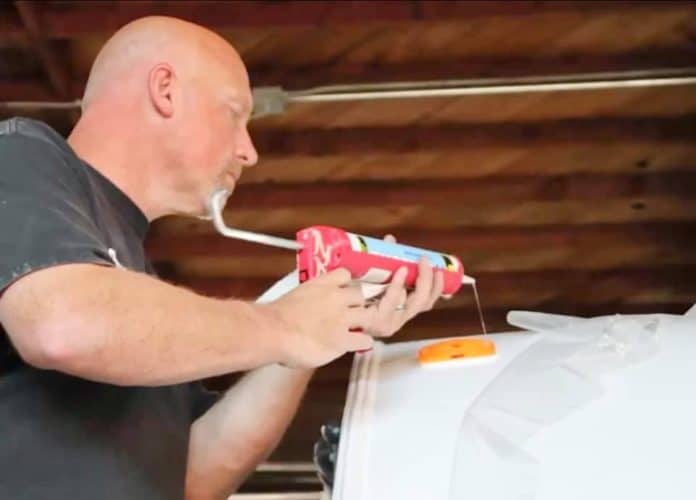
• Starting at one end, apply a steady, even bead of silicone along the seam or joint. Keep the tip of the tube at a consistent angle and speed to ensure an even application.
Smooth the bead
Use a caulking tool or your finger (wearing gloves) to smooth the bead of silicone. This helps to ensure good adhesion and a professional finish. Wetting your finger or the tool with a bit of soapy water can help create a smoother finish.
Remove the tape
Remove the painter’s tape before the silicone starts to cure. Pull the tape away slowly and carefully at a 45-degree angle to avoid disturbing the fresh sealant.
Cure time
Allow the silicone to cure according to the manufacturer’s instructions. This can range from a few hours to a full day, depending on the product and environmental conditions.
Inspect and touch up
Once the silicone has cured, inspect the seal. If there are any gaps or areas that need touch-up, apply a bit more silicone and smooth it out.
Tips
• Work in sections: If resealing a large area, work in small sections to ensure the silicone doesn’t start to cure before you smooth it out.
• Temperature and humidity: Check the weather before starting. Silicone adheres best and cures properly in moderate temperatures and low humidity.
• Ventilation: Ensure good ventilation if working indoors to avoid inhaling fumes from the silicone sealant.
By following these steps, you can reseal your RV with silicone like a pro, ensuring a watertight and durable finish.
More from Dustin
Make sure you check out my website, California RV Specialists, and our YouTube channel for more helpful information, and see our published articles on RVtravel.com and other social media pages.
RELATED
- How to clean an RV roof’s sealants before resealing it
- What sealants do you recommend for an RV, and what areas need to be sealed?
- Ask Dave: My RV’s frameless window leaks. How do I reseal it?
RVDT2731

Listen to Dustin, especially painter’s tape. When new to RVing I resealed a bay hatch. Marine grade silicon, but hey it’s clear. What difference does it make if the sealant smears a little? It didn’t until a few months later when the smeared sealant was full of embedded dust that wouldn’t wash off.
Generally speaking, I avoid silicone sealant. Once used, nothing else will stick. Eventually, when recaulking is required, will silicone sealant stick again?
Thank you for the steps and advice, Dustin! Have a great weekend and safe travels!
I don’t like silicone caulk because it attracts dust & dirt & is impossible to clean. Also if you ever have to remove it, nothing else will stick there. Overall, it is not a winner for me.