


Some time back there was a big stink in the news over gas. Gas stoves, that is. Studies indicated that gas stoves could be harmful to your health. Some sources suggested you should trade in your gas stove for an electric range. In the end, for RVers, it wasn’t a big deal—the danger was from natural gas stoves. Since RVs are plumbed into propane, not natural gas, no harm, no foul. But a new study gives concern. Could your RV stove be making you sick?

Heating up the oxygen/nitrogen tango
The study published in Sciences Advances finds that nitrogen dioxide (NO2) is given off by both natural gas and propane (LP) stoves. NO2 may be a substance you’ve heard about. The gas is a “bad boy” in air pollution control circles and is leading to tighter emissions control regulations. Whether you’re a fan of air pollution laws or not, this is still something that can personally affect you.
Both natural gas and LP stoves give off NO2 in this way. Turn on the burner to heat your food, and something else gets heated up too. Plain old air. The air is heated up so much by the stove burner that two oxygen atoms mix it up with a single nitrogen atom. The result? NO2. You might wonder why an electric range doesn’t do the same thing—after all, you’re still heating food, yes? Well, yes, but it turns out, electric ranges don’t heat up the surrounding air enough to do that three-way oxygen/nitrogen tango.
Why could your RV stove be making you sick?
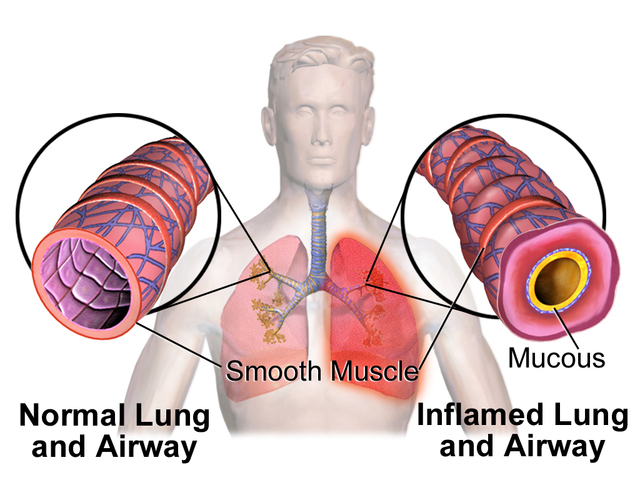
 So what’s the harm of NO2? Here’s the “bullet chart” from the American Lung Association. “Nitrogen dioxide causes a range of harmful effects on the lungs, including: Increased inflammation of the airways; Worsened cough and wheezing; Reduced lung function; Increased asthma attacks; and Greater likelihood of emergency department and hospital admissions.” Could your RV stove be making you sick?
And speaking of trips, travels with your LP gas range creating NO2 grief can easily be exacerbated. This same respiratory-ruckus-raising gas is also produced by some power plants. “OK, but I don’t travel near power plants.” But an even greater offender is that of tailpipe emissions. Kind of hard to get away from those when RV-tripping.
Study findings could apply to RVs
While the NO2 study used typical sticks-and-bricks homes and apartments for their research, it would seem the findings could transfer over to our rigs. In the study, researchers put sensors out through 100 dwellings to measure NO2 after a gas stove was used. The homes provided a variety of variables. Some of the dwellings were gargantuan when compared to floor space in RVs—some bigger than 3,000 square feet. Other homes were humbler—800 square feet or less. Some had range hoods (some exhausting to the outside, others simply recirculating through a filter), some had no hood.
Other variables brought into the study included things like cooking on one burner, or multiple burners at a time. Using the oven while cooking on the range top. Having windows open or closed. Operating burners for a short time, or for hours at a time. You get the picture.
Range hoods can help – if used properly

Now, what was the outcome? As you might expect, the first place that NO2 sensors sniffed the troublesome gas was right there in the kitchen. But the NO2 made itself welcome elsewhere, too. Within an hour, concentrations of the gas were higher down the hall than health standards would allow.
Range hoods decidedly had an effect. But just how much good a range hood did depended on how it was used. The speed makes a difference. Just turned on low it isn’t near as good as when that ear-disturbing high level is used. Hoods that sucked air outside were much better than those with a “filter-it, blow it back in the house” design. In all, when to-the-outside range hoods were used, they reduced NO2 levels from 10 to 70 percent. Recirculating hoods didn’t help much at all—or did nothing.
Just how much danger is there?
So how much nasty NO2 do gas stoves pump into living spaces? Both natural gas and LP stoves cranked up levels in those homes tested by 4 ppb (parts-per-billion). And how bad could that be? The World Health Organization says the upper safety limit for NO2 is 5.3 ppb. Just hanging out in a home with a gas stove means you’ve taken in nearly three-fourths of the safe limit of this gas. Step outside on a busy traffic corridor and imagine where that leaves your lungs.
For RVers, the final factor should be of great concern. In the residential NO2 study, it was found that the smaller the space, the higher the exposure. Remember, that 4 ppb figure was an average among all dwellings. From the study, those living in apartments or smaller homes got a dose of up to four times greater than those in larger places. And just turning off the burner doesn’t mean turning off the danger. The study found NO2 hung around above-harmful levels for many hours after the stove was turned off. Could your RV stove be making you sick?
Simple steps that can help reduce your risk
What’s to be done? For most RVers, switching to an electric stove just isn’t a practical option. But other steps can reduce the levels of NO2 and the respiratory dangers that come with it.
- When cooking with gas, always turn on the range hood.
- Check outside to ensure your range vent is open. Some have flaps that can lock closed, preventing the range hood from venting outside.
- Limit the amount of time you cook. Consider using the microwave instead of the gas range.
- Don’t use the range top as an auxiliary heat source.
- Consider opening a widow when cooking (and perhaps for a while afterward) to allow for more outside air to dilute any NO2 that escapes the range hood.
It would seem that cooking with LP can be dangerous. For RVers, we can do our best to reduce that danger by taking some simple steps. And remember there are positive health benefits from RVing. Getting away from stress and appreciating nature can do much to increase life’s happiness.
##RVT1156b


Our gas stoves are not going anywhere. Crazy article.
I’m curious – why do you think this is a “crazy” article? All it does is provide details of a study that shows that the use of natural gas/propane stoves results in the production of a known pollutant with potentially harmful effects to humans, and suggests ways to minimize those effects. It is up to an individual to assess the potential risk associated with the use of such stoves and act accordingly. No one is telling you not to use such stoves. For the record, we have propane stoves in both our camper and our boat and a natural gas stove at home, all of which we will continue to use. But, we will take steps (primarily ensuring better ventilation) to minimize the risk.
Lawrence,
Thanks for the reply. “Crazy” for me refers to the concept of the hazards in cooking and heating with natural gas and propane when these things have been around for hundreds of years without previous reports of the specific respiratory hazards in using them. As has been true for almost an equal amount of time is the use of a range hood and other ventilation items to greatly mitigate the hazards.- I think those points are the most important in the article. I’m glad you keep using your gas appliances.
The Romans had lead pipes for hundreds of years (i think), and at the time, I’m sure they couldn’t have had the slightest concern that they were getting something harmful from them. Turns out they were wrong.
Maybe we need to go back to cooking over an indoor wood stove…🤔😂
I remember when things were measured (and warned about) in parts per million.
Thanks, Russ and Tina! 🙂 Oh my! 😯 Thanks again, and safe, nitrogen dioxideless travels! 🙂
I have zee-row concern about this. I’m 78 and still “cooking with gas”.
Thank you for the informative article. I’m not fully in agreement with governments talking about limiting people’s ability to buy gas stoves but I appreciate getting the word out so people can make their own choices for their health. Then capitalism can correct it, properly.
ummmm to quote….”Turn on the burner to heat your food, and something else gets heated up too. Plain old air. The air is heated up so much by the stove burner that two oxygen atoms mix it up with a single nitrogen atom. The result? NO2.”
okay so I guess cooking by camp fire, wood burning stove, fire places that burn wood does the very same thing? palm of hand to forehead
is that group of folks that study the flow rate of ketchup still around, just curious of their findings, was a 60 minutes story a while back
Robin, I don’t watch 60 Minutes anymore but I’d really like to know about the ketchup story! Maybe You Tube?
Funny how a movement can come at us from every conceivable source – contrary to what ever is currently in use. The Gore/Biden Admin. is currently pushing electric vehicles and the go green program – so everything contrary to that and fossil fuels is now bad and more studies are coming…. I wonder what the effect of the solar explosions currently going on will be – certainly not anything healthy! HA!
Thanks Russ & Tiña for the information and reminder to use ventilation when cooking. Seems the Keyboard Warriors are up in arms again. Take a few breaths of good clean air and chill.
use your over the stove vent / fan and have a window open to circulate fresh air…no huffin’ the exhaust.