


Dear Dave,
There is excessive heat in the tubes [of the RV refrigerator] and what appears to be some sort of condenser module. The heat got to the point of not being able to touch the pipe (could touch for only 1 to 2 seconds). The unit voltages checked fine, as outlined in the online owner’s manual minus cover-off power supply. The unit sounds like water (fluid) is running through something. I did NOT check the roof vent and flue pipe. The vent cover exposing the unit is off the motorhome, exposing all of the back of the unit. This unit is a Norcold model 8663. I am not a refrigerator repair person. —Charles, 1977 GMC Eleganza II
Dear Charles,
Your Norcold refrigerator is a 3-way absorption model that runs on 12-volt DC, 120-volt AC, and liquid propane (LP). It starts with a rich solution vessel that has ammonia, water, sodium chromate, and hydrogen. This solution is heated by a heating element in the 12-volt DC and 120-volt AC mode, and by a flame in the LP mode. The solution gets heated to approximately 350 degrees and turns into a vapor.
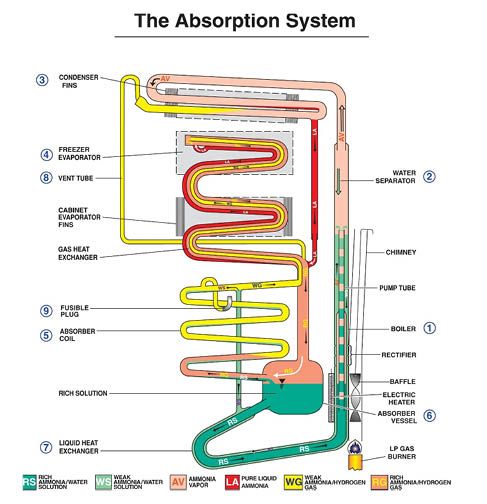
By the time it turns into a vapor, it isn’t quite that hot, but it is still above 200 degrees. That would be too hot to touch with your hand, even for a second or two!
If the unit is cooling adequately, the heat you are experiencing is normal. However, if the cooling unit starts to get clogged, then the temperature could get as high as 350+ degrees—which would be a concern.
Refrigerator needs to be level
Ensure your refrigerator is level when operating. When the vapor condenses, it flows down the cooling unit tubes by gravity. If it’s out of level by more than 3 degrees side-to-side or 6 degrees front-to-back, the liquid pools in a corner, gets too hot, flakes, and blocks the tube.
At this point you would experience insufficient cooling. A telltale sign of the start of a block is a gurgling sound as the vapor hits the clog, turns back into liquid and flows back down the tube.
Water/liquid sound
The water sound you hear could be the liquid returning to the rich vessel. As I said, if the unit cools on all modes, I wouldn’t worry about the sound or heat. Newer units have a temperature sensor that shuts down if the cooling unit’s temperature exceeds 422 degrees.
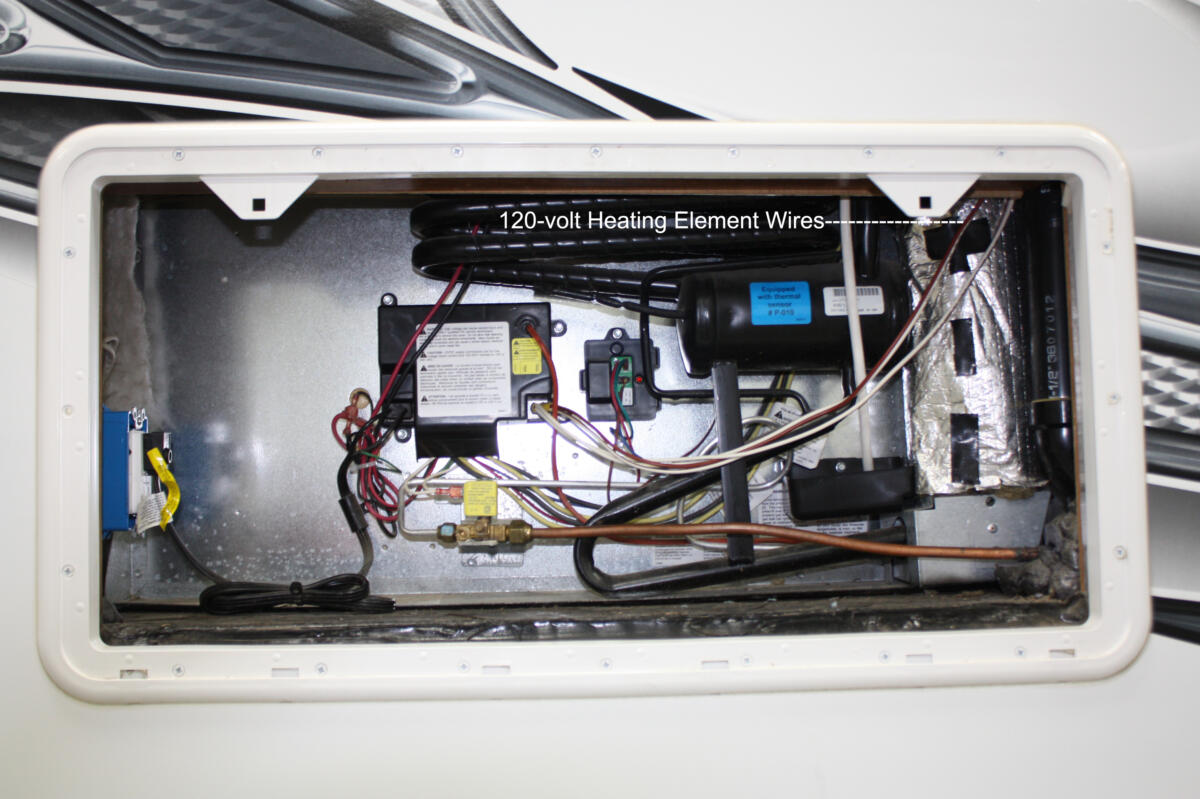
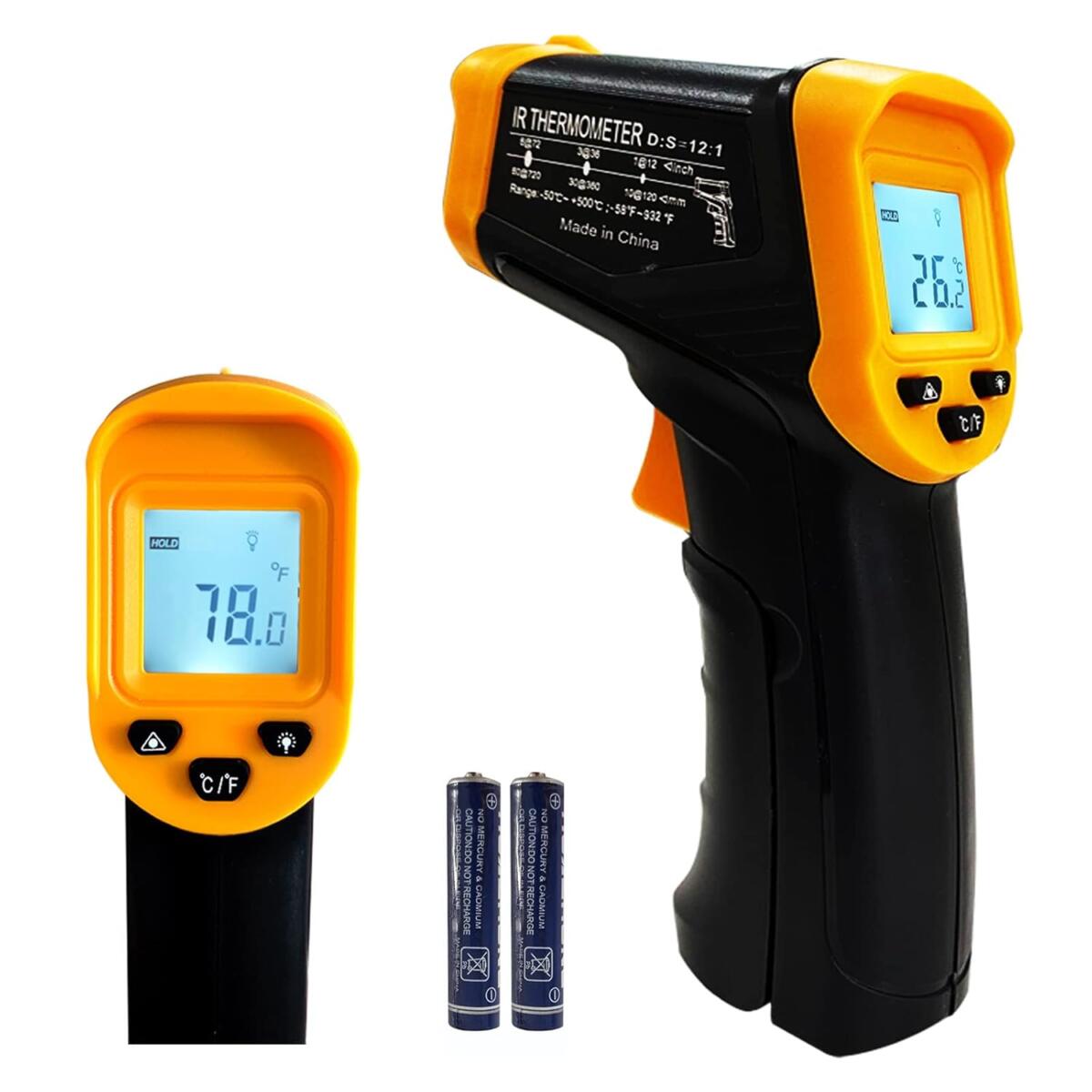
Since you have access to the coils, you might want to get the actual temperature with a non-contact temperature sensor. You can get one on Amazon here.
You might also enjoy these posts from Dave
- Can I add an inverter to run my RV refrigerator on 120-volt while driving?
- Will these power sources keep my RV refrigerator running while driving?
- Will running RV refrigerator on propane while driving hurt it?
- How long will an RV 12-volt refrigerator run with two batteries?
- RV refrigerator hot weather tips; install fridge fan?
DAVE HAS ANSWERED MORE THAN 1,000 readers’ maintenance and repair questions. Read a directory here. There is so much to learn!
Dave Solberg is a leading expert in the RV industry and the author of the “RV Handbook.”
HAVE A QUESTION FOR DAVE?
Send your inquiries to him using the form below.
RVDT2701


Thank you for the discussion, Dave! Interesting stuff here. Our refrigerator is electric, so this is educational for me. Have a great week and ssfe travels!