

By Dustin Simpson
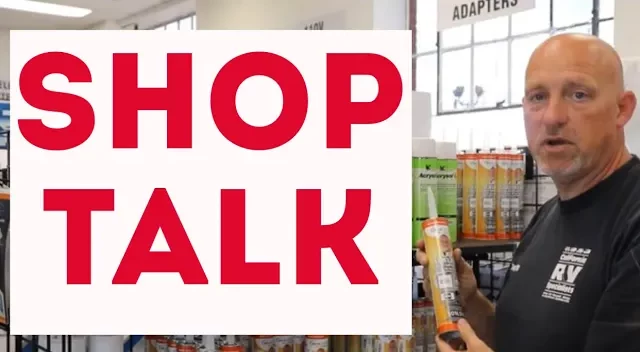
In this video, join me in our store as I explain the different types of sealants available for various RV roof materials such as fiberglass, rubber, TPO, and PVC.
Discover the essential products needed for cleaning and sealing your RV roof, and get expert tips on application techniques.
Types of sealants for different RV roofs
Fiberglass roofs
• Sealant type: Use a non-sag sealant or self-leveling sealant designed for fiberglass.
• Tip: Ensure the sealant is UV-resistant to prevent degradation from sun exposure.
Rubber roofs (EPDM and TPO)
• Sealant type: Use lap sealant or self-leveling sealant specifically formulated for rubber roofs.
• Tip: Choose a sealant compatible with your rubber roof type (EPDM or TPO) to ensure proper adhesion and durability.
*RVtravel.com recommends RV Roof Magic.
PVC roofs
• Sealant type: Use a PVC roof sealant that is flexible and weather-resistant.
• Tip: PVC roofs often require a primer before applying the sealant for better adhesion.
TPO roofs
• Sealant type: Use a TPO-specific sealant or a universal sealant compatible with TPO.
• Tip: Clean the surface thoroughly before applying the sealant to ensure a strong bond.
Essential products for cleaning and sealing your RV roof
Cleaning products
• RV roof cleaner: Use a cleaner formulated for your specific roof material (fiberglass, rubber, PVC, or TPO).
• Soft brush or sponge: To scrub the roof without damaging the material.
• Water hose: For rinsing off the cleaner and debris.
Sealing products
• Sealant: Choose the appropriate sealant for your roof type, as discussed.
• Primer (if needed): Some roof materials, like PVC, may require a primer for better sealant adhesion.
• Caulking gun: For applying the sealant smoothly and evenly.
Application tools
• Utility knife: For cutting the sealant tube tip.
• Putty knife: For smoothing the sealant and removing old sealant.
• Gloves: To protect your hands during application.
Expert tips on application techniques
Preparation
• Clean the roof thoroughly with the appropriate cleaner and let it dry completely.
• Remove any old or loose sealant with a putty knife.
Application
• Cut the sealant tube tip at a 45-degree angle to control the flow of the sealant.
• Apply a continuous bead of sealant along seams, joints, and around roof fixtures.
• Use a putty knife to smooth out the sealant and ensure it covers the area evenly.
Drying time
• Allow the sealant to dry and cure according to the manufacturer’s instructions. This usually takes 24-48 hours.
• Avoid exposing the roof to water or heavy use during the curing period.
Regular inspections
• Inspect your roof sealant periodically for cracks, gaps, or wear.
• Reapply sealant as needed to maintain a watertight seal and prevent leaks.
Properly sealing your RV roof is essential for preventing leaks and extending the lifespan of your roof. By understanding the different types of sealants and following expert application techniques, you can keep your RV roof in excellent condition.
Make sure you subscribe to our YouTube channel for more RV maintenance tips and keep your RV ready for every adventure!
More from Dustin
Make sure you check out my website, California RV Specialists, and our YouTube channel for more helpful information, and see our published articles on RVtravel.com and other social media pages.
RELATED
- Your RV takes on water damage through more than rain. Protect those sealants!
- A step-by-step guide to applying self-leveling sealant on your RV’s roof
- Dicor Butyl Rubber Sealant vs. traditional putty tape: Which is best?
- Even tiny RV sealant leak can cause costly damage
- How to clean an RV roof’s sealants before resealing it
RVDT2890
Thank you for the discussion, Dustin. I am unconvinced that RVers can be reminded of the importance of regular maintenance, particularly of seals, too much. Have a great day and safe travels!
It was a nice article, but it would have been nice to have links to products instead of the generic “Use _____ “ for each category.