

By Cheri Sicard
I’ll confess, until this video I had never considered RV roof vent covers. But my experiences on my Long Long RV Trip combined with the wisdom of Martin from RVstreet, one of my favorite RV vloggers, has me rethinking the proposition.
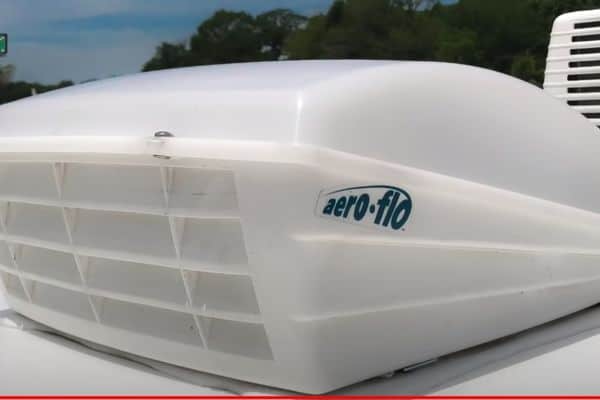
In the video below, Martin talks about the advantages of installing vent covers on your RV’s roof and how they protect your RV, especially from the elements like baking sun, high winds, or damaging hail.
In addition, RV roof vent covers allow you to keep your roof vents open all the time, even when it’s raining! Anyone who has forgotten to close a vent to come home after a rainstorm can especially appreciate this feature.
This is an easy-to-install RV modification and Martin talks about how to do that later in the video.
Martin also demonstrates the required maintenance, which is essentially just cleaning. An annual cleaning can remove dirt, debris, and even potential mildew.
What you will need to clean your RV roof vents and vent covers:
- Knee pads (watch the video for Martin’s homemade version)
- A whole roll of paper towels
- A bottle of Clorox Plus Tilex mold and mildew-removing spray cleaner
- 3M dry spray silicone lubricant
- Thetford slide out lubricant rubber seal conditioner — Martin uses this on everything rubber, not just the slide out seals.
- A Phillips screwdriver
Watch the video for Martin’s step-by-step tutorial on how to clean your roof vents and covers as well as condition their seals and the metal cranks too. Once you know what you’re doing, this RV maintenance job loses all intimidation!
Additionally, make sure you read this article by our own Dustin Simpson of California RV Specialists about the benefits of RV roof vent covers.
##RVDT2292
We purchased our 2016 Leprechaun new and immediately had MAXX AIR Vent covers installed in it. They are worth the investment, PERIOD!
Thank you, Cheri! Yes, very important. A good test of a service shop is whether they put them on backwards 😉 If they do, run away, … fast, … AFTER you have them removed, of course. 🙂 Our RV was expensive, yet lacked them. We had them added the day we got it and will never return to that dealer.
Wow! They actually installed them backwards? I didn’t think it was even possible to have a dealership that was that dumb! Glad you caught it!
We have MaxAire covers on our 3 vents, wouldn’t be without them!
We followed the RV Street videos for quite awhile, Martin had a lot of practical common sense advice, he is missed. RIP
I too installed four Aero Flo covers several years ago on our Class C that we’ve owned for eight years now. Nice to have protection over the cheap vents that came with the motorhome. I also like that I can take them apart to be cleaned on the inside.
Roof vent covers make too much sense. They should really be standard equipment on new RVs. Not that I’m holding my breath.
I always get the best deal I can and then get the dealer to throw in vent covers, installed, for all the roof vents.
One of the 1st things I do with a new to me RV is install roof vent covers. It is fantastic to open a bathroom vent and kick on the fan during my shower even when it is raining. When an RV is in storage, a vent is always cracked to control interior moisture and condensation. The only times I don’t have a vent cracked during travel is in freezing conditions and trying to maintain interior temps, and on dusty gravel roads. The vents keep out water, but not dust laden air.
We have installed vent covers on every RV we’ve had since the 90’s. I can’t imagine not having them!
I replaced the screaming meemi fan in the bathroom with a MaxxAir vent. Efficient and quiet too! I also replaced the Fantastic fan in the kitchen-dine area with a MaxxAir with a remote control and I can control the fan from the drivers seat. I also discarded the Camco roof vent covers as the ND-MN sun had eaten them in 3 years! – touch the fins and they fell apart!
Llike many Rver’s and I am sure his family and friends, I miss Martin and his practical videos.
We are not full timers and I have never used or envisioned the need for covering our standard non-powered vents for our style of travel or camping. I do not doubt the utility of covering the adjustable cover of a roof vent. However, seeing the dirt and debris that collect inside these vent covers over one year, I will likely never install them. I carry one replacement adjustable vent cover and seal for our three vents if one breaks and needs replacement. Cleaning leaves and pine needles from the top of vent screen is easy by just opening the vent.