

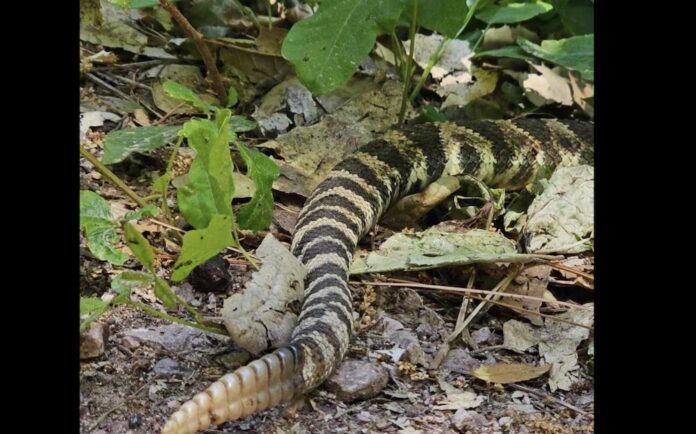
This warning comes from California’s Pinnacles National Park.
Hikers in California outdoors this time of year know to look out for two things in particular that, if encountered, can spoil their day: Rattlesnakes and poison oak. Both are pictured above. Rattlesnakes are found in almost every part of the continental United States, but they’re especially common in the Southwest.
While a Western Rattlesnake, like what you see in the photo, has no interest in jeopardizing its own safety in seeking a conflict with humans, it will defend itself if scared, threatened or stepped on. And with their excellent camouflage, incidents can sometimes occur. Always pay attention the sounds of where you are hiking or even in your campground, where a snake might wander. If you hear a sound like a baby rattle, be aware: It could very well be a rattlesnake warning you, a potential aggressor, to back off.
Poison Oak, with three leaflets on each leaf, can occur as both a woody vine or a shrub, and in both states, the leaves and stems are covered in a resin that can cause severe itchy rashes and blisters. And while this plant also typically does not seek conflicts with humans, they do tend to grow in places people like to hike. Since they grow rapidly, they often overhang trails and are easy for visitors to accidentally brush against.
Poison oak typically grows as a shrub in the Eastern and Southern U.S. The shrub sometimes has white or yellow berries. Poison oak grows more commonly as a vine in the Western U.S, according to the Cleveland Clinic.
While neither of these living things are evil, they can certainly ruin an unprepared visitor’s day. The moral of this story: Always keep a sharp eye out when recreating in wild spaces, and give nature some space—for the safety of both yourself and the wildlife.
Photo credit: NPS / Symons
##RVT1157


The only thing missing is the pictures of poison Oak, Poison Sumac, Poison Ivy! You can find pictures them here: https://www.google.com/search?channel=ftr&client=firefox-b-1-d&q=poison+Oak+pictures
Thank you, RV Travel! 🙂 We here in East Tennessee call the vine version poison ivy. If it is a stand-alone plant (often grouped with several others in a location), then we call that poison oak. DW is highly allergic, so I am vigilant in looking for it when we work in the woods. I had a reaction to it that was quite widespread over my arms and legs as a pre-teen. Fortunately, I have had no such reactions from casual exposure as an adult. Hence, I am able to work in areas off-limits to DW. As to rattlesnakes (and copperheads in our area), we avoid the woods between late-spring and early-fall. Thanks again and safe travels! 🙂
You can find all the plants noted by Ran below plus rattle snakes in ND and generally as far east as the Missouri River. Wear high top boots etc when hiking or horse back riding.