


Dear Dave,
Hello. I am in the process of purchasing a 2022 Coleman 262BH from a friend who is helping this 70-year-old woman set it up for myself. This particular coach does not have an enclosed underbelly. I’m planning to stay in warmer weather as much as possible, but I know there will be times when that isn’t possible. I have children in Colorado that I want to visit in spring or fall. I want to find someone who can install an underbelly cover, but I don’t know where to find them. All I’ve found by Googling are how-to’s for DIY. Do you have any advice for me? Thank you for taking the time to read my email. —Janet, 2022 Coleman 262BH
Dear Janet,
From the photos I can find on RV Trader and other websites, it looks like the Coleman “Bunk House” unit you are looking at has “stick-and-tin” construction with an exposed underbelly. It is an inexpensive unit, and the Coleman brand has been around for many years with many different manufacturers. In 2022, it was listed under the Dutchmen RV brand and now is under Keystone. They are both owned by Thor Industries. It’s just a marketing switch, I believe, as Camping World lists the Coleman as their #1 seller.
As I write this, I am at an RV show in Myrtle Beach, SC. Although there are no Coleman models being shown (as Camping World has the market and chooses not to participate), there are several here that have the same construction methods and materials. Here is one that looks to be similar to the unit you are looking at.
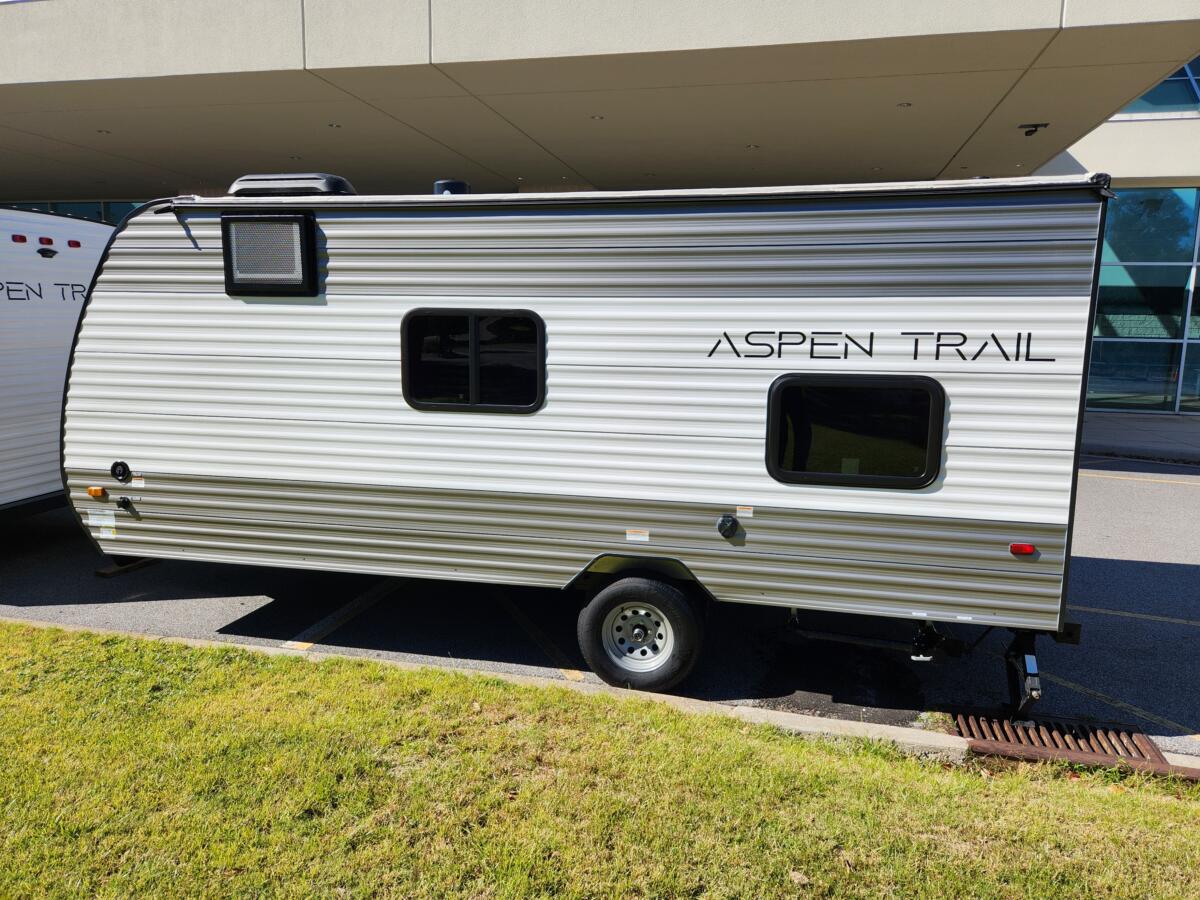
The underside has no coverage and the holding tanks and low point drains are exposed.
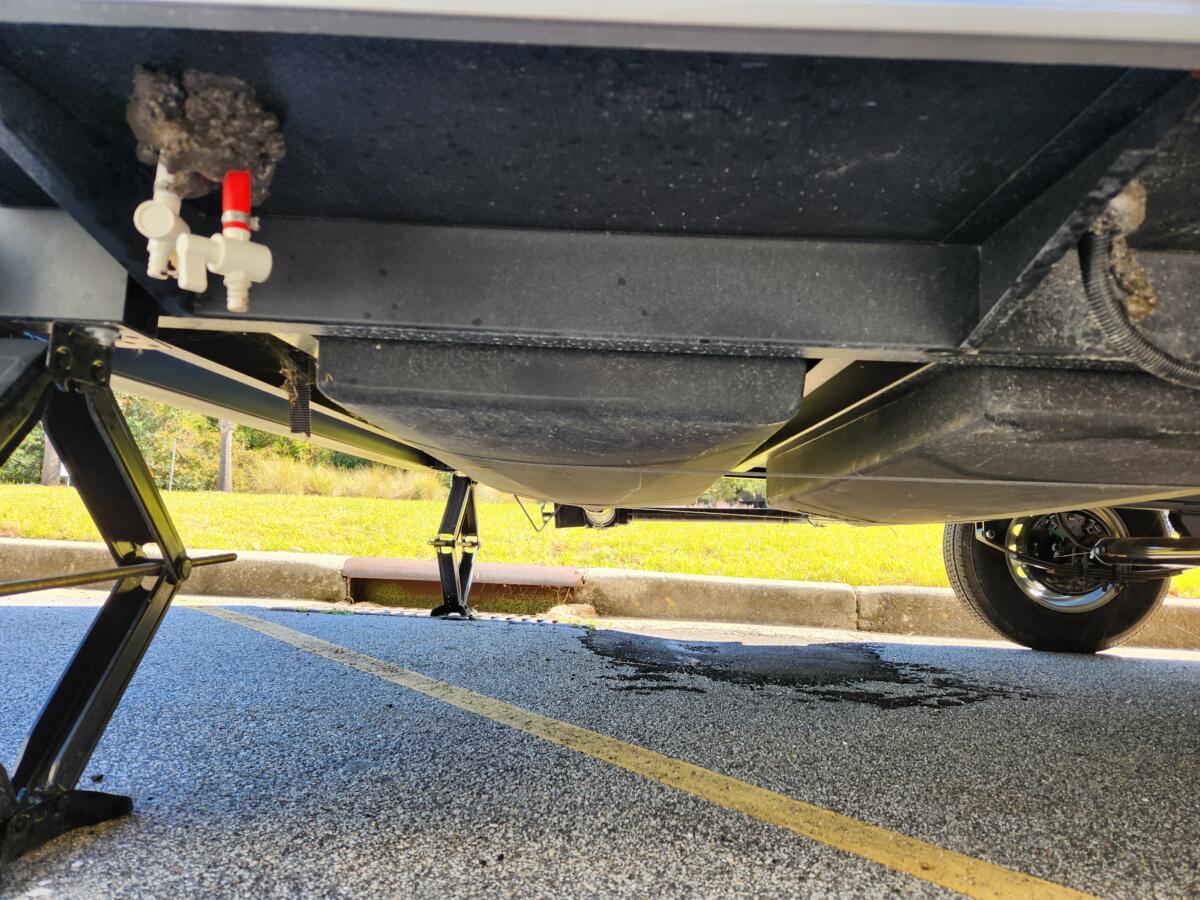
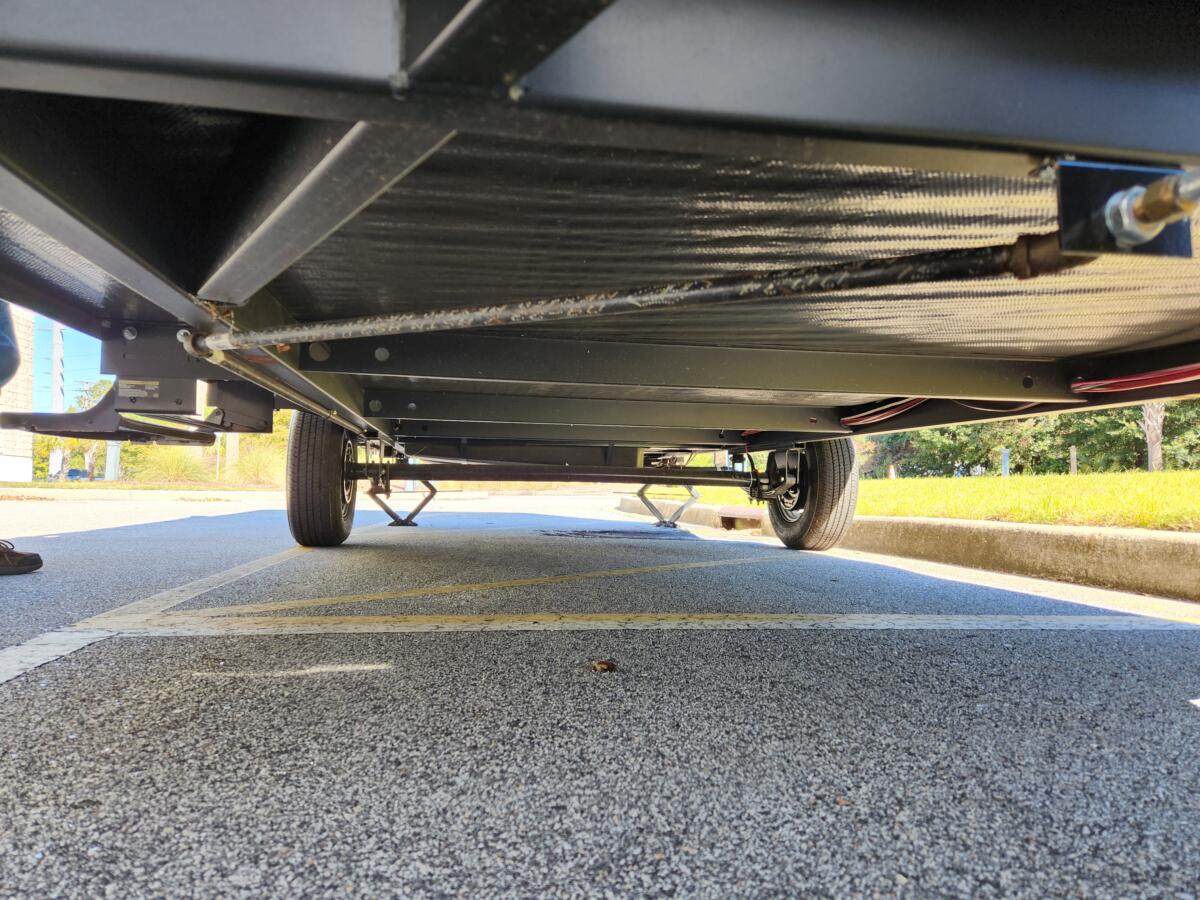
Underbelly cover
Since you are looking to install an underbelly cover, I assume you are wanting to not only protect the water lines but add extra insulation to the floor. According to the Keystone website, the Coleman line features a HyperDeck™ floor construction. That is a sandwich design with 2″ block foam in the middle—so it does have excellent insulation. I am not sure if that same design was used in 2022, but I do believe there is some type of insulation.

If you are looking to block cold wind and snow from blowing underneath, an easy option would be to use RV AirSkirts.
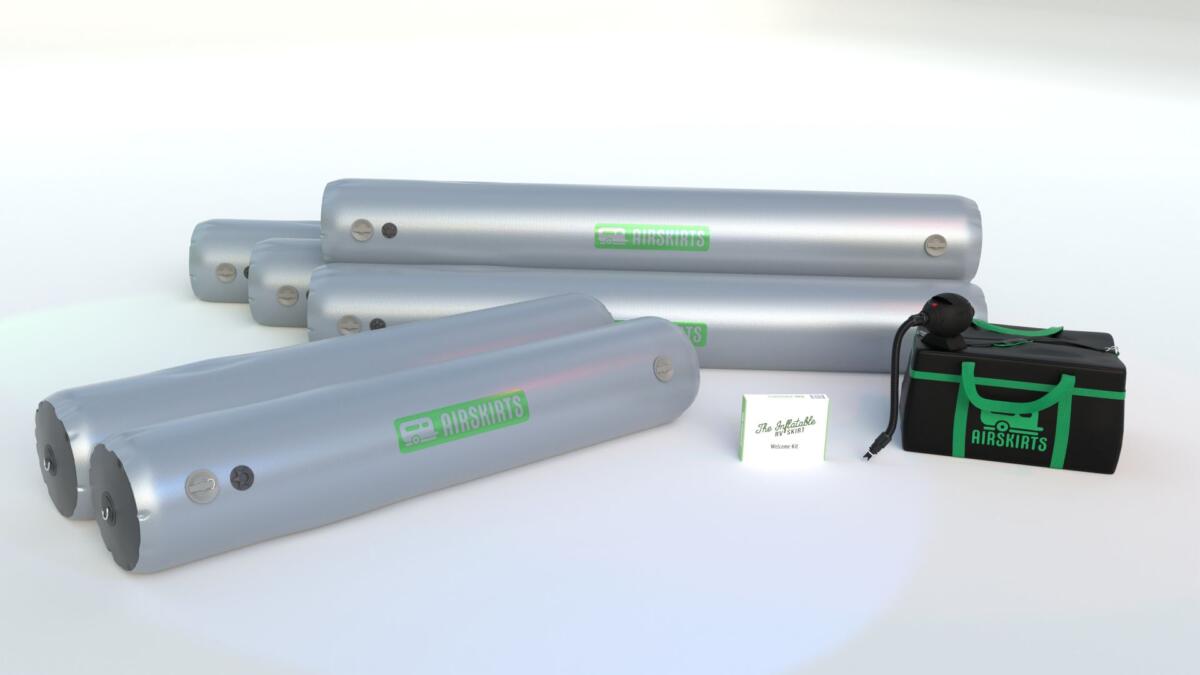
They block the wind and the air in the bladder is an insulator. Their website claims it helps add twice the insulation of a traditional floor and keeps water lines from freezing. The cost is a factor; however, with labor prices close to $200 per hour, it might be comparable to someone adding an underbelly.
What most manufacturers and DIYers use is a corrugated plastic sheet fastened to the frame rails. Some use block foam insulation or even spray-on foam.

This is an example of a section underneath a unit that has the underbelly panel, as this is the plenum for the furnace. [From Merriam-Webster: plenum: an air-filled space in a structure, especially one that receives air from a blower for distribution (as in a ventilation system).]
Not difficult to install underbelly cover
I don’t know of anyone that would actually “specialize” in insulating the underbelly, so that is most likely why you have not found anything on the internet. This is not a difficult install and can be done by a person with a little handyman skills.
I would suggest contacting a home handyman service that does insulation or other small jobs and show them the DIY videos you have found. It is basically screwing the panels on to the frame rails and spraying a little expandable foam. Most handyman services do this for doors and windows in homes all the time.
You might want to visit a home improvement store, as they have business cards posted of people that will do all types of construction and painting work. I would believe one of them can do this fairly easily.
You might also enjoy this from Dave
What is the best way to protect and insulate the underbelly of an RV?
Dear Dave,
What is the best way to protect and insulate the underbelly of an RV? I have seen where the manufacturer will cover the entire underbelly with a thin corrugated plastic. I have also seen where the manufacturer simply sprays insulation on the entire underbelly, leaving the underside exposed, assuring access to vital components, valves, tubing and wiring. Which method do you think is better? Thanks. —James, 2023 Escape 5.0TA 5th wheel
Dave Solberg is a leading expert in the RV industry and the author of the “RV Handbook.”
Read more from Dave here.
HAVE A QUESTION FOR DAVE?
Send your inquiries to him using the form below.
##RVDT2497

Instruct the person doing the job to put in some access panels below critical features, like the drain valves for holding tanks, electrical connection boxes, if any, etc. Basically, any point that may need maintenance in the future.
Also, if the holding tanks are held in by puny little insufficient strapping, like in the picture Dave posted, I would have the installer beef that support up with something more substantial. Too many horror stories of tanks falling out the bottom because manufacturers use those cheap straps instead of framing.
Dave that was a great reply. The one thing that I see as a possible problem is that spray foam, its great for plugging holes & adding a bit of insulation however it can be a nightmare if you have to fix something in the area that you have added the spray foam as it sticks to everything!
Thank you for the discussion, Dave! Have a great week and safe travels!