

Dash cams have been common in cars for years, but for RVers, they’re quietly becoming one of those upgrades that just makes sense.
From campground backing mishaps to wildlife encounters on rural roads, dash cams can give RVers a clear record when things don’t go as planned.
When you’re driving something big, heavy, and expensive—often through unfamiliar towns, narrow campground roads, or wildlife country—having a clear record of what actually happened can matter. Not just for highway accidents, but for the everyday moments RV travel brings: backing into a tight campsite, navigating crowded parking lots, or encountering animals on rural roads.
Consumer Reports recently tested a range of dash cams. It highlighted several that are genuinely worth buying. Here’s how those picks translate into real-world value for RVers, without getting lost in tech jargon.
What a dash cam actually does for RVers
A dash cam continuously records while you’re driving, and many can also monitor your vehicle when it’s parked.
For RVers, that can mean:
- Clear evidence if you’re involved in an accident
- Video proof if someone bumps your rig in a parking lot or campground
- Documentation of wildlife encounters on back roads
- Peace of mind when your RV is parked, and you’re away hiking or sightseeing
You may never need the footage. But if you do, you’ll be glad it’s there.
One important distinction: one camera versus two
Not all dash cams are created equal, and this is where RVers should pay attention.
- Some dash cams record only what’s happening in front of you.
- Some can accept a rear camera later, but it’s sold separately.
- And a few come as true front-and-rear systems right out of the box.
For longer rigs, that difference matters more than it does for car drivers.
Budget-friendly option with front and rear coverage
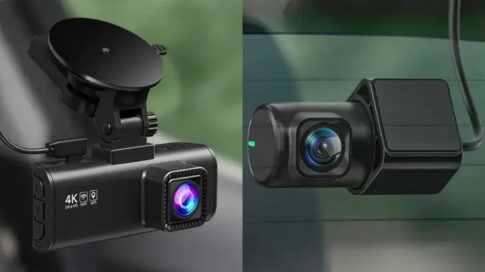 Redtiger F7NP Basic—$150
This model stands out because it is a true two-camera system. Both the front-facing camera and the rear camera are included, and they record at the same time.
The front camera captures the road ahead, while the rear camera records what’s happening behind your rig—especially useful in campgrounds and parking lots, where low-speed bumps and backing mishaps are more common than highway crashes.
For motorhomes, fifth wheels, and anyone who backs into campsites regularly, having rear coverage without buying extra components is a real advantage.
Front-only option for simpler setups
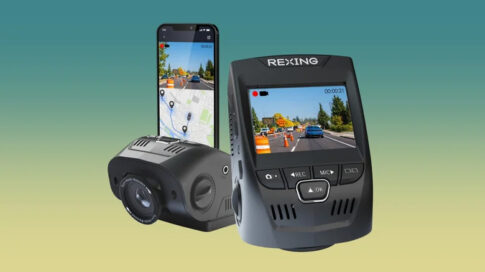 Rexing V1-4K—Under $100
This dash cam focuses on recording what’s ahead of you. It’s typically sold as a front-camera-only system, making it a good fit for tow vehicles, Class B vans, and RVers who want straightforward documentation of road incidents.
Some Rexing models support rear camera add-ons, but this version is usually used for front coverage only. If your main concern is traffic incidents or wildlife encounters, that may be all you need.
A flexible midrange choice
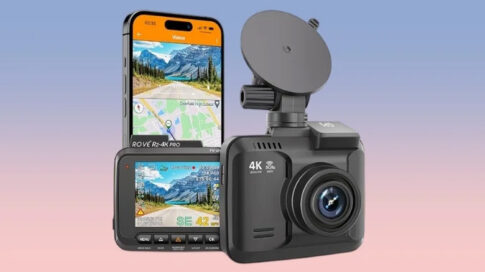 Rove R2-4K Pro—$250
The Rove R2-4K Pro records clear forward video and includes location tracking. Out of the box, it’s a front-camera system, but it can accept a rear camera add-on if you decide later that you want more coverage.
That flexibility makes it appealing for full-timers and snowbirds who log a lot of miles and want the option to expand without replacing the whole system.
Proven and straightforward
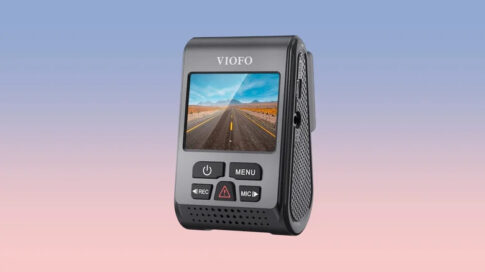 Viofo A119 V3—$114
This dash cam is designed as a front-camera-only unit, with no rear camera option. Its focus is reliability and simplicity rather than extra features.
For RVers who want dependable forward coverage and don’t want to deal with additional wiring or components, it’s a solid, no-nonsense choice.
There are, of course, many other dash cams available on Amazon.
Matching the dash cam to your RV
Different rigs benefit from different setups.
Class A and large Class C motorhomes often benefit from front-and-rear recording, especially when backing into campsites or navigating tight parking areas. Parking monitoring can also add peace of mind when the rig is left unattended.
Class B vans and smaller rigs often do fine with a high-quality front-facing camera, especially if simplicity and a clean windshield setup are priorities.
Tow vehicles pulling trailers typically rely on dash cams for forward documentation. Many RVers already use separate backup camera systems, so a front-only dash cam can still make sense.
What matters most
You do not need to chase specs or buzzwords. For RVers, the important things are:
- Video that is clear enough to recognize what happened
- A system that turns on and works every time you drive
- Simple operation without constant fiddling
Fancy features are nice, but peace of mind is the real upgrade.
The bottom line
A dash cam will not make traffic lighter, campgrounds wider, or wildlife more predictable. But it can give RVers a clear record of what happened when things do not go as planned.
Like many RV upgrades, it is something you hope you never need—but are glad to have when you do.
RELATED
- Do you have a dash camera on your RV or tow vehicle?
- What kind of roads do you dislike driving the most?
- What can I do to reduce blind spots when driving my older Class C?
- Motorhome hits bicyclist on highway. See dash cam footage
- Dash cam catches dramatic travel trailer crash
- Video: Trailer blows 3 tires on 800-mile trip. See dashcam video from car behind
RVT1246


My first dash camera had a screen.
I don’t know what I was thinking as to the benefits but for me, it was annoying. Annoying at night, annoying on the peripheral and annoying for durability.
All the dash cams that I’ve purchased thereafter don’t have a built in screen. I just connect to it via my phone or iPad wirelessly to access videos.
My recommendation for new buyers, skip the screen. You don’t need it to drive, let alone capture, store or send videos.
Is there a particular brand / model that you would recommend? Front &/or rear views???
We’re currently using the AZDome MS300 https://amzn.to/40s9IQi which has been pretty good. My only complaint is SD cards don’t seem to like getting baked by summer heat so they don’t last more than a couple years it seems.
My dash cam comes on, lights the screen on initial start for a few seconds, then goes blank but keeps recording. It will come back on with lane departure or read warning of closure speed on another vehicle. Keep in mind dash cams record the good along with the bad, by that if you do something silly it records you and may be used in insurance claims.
I have a Vantrue system, which besides the standard front-viewing camera, has a small into-the-cockpit camera and another, rear-facing camera with a long wire that mounts on the back window of the vehicle. While towing in Michigan, a distracted driver going the opposite direction entered my lane, which I was fortunate to observe, evade and avoid a head-on collision. I retrieved the recorded video from these 3 cameras, which clearly showed the potential disaster. While evading, there was a lot of corrective steerage while the trailer responded to the quick movements, bounced a little, but remained upright while looking like a circus act. This all showed on the videos.
We have the Garmin rvcam 795. It’s a GPS with built in dashcam.