

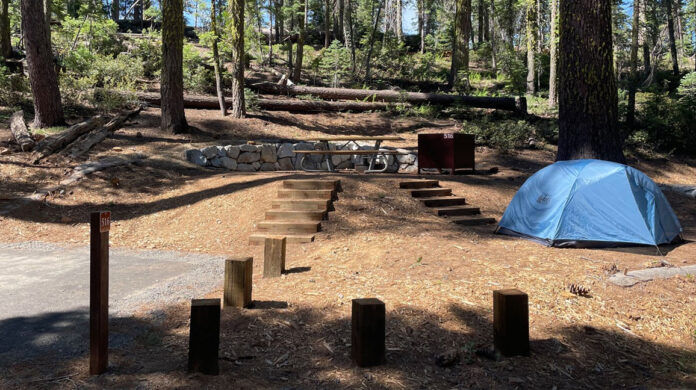
The COVID-19 pandemic changed a lot of things. One of them was the shutdown of a big campground in ever-popular Yosemite National Park. The campground hadn’t been upgraded since 1962 and had fallen into disrepair. The National Park Service shut the gates in 2020. Now Yosemite reopens Crane Flat Campground—with a whole new look.
Nearly $10M invested in Crane Flat Campground
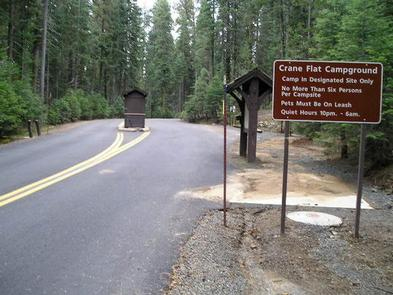 Yosemite National Park’s Crane Flat Campground is welcoming visitors for the first time in four years, thanks to a $9.8 million investment from the Great American Outdoors Act (GAOA).
Over the years, the campground that hosts more than 100,000 visitors a year had become rundown. Picnic tables and fire rings were rusty, and camp signs faded. Campers parked anywhere there was space, so sites needed better definition. Sensitive vegetation was trampled on.
But one of the biggest complaints was the lack of flat spots to pitch a tent or set up for cooking and eating. Campers often improvised by shoving logs under table legs to make tables flat and carved in pads for their tents. The campground shut down in 2020, shortly after the COVID-19 pandemic.
Eagle Scout/civil engineer spearheads project
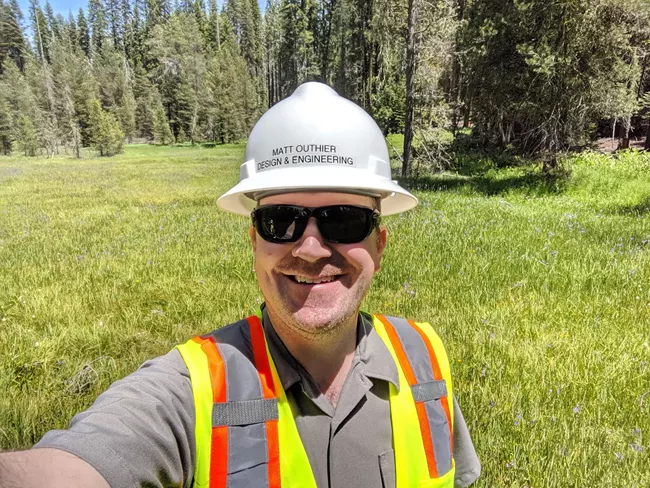
Spearheading the revamp was Matt Outhier. Redesigning an entire campground for a civil engineer with a background as an Eagle Scout and avid camper was a dream project. He works for the Park Service and spent five years in the Design & Engineering Branch at Yosemite.
“I was a Boy Scout growing up, and I love the outdoors, but besides that, this project had a lot of elements that just really spoke to me,” Outhier said. “During the design process, we spent hours researching and reading website reviews. We wanted to pick up campers’ vibes about the place.”
Campground of last resort
They found the campground was often a last resort for campers and that the second word in Crane Flat was a misnomer. There was nothing flat about it. For many park visitors, it was a backup site when more popular campsites in the Valley filled up.
Outhier was determined to make the campground a prime destination in the park.
“I spent many, many nights at Crane Flat, especially during construction phase, just to get a feel for the place,” Outhier said. “It’s a pretty special place.”
Wildlife aplenty
The conifers, pine, and oak trees provide excellent cover for wildlife. Outhier said he captured photos of bears and deer coming by daily. One morning, when crews were coming around the corner in one of the back loops, they saw a doe had just given birth to a fawn in the middle of a campground road. “It was just spectacular,” Outhier said.
New and improved
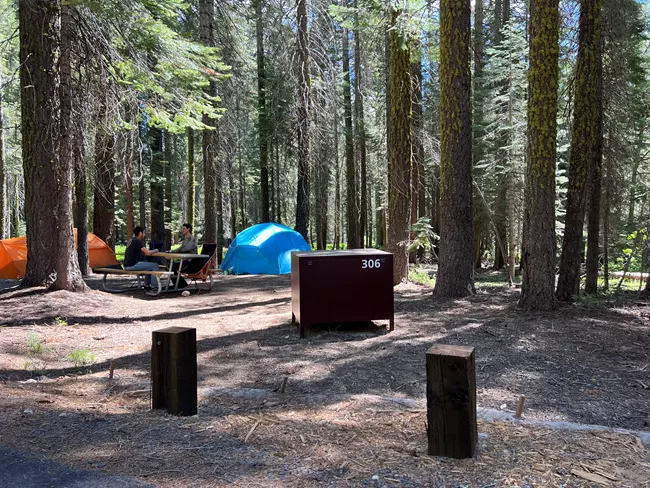 Crews graded more than 160 campsites, including eight ADA-accessible ones. Each site now has a tent pad, fire ring, and picnic table, all next to each other, making it a pleasant outdoor living area for all visitors.
Workers added culverts to improve drainage, and they built tent pads at all sites. The builders constructed eight fully accessible campsites along with accessible paths that connect to comfort stations. These sites all have accessible bear boxes placed higher off the ground. They also provide double-walled fire rings.
Several double sites were added, allowing groups of up to 12 to camp together. Workers added retaining walls and steps to several sites to make the camping experience more enjoyable.
“Historically, these were undesirable campsites due to the challenging grades, but now they’re some of the best spots in the campground,” said Outhier.
Now cooking and eating areas are clearly defined. They include new picnic tables, fire rings, and bear-proof storage lockers. Workers installed stop logs and boulders to prevent off-road travel, and they restored landscape vegetation and ground cover.
Designer’s hope
“I really hope this becomes a desirable place where people want to come and stay,” says Matt Outhier. “I hope people come back and notice how different it is now. That’s what I’m most excited about—to see people’s reactions and read reviews that are positive. This is another example of how the Great American Outdoors Act is transforming parks across the country.”
Source: National Park Service article, edited for brevity and clarity. All images, NPS.
##RVT1165b

Thank you, Russ and Tina! 🙂 I look forward to seeing reviews once people begin staying there again. I wonder how flat the campsites are, how long, what utilities tbey have? That is, I wonder how well the ~$10,000,000 was spent? I guess we’ll see. 🤔 Thanks again, have a great week, safe travels, and safe stays! 🙂
A great positive, reopening more campsites, in one of the busiest, most crowded camping areas that I know of !
Wow! $10M to build tent sites???? That works out to over $60K a site I know things are expensive now, but that sounds really out of line.