

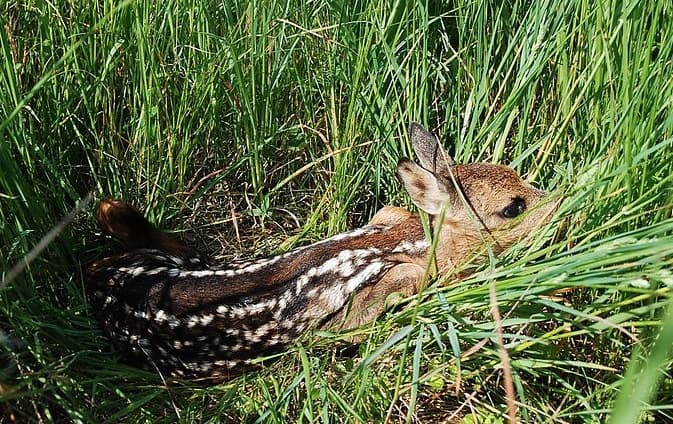
They look so cute and helpless, the baby animal you came upon in a meadow, along the road, or maybe on an ocean beach. But don’t stop to help them. You probably are not.
Your efforts, although well meaning, could end up harming the animal and reducing its chances to survive.
It’s important to understand that wildlife care for their young much differently than humans. One strategy that some species, particularly those species typically preyed upon by other animals (deer, rabbits, birds), use is to distance themselves from their young for many hours at a time. This helps to keep predators away from their young.
For example, fawns are born without a scent, and it is safer for them if their mother, who has a scent, is not nearby. This also can potentially distract a predator into focusing on the doe rather than its offspring.
Wild animals thrive better where they have plenty of natural habitat (food, water, shelter, space). The potential to spread wildlife disease is also a good reason to leave young wildlife alone.
And then there are potential diseases
Baby ground squirrels, raccoons and rabbits can carry zoonotic diseases, which means diseases that are infectious for humans. Examples include plague, hemorrhagic diseases and tularemia.
If you see a baby animal, whether a goose or a grizzly, keep your distance and leave it alone. Handling baby animals can be dangerous, and usually once young animals are picked up by people they can’t be rehabilitated.
Montana’s Fish, Wildlife and Parks service, which provided much of the information for this article, does not accept, hold or rehabilitate moose, deer, elk and most other animals, including waterfowl. If you bring a deer or elk to FWP, you’ll be asked to take the animal back to the site where it was found. If the animal can’t be returned, it may need to be humanely euthanized.
RELATED:
Elk calving begins in Yellowstone. Watch out – elk can be mean
Cow elk are much more aggressive towards people during the calving season and may run towards you or kick. Attacks can be unprovoked and unpredictable no matter how calm an animal appears to be. More.
##RVT1162


We had a fawn visiting for almost a day, almost on our property line. And definitely not the most remote area.
Initially, we were a bit concerned. But by evening it was gone.
It was a pleasant visit, with no nosey dogs or other potential predators, making life overly interesting.
If you aren’t sure whether or not an animal needs help, contact a local wildlife rehabilitation center. They should be able to guide you after learning more about the situation. You can find the rehabilitation centers by googling.
Thank you, RV Travel! 🙂 Thank you for the reminder! SAFE travels! 🙂
I just bought several signs for our dead end road. They say PLEASE SLOW DOWN, ITS FAWN SEASON TIME. I got them on Zazzle. I have seen a set of twins and several mums with utters.. wish I could show you the signs..
Deer farming, in New Zealand, I would see the hinds deposit their fawns in safe places during the day. I would often not see any fawns, for quite a while after fawning had begun.