


Dear Dave,
We are full-time RVers. I’m wondering if I need to use a trickle charger on my 12v starter batteries to maintain them. If so, how do I do it? We are usually plugged into shore power at parks. —David, 2000 Fleetwood Bounder 39Z
Dear David,
The engine battery will have a slight drain from some of the automotive components such as the engine computer and radio with preset stations. However, this typically takes several weeks to drain an engine battery if it is in good condition, as the draw is very small.
You can actually test the draw with a multimeter by removing the negative cable on the engine battery, set the multimeter to DC amps, place the red probe on the empty battery post and the black probe on the cable end. Any draw or drain that is coming through will show there, and it is common to see a 1- to 2-amp draw. Anything more than that would indicate something else drawing power.
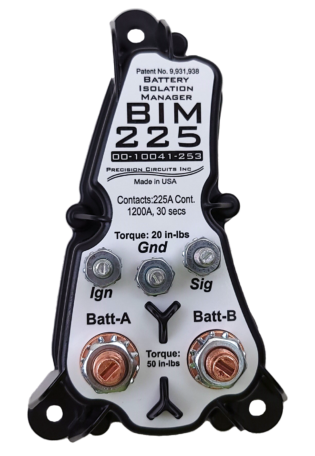
Newer motorhomes have a battery isolation management (BIM) system. It is a solenoid installed between the engine battery and the house battery bank. When the engine is running, the alternator provides a charge to the engine battery and the house batteries through the BIM. It also allows a jump from the house batteries if the engine battery is dead by using the spring loaded switch typically on the dash.
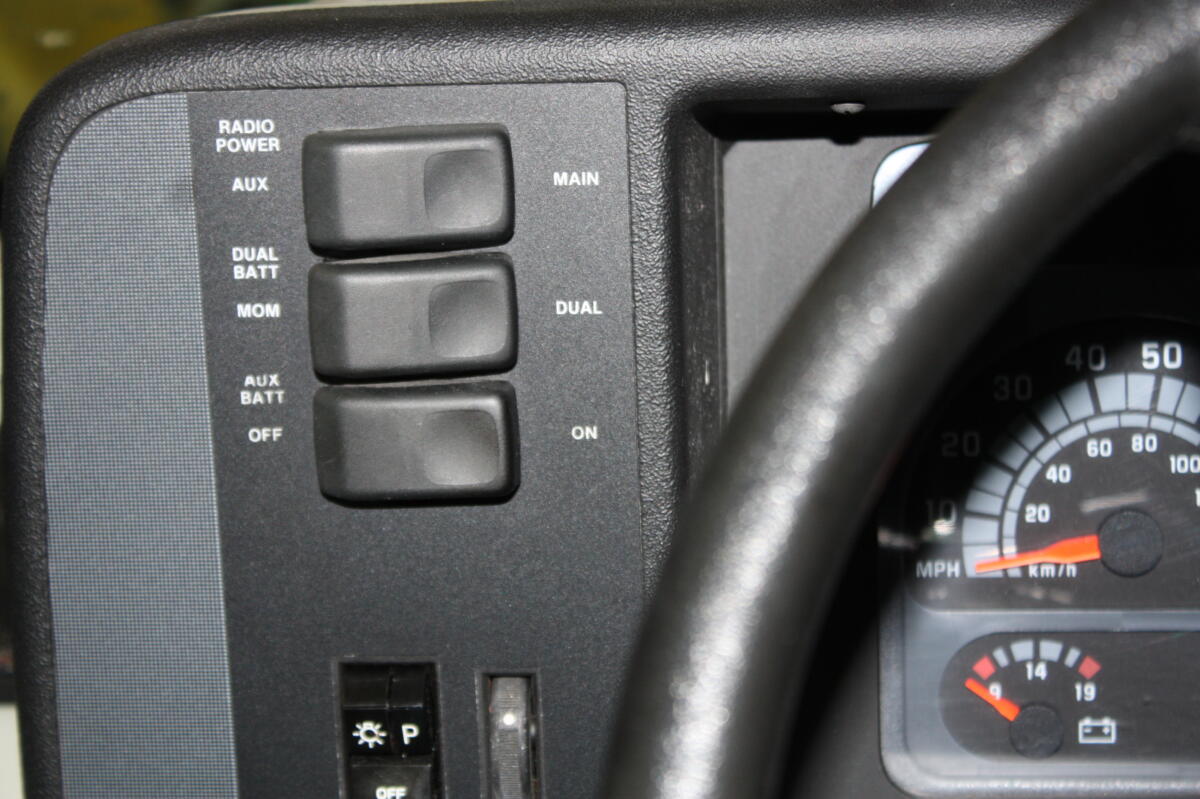
Newer models have an engine battery charging feature through the BIM. When you are connected to a campground source, 120-volt power is supplied to the distribution center, which supplies power to the converter/battery charger. If your Bounder has a large inverter such as the Freedom 2000 version, it will have the battery charger as part of the inverter.
Either way, whatever charger you have will provide a charge to the house batteries and also the engine battery through the BIM. Depending on your battery’s charge profile and the converter, it will be at least 13.2-volts.
You can verify if your engine battery is receiving a charge from the converter/inverter with a multimeter, as well. With the rig unplugged from shoreline power, set the multimeter to DC volts and place the red probe on the positive terminal and the black probe on the negative terminal. It should read 12.6 volts without a charge coming from the charger. Plug the shoreline cord in and retest for voltage and you should see at least 13.2 volts. This will verify the BIM is allowing a charge to the engine battery while you are plugged into shoreline power.
You might also enjoy these posts from Dave
- My RV’s new house battery will only charge when driving. Why?
- No power from RV house battery. Could it be bad battery disconnect switch?
- RV engine battery goes dead periodically. What is best booster?
- My batteries don’t charge when connected to shoreline power. How can I test my converter?
- What does 50% State Of Charge (SOC) of a 12-volt battery mean?
DAVE HAS ANSWERED MORE THAN 1,000 readers’ maintenance and repair questions. Read a directory here. There is so much to learn!
Dave Solberg is a leading expert in the RV industry and the author of the “RV Handbook.”
HAVE A QUESTION FOR DAVE?
Send your inquiries to him using the form below.
RVDT2920

During periods of sitting, for my pickup, I use a solar charger that sits on the dashboard and it plugs into a power port on the dash. It’s worked great, and cost under $30.
Thank you for the question and your comprehensive answer, Dave. Have a great weekend and safe travels!