

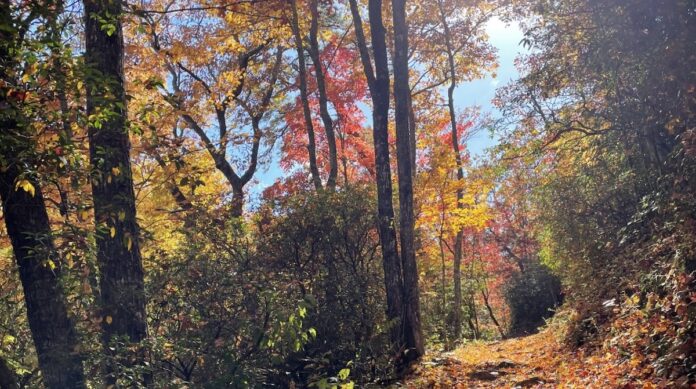
GATLINBURG, Tenn.— It’s beginning to feel like fall in Great Smoky Mountains National Park! Autumn is a beautiful but busy time in these parts. Visitors should plan ahead and be prepared for incredible fall colors, but also crowds, traffic congestion and limited parking throughout the park. Here is some advice from the Park Service to improve your visit.
The Smokies typically experience a stunning fall foliage season, thanks to the park’s wide range of elevations and rich biodiversity of deciduous trees. These elevation changes allow the peak color season to stretch over several weeks, as the vibrant display of colors gradually move down the mountainsides.
At higher elevations, fall colors begin with trees like yellow birch, American beech, and mountain maple. As the season progresses into lower elevations, sugar maple, scarlet oak, sweetgum, red maple, and hickories take over the display.
Avoid the crowds
Great Smoky Mountains National Park is consistently the most visited national park in the country, with October being one of the busiest months. To make the most of your visit, consider arriving before 8 a.m. or after 4 p.m. to avoid peak crowds. If you’re driving, please park responsibly. Parking outside designated areas can damage natural resources, increase congestion and create safety hazards along busy roads. For additional information check out traffic and travel tips.
Scenic Drives
Avoid the crowds by taking in the views from the Foothills Parkway. Cades Cove Loop Road and Roaring Fork Motor Nature Trail are consistently the busiest places in October. Allow more time than you think if you’re planning to travel on these scenic roads.
Hiking
Great Smoky Mountains National Park includes more than 800 miles of trails. Consider taking a shuttle from nearby communities to the trailhead. It’s a great way to reduce traffic and enjoy a more relaxed experience in the park. Learn more about hiking in the Smokies.
Got your parking tag?
Parking in the Smokies for more than 15 minutes requires a valid parking tag. Tags can be purchased online anytime at Recreation.gov or in person at multiple locations. Visit the park’s trip planning webpage before you arrive. Consider visiting an area of the park you haven’t explored before. Prepare a back-up plan (and even a back-up for your back-up) in case you run into congestion or full parking lots.
Pack clothes for all weather and layer up for your adventures. Weather can change quickly during fall, particularly in the mountains. Temperatures at Kuwohi are at least 10 degrees cooler than in lower elevation areas like Oconaluftee, Sugarlands and Cades Cove.
Wildlife safety
Fall is a prime time to spot bears and elk in the park. To ensure your safety and the well-being of wildlife, maintain a safe distance of at least 150 feet (about half the length of a football field).
When hiking, camping or picnicking, be mindful of food and garbage. All waste should be properly disposed of in bear-proof dumpsters or packed out. Bears that learn to associate humans with food can become defensive and pose a danger to visitors by becoming aggressive.
RELATED
- An in-depth look at traveling by RV at Great Smoky Mountains National Park
- Top 5 things to do in the Great Smoky Mountains National Park
- Midwest forests begin their autumn shift as colors emerge
- Top 10 fall foliage RV road trips
- Lesser-known leaf-peeping spots you don’t want to miss on your travels
- The top 10 scenic drives in the United States
RVT1228b


2 things I miss living in FL-1. The turning leaves. 2. Spring northern flowers- daffodil, lilac, hyacinth, crocus, forsythia, dogwood, azalea.
and redbud!