

By Nanci Dixon
Rocking and rolling down the road in an RV can loosen and strip even the most tightly held screws. As our RV gets older, we are finding more screws shake loose and more screw holes stripped out when we try to replace or tighten. Sometimes it just takes a fatter screw, but that doesn’t always work, especially when going through tight metal brackets or hinges.
One major issue for us has been a wall—yes, literally a wall—that was never screwed down in manufacturing. The factory fixed it once but, in time, the screws have loosened, the holes have been stripped, and now the bathroom door flaps open while driving.
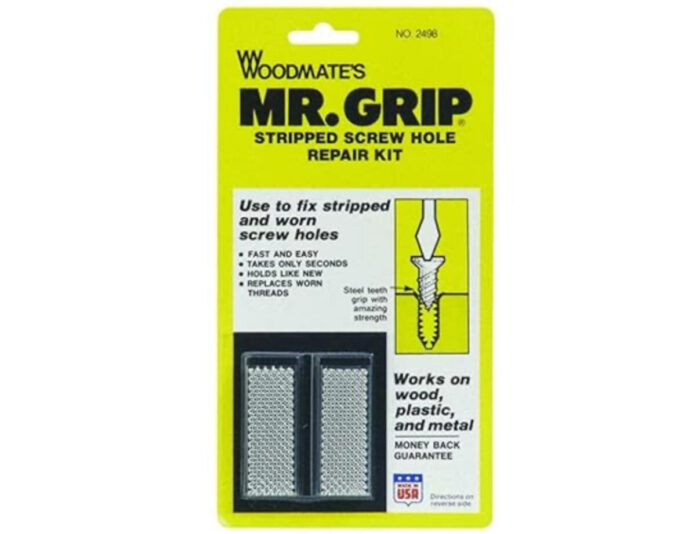
Searching across Amazon, YouTube, and RV sites, I finally found what might be a better solution than the short-lived glue and toothpicks in the wood holes. Before drilling out the metal bracket to accommodate larger screws, we decided to try Mr. Grip, as recommended by many. And it worked! Mr. Grip has pieces of indented metal that grip a screw.
Mr. Grip works on any material: wood, metal, plastic, cement, aluminum… anything! All you have to do is cut Mr. Grip to the right size or shape, and screw!
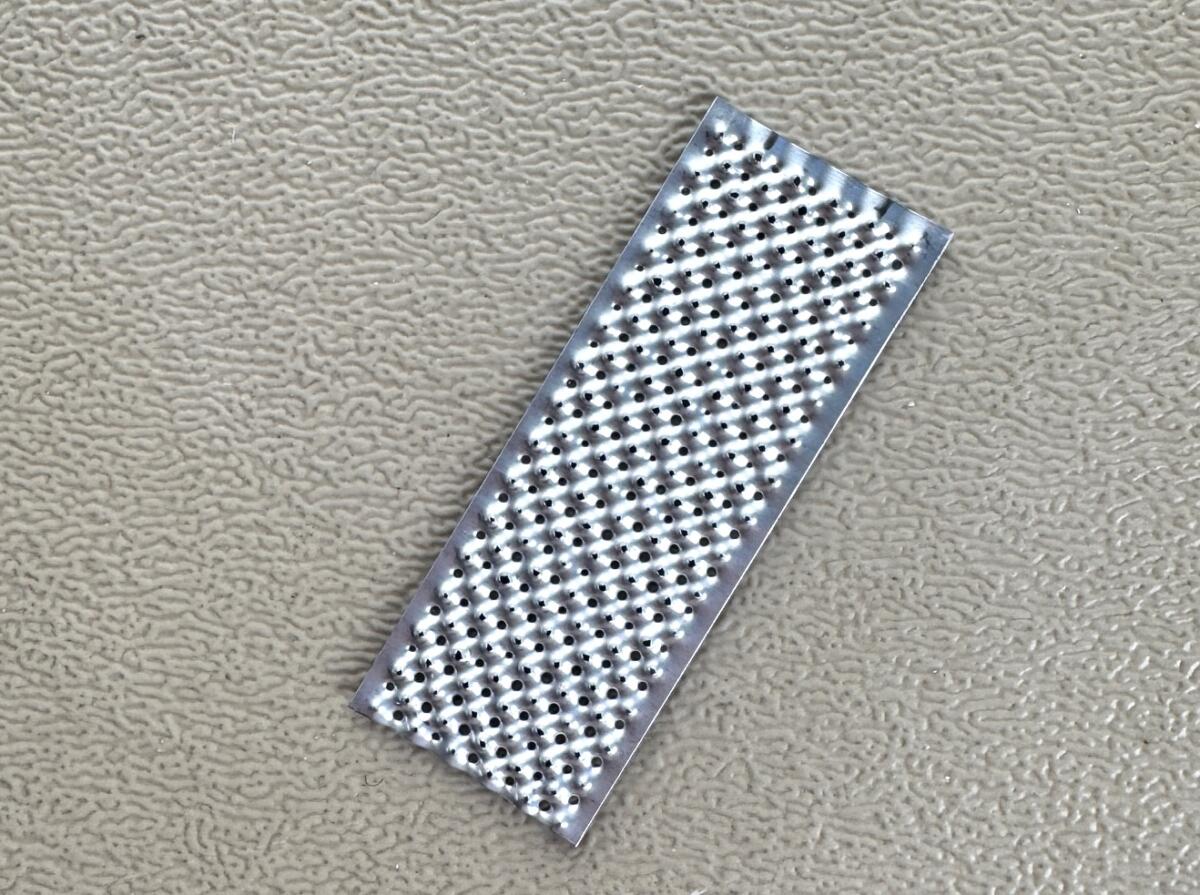
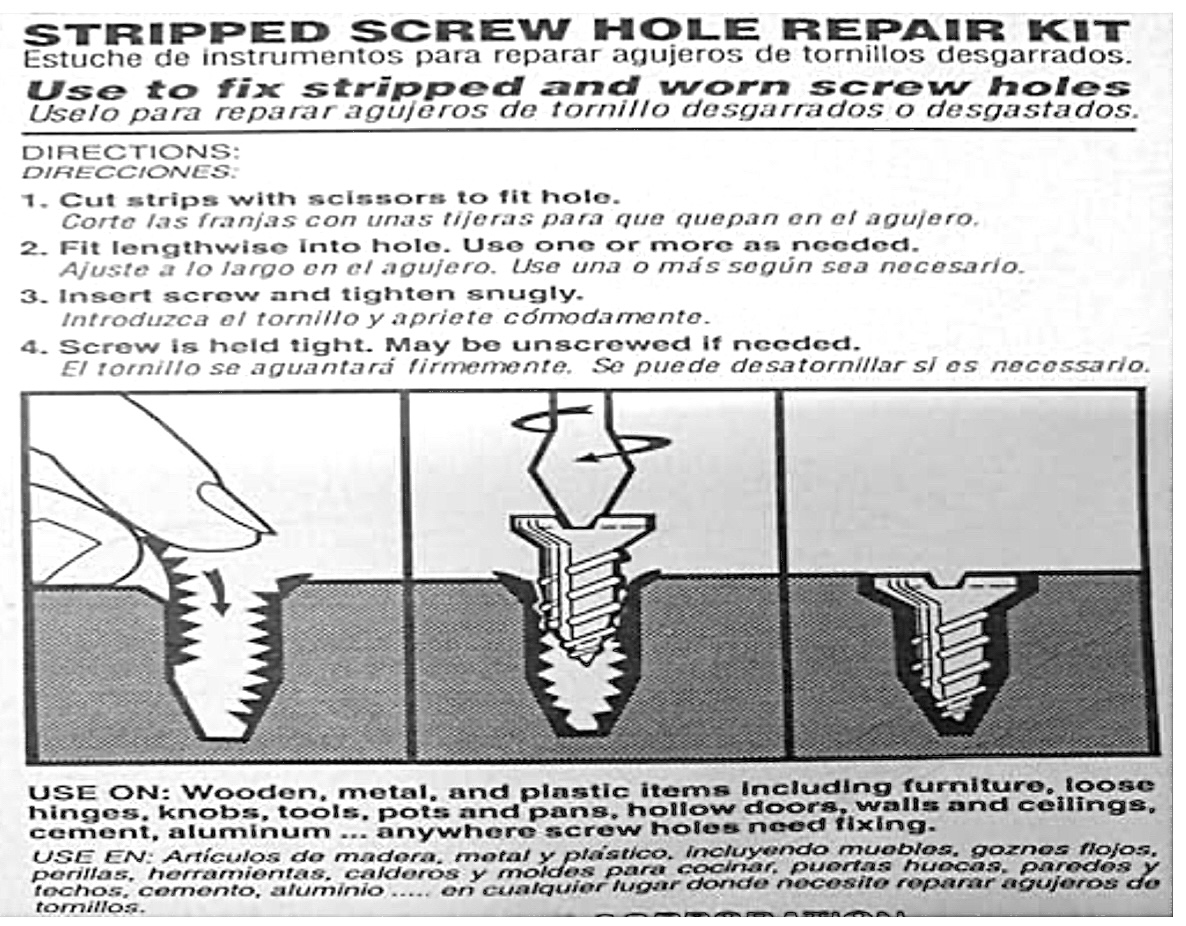
The screw holes were small, so my husband cut the metal pieces into narrow pieces, slightly bent to a curve and put into the holes. We tested by inserting and turning the original screws and they held! We then added the bracket and bolted the plate back to the floor.
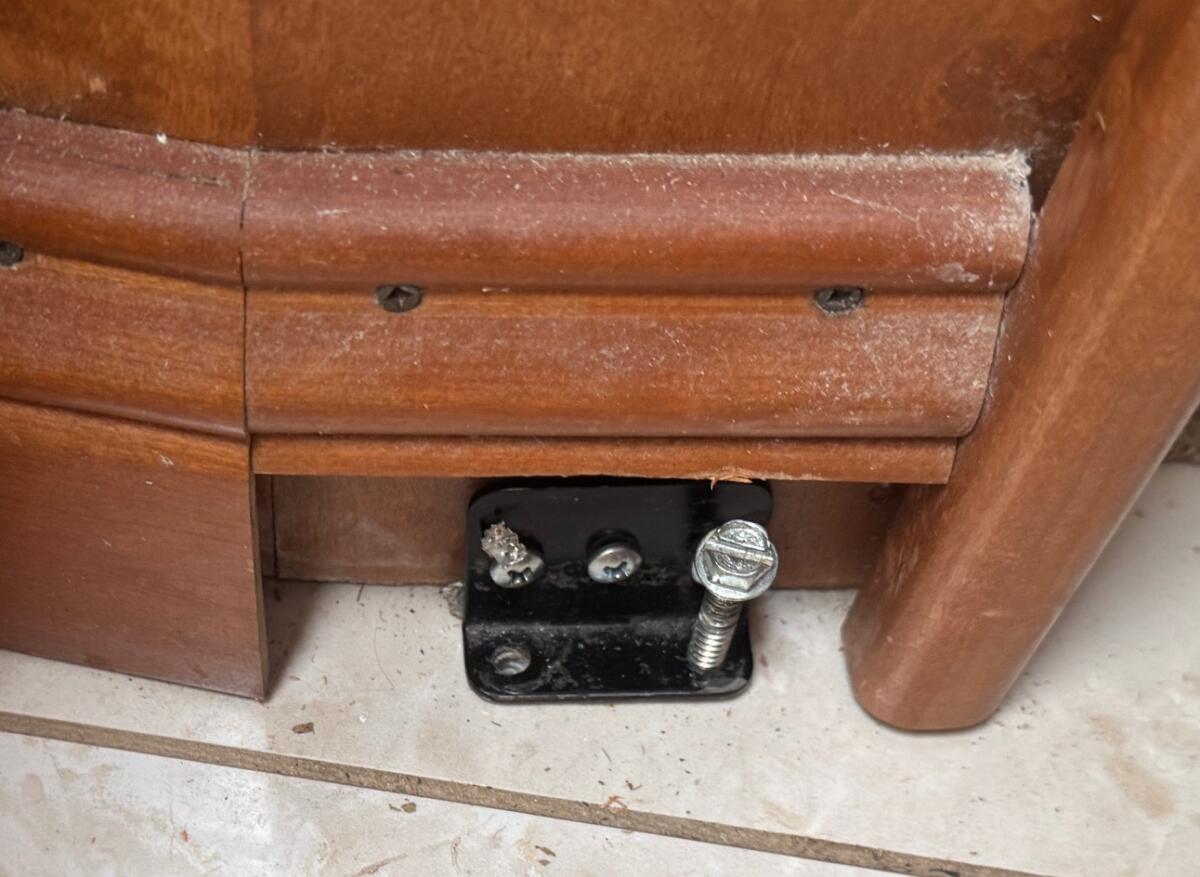
So far, so good. The door meets the frame again and closes! We’ll see what a couple thousand miles do and if the screws wiggle free. Mr. Grip may be my new best friend! If Mr. Grip works as good as advertised, he will travel with us and come home for those annoying everyday repairs, too!
Mr. Grip is available on Amazon.
RELATED
- Understanding RV screws, RV screwdrivers, and specialty bits
- The types of RV screws and bits you should have in your toolbox
- Have a loose screw? Here’s how to fix it
- Two clever RV fan screw hacks to add functionality to your RV
RVDT2917
These have been around tor quite a while. When my daughter bought her first house, the back door hinges were loose. I used something very similar. On a few of the holes I had to fold and double up on it.
Still holding when she sold the house 15 years later.
Thanks Nanci! I will give these a try.
Nice tip Nanci, thanks!
Depends on whether the hole is into a structural component (in a RV that means thicker than the screw is long). If there is no structure behind the wall better than foam, this won’t work. Pop rivets, short molly bolts are the 1st choice. I have also been successful with Shoe Goo if there is a soft subsurface. Use a small ‘L’ shaped Allen wrench to slightly enlarge the space behind the screw hole. Push the tube of Shoe Goo tight to the hole and push it into the cavity. Wait about 5-10 minutes and put the screw back in. The Goo will mushroom behind the wall like a molly bolt. Shoe Goo is fairly rigid once it cures.
I was in the home repair business for about 15 years & used something similar to mr. grip! There are a lot of ways to fix an enlarged hole. But on our MoHh’s their use is very limited. Iv’e started using try fold rivets, especially on our thin walls. When I first install something on a thin wall with sheet metal screws I make the pilot hole a bit smaller & use a dab of wood glue to help keep the screw from coming loose!
Snoopy
Always a better mouse trap being built. For me, I’ve not found that glue and toothpicks are short lived.
Thank you for reprinting Nanci’s article, Emily. When it appeared last year, we were traveling in Alaska and unable to order it. Since then, we had the stripped screw in a storage bay repaired by the manufacturer. However, this reminder enables me to order it since we’ll be home most of the summer. Have a great day and safe travels!
There is no universal solution to permanently loosened screws. In our prior MH, the gas struts on cabinet doors eventually caused the hinge screws to fall out. My solution was to make a new hole by hammering a golf tee into the hole after placing Titebond 2 glue in the hole and on the tee. The tee is already tapered, but the hole might need to be enlarged, depending. I cut off the excess with a wire cutter and hammer it in flush. After it dries overnight, I drill a new hole into the tee. That is superior to using soft toothpicks.
For screws into metal, unfortunately nothing works better than a larger screw or, if practical, replacement with a bolt and nut setup or drilling a new hole.