

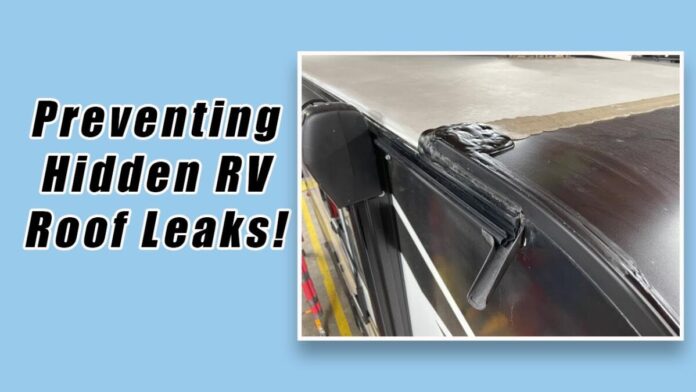
Roof leaks in RVs may seem like a minor issue, but they can lead to serious consequences if left unaddressed.
In this article and video, we’ll explore the dangers that roof leaks pose to your RV, how to identify them early, and share expert tips on how to prevent and repair them before they cause significant damage.
The dangers of roof leaks
Water damage to interior
Leaks can quickly spread water throughout the ceiling, walls, and floors of your RV, damaging upholstery, insulation, and the structural framework. Over time, this moisture can lead to mold and mildew growth, which can make the RV uncomfortable and even hazardous to your health.
Even small leaks can cause rot in wooden structures, and significant water damage can compromise the integrity of your RV.
Electrical hazards
Roof leaks that infiltrate electrical wiring can create a serious fire risk. Water and electricity don’t mix, and leaks near electrical components or wiring can lead to short circuits or fires. It’s critical to address any roof leaks promptly to avoid this danger.
Increased repair costs
A small leak might seem like an easy fix, but if ignored, it can turn into a larger issue, resulting in more expensive repairs. The longer you wait, the more extensive the damage, and the more costly the repairs will be.
Decreased RV value
Leaks not only affect the functionality of your RV but can also decrease its resale value. Buyers are often wary of RVs that have a history of leaks, as they may assume there’s underlying, unseen damage.
How to prevent roof leaks
Regular roof inspections
One of the best ways to prevent roof leaks is to perform regular inspections. Check your roof for signs of wear, cracks, or holes. Pay attention to areas around vents, skylights, and seams where leaks are most likely to occur.
Perform seasonal checks (at least twice a year) to ensure that no damage has occurred over time, especially after extreme weather conditions like hail, rain, or snow.
Seal the roof properly
Use high-quality roof sealant to seal cracks, seams, and joints. Regular resealing prevents water from infiltrating through weak spots. It’s essential to use a self-leveling sealant designed specifically for RV roofs, as it will bond well to both the roof and any attached components.
Make sure to clean the surface thoroughly before applying any sealant to ensure a strong bond.
Avoid standing water
If your RV roof isn’t perfectly level, water can pool in certain areas, leading to leaks over time. Ensure that your RV is parked on a level surface to avoid water collection. Additionally, clean the roof regularly to remove debris like leaves and branches that can obstruct drainage.
Inspect and maintain roof components
Make sure that all components on your RV roof (e.g., vents, antennas, air conditioners) are in good condition. Inspect the gaskets around vents and windows to ensure they’re not cracked or deteriorated. Any compromised components should be repaired or replaced immediately.
How to identify roof leaks early
Interior water stains
If you notice water stains or spots on the ceiling or walls of your RV, it could be an indication that water is getting inside through the roof. These spots are often the first sign of a leak and should be addressed immediately.
Mold or mildew odor
A musty or damp smell inside your RV can be a strong indicator of water intrusion. Inspect the roof and interior thoroughly for signs of mold or mildew growth, particularly in hidden areas like under cabinets or in storage compartments.
Discoloration of ceiling or walls
Roof leaks can cause paint or wallpaper to bubble, peel, or discolor. If you see any signs of this, it’s important to check the roof for leaks that could be causing the damage.
How to repair roof leaks
Small leaks
If you spot a small leak, you can often repair it with sealant or roof tape. Clean the area thoroughly, then apply the sealant or tape directly over the affected area to seal it. Be sure to follow the manufacturer’s instructions for the best results.
Larger leaks
For more significant leaks, it may be necessary to replace damaged roof panels or components. In these cases, you should consult a professional RV technician who can properly assess the damage and recommend an appropriate repair.
Roof coatings
After repairing any leaks, you may want to apply a protective roof coating to help prevent future damage. These coatings provide an additional layer of protection and can improve the longevity of your RV roof.
Final tips for protecting your RV roof
• Regular cleaning: Keep your RV roof clean and free from debris, which can accumulate and cause damage over time.
• Quick action: If you notice a leak, take action immediately to prevent it from spreading and causing more damage.
• Professional help: If you’re unsure about the condition of your roof or how to repair a leak, consider hiring a professional RV repair shop to inspect and fix the issue.
Final thoughts
Roof leaks are one of the most common and dangerous issues RV owners face. By staying proactive with inspections and maintenance, you can prevent leaks from becoming a serious problem.
If a leak does occur, acting quickly to repair it will help you avoid more costly and extensive damage. Watch the full video to learn more tips and tricks to protect your RV roof from leaks and keep your RV in top condition for years to come!
More from Dustin
Make sure you check out my website, California RV Specialists, and our YouTube channel for more helpful information, and see our published articles on RVtravel.com and other social media pages.
RELATED
- Ask Dave: My RV’s frameless window leaks. How do I reseal it?
- Water pump noises could mean leaks in your RV’s water system
- Even tiny RV sealant leak can cause costly damage
RVDT2635


Thank you for the reminder of how important roof inspections and adequate sealant are, Dustin! Have a great day and safe travels!
Thank you sir!