Home Blog Page 2159

“Summerizing” your RV for storage

0

By Russ and Tiña De Maris

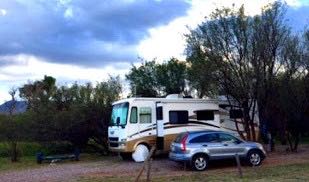
Not every snowbird has a rig that’s portable. Every year, thousands set out from their stix-and-brix homes in the cold north and head south by planes, trains, or automobiles. Waiting for them at the other end, their trusty, but perhaps more-or-less permanently parked RVs. After enjoying a wonderfully warm winter season, it’s time to head back home again. But what about the RV? How can you lay-up your RV for a hot summer on the desert?

old solHere are some thoughts from RVers who are in just this situation:

Humidity: Your rig may not do well sitting in the proverbial “valley of the dry bones.” Wood trim, cabinets, and paneled walls may react badly to too much of a good thing. Gather up a good number of five-gallon pails, fill them up with water, and distribute them throughout the RV. The evaporating water will tend to raise the humidity inside the rig, thus helping wood not dry out so badly. Some folks put a few drops of bleach in their buckets of water, but we’ve never been convinced of the need. And if a bucket should develop a leak, bleach water on the carpet is not a good thing.

It’s not a bad idea to take a few minutes at least once a season to treat those same wood products with an appropriate oil-containing wood treatment. Most simply wipe on with a rag, dry down, and wipe off the excess.

Sunlight: Old Sol can make a proper job of burning things up with UV rays. Outside, be sure to thoroughly cover your tires. Industry folk tell us that tires are best preserved when blocked from all light–so dark (black) covers that fully wrap around are best.

Inside your RV, textiles like furniture fabrics can also fade (or worse) when left in the sun. Even colorful curtains, supposedly meant to compete with the sun, can come out the loser. We’re big fans of reflective bubble insulation. The stuff comes on a roll and is basically a sandwich of thin plastic “bubble wrap” between layers of aluminum foil. Cut it to fit the windows tightly. We use a marking pen and write which window the piece belongs to so when we need it next time, it’s an easy fit. Not only does it keep out those nasty UV rays, it also does wonders for keeping things much cooler.

Some folks like the idea of keeping a roof vent or two cracked open to keep excess heat from building up. In our long-term rig, we have a Fantastic Fan with a thermostat that runs the lid up and turns on a vent fan when heat gets to be too much. It also has a rain sensor, so when the monsoon rains roll through, it shuts the lid down to prevent water from getting in the house. But as far as keeping “manual” roof vents open, we’re not to keen on the idea. Not only are they open when the rains hit, if a dust storm blows through, there’s no pressure from a fan blowing out of the house to prevent the dust from getting in.

Other things you’ll want to keep out are unwanted critters. In the desert southwest, ants are a major source of irritation and damage to any sort of foodstuffs you might leave behind. We’ve found that scattering bay leaves on cupboard shelves really does tend to send them scurrying elsewhere. Speaking of foodstuffs, if you keep your power on, you may find that tossing jars of sugar, flour, and other food items normally kept in the cupboards into the fridge (set “low”) will help preserve things. Be sure to use air-tight containers. Canned foods and sodas don’t do well left in the heat–keep ’em cool, or prepare to give the stuff away.

We’ve also found that cheap plastic “glassware,” may actually blister. Don’t know if it’s a health hazards, but it sure is ugly. Unless you want a “conversation piece” when you serve drinks to company, stick with glass.

A few simple measures will make your return to your RV come fall a lot happier.

#nrv
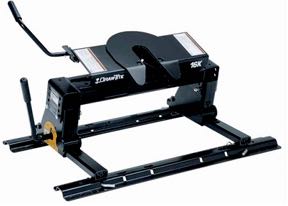
New RVer asks: What fifth wheel hitch position for tow?

By Russ and Tiña De Maris

Folks new to the fifth-wheeling game sometimes have a little catching up to do. Sometimes even us ‘old dogs’ learn something new. For example, I know plenty of fifth wheel owners who’ve never had the need for a “sliding hitch” because they’ve always towed with a long-bed truck.

sliding hitchFirst, what’s a ‘sliding hitch’? Specially designed for short-bed pickup trucks, a sliding fifth wheel hitch temporarily allows the actual hitch to slide farther back in the bed of the pickup—the “maneuver” position. This is helpful when making really tight corners–as when maneuvering in or out of a camp site. With the hitch “forward” in the truck bed, in the “tow” position, a tight corner could actually cause your trailer to impact with the truck cab–not a happy situation.

So, can you tow with the hitch in the maneuver position? Technically you could–and some people erroneously do. But towing in with the hitch back puts the weight of the trailer’s kingpin far behind the axle, compromising the pickup’s suspension, and great endangering road-worthiness. Never tow with the hitch in any position other than the proper forward “tow” position.

photo courtesy Reese Hitch

#nrv

New RVer asks: Why is my RV too old for the park?

0

By Russ and Tiña De Maris

An RVer with a 1989 motorhome tried making a reservation in an RV park. When the reservation clerk learned the age of the unit, the RVer was told: “Sorry, but your rig is too old. Your electrical system just isn’t compatible with our service and it would likely catch fire.” He was told the park only allowed RVs that were no older than ten years.

The RVer was left a bit shaken: Do older RVs burn up because of newer electrical services? The answer to that question is, No. Properly wired and maintained RVs, regardless of age don’t “catch fire” plugged by being plugged into a “modern” electrical service. The smoke here was from the RV park puffing up an improbable excuse to refuse an “older” RV.

older rv family

No, Virginia, there really isn’t a Santa Claus, but sad to say, there are plenty of RV parks who practice–as many RVers see it–age discrimination. Many “upscale” RV properties practice the so-called “ten year rule.” Basically, if the rig is more than ten years old, it’s simply not welcome at the park. What’s the “reasoning” behind this practice?

“You have to do it,” said Reza Paydar, president and CEO of La Jolla, Calif.-based SunLand RV Resorts, which owns and operates seven RV resorts throughout Southern California. “If you allow these older vehicles to come into your park, it’s like having a neighbor with a rundown house, and it impacts the desirability of the sites nearby.” Paydar was quoted in a story in RV Business Magazine.

Others use more subtle means to keep out “undesirable” rigs. Here’s a quote lifted from a forum for RV park owners. “We also do not post our monthly rates. Our rates run anywhere from $200 to $550 per monthly for the same type of spot. Usually if you say a high price to the undesirable customers, they will turn it down and move on.

“If they call rather than drive in, I say tell me a little about your rig…. how many people? Pets? so I can see if we have an appropriate space for you… are you working in the area or vacationing? etc. You can get a pretty good idea of they will fit into your park that way. Then you can quote the price.”

Not all parks with the “ten year rule” enforce the rule. Some park managers will make exceptions if the rig has been well-maintained. This ires some RVers who feel “rules are rules,” and should be enforced across the board. Others find the situation amusing and suggest those with older rigs simply lie about the age of their unit, or pass on by.

Got an older rig and worried you may not be able to find a place to stay? Remember, not every RV park has such a rule, and if your rig is well cared for, you may be able to stay there anyway. We’ve never heard of a public campground with an “aesthetics” standard, so generally speaking, you’ll probably always be able to find a place for your and your rig, regardless of age.

#nrv

ABCs of RV shopping: Two popular kinds of motorhomes

0

By Russ and Tiña De Maris

If you’re in the market for your first RV, there’s plenty to be learned about the differences in RVs. This is the firsts installment of a multi-part series to help better acquaint you with your choices. This time we’ll talk about the two most popular kinds of motorhomes.

Class A motorhome

Often called a coach, a Class A motorhome is a unit built on a special chassis. Most have galleys (kitchens), central heating and air conditioning, and some sort of entertainment center. A Class A motorhome will range anywhere from 21 to 40 feet, and a few are even longer. Typical new prices run from $60,000 to $500,000. Got a lot of family or friends to tote? While size makes a difference, figure up to six can sleep aboard the larger rigs.

Class A units are considered “spacious” and “home like” by most. The more you invest, the more features you’ll find. Included in this “spacious” aspect is a lot of storage room. Most of these rigs have what RVers call “basement storage”—storage compartments accessed from outside the motorhome. Many have “slideouts”—sections that move outward from the unit at a push-button command. This enlarges the living space of the rig, and definitely increases the spacious feel.

Class A motorhomes are usually designed for towing another vehicle. Once in camp, a towed car (often called a “toad” by RVers) can be used for sightseeing and errands, while the coach stays parked comfortably. Speaking of driving, most Class A units can be driven by anyone with a standard driver’s license. Some states may require additional training or a license endorsement, depending on the weight of the motorhome or if they have air brakes.

Class C Motorhomes

Class CSometimes referred to as mini- motorhomes, Class C units are built on a van frame. While the front of the van is kept, you can expect a much wider body behind. A giveaway that you’re looking at a Class C motorhome is the “over the cab” sleeping area. Typical lengths range from 21 to 35 feet, with new prices starting at $43,000 and topping out at over $200,000. Depending on size and interior arrangement, you’ll find Class C motorhomes that sleep as many as eight.

Like Class A motorhome, Class C units provide a galley, bathroom with shower, entertainment systems and storage. Heating and air conditioning are standard, and many have capacity to tow a car behind them. Some of these motorhomes have a slideout or two.

A more recent industry innovation is the Super C motorhome. Built not on a van chassis but on a big truck chassis, the Super C motorhome has a higher vehicle weight capacity than a standard Class C motorhome. A bigger weight capacity often translates into a bigger motorhome, and it could also mean additional towing capacity, depending on what the manufacturer throws on the chassis. Here’s where the wise shopper looks closely at specifications. And if you’re looking for a diesel engine on a Class C motorhome, Super C motorhomes may be where you’ll need to go, as the regular C-class motorhome with a diesel engine is a vanishing breed.

#nrv

Shurhold system enables high quality DIY RV detailing

Shurhold System enables DIY detailing

By Bob Difley

RV owners tired of paying $5–7 a foot to have their rigs professionally cleaned can instead detail with quality DIY tools and products. They make the job fast and easy, while being significantly less expensive.

Thoroughly rinsing the RV first will loosen dirt and grime, soften stuck-on insects, and wash away debris that might scratch the finish. By avoiding the heat of the day, and adding only a small amount of soap into the water, spotting is kept to a minimum.

High quality soaps provide superior cleaning, and won’t strip away wax or polish. Because they’re concentrated, they can actually be more economical than budget-brand detergents that require more product.

Use a quality soft-bristled brush. Start at the top and work down to avoid dirtying washed areas. For large RVs, wash and rinse in sections to ensure complete coverage.
Telescoping handles, especially those that extend to 9′, are ideal for RVs. Curved adapters make it simple to clean every inch, even the crown. All of Shurhold’s handles and adapters have a locking, quick release that allow owners to effortlessly switch from brush to drying device in a snap.

Waste no time in drying. Devices such as the SHUR-Dry Flexible Water Blade contour to an RV’s shape and cut the time needed by 2/3. It eliminates the need for towels or chamois. Made of silicone, it’s safe to use on any surface and easy to clean.
A quick detail provides the finishing touches. Quality multipurpose cleaners such as Shurhold’s SMC eliminate the need for multiple products. Spraying wheels, calipers or any metal that should shine and then wiping with a microfiber cloth will bring back a showroom look.

RVs are an investment that look their best when clean. With the right tools, product and a little elbow grease, they’ll stay in top shape and remain a source of pride for their owners.
Shuhold’s 9′ Telescoping Handle is $37.98; the Curved Adapter is $12.98; Flexible Water Blade is $26.98 and its adapter is $14.98.

Shurhold is dedicated to educating owners on RV value preservation. Inventor of the One Handle Does It All system, Shurhold manufactures specialty care items and accessories to clean, polish and detail.

You can see the Shurhold system and accessories on Amazon and the Shurhold website.

You can find Bob Difley’s RVing ebooks on Amazon Kindle.

#rvtG&G742

RV toilet seats: Uncomfy or worn out? What to do

By Russ and Tiña De Maris

Here’s a subject that’s not oft’ spoken of in RVing circles, but from a comfort standpoint, ought to be: How’s your RV toilet seat?

Screen Shot 2016-04-13 at 8.19.57 AMYou probably don’t think about the seat on the throne, lest you’re seated on the throne, and the seat isn’t too neat. What can you do about an uncomfortable or worn out RV toilet seat? In many cases, simply replace the durn thing.
Unless you’re “blessed” with an ancient vintage RV toilet, replacing the seat probably won’t require a visit (or contact) with the original toilet manufacturer for an invariably expensive “replacement part.” Drop that lid now and take a look. Does it appear that your seat attaches to the toilet like the one back in your sticks n bricks home? If it does, then it’s likely you can work with an “off the shelf” toilet seat from your nearby Lowes.

But what might cause you to swap out your old toilet seat? Could be that it’s just plain ugly – I know ours could stand a retrofit, but sadly, we’re in the camp of the “ancient vintage RV toilet” that can’t be easily replaced. A friend of ours – who remains anonymous – can explain another good reason: Beware the crack.

The friend is a good sized fellow, and failed to notice a small crack in a toilet seat before easing himself onto it. All was well, until he tried to rise up again – the micro-crack in the toilet seat responded to the assault of his prodigious backside by opening up larger under pressure, then snapping closed like an offended snapping turtle. We’ll allow your imagination to picture the results of trying to stand up and re-clothe yourself with a toilet set biting into your bottom.

Other RVers have reported that they’d like to get a little more rise out of their toilet seat for medical reasons. Oft cited are recent knee or hip replacement operations, where easing down or getting back up off the seat is torture. Yes, you can get a riser for the typical RV toilet, but the rise is only good for a couple of inches – hardly enough to help. While a replacement toilet set here may not be of much help, if there’s enough room around the commode, you may find that a bedside commode from a medical supply outfit will sit right over the top of your existing RV toilet, and a clever funnel-like design allows the contents of the commode to drop down into the targeted toilet. Not only does this preclude having to purchase a riser, a taller toilet, or both, these commodes usually come equipped with handy armrests that allow the user to gain a little leverage on lift-off.

What about the nuts and bolts of replacing your toilet seat? You could simply remove the old seat from your rig, and take it with you to the hardware store, sizing up bolt and hole patterns. If that’s a bit too much for your sensibilities, then make careful measurements, or even tracings on paper or cardboard. You may find that the “bumpers” or spacers that lie between the seat and the rim of the toilet won’t line up as they should. It’s possible to relocate them in some cases, or to simply add a couple of new ones in appropriate locations. Add them how? Some mount with screws, or you could glue them into place.

For you vintage RV owners that have problems finding a seat small enough to cover that equally vintage porcelain RV toilet, check out the Vintage Trailer Supply web site. For less than $20, you may find just what you’re looking for.

And want to get fancy? If you’re working on “shore power,” it’s possible to lay your hands on a heated toilet seat. Afraid of a shocking experience? A low-voltage power supply steps down the shore power to a safe level before the juice hits the seat. Check it out on Amazon.

What’s the bottom line? If you’re RVing, you may as well be comfortable everywhere – even in the biffy.

#rv123-4/18/16

RVing and volunteering: ‘What a life!’

0

Screen Shot 2016-04-12 at 5.11.04 PMMany RVers take to the road when retirement takes them out of their daily beat. Some just travel to see the countryside; others may want to “keep their hand in,” by doing part-time work. Still others who aren’t in need of cash but still want to actively “do something,” follow up on volunteer opportunities that RVing makes possible.
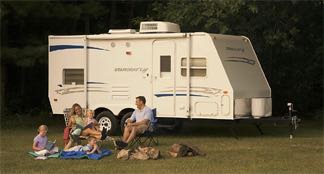
One couple, Tim and Karen Slack are in the latter group. Tim’s been “off the job” for three years, but their life is anything but one of empty hours. The couple cruise around the country volunteering months at a time for various charitable organizations – great for the soul. They also spend some of their volunteer time carrying on at National Wildlife Refuges. There are various things that need doin’ at these beautiful, natural spots, and often, there’s a place for your rig when volunteering.

How do you find such opportunities? Tim says it’s easy. Just point your Internet browser to volunteer.gov, then use the drop down menus to visit a host of volunteer opportunities, not just with the wildlife refuges, but with other worthy positions across the nation. He says the best way they’ve found to secure a position is to make direct contact with the volunteer coordinator for any given assignment.

The Slacks sum up their experiences in volunteering and RVing simply: “What a life!”

Photo: Tim Slack

ABCs of RV shopping: Towables (part 1)

0

By Russ and Tiña De Maris

What’s the lure of a towable, non-motorized unit, over a motorhome? One less engine to maintain is a big draw. Finances figure in, non-motorized units generally cost less for equivalent living space. For some, arriving at camp and disconnecting or dismounting the RV from your truck, the RV stays at camp while the motor unit can run around on its own. Not only is there less rig to maneuver on the road, but also when someone wants to stay at camp and others want to run about, everyone can be satisfied.

In this post we’ll cover two popular towables, travel trailers and toy haulers. In our next installment will talk about others.

Travel Trailers

ttrailerSome older ones may recall a time when a travel trailer might be called “A-frame trailers”(for the shape of the hitch frame up front), or “bumper pull trailers” (for how they attached to the tow rig). No matter what you call them, travel trailers come in a wide range of sizes, layouts, and of course, price ranges. Ranging from 12 to 35 feet, you can expect new prices to run from $8,000 to nearly $100,000.

Living features inside a travel trailer are from Spartan to super-deluxe, though almost all have bathrooms and showers. Cooking isn’t usually a problem, as most come with a galley, although the smaller the trailer, the more tight you’ll find cooking space. Sleeping accommodations are comfy; some are even set up “bunkhouse” style, with bunk beds especially favored by the younger ones. Need more space? Some units come equipped with one or more slideouts that add floor space.

What you’ll need to pull a travel trailer is often directly related to size and weight. Smaller travel trailers can run along comfortably behind the family SUV, car or small pickup truck. Of course, you’ll need to have a proper towing hitch on whatever vehicle you use. More about that later. Many manufacturers are aiming for lighter trailers by using composite materials, making a wider range of trailers towable with six-cylinder vehicles.

Toy Haulers

toy haulerWhile the industry prefers to term this special kind of travel trailer as a “sport utility RV” or SURV, we’ll have to bow to the people: toy haulers they are. With living accommodations like conventional travel trailers, toy haulers put a wall up at the end of the living quarters and reserve the rear end of the trailer for carrying ATVs, motorcycles, sand rails and the like. It’s like having a mobile garage. The rear wall drops down to allow you to roll your toys in and out of the RV. We’ve seen folks who have turned their toy hauler into a “shop” for their business, working on the road in the garage area of their rig.

Toy haulers range anywhere from 19 to 39 feet, and prices start at just near $10,000 and top out above $170,000, depending on size and amenities. Those amenities can include slideouts. If you don’t mind sleeping in the “garage,” some units will sleep up to eight.

By taking the garage along with you, expect that you’ll have a trade off here and there. Toy haulers generally aren’t as plush and spacious in the living quarters as their conventional travel trailer cousins, but they’re a good pick for those who want to take their stuff with them.

#nrv

ABCs of RV shopping: Towables (part 2)

0

By Russ and Tiña De Maris

In our discussion about towable RVs we’ve talked about travel trailers and toy haulers. Now let’s talk about two other towables, fifth wheels and pop-ups.

Fifth-Wheel Trailers

5erA favorite among those who take long vacations or even live full time in their RV, the fifth-wheel trailer is a specialized unit requiring a pickup truck or specialized fifth-wheel pulling unit. The name comes from the manner in which the RV attaches to the tow vehicle. A special fifth-wheel hitch resides in the bed of the pickup truck, attaching to the fifth wheel kingpin on the trailer. By design, the “fiver,” as some dub a fifth-wheel RV, is built with a raised section up forward, giving you, in a sense, two stories. Many manufacturers put a bedroom area in the upper section, while a few place the living room aloft.

Like conventional travel trailers, fifth-wheels come with all the modern conveniences, but often add-on in terms of more slideouts—up to four in some cases. Having panoramic views from huge windows is not uncommon either. Adding to the allure for folks who spend a lot of time in their RV is added “basement storage,” or outside accessible storage compartments. A lot of stuff can be stored in these spaces.

When thinking about a fifth-wheel, keep in mind that in addition to needing a pickup truck to tow the unit, some states may have special license requirements. Once a fifth-wheel is over a given weight range, you may need a special endorsement on your driver’s license, so check with your state’s motor vehicle department for more information. In any event, if you meet your own state’s licensing requirements, you should be good to go with your fifth-wheel in any state, regardless of any endorsement requirement.

Pop Into a Pop-Up

pop upConsidered by some to be an entry-level towable unit, the pop-up, or what the industry calls a folding camping trailer, is a lightweight and inexpensive tow-behind that many families enjoy. As you might think, a folding camping trailer folds up or down, giving it a very low profile in the wind. They are commonly equipped with canvas or nylon sides. It’s like sleeping in a tent — but up off the ground. Plenty of fresh air, with some added conveniences.

Those conveniences could include galley facilities like a stovetop, perhaps even running water. Expect a dining table, and of course, plenty of bed space for the family. Their light weight and low wind resistance make them an easy tow for many family cars, including some smaller ones. They range from eight to 24 feet, and in price from $5,000 to $22,000. Larger pop-ups can sleep up to eight.

Expandable Travel Trailers

Cross a conventional travel trailer with a pop-up and what do you get? A hard-sided trailer whose ends pop out to give more sleeping space in a soft-sided room. Lighter than their conventional cousins, they cost a bit less, too. Built small to be towed by mid-sized rigs like SUVs and larger six-cylinder engine cars, the expandable trailer fills a niche in the non-motorized RV marketplace.

You’ll find the amenities of travel trailers here: galley, bathroom, entertainment stuff, but a bit more room for sleeping folks overnight. Sized from 19 to 30 feet, these units run from $10,000 to $30,000. Numbers vary, but the larger units can sleep eight.

There’s yet another kind of RV to talk about, and we’ll talk about slide in truck campers in our next installment.

#nrv

ABCs of RV shopping: Slide-in truck campers

0

By Russ and Tiña De Maris

In our series on the ABCs of RV shopping we’ve talked about motorhomes and towables of all sorts. While not a “towable” as such, there is one other non-motorized RV that fills a real need for some RVers: Slide-in truck campers.

truck camperThese non-motorized units don’t tow behind you — instead they slide into the bed of your pickup truck. These distinctive RVs are a favorite among those who really want to get off the beaten path. They’re hardy, yet at the same time, comfortable. If you want to tow a horse trailer or a boat, a truck camper is a natural because you can have your RV and tow your stuff too.

If you already own a pickup, a truck camper is a must to eyeball when you shop. Since the unit is carried in the truck bed, rough roads, narrow roads, and windy roads don’t phase it. While it’s a bit more difficult to “offload” a truck camper than to detach from a travel trailer or fifth-wheel, it can be done, leaving your camper as a base camp while tooling about in the pickup.

What about amenities? Although the space in a truck camper is likely to be less than in a travel trailer, you’ll still find plenty of amenities. You can cook in the galley, and many have showers and toilets, too. Sleeping in the “master bedroom” is done in the area above the cab, but there may be other places to sleep too, including a dining table that makes into a bed. Some units have a slideout or two, increasing the available floor space.

Sizes of pickup campers range from eight to 20 feet, with selling prices running from $6,000 to nearly $60,000. Don’t let sizes fool you though: Some manufacturers size their camper by the length of the floor—not including the cabover. Hence an 11-foot truck camper is quite large—hanging over the back of the typical pickup bed by three feet. By adding on the cabover length, you’ll find an 11-foot camper much bigger than you might imagine. You’ll find truck campers suitable for small pickups to one-ton dually units.

photo: R&T De Maris

#nrv

Hubby fine until he panics at wheel. Wife gets blame

0

Dear RV Shrink:
rvshrinkMy husband and I get along just fine while traveling, until he panics. When he becomes lost or confused as to which way we should turn, it suddenly becomes my fault. He thinks I should have read his mind, known he was going to become confused, and be able to give him instant directional help.

One day I lost it and threw the Rand McNally at him. I know that probably wasn’t a good idea, but he was impatient and rude. When I do try to help him, he says I’m nagging, I’m wrong, I’m directionally challenged, or I couldn’t find my seatbelt with both hands.

Do I need to put up with this abuse? How can we turn our directional relationship into a bit more of a civil conversation? –You Turn in Yuma

Dear Yuma:
It takes a village to direct an RV. There is a general rule that few people seem to follow in directional relationships. I don’t think it is widely known outside of RV academia. It is called the “Nagivation Theory.” Everyone in the vehicle has the right and duty to be involved in “Nagivation.” Holding on to the steering wheel does not give one passenger sway over all the others.

In your case, you should both be involved in deciding your route and in navigating it. The old saying, “two heads are better than one” fits perfectly here. It should take much less “Nagivation” these days if you implement the use of all the tools available for navigation. Instead of using just a map book, familiarize your route using map apps, GPS, and even google earth.

If your husband is a nervous driver, pay close attention when you are coming to decision points and work together to alleviate his anxiety by feeding him information that is helpful before he goes ballistic. Knowing where you are going is also a safety issue. You don’t want to be making sudden lane changes, quick turns and ducking map missiles.

When coming into a congested area it is better to pull over when convenient and do a bit of studying together so you are both on the same map page. Doing a bit of homework will eliminate a lot of “Nagivation” and make you less of a “Nagivator” –-Keep Smilin’, RV Shrink

The RV Shrink is not really a psychologist (or professional RV technician). But he does know a lot.

Read more by the RV Shrink

Smart Car Charger charges your phone, tablet and locates your car

0
The Zus will charge your phone and iPad and find your car

By Bob Difley

When I was first asked to review and test the Zus I thought, “Why do I need a device to know where I parked my car?” And then I remembered that day at Disney World, and also at Arizona’s sprawling RV winter encampment at Quartzsite. There was also the Giants game AT&T Stadium in downtown San Francisco. OK, so maybe it was a good idea – if it worked.

What intrigued me more, however, was that the Zus is actually a Smart Car Charger, capable of charging two iPads at full speed – two times faster than most car chargers. I could regard the car finder feature simply as a bonus feature.

And both the car finder and charger features work. I tried it out over the past couple of weeks, charging my iPhone up as I drove and then purposely erasing from my short term memory bank where I parked the car – and each time when I pulled out my iPhone and tapped the Zus app a compass rose appeared almost instantly with an arrow pointing the direction to my car and the approximate distance.

It is so automatic that you can leave it plugged in to your cigarette lighter (a small white light shows it is activated) and when you turn off the ignition a small beep tells you that it has saved your location – and also asks if you want a time alert signal in case you parked at a meter. Pretty clever.

Find out more about ZUS Smart Car Charger and Car Finder.
You can find Bob Difley’s RVing ebooks on Amazon Kindle.

#rvt740