

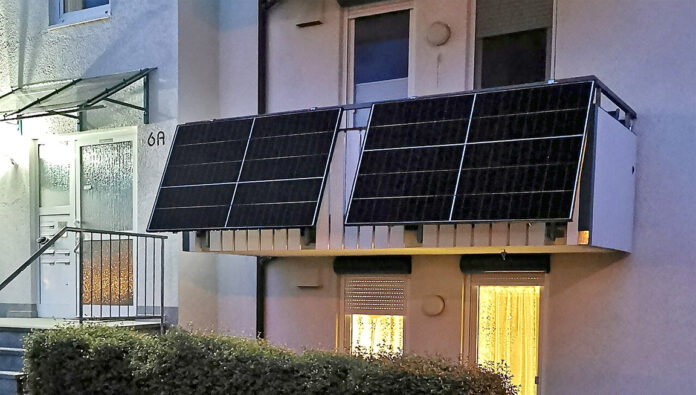
RVers have been living with small-scale solar for years—watching the weather, managing limited wattage, and squeezing the most out of a few panels and a battery bank. Now, a similar idea is starting to move into the residential world. Plug-in solar, a simplified way to generate a bit of your own power at home, is gaining traction in Western states and beyond.
The concept sounds familiar. But the reality—especially at home—is more complicated than just setting a panel on the porch and plugging it in.
What “plug-in solar” actually means
Plug-in solar refers to small, self-contained solar systems designed to connect directly to a household outlet. Instead of a full rooftop installation tied into your home’s electrical panel, these systems are meant to offset a portion of your electricity use—think shaving down your daily draw rather than powering the whole house.
They’re often marketed for balconies, patios, yards, or small homes. In Europe, similar “balcony solar” systems have already taken off. Now, several Western states are exploring how to allow them more broadly in the U.S.
That’s where the news hook comes in. Lawmakers in places like Utah, Colorado, and California are working through how these systems should be treated—whether as appliances you can simply plug in, or as grid-connected systems that require permits, inspections, and utility approval.
Why RVers already understand the appeal
If you’ve spent any time running solar on an RV, the pitch behind plug-in solar makes immediate sense.
You already know:
- A few panels won’t run everything—but they can make a dent.
- Sun angle, shade, and placement matter more than the brochure suggests.
- Batteries change the game, but also add cost and complexity.
- Every watt counts when you’re trying to stretch limited power.
That mindset—using solar as a supplement, not a total solution—is exactly what plug-in solar is built around.
There’s also the DIY angle. RVers are used to portable panels, modular systems, and incremental upgrades. Plug-in solar is trying to bring that same flexibility to homeowners and renters who don’t want (or can’t install) a full rooftop system.
Where the similarities stop
Here’s where it’s important to slow down.
RV solar and plug-in home solar may look alike on the surface, but they operate in very different environments.
- Your RV isn’t tied to the grid.
- An RV system is self-contained. You generate power, store it, and use it. There’s no utility company involved.
- At home, plug-in solar interacts—directly or indirectly—with the grid. That raises questions about backfeeding electricity, safety standards, and how utilities manage power flow.
- You can’t just “plug anything in.”
That folding panel you use at camp isn’t designed to feed a house circuit. Plug-in solar systems being proposed for homes are purpose-built, with inverters and safety features designed to meet electrical codes.
This is one area where the hype can outrun reality. The push in state legislatures is not about letting people jury-rig RV gear into a wall outlet. It’s about defining safe, certified systems that can be used without a full solar install.
The rules aren’t settled yet
Depending on where you live, plug-in solar may be:
- Explicitly allowed
- Restricted
- Or not addressed at all
That’s changing quickly. Some states have already carved out space for small plug-in systems, while others are still debating safety concerns and utility pushback.
What plug-in solar can—and can’t—do
If you’re picturing running your house like your RV on a sunny day, it’s worth resetting expectations.
Plug-in solar is best thought of as:
- A way to offset part of your daily usage
- A potential reducer of your power bill
- An entry point into solar without a major install
It is not:
- A whole-home power solution
- A guaranteed backup during outages
- A replacement for a properly designed rooftop system
In other words, it behaves a lot like a modest RV setup—helpful, flexible, but limited.
Why this matters for RV households
For many RVers, especially those with a home base, park model, or seasonal setup, plug-in solar could eventually offer a middle ground.
Instead of:
- Committing to a full rooftop system, or
- Doing nothing at all
there may soon be a third option:
- Adding a small, modular system to chip away at energy use
That’s particularly relevant in the Southwest, where sun exposure is strong and outdoor space—patios, lots, decks—is often available.
It may also appeal to renters and part-time residents who can’t install permanent systems but still want some control over their energy use.
The bottom line
Plug-in solar is gaining momentum, and the idea behind it will feel familiar to anyone who’s ever watched their RV battery monitor climb on a sunny afternoon.
But this isn’t just “RV solar for your house.” The technology, the rules, and the risks are different.
RVers may understand the promise better than most. The key now is watching how states define the limits—and whether plug-in solar becomes a practical tool or just another idea that sounds easier than it really is.
POSTS ON RV SOLAR POWER
- How to get maximum power out of your solar panels
- How to safely charge your RV batteries with solar power
- How many solar panels you need for your RV
- Don’t pay for more solar than you need
- Don’t pay for more solar than you need, part two
- Don’t pay for more solar than you need, part three
RVT1253b


The costs just don’t support the concept of “solar peak shaving” or “supplemental solar power” regardless of panel count.
It’s practically inescapable if one wants to boondock in a power hungry rig without wearing out their generator but there’s a huge difference charging house batteries versus putting stable 120 VAC into your home behind the meter. I wonder if this is a “reinterpreted” version of the great household solar scam that many fell victim.
The single best decision I made when deciding how to outfit my van was to go all solar and electric.