


Hello Dave,
I’m not sure if this is an issue in your area of expertise, but thought it might be a common question. As we began pulling our trailer out of a Florida county campground last year, our tow vehicle went into “limp mode” and would not accelerate. We “limped” to a nearby reputable auto mechanic, who then determined that a rat gnawed through some of the engine wiring and that created the problem. Thinking back, we realized that we had seen one rat and many rat traps at the park (which is an otherwise exceptionally well-maintained park). Is there a way to deter creatures from damaging vehicle wires? Thanks. —Tim, 2021 Chevy Silverado
Hi Tim,
Even though there is no snow yet, it is getting cold and most RVers up here in the North country are putting their rigs to bed for the winter. So, I thought it might be good to readdress this issue of rodents chewing vehicle wiring and discuss products that many RVers are using.
Mice, rats or, basically, rodents in general have been an issue with RVers for years. I remember getting calls at Owner Relations back in the late 1980s from owners that stored their rigs in buildings here in the Midwest that also stored corn. The mice and rats had a field day! They even claimed the rodents would throw the d-CON® bait all over the place!
I featured many different traps and baits in an RV Lifestyle & Repair video quite a while ago. However, the challenge with those is the overwhelming number of rodents that just keep coming! Some of these were live traps, others were kill traps or even poison bait.
Everyone has their own “go to” deterrent
My folks filled every nook and cranny of their unit during storage with moth balls. I have to admit, they did not have any rodents when we brought the unit out for the spring. The challenge with most of these is you don’t know if there were any rodents to begin with, as they parked the unit in a secure parking lot. The smell of moth balls lingered most of the camping season, but it reminded me of my grandparents’ house.
Some owners think that scented dryer sheets are the answer and have them laying all over the rig. It does smell better, but I have still found droppings in cabinet drawers.
Rodents don’t like mint!
If you do an internet search for “rodent deterrent” or “rodent repellent” you will find dozens of products with most of them having some type of mint-based ingredient. Fresh Cab has been a popular product with RV owners and is featured at many shows.
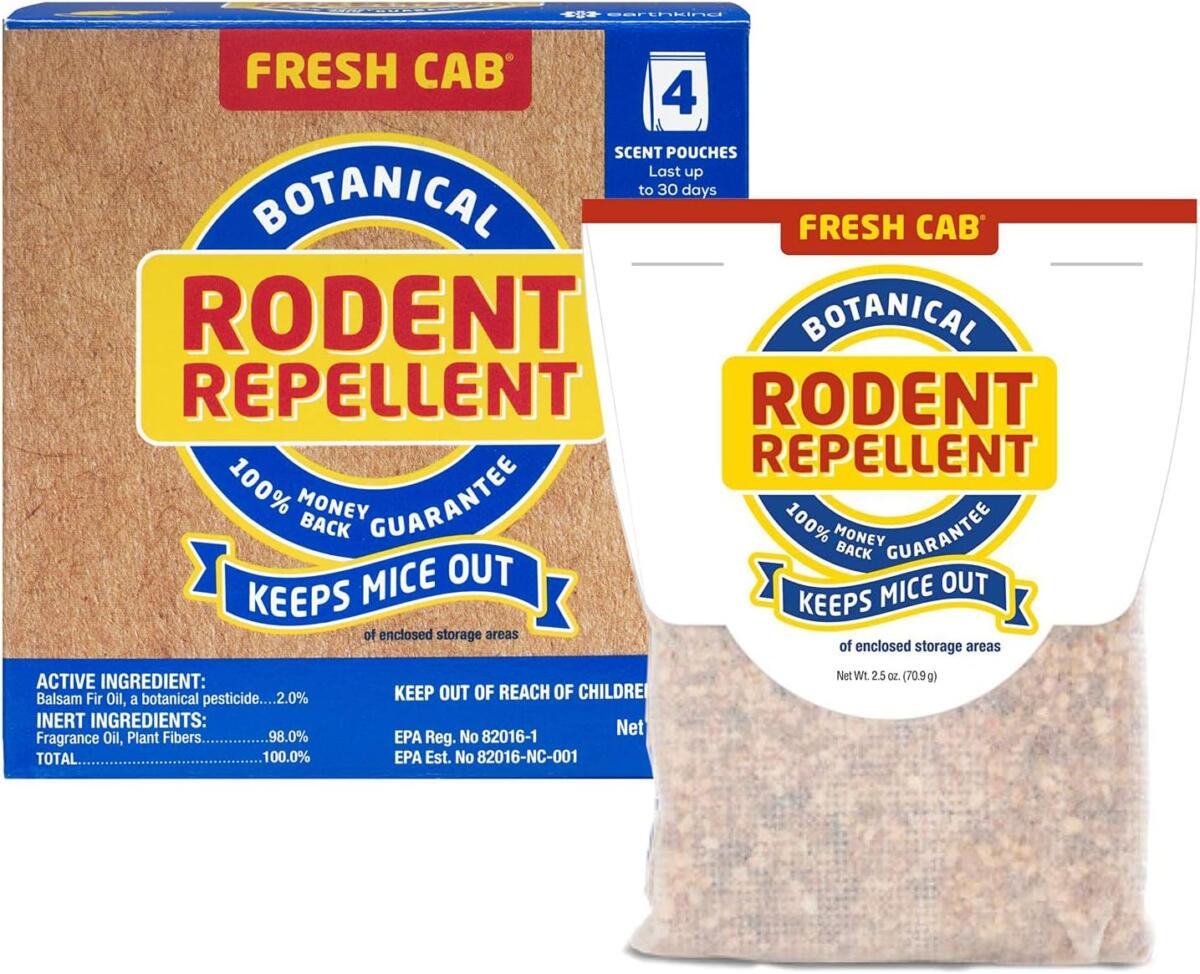
The inert ingredients are 98% fragrance oil, which is a mint-based oil, and 2% balsam fir oil. It comes in pouches that will last up to 30 days. You can find it on Amazon here.
Grandpa Gus’s mint-based mouse repellent has become very popular, as well. It has both cinnamon and peppermint oils in pouches. I have talked with several owners that have used this. It can be found on Amazon here. It is also available in a spray on.

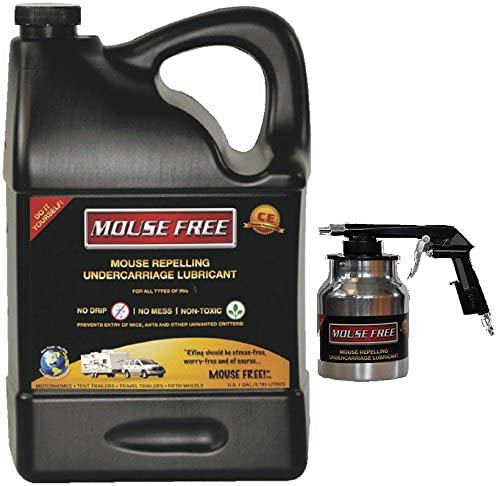
Several years ago I came across Mouse Free at the RVIA Louisville show and had a very interesting conversation with the owner. Unlike the mint-based deterrents, Mouse Free is a spray that is applied to the undercarriage and not only acts as a deterrent, but also as a lubrication that is slippery and keeps rodents from climbing up any components. It claims to be safe and uses the same component parents have been using for diaper rash and aroma therapy, as well. My guess is it might be some type of vaporizing rub with menthol and eucalyptus. It is good for one year and will last almost two years if the unit stays stationary. However, it will not deter rodents that are already inside a unit, so it must be sprayed on before there is an issue. You can find it on Amazon here.
You might also enjoy this from Dave
Advice needed about devices that repel rodents
Dear Dave,
We have rodents in the engine compartment and wonder if you have ever heard of or used Grid Guard or RatMat. —Linda
Dave Solberg is a leading expert in the RV industry and the author of the “RV Handbook.”
Read more from Dave here.
HAVE A QUESTION FOR DAVE?
Send your inquiries to him using the form below.
##RVDTxxxx

I don’t want to repel them. I want them dead. Otherwise, they just move over to my neighbor’s place (where he may be doing the same thing, and that’s why they are coming to my place – ha).
Something not mentioned in the article is that a lot of the wire used in vehicles today have soy based insulation. Rats, mice and squirrels love it.
We used the spray type mouse repellent on one of our motor homes. The great news is that it worked. It stays wet and mice can’t get a paw hold to climb anywhere. The bad news is that it stays wet and when ever a human touches it they come out with it all over their hands too. But it seemed to work. Next motorhome sealed everything , used Grandpa Gus spray and bags and set traps if they snuck in anyway.
Packrats are a concern in the certain parts of the Southwest. When were were camping at Lost Dutchman State Park in Apache Junction, Az. many RV’s had the string lights around the RV. I also have these lights around our 5th wheel and a rodent strobe light under the hood of our tow vehicle. Fingers crossed we had no issues, but spoke to some who did and they did not have these lights. We tuck them under the RV and turn them down somewhat at night to be considerate neighbours. Apparently automotive wiring has soy in it as part of the manufacturing process which is a tasty treat for rodents! And finally we have a cat for a rodent deterrent if anything gets inside!
so, what works in the real world?
Mousetrapmondays youtube channel.
Shawn Woods does real life testing on his farm. You can search, on his channel, for the deterrent you are considering and he has probably tested it and has a video of the results.
Mint oils and Grandpa Gus products did show promise in his tests. Most things like dryer sheets, soaps, sonic sound, and string lights showed mice and rats eating them and/or crawling all over them.
I believe population minimization is a huge factor. Bucket traps are great, but I also use snap and glue traps. I avoid poisons. Key is sealing any entry points, but on motorized that’s impossible for the engine area. Thus, kill as many as you can and keep killing them.
I buy SIVA 4 oz peppermint oil on Amazon $8. I mix about one fourth of it with water in a quart spray bottle. I use the fine spray setting and spray over the engine compartment and hood. Works well for me as my cars are in an open carport.
Chipmunks have been the most destructive vermin for us . Have wasted money on all the expensive deterrents listed . As Tommy says I want them dead! Sorry Karen,They make a plastic rat chipmunk trap that’s effective (Tomcat ) easy to use. Use box traps at home
100% Peppermint oil mixed with some water in a spray bottle and spray the area you want protected. Or soak some cotton balls with the oil and place them in the areas of concern. Works great.
Thank you, Dave! We tried many of these. None worked as a deterent. But we live in the country with lots of field mice. We have killed several with traps. Currently, we have fenced our open-air RV barn with 1/4″ wire mesh and pea-sized gravel around the outside edge and 40-pound bags of Quikcrete around the inside edge to prevent successful tunneling into the barn. We fenced all sides vertically with 20″ of aluminum flashing that mice supposedly cannot climb. Thus far (14 months since we completed the project), we have seen no mice activity inside the RV. We also keep bagged poison that I bought at the farmers’ co-op in the storage bays to combat mice that may enter when traveling.
Fresh Cab seems to work ok for storage. Snowbirds by the thousands (if those dispersed throughout the southwest are an indication) leave their engine compartment hoods open a few inches and/or solar LED lights around the footprint of the vehicle. I do this and haven’t had a repeat of the chewed injector wires and mouse nest in the air cleaner that vexed me a few years ago. Pack rats are the big nuisance down here.
By the way..the nest was full of little green rodent poison pills.. maybe the rodents like the fragrance.
I have this problem for a few years – none in the Rv since I found the basement A/C return air duct separated from the unit! HOWEVER, I have had this serious problem in my tail-brake light housing assemblies. This past summer I spray foamed all around the plastic box which the lights mount to, I also added sticky sheets, mouse poison bate and the inside stuff that comes in the RenuzIt deodorizing things! No mice in the lites. I am running out factory wire to splice – without getting into serious rewiring! The foam seems to be the answer, they don’t like it! But, you have to find all the entry points and it won’t work on the engine!
Also, a heart-breaking story in Sept. Oct 2023 there was large Class A which caught fire on a main street. The owner had just packed it and was leaving on a trip to NY from ND. He suspected it was mice in the wiring from storage – no way to know now of course. It was a total loss and the fire department was there in about 5 minutes.
After having spent $500 to replace a chewed through sensor on my wife’s new car we installed ultrasonic sound and light devices by Loraffe to our vehicles and trailer. They come as a complete two pack kit with everything needed to install and connect to the vehicle’s battery. So far, no reoccurrences.
A five gallon pail, a ramp to get them up to top. A soda can and a piece of coat hanger
Punch a hole into can to allow it to spin. Put can in center and smear with peanut butter. They walk up ramp jump to can with peanut butter can spins they fall into pail filled with water, or rv anti freeze. Drown. Works good.
I keep the hoods of my rigs open, even though they are in a swell shop.
I also placed rugs in the engine compartments above the headlights.
Barn Kat loved to sleep there.
Can you picture Mickey-Minnie popping their beady little beaks up and seeing my Killer Kat?
Lights out mouskies….