


By Dustin Simpson
A question we get asked a lot is, “Can EternaBond tape be removed?” Yes, it can be removed if it fails or if necessary for replacing items that have been sealed with it.
Materials and tools you’ll need
- DeWALT® cordless heat gun
- Plastic putty knife or plastic scraper
- Acrysol adhesive remover
- Clean, dry rags
- Soap and water
Steps to remove EternaBond tape
The steps are the same, no matter if it’s on a slide-out roof or a main roof.
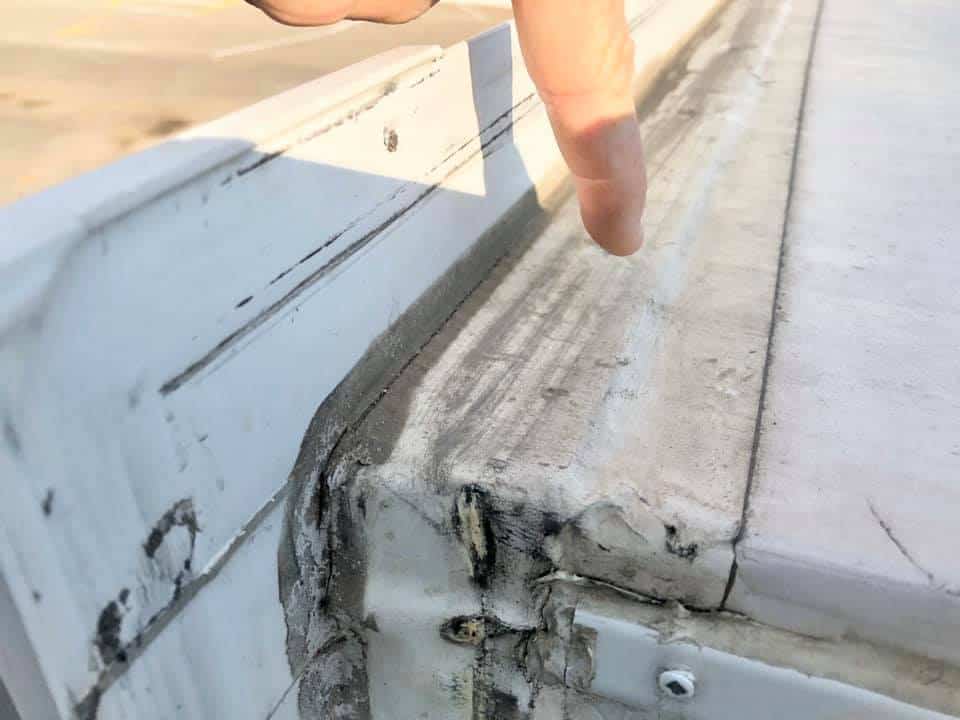
Apply heat
Use a cordless heat gun to warm the EternaBond tape. The heat helps to soften the adhesive and makes it easier to peel off.
Start peeling
Begin peeling the tape gently from one end. If the tape is warm enough, it should start to lift easily. Pull it at a 45-degree angle to the surface to minimize the risk of tearing.
Continue heating
If you encounter resistance or the tape isn’t peeling off smoothly, apply more heat to the area as needed. Be patient and avoid rushing the process so as not to damage the roof membrane surface.
Use a plastic scraper
For stubborn areas, use a plastic scraper to gently lift the edge of the tape. Be cautious not to damage the underlying membrane surface.
Clean residue
After removing the tape, there may be adhesive residue left on the surface. Use rubbing alcohol or an Acrysol adhesive remover to clean the remaining adhesive. Apply the solvent to a clean, dry rag and gently rub the residue until it comes off.
Wash the surface
Clean the surface with soap and water to remove any remaining adhesive remover or residue. Ensure the surface is dry before applying new tape or sealant.
Inspect the surface
Once the surface is clean, inspect it for any damage or areas that might need repair or resealing.
Apply new sealant (if necessary)
If you removed the tape for maintenance purposes, consider applying new sealant or tape as needed to ensure the integrity of the RV’s seals.
Remember to work carefully during this process to avoid causing damage to the RV’s surface. If you have concerns about the removal process or encounter difficulties, it’s a good idea to consult the manufacturer’s guidelines or seek professional assistance. Additionally, always follow safety precautions when using heat tools and adhesives.
Make sure you check out Dustin’s website, California RV Specialists, and their YouTube channel for more helpful information, and see their published articles on RVtravel.com and other social media pages.
Related EternaBond articles
- Why you SHOULD NOT use EternaBond to tape your RV roof!
- Two additional uses for EternaBond tape on your RV
- Slide out roof EternaBond tape failure… and fix
RVDT2780
Would you recommend Armor roofing?
Hi, Randy. In case Dustin doesn’t see your comment, and in case you’re referring to FlexArmor, here’s an article he wrote awhile ago about “The pros and cons of applying FlexArmor to your RV’s roof.” Here is a link to more FlexArmor posts on our website. If you still have questions for Dustin, comment here again and I’ll make sure he sees it. Have a good night. 😀 –Diane at RVtravel.com