

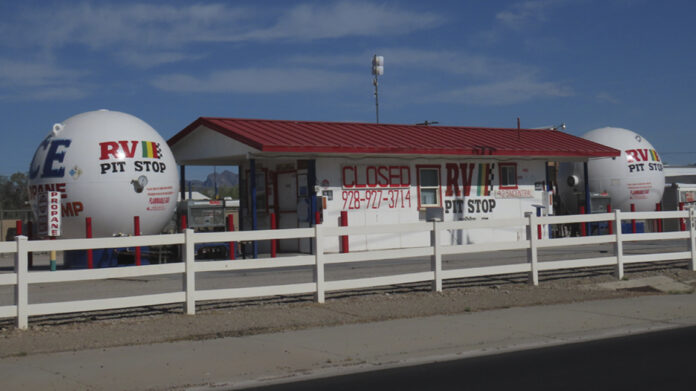
(QUARTZSITE, AZ) An Arizona RV park is suddenly at the center of a fight that could make a lot of long-term RV residents uneasy—especially heading into another brutal Southwest summer.
According to Arizona officials, residents at the park at RV Pit Stop in Quartzsite, Arizona, found themselves without electricity during triple-digit heat after power to the property was shut off amid an ongoing dispute involving park management and tenants. State officials later stepped in and ordered the power restored.
And in Arizona heat, losing power in an RV park is sounding like a paperwork dispute pretty quickly.
According to reporting by Arizona’s Family, Arizona Attorney General Kris Mayes issued a cease-and-desist letter to Alejandra and Ignacio Garcia, owners of the RV Pit Stop property. The report says state officials learned electrical power to residents had been shut off while tenants were ordered to leave the property within 48 hours.
That immediately raised a bigger question many RVers may never have considered: Once somebody has been living in an RV park long-term, what rights do they actually have?
Why this situation got attention so quickly
This reportedly was not a case where a monsoon storm knocked out power lines or a park transformer unexpectedly failed.
State officials viewed the situation as serious enough to intervene during dangerous heat conditions. Anybody who has spent a summer in the Arizona desert already knows how quickly an RV can become dangerously hot once the air conditioner quits.
Inside temperatures can climb fast, especially in older rigs with limited insulation or rooftop A/C units already struggling to keep up with outside temperatures.
For some residents, losing power can also mean refrigerated medications warming up, medical equipment shutting down, pets trapped in dangerous heat, and refrigerators full of food spoiling within hours.
And unlike overnight campers passing through town, many long-term RV residents cannot simply hook up and leave on short notice. Some no longer even own a tow vehicle capable of moving their RV.
RV Pit Stop issues are building
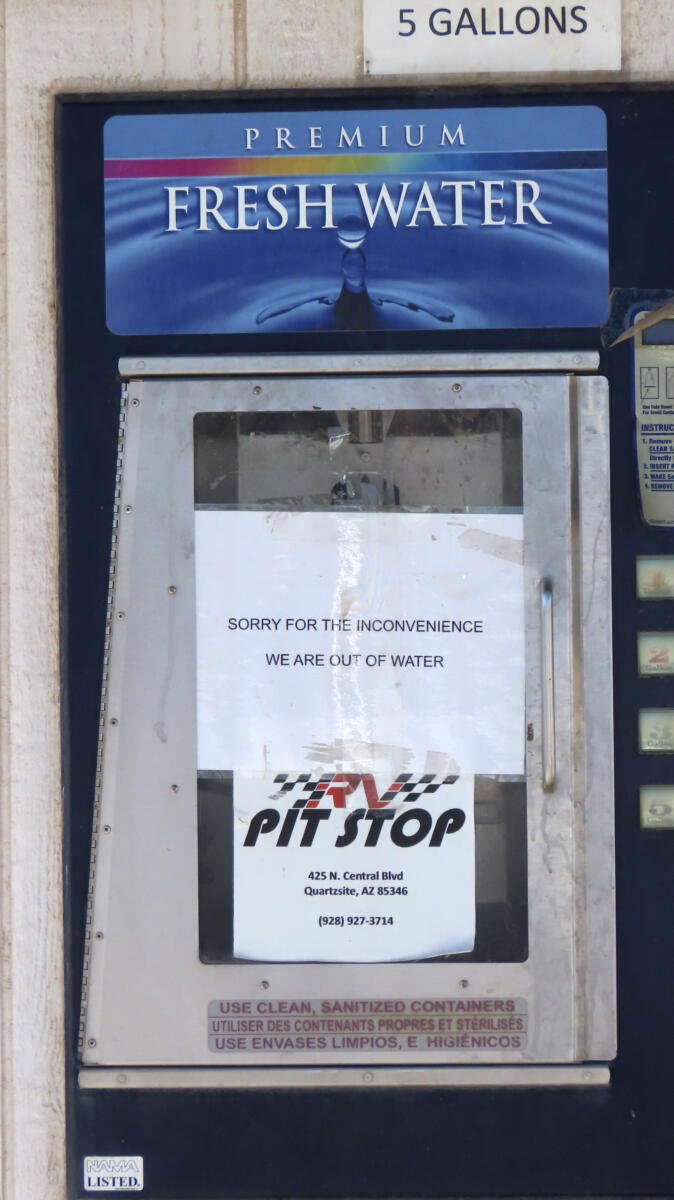
The situation has attracted extra attention in Quartzsite because RV Pit Stop was already familiar to many Southwest RVers and snowbirds. The property had operated year-round for years and included a well-known propane filling station along with an RO (reverse osmosis) water vending service used by both residents and travelers passing through town.
But a couple of months ago, both the propane operation and water vending service abruptly closed without public explanation. For many locals, the sudden shutdowns now look far more significant in hindsight.
Long-term RV parks are becoming something else
This story also highlights something quietly changing across much of the Southwest.
A growing number of RV parks no longer function strictly as vacation campgrounds. In many places, they have become a form of affordable long-term housing for retirees, fixed-income residents, and people priced out of traditional housing.
Especially around snowbird communities, it is common to find residents who have occupied the same site for years.
That changes the tone of disputes like this one.
A weekend camper staying a few nights generally does not have the same expectations—or potentially the same protections—as somebody who has effectively turned an RV park into a long-term home.
And readers who have spent time in older desert RV parks probably recognize another uncomfortable reality too: Many parks were built decades ago for a very different kind of RVing.
Years ago, parks were typically serving smaller RVs with fewer high-draw appliances and far less year-round occupancy. Today, many parks are trying to support larger rigs with multiple air conditioners, residential refrigerators, electric heaters, and much heavier electrical demand.
That may or may not have played a role in this Arizona dispute. But it is one reason utility problems inside RV parks can escalate quickly once temperatures start climbing. We spoke with one RV Pit Stop resident about their issue. They reported that, happily, the power was only cut for about 14 hours.
What RVers should do if utilities are suddenly cut
Experts generally recommend documenting everything if a serious utility dispute develops inside a long-term RV park.
That means saving texts and emails, photographing notices, documenting temperatures during outages, and keeping receipts for emergency expenses like hotels, generator fuel, or spoiled food. Residents should also keep copies of rental agreements and written park policies involving utilities or eviction procedures.
And, perhaps most importantly, RVers should understand that not every stay inside an RV park is treated the same way.
For a growing number of people, RV parks are no longer just vacation stops.
They’re home.
Sources include:
Arizona’s Family report on the RV park dispute
RELATED
- Arizona RV park fire destroyed multiple homes in minutes. Here’s why snowbirds are especially vulnerable
- Arizona considers removing daytime speed limits on select highways
- Quartzsite, Arizona: 20 reasons why so many RVers love it
- Mittry Lake Wildlife Area—Free Arizona BLM boondocking
- Top 5 Arizona campgrounds for snowbirds
- Three small towns in Arizona all RVers will enjoy
RVT1261b

Just another reason we like our LP fridge, water heater, and furnace. Need very little electricity. When A/C is needed we move to higher elevations.
Hey, Tony, why did you spend so much time and effort with your battery/solar system and replacing your AC with something very efficient yet powerful?
Probably the same reason I left Quartzsite several months ago. You know. Thinking ahead.
Install SoftStartRV in your Air conditioners. That’s a good start for both.!
That helps/reduces the LRA requirement to start your AC but doesn’t reduce the amperage load to run it. It’s great if your trying to start it on a generator but does nothing if your on shore power. LRA draw high current for only a millisecond.
With one exception. we avoid using any RV park with full time residents. Too many questionable experiences. Of course, sometimes you don’t know that until you get there and see the dead lawnmowers, washers and driers outside, plywood doors and windows, cars that haven’t moved for a long time, etc.
The park is “closed until further notice” and the three remaining in the park have been living rent free “for months” lacking either the means or desire to move. To be brutally candid, they’re squatting.
According to an article published by Arizona’s Family News, the Arizona Attorney General requested the power be restored while it determines if the park owner has fully complied with Arizona’s eviction laws. The power was turned off by Arizona Public Service (power company) with notice but denied by some.
So the question is if a park closes how long must the owners, taxpayers and/or power company provide power to those staying on property rent free that cannot or will not leave?
And now you know… the rest of the story.
Great article!
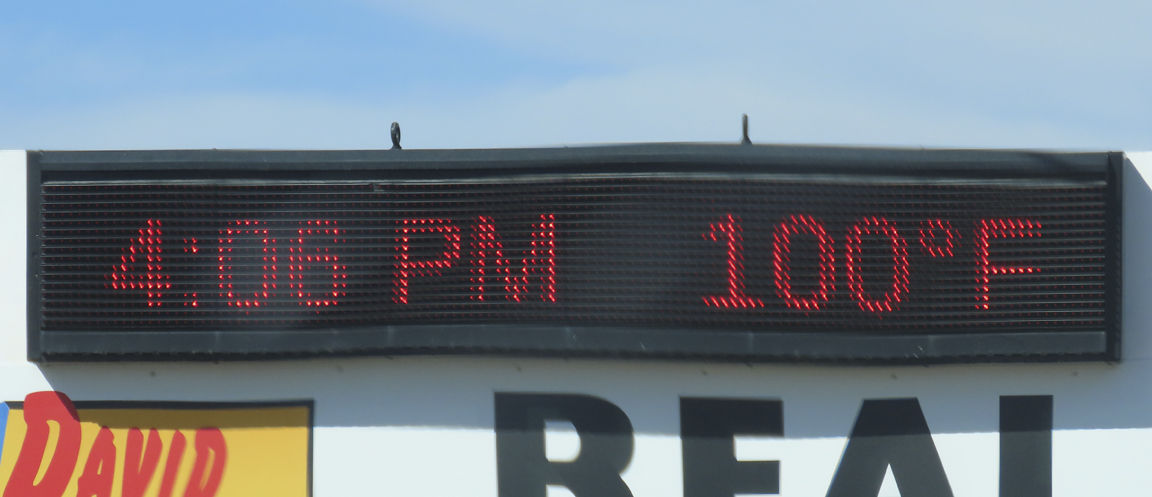
Only 100 degrees ? What happens when a town, county or state has a rolling brownout, some that last for days? Life is rough for an RV with a massive electrical drain. Or, too darn big for the campsite?
I am incredibly grateful to have slid in under the wire years ago and to have bought my modest little home when I did. Had I not, I’d be living on wheels and being bashed for my situation on forums like this by people with zero consideration for anyone other than themselves.
I hope that for those in such dire straits, something works out in their favor, but in this economy, it’s looking pretty bleak.
Waiting for flames in 3,2,1…
Thank you for your comments, Clu. The vast majority of our readers are very considerate and compassionate people. One example is a post from Nanci Dixon a couple of years ago: Compassion or concern for the homeless in ‘our’ campground, and the number of supportive comments under it. Have a good night. 🙂 –Diane at RVtravel.com