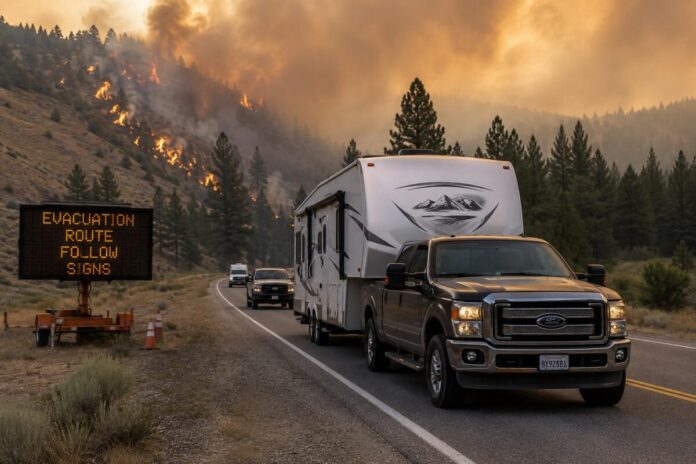
No one heads out on an RV adventure expecting to evacuate a campground. But wildfires, flash floods, hurricanes, hazardous material spills, and other emergencies can force campers to leave with very little warning. Knowing what to do before an emergency happens can make the difference between a stressful departure and a dangerous one.
If you voted in last weekend’s poll and read through the comments, you know this isn’t just a hypothetical scenario. We asked readers if they had ever been forced to evacuate a campground because of severe weather, and while many said they’ve never experienced it, plenty of others shared firsthand stories of fleeing wildfires, flash floods, hurricanes, and other emergencies. (21 percent of RVtravel.com readers have been officially evacuated from a campground at least one time, and an additional 12 percent said they have self-evacuated due to bad weather.)
One thing their experiences had in common? When it’s time to leave, every minute counts and a little planning goes a long way. Here’s how to be ready if campground staff or emergency officials tell you it’s time to go.
Pay attention

The moment an evacuation order is issued, take it seriously. Emergency officials base these decisions on rapidly changing conditions, and waiting “just a few more minutes” can put you, your family, and first responders at greater risk. FEMA and the U.S. Fire Administration recommend leaving immediately when instructed. Stay informed through official emergency alerts rather than relying on rumors or social media.
Who does what? When?
• Have a plan. Have an evacuation plan before you need one. As soon as you arrive at a campground, locate every exit, not just the one you drove through. (Some parks have secondary emergency exits that may only be used during evacuations.) It’s also smart to note nearby highways, fuel stations, grocery stores, and communities where you could spend the night if you can’t return to the campground.
• Do this. Keep your RV ready to roll. During high-risk weather or wildfire season, avoid letting your fuel tank drop below half full. Store your tow vehicle or motorhome keys where everyone in your travel party knows where they are. Keep essential medications, important documents, pet supplies, chargers, flashlights, and a few days of clothing together so they can be loaded quickly if needed. Ready.gov recommends maintaining an emergency supply kit that is easy to grab during an evacuation.
• Practice. Practice a fast exit. Think through who disconnects utilities, who secures loose items inside the RV, and who checks that pets are safely loaded. If everyone knows their job ahead of time, you can be on the road much faster when every minute counts.
• Leave it. Don’t waste time packing everything. Personal safety matters far more than outdoor rugs, patio lights, grills, or lawn chairs. Secure only what can be done quickly. Leave behind anything that slows your departure.
• Stay tuned. Stay informed throughout the emergency. Enable Wireless Emergency Alerts on your phone and sign up for local emergency notifications whenever possible. Many campgrounds also communicate through text messages, office announcements, or campground apps. Continue monitoring official instructions after you leave because evacuation routes and return times can change as conditions evolve. If you don’t have cell service, make sure you carry an emergency NOAA weather radio.
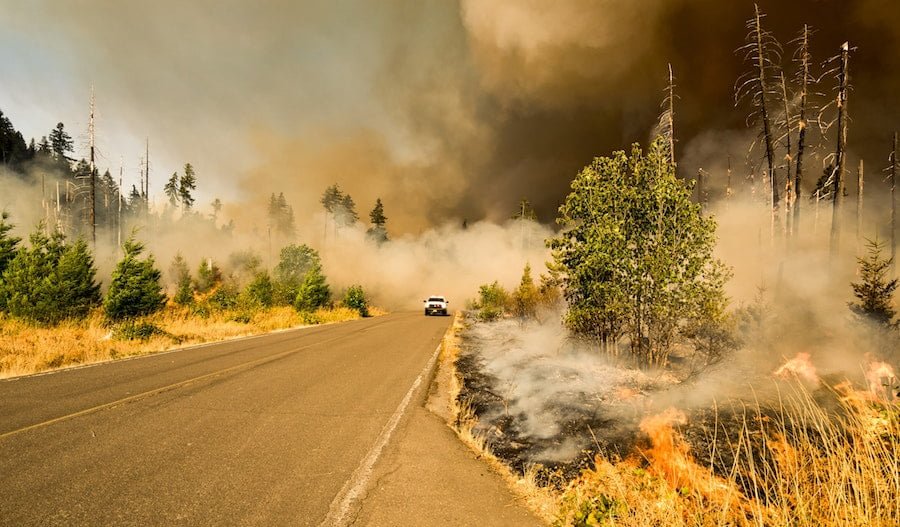
• Use caution. Drive very carefully during an evacuation. Traffic may be heavy, visibility poor, and emotions may run high. Follow designated evacuation routes even if your GPS suggests a shortcut. Officials may have closed roads or redirected traffic for safety reasons. If you are towing an RV, allow extra stopping distance and avoid unnecessary lane changes.
• Lodging. Know where you’ll go if other campgrounds are full. Hotels, fairgrounds, community centers, truck stops, and other public facilities sometimes become temporary refuges for evacuees. Thinking about these alternatives before an emergency reduces stress when you’re forced to leave.
A reader’s experience
RVtravel.com reader Rosanne Drechsel shared a valuable real-world lesson after evacuating a Missouri State Park north of Hannibal.
“We had to evacuate once from a MO State Park north of Hannibal. Thankfully, a hotel in Quincy, IL, had an electric plug-in at each light post in the parking lot for semi-trucks. We were able to keep our 5er plugged in while we stayed at the hotel. This was a good option for us and one for RVers to keep in mind in an emergency.”
Her experience is a great reminder that truck-friendly hotels may offer unexpected resources during an emergency. While not every hotel has electrical hookups, it’s worth asking if they accommodate trucks or oversized vehicles. Some locations may have parking lot power pedestals or electrical outlets intended for commercial vehicles.
Additional tips
If you’re evacuating because of a wildfire, leave early whenever possible. Smoke can reduce visibility quickly, traffic builds rapidly, and conditions may change faster than expected. The U.S. Fire Administration also advises keeping vehicle windows closed and using the air conditioner on the recirculate feature to reduce smoke entering the vehicle while traveling.
Once you’re safely away, let family or friends know you’ve evacuated. Also be sure to tell them where you’re headed. Wait for local officials to announce that it’s safe before returning to your campsite. Roads, power lines, trees, and utilities may still present hazards even after the immediate emergency has passed.
Most RV trips end with nothing more exciting than campfire stories and beautiful sunsets. But emergencies do happen. Take a few minutes to prepare before you need to evacuate. Preparing ahead of time can help protect your family, your pets, and your RV. It will make a difficult situation much easier to manage.
Have you ever had to evacuate a campground or boondocking spot? Tell us about your experience in the comments below.
RELATED
- Poll: Have you ever had to evacuate a campground because of severe weather?
- Who decides when an RV park should evacuate due to safety concerns?
- Disaster preparedness: Packing an evacuation ‘go’ bag
RVT1271