


Last week I covered some history of why cars and some trucks are now required to have tire pressure monitoring systems (TPMS). The TPM systems found in almost all new vehicles use sensors that are internal to the air chamber and are part of the valve stem. Since most RV motorhomes have gross vehicle weight rating (GVWR) in excess of 10,000 lbs., they are not required by law to have a TPMS.
But over the last 15 years or so, many in the RV community have seen the advantage of having such a system. So the “aftermarket” grew, with most sensors being external to the tire air chamber but attached to the outer end of the valve stem.
Options for TPMS
If your RV did not come with a TPMS, you have a couple of options. There are many aftermarket systems that use external sensors that screw onto the end of your existing valve stem.
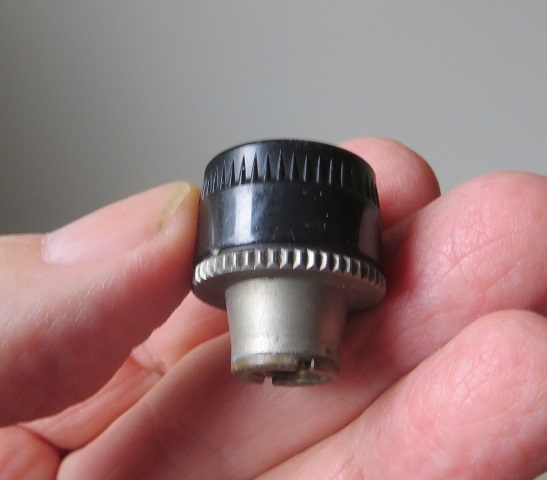
These sensors usually come apart so you can replace the battery.

I carry a couple of new batteries so I can replace one when my monitor indicates no signal from one tire.
Some of these aftermarket systems have “repeater” units to help get the low power signal from individual sensors up front to the monitor you would have on the dash.
These “aftermarket” TPM systems do need to be programmed for your personal RV, as you may have 4, 6 or more sensors. Your measured load dictates your minimum cold inflation.
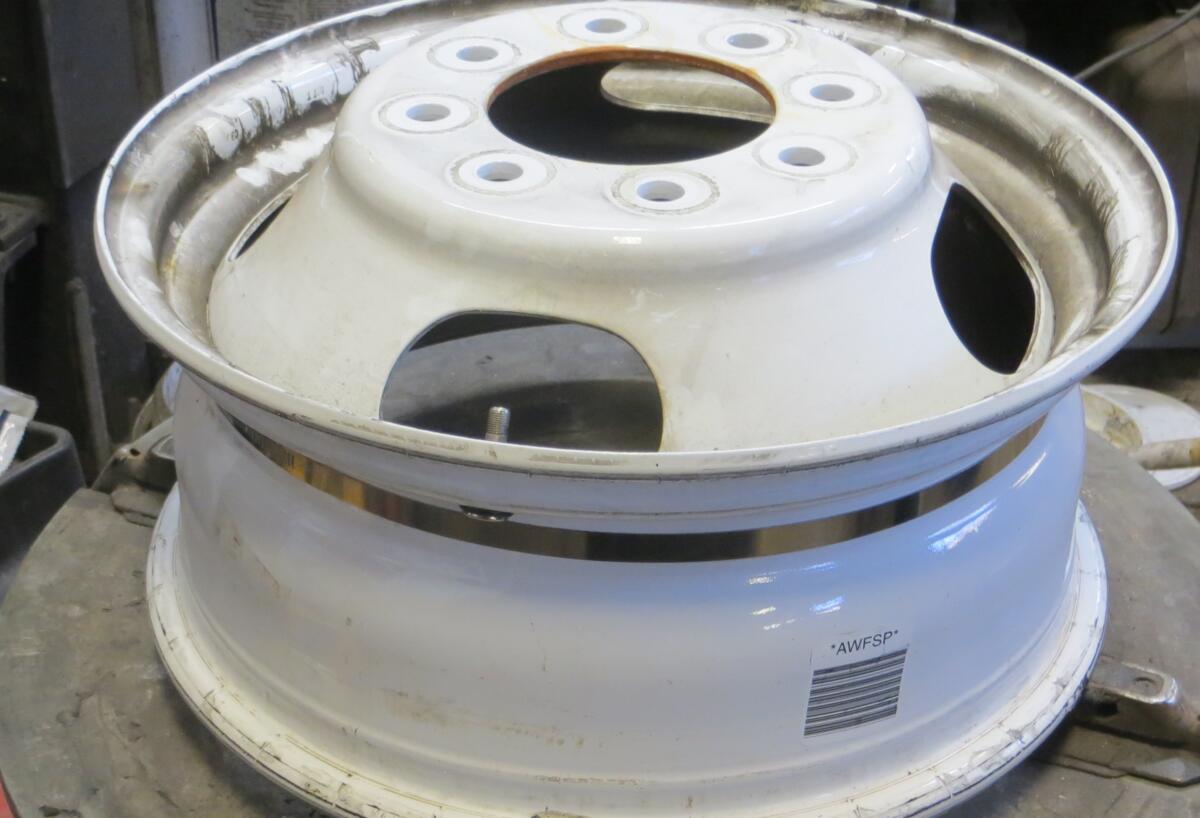
NOTE: If you are attaching an aftermarket sensor to your valve stems, I STRONGLY recommend that your valve stems need to be “bolt-in” metal stems similar to this.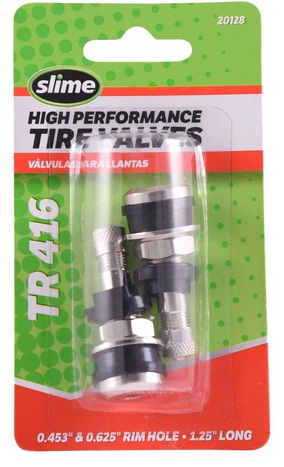
The standard “snap-in” rubber stems can flex. This sensor moved enough to leave a mark on the wheel, 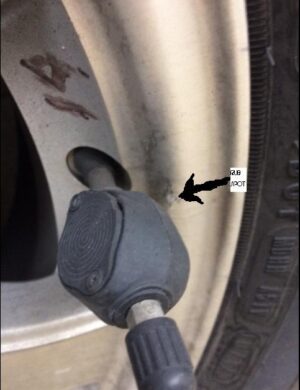 Sometimes the standard rubber stem can crack with age, as seen here.
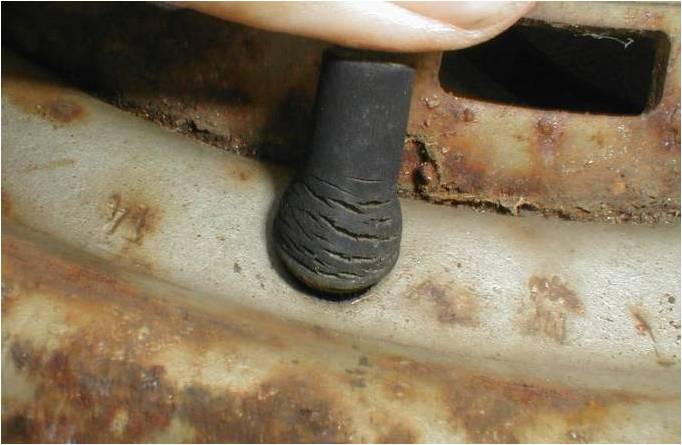 The extra weight, though small, of the TPM sensor may eventually cause a failure of the rubber stem.
Programming your tire pressure monitoring system
Basically, these aftermarket systems need to be installed so the monitor can report which tire is running a lower-than-desired psi level. My recommendation is to set the low-pressure warning level to the minimum psi required to support your measured load.
Some suggest using the low-pressure warning setting provided by the aftermarket system retailer. However, in some cases that may be as much as 25 psi low. I recommend you never drive on tires that are underinflated or overloaded.
I set my “cold’ psi level in my tires to my minimum PLUS 5 to 10 psi. This allows for daily temperature changes, which will result in the tire psi to change by about 2% for each change in temperature of 10° F.
Example: My Class C measured tire loads indicate I need at least 65 psi in my front tires. That is based on the scale weight readings and the Load & Inflation tables for my Load Range E tires. I set the TPM system low pressure warning for the front tires to 65 psi. I set the “cold” psi in my front tires to 75 psi.
Some people ask about aftermarket tire sensors that mount to their wheels in a manner similar to what is seen in cars. I am not aware of any retail aftermarket systems with sensors similar to the sensors provided by car companies. There are one or two aftermarket systems that are attached with straps to the wheel, as seen here.
Bottom line
I strongly recommend that all vehicles have TPM systems. I also recommend that owners program their system to provide a warning if the tire pressure ever drops below what is needed to support the measured tire load.
Roger Marble
RELATED
- TPMS: Some history and basic information – Part 1
- What type of tire valve stems should you use with external TPMS sensors?
- Learn the basics of setting tire pressure and testing TPMS
- TPMS settings may not be right
- Many more posts on TPMS on RVtravel.com
If you have tire questions, check out Roger’s posts on RVtravel.com. There are hundreds of posts covering everything to do with tires.
If you still have a question for Roger after searching the above posts, send your inquiries to him using the form below.
RVT1245

The reality of the situation is that all RVs should come with TPMS, whether it’s required by law or not. While RV owners are generally more aware of their tire pressure than most drivers and may even check it before every drive, that doesn’t protect us from issues that occur while we’re driving. I wouldn’t consider driving any significant distance without TPMS.
Personally I prefer an add on system versus the ones installed at the factory.
A TPMS on towables should be a no-brainer. I’ve got a twin axle travel trailer. Any one of the tires could start losing pressure and I probably wouldn’t know it until long after the rim was on the pavement. Mine also has temperature sensors as well that could possibly give a heads up to an imminent bearing or brake failure. Having alarms programed for these kinds of possibilities gives me a lot of peace of mind.