

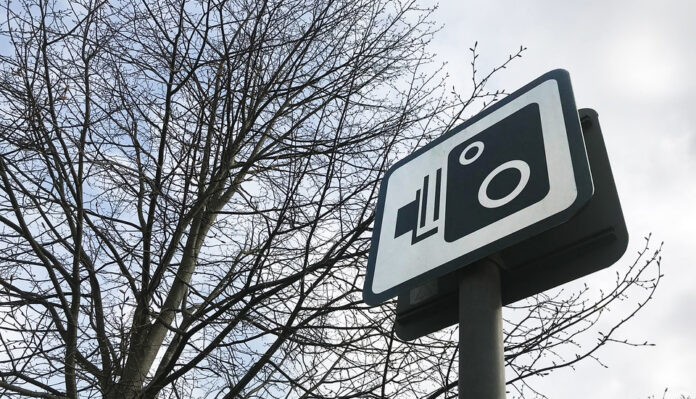
If your foot is heavy on the accelerator but light on the brake, look out! Two states have new laws on the books expanding traffic camera enforcement. On both ends of the country, the two states are upping the ante against traffic violators with more speed and red-light cameras.
Opposite ends of the country expand traffic camera enforcement
California and New York join other U.S. states that in 2024 already added more traffic camera use. The others include Connecticut, Iowa, Louisiana, Maryland, Minnesota, Vermont, and Washington. We’ve written about some of these: click here for information.
While some contend that traffic cams are largely in place to pump revenue into government coffers, the states beg to differ. New York and California say the new cameras will pump up safety.
New York City—and others—add red-light cams
For its part, New York’s new law will expand red-light cameras in New York City, and other areas around the state. In the Big Apple, red-light camera intersections show a 58% drop in severe injuries from collisions, compared to three years before camera installs.
The new law goes farther than just New York City. It extends or creates red-light camera programs in five of the state’s top 30 most-populated cities. Cameras in Albany, Mount Vernon, New Rochelle, White Plains, and in Nassau County will grow. A red-light camera program will start up in Greenburgh.
California expands speed cams
Out West, California’s new law will grant more cities options to put up speed cameras. Red-light cameras are already allowed by state law, and traffic camera enforcement is used in 30 areas. Last year a bill was passed and signed to allow for speed cameras. It allowed for automated enforcement in “safety corridors,” where crashes are frequent, in areas of street racing events, and school zones.
Now more California cities have been given the nod for speed cams. Look for them in Glendale, Los Angeles, Long Beach, Oakland, San Jose, and the city and county of San Francisco. The new law grants permission for speed cams on the Pacific Coast Highway on a stretch that passes through Malibu.
Traffic camera enforcement can be costly in California. Heavy-footed drivers who get caught by the cameras face escalating fines determined by the vehicle’s speed.
Here’s a state-by-state traffic camera enforcement list website.
##RVT1181b


Follow the existing traffic laws and there are no worries.
Exactly!
Right on Bill – Right on! Comply – one way or the other – we all make choices!
Yes…we will all make a choice on Tuesday…comply is one choice…freedom is another…🇺🇸
Exactly.
Maybe the cameras will wake people up to obeying the traffic laws. As far as someone slamming on the brakes, you are probably following too close and hoping they are going to run the light so you can follow.
…and follow your leader right into tyranny…no worries
There are plenty of studies showing increased accidents where red light cameras are installed for a very logical reason: nobody wants a ticket and fine so they will slam on their brakes and guess what? For those who applaud all this increased surveillance we just have to look to China to see what can happen: cameras watching people’s behavior almost everywhere and of course the corresponding actions to “correct” anything deemed inappropriate by the state. Fun
The problem with these cameras is that the ticket goes to the vehicle owner and not necessarily to the driver.
In a case like that, the owner can let the police know who was driving.
It’s always in the name of “safety”…because “government” cares about that over “profits”
And don’t care about the 4th ammendment.
That one was obliterated on 9/11…and haven’t we all been safer ever since…
Contrary to what the camera peddlers and lobbyists say, cameras record events, they don’t prevent them.
No red light runner looks for a camera to make their decision. If they look at anything, it’s for risk of collision at most.
So what about the cool statistic?
Cameras are typically placed where collision risk is higher (congestion), not lower. Traffic congestion reduces speed which reduces severity of accidents.
But what if the improvement comes after installation at a known congested spot?
Altering the signal lights timing and delays to create legally binding proof of infraction reduces the frequency of events thus the severity percentages.
Yep. Car & Driver did a study many years ago and found that just increasing the yellow by 1.5 seconds reduced red light running by something like 80%.
Thankfully red light cameras and speed cameras are illegal here in Texas.
Thank you, Russ and Tina! I see. More capital assets, so potentially fewer of those potentially troublesome labor inputs (aka, police officers). No fringe benefits need be paid cameras, unlike those police people. Of course, all are fallible. I do suppose these are well-known and widely disseminated facts, surely. Have a great week and safe travels!