

As we usher in 2025, RVers across the United States should be aware of several new and updated driving laws.
These new changes are designed to enhance road safety and adapt to evolving technologies. Here’s a state-by-state breakdown of new and updated 2025 driving laws.
California
Pedestrian safety: California drivers will need to adjust to a new rule designed to prioritize pedestrian safety. Known as the “Daylighting Law,” it prohibits parking within 20 feet of any crosswalk. This applies whether the crosswalk has visible markings or not and regardless of whether the curb is painted red. Cities across California are stepping up efforts to add signage and paint curbs to help drivers adapt to the change. However, officials admit it’s unlikely every curb will be marked red before the law goes into full effect.
Colorado
Express lane violations: Effective January 1, 2025, drivers improperly changing lanes in tolled express lanes will face fines starting at $75. The fine will double to $150 if unpaid within 20 days. This law mandates that drivers enter and exit express lanes only in designated areas to improve traffic flow and safety.
Handheld device ban: A new law prohibits the use of handheld devices while driving or stopped at a red light. Fines can be as much as $250 for violations. This initiative targets distracted driving to reduce road accidents. (Note: Commercial drivers and other drivers using phones to contact emergency services are exempt from this law.)
Child car seat requirements: Updates to car seat regulations now require rear-facing seats for children under 2 years old and extend the use of child restraint systems or safety belts to individuals up to 18 years old. The change hopes to ensure child passenger safety.
Florida
First responder: A new law prohibits a person from approaching a first responder engaged in a legal duty, once s/he has been warned. Violating a warning by approaching the first responder is against the law.
Illinois
Digital driver’s licenses: Starting January 1, 2025, Illinois residents can carry digital versions of their driver’s licenses. However, physical IDs are still required and must be presented to law enforcement upon request. This law also protects individuals’ privacy by prohibiting police from searching mobile devices without consent when presenting a digital ID.
Maryland
Expansion of Worker Protection Act: Speed cameras will be installed in work zones, and fines for speeding will see a significant increase. Fines will range from $60 to $500, depending on speed. If workers are present, those fines will double, making it even more crucial to slow down and drive safely in these areas.
Michigan
Following distance: Drivers in the Wolverine State should be aware of a new law that requires drivers to maintain at least 200 feet following distance behind an active snowplow. At intersections, the following distance is 20 feet.
The communications coordinator for Genesee County, Kylie Dontje, suggests, “The stripes on the road are actually 50 feet apart from the beginning of the first one until the next one. So that can give you an idea, if you can see the lines on the road, of how far 200 feet is.” Of course, if the roadway is snow-packed, you’ll have to estimate the distance.
Missouri
Handheld cellphone use: As of January 1, 2025, penalties for handheld cellphone use while driving will be enforced. First-time offenders will face a $150 fine, with fines increasing for subsequent violations. This law aims to curb distracted driving and enhance road safety.
Washington, D.C.
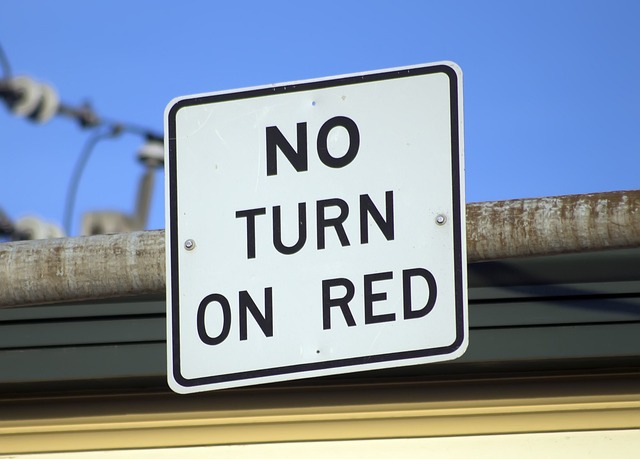
No right on red: A new law prohibits turning right on red at intersections in our nation’s capital. However, proper signage has not yet been installed. Because of this, the ban will only be enforced at about half of D.C.’s 1,600 intersections (those with signage).
General trends across states
Distracted driving laws: Many states are implementing stricter laws against the use of handheld devices while driving. This move mirrors similar laws already activated in 24 states. These laws are supported by safety advocates who warn that phone use quadruples crash risks.
Child safety measures: Updates to child car seat requirements are being adopted to enhance the safety of young passengers. When traveling with children and/or grandchildren, be aware of individual state laws regarding seat belts and other safety measures for children under 18.
Summing up new 2025 driving laws
As these laws take effect, it’s crucial for RVers to stay informed and comply with the new regulations to ensure safety and avoid penalties. For the most current information, always refer to each state’s Department of Motor Vehicles or official state government websites. This list can get you started.
##RVT1190b


And if everyone would voluntarily always drive with their headlights on we can make driving even safer and without the need for rules. Common sense says “See and Be Seen for Safety’s Sake”. It’s the law when driving in work zones or when it’s raining – it’s so others can see you better, so why not all the time.
Yes. The brain has special circuitry to detect motion of objects. This is an automated survival reflex, no conscious thought is required.
Lights amplify this ability. But people still object to daytime running lights (DRLs). They are critical to safety and survival.
That’s what DRLs are for.
Thank you, Gail! 🙂 We rarely actually go into DC when visiting nearby, so the new law of no right turn on red really caught us by surprise. Thank you for informing DW and me. Happy new year and safe travels! 🙂
It should be noted, most of these laws come from crunching the statistics on thousands of accidents.
Patterns become obvious, even ones that no individual driver could see.
For example, DC probably realized that while right on red after stop saves energy and time, it is dangerous to other drivers and pedestrians.
I believe using turn signals should be a law in all states. And by using them I mean at least 5 seconds not just 0ne flash here I come.
What if there is no one around to see my signal? I won’t use them then.
In Washington State they have prohibited license Plate covers.” Tinted and non-tinted covers can alter the appearance of or the reflectivity of the plate and make it unreadable or reduce the reflectivity.” The same goes for license plate ” holders, frames, or any materials that in any manner change, alter, or make the vehicle license number plates illegible.”