

By Cheri Sicard
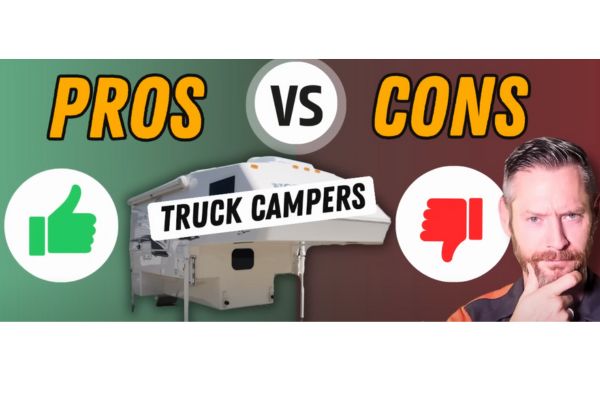
Truck campers spark a lot of opinions in the RV world. Some wonder why anyone would pick this style of RV over a travel trailer or a big motorhome. Others swear by their versatility. Knowing the real pros and cons helps anyone thinking of a truck camper make the best decision for their travels.
In today’s video, certified RV tech Jacob Rigor shares those pros and cons.
A truck camper is an RV unit designed to slide into the bed of a pickup. Unlike travel trailers or motorhomes, a truck camper sits right on top of the truck and can be removed when not in use. It combines the freedom of a truck with the convenience of a small living space, but isn’t always the right fit for everyone.
People choose these for many reasons, from budget to adventure. Though they seem straightforward, truck campers carry some unique benefits, along with a few challenges. Here are a few quick points many shoppers ask about:
- Often cheaper than most motorhomes
- Easier storage and less maintenance
- Smaller living quarters and storage space
Truck campers aren’t an obvious pick for every RVer, but they appeal to those who want adaptability and simplicity.
Top benefits of truck campers
1. Affordable entry point: Truck campers usually cost less than most full-size RVs. The smaller size keeps purchase prices lower.
2. Less maintenance needed: No chassis to maintain, no extra tires or wheel bearings on the camper itself, and no engine or oil to deal with.
3. Upgrading trucks is simple: Owners can keep their camper even if they swap out trucks. Got a new pickup? Just move the camper over.
4. Easy to maneuver: The camper rides right on the truck’s chassis, keeping turning and parking much like a regular pickup.
5. Ability to tow another vehicle: You can tow a trailer, boat, or ATVs behind the truck camper, opening doors for extra adventure.
6. Lower ongoing costs: Most states see a truck camper as cargo, not a vehicle, so there’s less paperwork and no separate registration.
7. 4×4 adventure-ready: Mounting a camper on a four-wheel-drive truck gives off-road capability without the premium price tag of dedicated 4×4 RVs.
8. Flexible mounting options: Put the camper on your truck, a large boat, or even mount it on a flatbed or trailer to create a DIY toy hauler.
Why maintenance is simpler
Truck campers skip a lot of chores found in bigger RVs. Owners don’t worry about things like camper tires, separate wheel bearings, or oil changes for the living unit. Fewer moving parts mean less can go wrong:
- No separate tires to maintain
- No RV-specific brakes or axles
- No engine maintenance
These RVs offer unique flexibility and customization options. Adventurers can remove the camper when not in use, swap it onto different vehicles, or mount it in creative ways. Some even mount campers on trailers or improvise toy-haulers.
Challenges and drawbacks
1. High center of gravity: Sitting tall on the bed makes trucks more top-heavy and prone to sway or tipping, especially off-road or in wind.
2. Handling can be rough: Standard truck suspensions aren’t built for tall, heavy loads. Many owners add stiffer springs or helper air bags, which can make unloaded rides bumpy.
3. Small living space: Interiors feel cramped compared to most travel trailers or motorhomes. They work best when you just need a place to crash.
4. Limited tank capacity: Smaller fresh water and holding tanks mean shorter trips away from hookups.
5. Minimal storage: Sparse room for cargo inside challenges anyone packing for long stays or with bulky gear.
Safety considerations
The weight of a truck camper rides high, making the whole setup less stable on sharp turns or slanted ground. Crossing steep slopes or driving in strong side winds pushes the limits. Always manage your speed, avoid sharp maneuvers, and keep cargo weight low. Suspensions on most trucks sag under tall, heavy campers, affecting steering and braking. Upgrades like heavy-duty springs or air bags help, but can leave the ride feeling stiff whenever the camper isn’t loaded.
Space is tight in truck campers. Interior layouts limit sleeping, cooking, and relaxing room. Tiny water and holding tanks can cut trips short. They’re best for people who use the RV for shelter and meals but spend most days exploring outdoors.
Who should consider a truck camper?
Truck campers work well for minimalist campers, off-road explorers, and anyone who needs a flexible RV setup. They suit people who value portability, wish to keep a 4×4 truck for adventuring, or want to save on costs.
RELATED
- Truck campers not welcome at some RV parks
- Truck camper review: 2026 Northern Lite 10-2EX LE—a ‘right-sized’ option
- Check out the amazing, rare 1963 Del Rey Sky Lounge truck camper… and it’s for sale!
- RV review: These are Far-Out Campers—a truck camper for adventurers
- Tour Optimized Overlanding’s unusual gull wing popup truck camper
- Amazing and inexpensive DIY wooden truck camper
- You won’t believe this tiny Geo Tracker micro truck camper!
RVDT2922
I love my truck camper. It gives me a lot of flexibility to go from point A to point B. I can stop anywhere to rest. I pull an enclosed car trailer for my show cars and this is the best combo for me.
Thank you for the video and summary, Cheri. Lots of truck campers, both owned and rented, in Alberta, British Columbia, Yukon (never been in the Northwest Terrotory, so excluded it), and Alaska. Have a great day and safe travels!