

By Cheri Sicard
Truck ads love a big tow rating. For RV owners, that’s often the wrong number to focus on first.
Joshua at RV Gear & Far makes a simple point: Payload capacity usually runs out before towing capacity does. That’s because an RV doesn’t only trail behind the vehicle, it also puts part of its weight onto the truck or SUV. That difference changes the whole math.
Towing capacity gets the attention
Towing capacity is the maximum weight a vehicle is rated to pull and stop on the road. It’s useful, but it doesn’t tell the whole story.
An 11,000-pound load on a flat trailer can feel completely different from a 20-foot travel trailer behind the same truck. Bricks on a flatbed mostly add weight, while a camper also adds wind resistance because its tall shape acts like a sail. The same ratings also apply across very different setups, including a Jeep behind a Class C motorhome, or a travel trailer behind a large SUV.
Payload is where many RVers run out of room
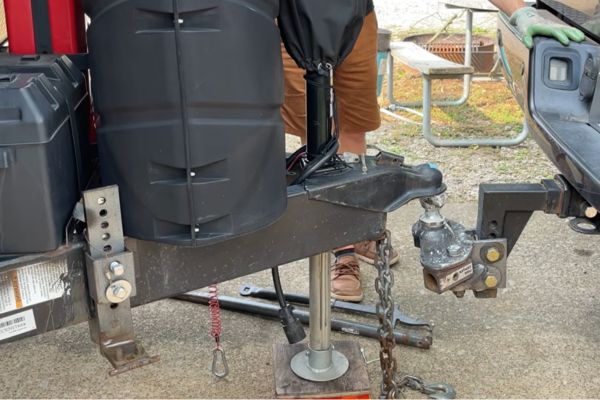
Payload capacity is the total weight the vehicle itself can carry. That number includes people, pets, cargo in the cab or bed, the hitch, and the trailer’s tongue or pin weight.
Payload is not spare room for gear alone. It also has to absorb the weight transferred from the RV onto the tow vehicle.
That transferred weight adds up fast:
- Bumper-pull trailers usually place 10% to 15% of their loaded weight on the hitch.
- Fifth wheels usually place 15% to 20% of their loaded weight in the truck bed.
A farm wagon with an articulated tongue puts almost no weight on the suspension. An RV does, so payload often becomes the limit first.
One truck example shows the problem
One example uses an F-150 with a Max Tow package rated to tow 11,200 pounds. On paper, a 9,500-pound loaded RV looks fine. The trouble is that the same truck has only 1,596 pounds of payload.
At 15% tongue weight, that trailer could put about 1,425 pounds onto the truck before anyone adds a dog, a cooler, or the hitch hardware. Three passengers can push the setup over the payload even though the trailer still sits below the tow rating. That’s why the flashy number can give owners the wrong answer.
The sticker and the scale matter more than guesses
Manufacturers don’t all calculate ratings the same way. Some payload figures assume a 150-pound driver and a full tank of fuel, then nothing else in the vehicle. Owners need to check the door-frame sticker and the manual for the exact truck they own.
Real numbers matter because trailer loading changes hitch weight. Move cargo around inside the trailer, and the weight on the hitch can change with it. For that reason, a loaded rig should be weighed before a trip.
Final thoughts
For most RV setups, payload is the number that runs out first. When owners check the sticker, account for tongue or pin weight, and weigh the loaded rig, they get a much clearer picture of what their vehicle can handle.
RELATED
- Avoiding payload problems: How much can I tow?
- Stay safe with this towable RV checklist before moving
- Triple towing: Is it legal? Is it safe? Should you do it?
RVT1270

I use a tongue scale for bumper tows. You can weigh up to 1,100 pounds for under $50. My single axle has to be below 400# tongue weight or the trailer is overloaded, so I keep a package scale in the bay. While you also need some kind of support rig (a discarded 5th wheel tripod worked for me), a 1,100# crane scale does the job.
As a side note, this is a rough way to estimate the entire trailer weight if you don’t have access to a vehicle scale. If your load is appropriately distributed and the trailer level, the tongue should be 10-15% of the total.
Thank you for the discussion and warning that more than towing capacity matters, Cheri. Have a great week and safe travels!